In Bolivia’s Dry Forest, the Rivers Sustain
For the Gran Chaco region, Indigenous-led conservation offers hope for the future.

Without the river, life here would wither. It’s late October in Tentaguasu, an Indigenous community in southeast Bolivia, and the only distraction from the searing sun is the rustle of brittle leaves still clinging to the quebracho trees. This is the end of the six-month dry season in these forested hills, when temperatures can top 115 degrees Fahrenheit (46 degrees Celsius), baking the landscape into submission.

It is a time when residents center their lives around the Pilcomayo River, which the community cherishes as they would a revered elder. The story is the same throughout the broader Gran Chaco region, a nearly 400,000-square-mile (1-million-square-kilometer) semi-arid area that spans parts of Bolivia, Argentina, and Paraguay. The Pilcomayo and the smaller—but still significant—Parapetí River course from the Andes and through this ecologically rich swath of forests, savannas, wetlands, and salt flats, bringing fresh water, food, nourishment, and relief to the people and wildlife that call the Gran Chaco home.
Together, these two rivers are lifelines for one of South America’s last major wild zones. The Gran Chaco’s extraordinary biodiversity includes an estimated 3,400 plant species; more than 1,000 bird species, including the helmeted manakin and hyacinth macaw; and an array of reptiles and amphibians. As for mammals, one of the continent’s last significant jaguar populations lives here, as do giant anteaters, maned wolf, puma, and the Chacoan peccary, a pig-like animal that was thought to be extinct until researchers “rediscovered” it in 1975.
But the Gran Chaco is under threat from shifts in land use—including encroaching cattle ranching and soy farming—that have driven deforestation, along with wildfires and pollution. The region is home to 9 million people who are scattered among urban centers as well as more rural communities whose inhabitants range from cattle ranchers and beekeepers to commercial fishers and Indigenous weavers.

The Pew Charitable Trusts began working here in 2022, both following and joining regional and local governments in planning creative approaches to conserving this diverse place. Those initiatives are already bearing fruit: Over the past 15 months, portions of both the Pilcomayo and Parapetí rivers and their basins in Bolivia have won major protections—a notable occurrence because, like most countries, Bolivia has few formal legal instruments for safeguarding fresh water. Even with these conservation gains, leaders in Bolivia must do more to safeguard the Gran Chaco’s waterways.
Worldwide, rivers, wetlands, lakes, and other fresh water sources rank as the most biodiverse, most threatened, and least protected ecosystems. In fact, rivers host around 10% of all known species and are vital to the migratory routes and habitat connectivity for even more species, though they cover less than 1% of the Earth’s surface.
“We are fortunate that our ancestors settled along this majestic river,” says Lorgio Bustos, the Guaraní captain of Tentaguasu. Captains serve as their communities’ ancestral and cultural leaders, which includes helping sustain the people’s connections to nature.
“For us, it is something like … a legacy our grandparents left us, because the river means so much,” Bustos adds. “It feeds us, provides us with life and health—we live from it,” including by catching sábalo fish for both local consumption and sale. “For us, the Pilcomayo River means everything.”

Tentaguasu is in the Chaco dry forest, the predominant ecosystem in the Gran Chaco and the second-largest forest in South America, behind the Amazon. The flora here are tenacious, with stout trees, shrubs, and other plants that have adapted to thrive in extreme heat and aridity.
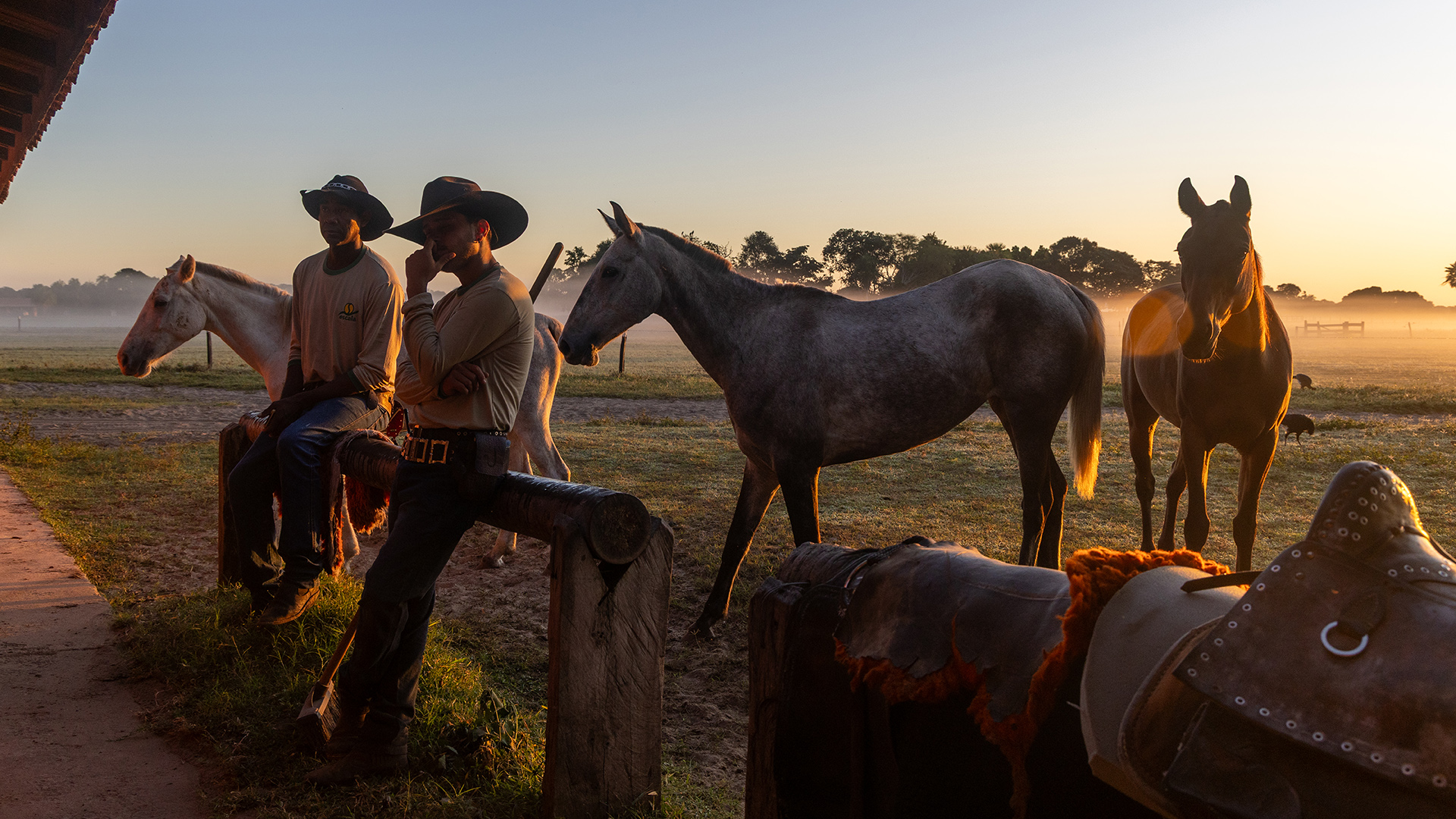
The Pilcomayo, which is much larger than the Parapetí, runs for 930 miles (about 1,500 kilometers) along the western edge of the Bolivian Gran Chaco before cutting east along the Paraguay-Argentina border and into Argentina’s nearly 1-million-acre Bañado la Estrella wetlands. In Bolivia, a healthy Pilcomayo benefits ranchers, whose cattle graze exclusively in native forest, and Indigenous Guaraní, Weenhayek, and Tapiete people who harvest honey from wild hives, as their ancestors did.
On April 7, the government of Bolivia’s Tarija Department approved the Pilcomayo River Departmental Corridor Law, which establishes a protected zone for six miles on either side of the river along its 155-mile (250-kilometer) course near the Argentine and Paraguayan borders. This adds up to 868,000 protected acres in an especially significant area, given that the water, fish, and surrounding forests of the Pilcomayo are central to the livelihoods of more than 40 Indigenous, campesino (peasant), and fishing communities in Bolivia. This law is intended to safeguard biodiversity and promote sustainable use while affirming local and Indigenous rights.
Such cohesive protection of a river and its surrounding land, if well managed, can yield significantly greater benefits than protecting just one element, according to a 2019 literature review in the journal Conservation Letters.
The government should now adopt implementing regulations and a management plan to ensure that the corridor meets its conservation and social objectives. Many along the river are eager for the new protections to take effect.
“Before, there was plenty of fish—surubí, dorado, pacú—now there is very little,” says Eudal Vargas, a fisher in the El Angosto community along the Pilcomayo River. “Before, there were beautiful pools where fish grew. Now they no longer grow here. They’re just passing through.”

The story is similar along the Parapetí, which enters the Gran Chaco south of the city of Santa Cruz and flows north for 310 miles (500 kilometers) before dissolving into the massive Bañados del Izozog wetland. Locals living along the Parapetí have also reported fewer and smaller fish, declining water quality, and erratic flooding due to upstream erosion of the riverbanks.
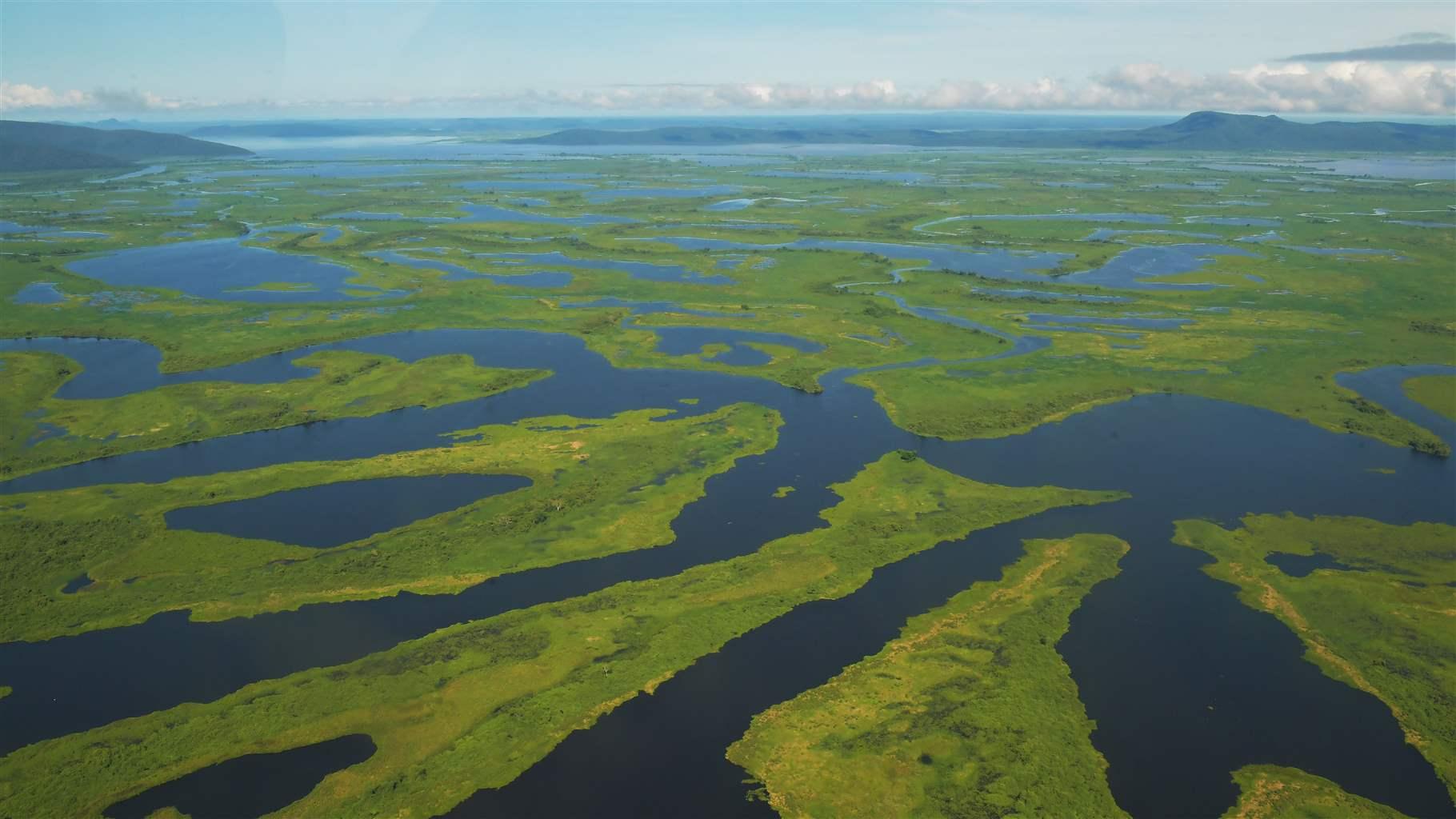
But here, too, there has been progress. In April 2025, the Gobierno Autónomo Indígena Originario Campesino (GAIOC) of Charagua Iyambae, which oversees an area roughly the size of Panama, designated
the 1.3-million-acre Parapetí River and Isoso (Izozog) Wetlands Integrated Management and Connectivity Area. The Guaraní call the new reserve Yande Yari, which translates loosely to “grand mother.”
This followed the 2019 designation of the Ñembi Guasu Protected Area, an important Indigenous-led conservation effort in the region, and the creation of the Irenda Water Management Area and the Guajukaka Wildlife Area, which safeguards habitat of the guanaco, a llama-like animal.
Together, these protections represent a global gold standard in Indigenous-led conservation.
“In Charagua Iyambae, water is not just a physical resource but an element that integrates life, territory, and spirituality,” says Mariflor Suárez Angulo, whose title—Tëtarembiokuai Reta Imborika—is the equivalent of mayor of the GAIOC. “The Guaraní see Yande Yari as a sacred being, guardian of the fish, and we always ask permission before taking anything from it. Our relationship with the river is based on respect and balance with nature.”

For millennia, Gran Chaco Indigenous communities were nomadic, following big game, water, and fertile land through the seasons, which helped ensure the long-term sustainability of the river basins’ flora and fauna. This included Bañados del Izozog, which the Ramsar Convention on Wetlands—a 1971 intergovernmental treaty—designated as a “wetland of international importance,” in part because of the hundreds of species of flora and fauna that flourish there, including jaguar, tapir, giant river otter, and a kaleidoscopic array of birds.

This special place is yet one more reason that the new protections in the Gran Chaco must hold. Driven in large part by expanding agribusiness and illegal settlements over the past few decades, the region is now one of the world’s fastest-deforesting landscapes, losing 27 million acres of native vegetation from 2000 to 2021 because of land-clearing for crop and livestock production. That’s the equivalent of losing an area four times the size of Central Park in New York City every day, according to MapsBiomas Chaco, a nongovernmental organization working to document and understand the region’s shifting land uses.
This is why many Indigenous communities are hopeful that the GAIOC can help ensure that protected areas are truly safeguarded. And even in the short time since its formation, the organization has proved up to the task.
For example, the government stood up a seven-person team of Indigenous rangers to help enforce conservation laws and prevent and respond to wildfires.
“We try to prevent any misuse of the protected area by actively monitoring and patrolling,” says Alejandro Arambiza Segundo, one of the rangers and former director of the Ñembi Guasu Conservation and Ecological Importance Area. The team also conducts censuses of settlements, surveys bird and large mammal populations, and seeks ways to support sustainable development for the community.
To control wildfires, which are growing more severe and are often caused by settlers clearing land, the rangers train year-round to prepare for firefighting stints that can stretch for days.
“The Gran Chaco had two of its worst fires on record in 2019 and 2021, destroying dozens of homes and killing and displacing livestock and wildlife,” says Natalia Araujo, who leads Pew’s work in the region. “Thankfully, the autonomous government and, specifically, the rangers have responded in an impressive way.”

When the next big wildfire swept across the Gran Chaco in 2024, the rangers were on duty for up to two days straight, working to keep the flames from reaching Ñembi Guasu. This included setting up firebreaks, overseeing controlled burns in high-risk areas, and using backpack water pumps in front-line battles with the blaze. The rangers held the fire at bay, and the local Indigenous communities suffered only minimal damage.
Today the Guaraní and other local people of the Bolivian Gran Chaco continue to adapt to counter the threats to their environment and culture. Conservation sits at the center of those efforts, with a specific focus on their beloved rivers, along with the surrounding landscapes.
“From the moment the Pilcomayo Corridor project was announced to us, my soul was moved,” Bustos says. “For as long as I can remember, I watched its waters flow—waters that today are no longer the same.” The corridor, he says, will bring opportunities.
“We want to conserve what still exists and prevent deforestation, because otherwise we would be complicit. If we see what is happening and do nothing … I don’t even want to imagine the day when our only source of income and food disappears.”
John Briley is a Trust staff writer.
Bolivia’s Gran Chaco region is home to rich and colorful culture, abundant wildlife, and arresting scenery. These photos and videos capture just some of the highlights of this remote yet vulnerable place and its inhabitants.


Explore the Issue
This article is part of a magazine issue featuring in-depth stories and insights.


