1 International Treaty Has Helped Fight Illegal Fishing for a Decade
How the Port State Measures Agreement has improved the health of fisheries and the economic security of coastal communities worldwide

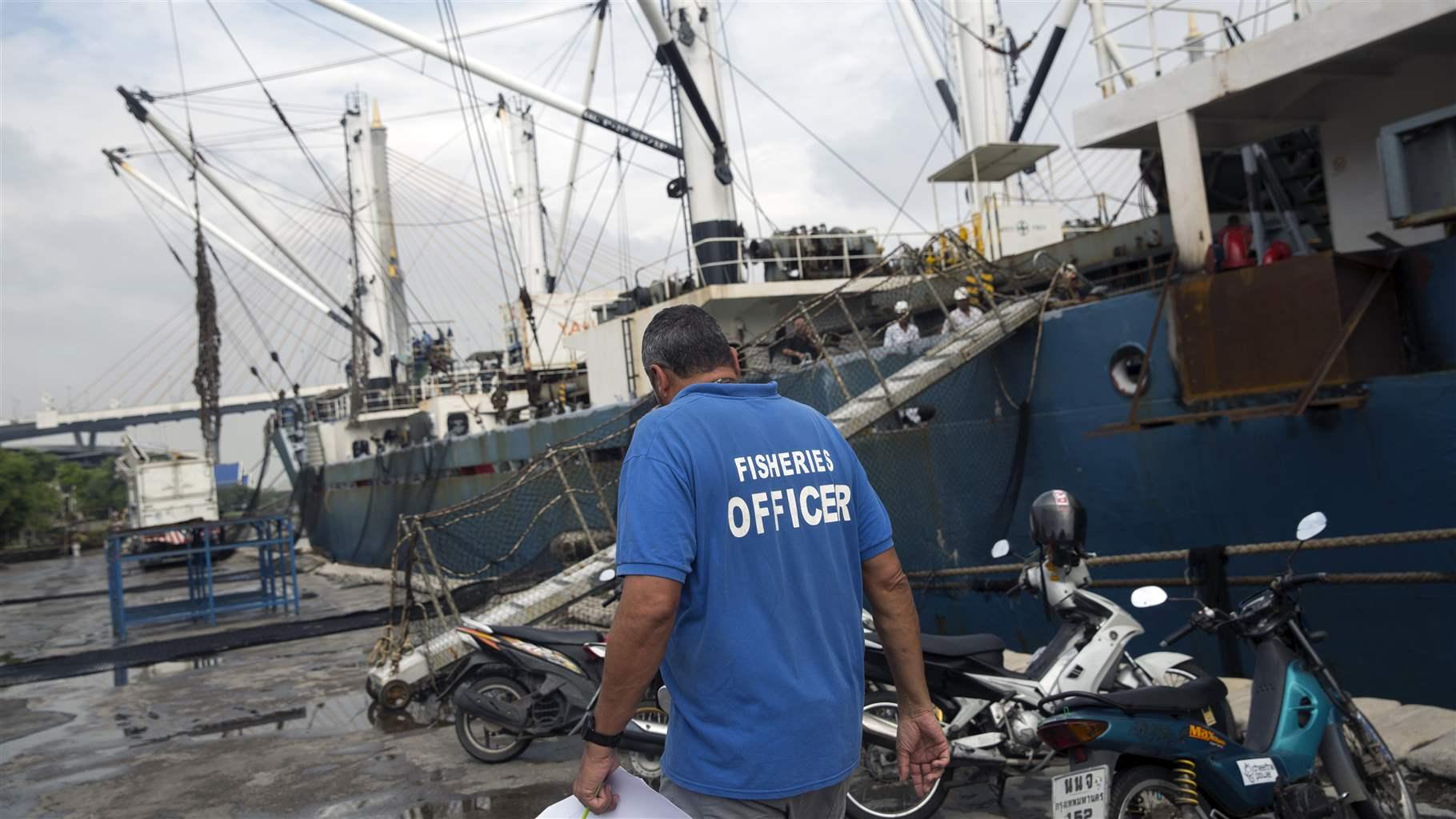
Each year, illegal, unreported and unregulated (IUU) fishing costs the global economy up to $23 billion and accounts for up to 30% of high-value catch volumes, undermining efforts to restore fisheries to sustainable levels and disproportionately affecting developing coastal communities. However, for the past decade, one international treaty – the United Nations Food and Agriculture Organization’s Port State Measures Agreement (PSMA) – has united governments on six continents to reduce the harm caused by IUU fishing through increased collaboration, financial disincentives and advances in technology and data systems.

For decades, overfishing has placed enormous pressure on the ocean, depleting commercially important fish populations and destabilizing ecosystems. Now, more than a third of marine fish stocks are harvested at a faster rate than they can replenish. And in a world where the Food and Agriculture Organization expects marine protein demand to double by 2050, tackling these challenges can feel insurmountable. Yet, since entering into force in 2016, the PSMA – the only legally binding global instrument specifically designed to end IUU fishing – has been one of the world’s most successful ocean governance treaties, with a stable institutional structure and an effective program to help governments build compliance and enforcement capacity.
Three quarters of coastal States are parties to the PSMA, including the world’s largest fisheries powers – China, the European Union, and the United States – as well as major port destinations, such as Ireland, the Republic of Korea, the Marshall Islands, Mauritania, Senegal, and Spain, which receive thousands of foreign vessels each year. By joining the treaty, these countries agree to strengthen port controls, limiting where vessels and unethical operators suspected of IUU fishing can offload their catch before it can reach the marketplace. Parties also participate in real-time data exchange, using and expanding monitoring, control, and enforcement efforts to identify and alert port States when and where illicit vessels are at sea, so that other countries can also deny port services to bad actors.
In all, more than 100 countries have agreed to the rules of the PSMA, and research commissioned by The Pew Charitable Trusts indicates that the agreement helps close loopholes for IUU fishing activities. Using data from 2017, 2020 and 2023, these studies concluded that the risk of receiving IUU-caught fish at port has consistently decreased for PSMA Parties, suggesting that simply being a Party to the treaty may be an effective deterrent. But even more striking is that the risk for non-Parties has also gone down, largely because of an uptake of similar rules across other international bodies, such as the multinational regional fisheries management organizations (RFMOs) that manage fisheries for highly migratory fish stocks, including those found in high seas. Today, 13 of the largest RFMOs, including the five that manage fishing for high-value tuna species, have adopted port State measures.
Continuing the momentum, in 2023, the PSMA Global Information Exchange System (GIES) became operational, marking a key milestone for the agreement. The GIES informs real-time decision-making at port and, to date, Parties have uploaded more than 4,300 port inspection reports on over 1,250 vessels to the system.

The first 10 years of the PSMA are worth celebrating. Port controls are working, information-sharing is growing and the treaty has effectively united many nations in support of a common goal. Governments should embrace the lessons of cooperation and implementation learned from the PSMA as they move forward on other major international agreements, including a new treaty to protect high seas biodiversity, an agreement to curb harmful fisheries subsidies and the Cape Town Agreement to enhance fishing vessel safety and help fight IUU fishing. Together, and with the successful effort to fight IUU fishing as a guide, the world can move this developing suite of treaties forward to protect the marine resources that are so important to people and nature.
Elaine Young works on The Pew Charitable Trusts’ international fisheries project.
People