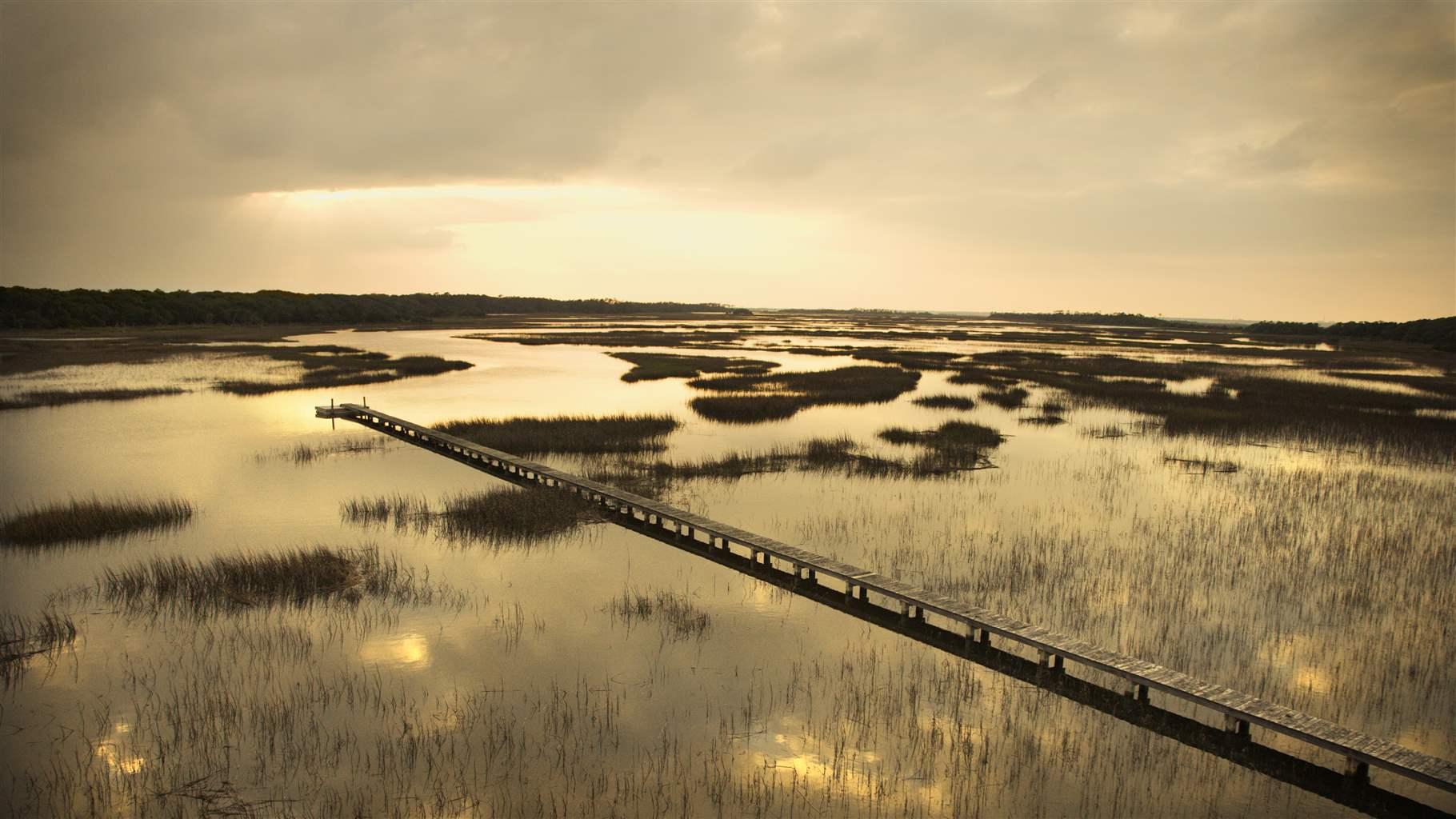
5 Things You Probably Don’t Know About Bogs
On International Bog Day, learn more about these misty, mysterious ecological heavyweights that filter water, buffer communities from harm, and store carbon

Pew Points
Bogs: The Type of Ecological Multitasker Earth Needs Most
- Bogs are a type of peatland that store vast amounts of climate-warming carbon accumulated over thousands of years.
- Healthy bogs help protect communities by filtering pollutants from water, reducing flood and wildfire impacts, and supporting biodiversity.
- Bogs act as natural archives, preserving ancient artifacts and organic materials that help scientists understand how people, ecosystems, and climates have changed over time.
Bogs may conjure images of fog, folklore, and lurking creatures, but in fact, they are dynamic habitats that perform some of the planet’s most important ecological work.
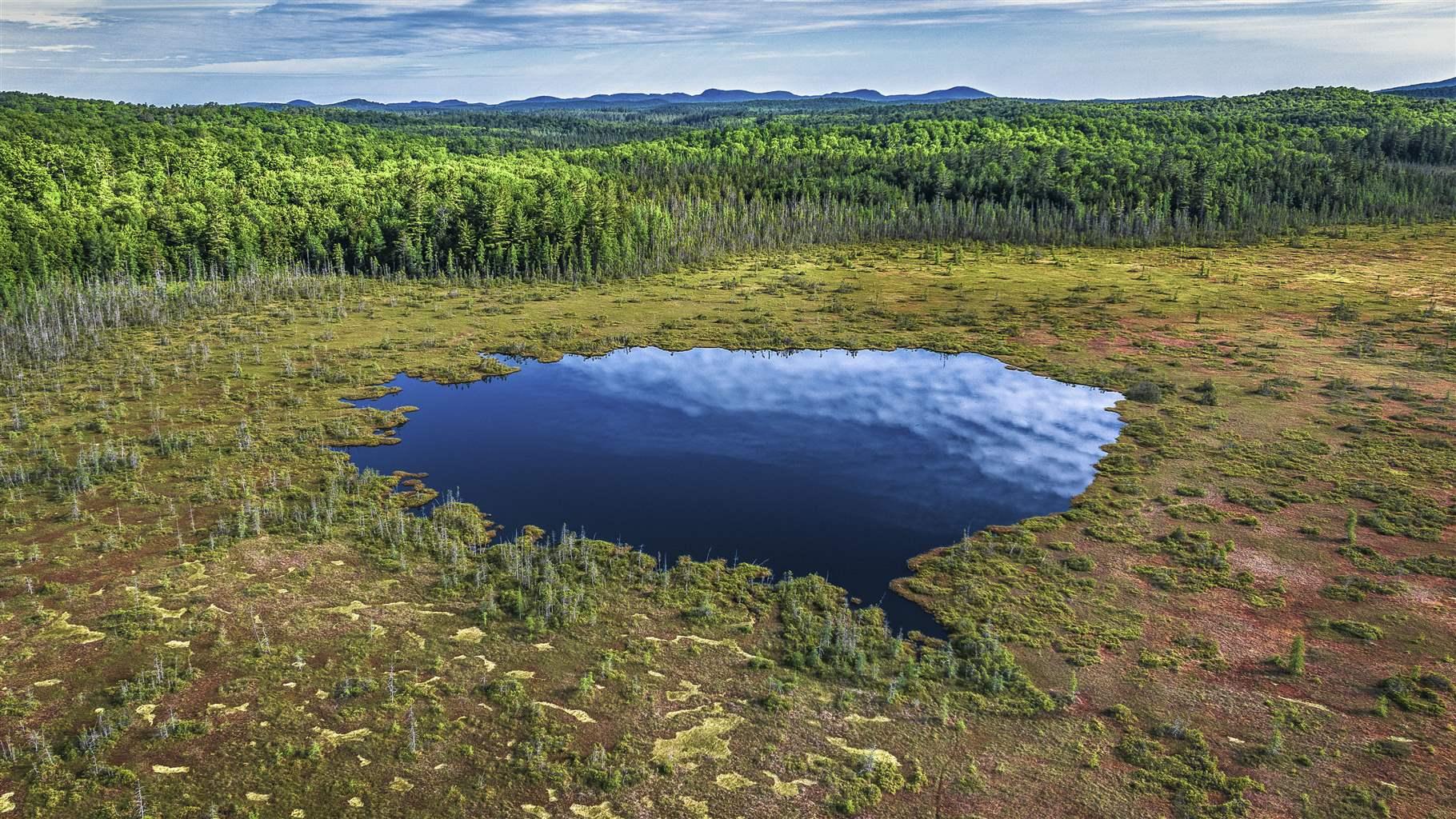
Part of a broader family of wetlands called peatlands, these mossy, freshwater ecosystems are like natural sponges, soaking up water and locking away carbon in layers of soil and silt built over millennia and in some cases, extending deep enough to bury a four-story building.
The world’s largest bogs span Russia and Canada and blanket northern Europe. In the U.S., they are found mainly in the Northeast and Great Lakes regions—particularly Minnesota and Wisconsin, but also in vast peatland landscapes in Alaska and in smaller pockets from the Appalachian Mountains to the South Atlantic Coastal Plain.
July 26 is International Bog Day. Here’s five facts that make these habitats worth celebrating.

1. They’re giant carbon vaults
Bogs consist of layers of partially decomposed plants, mostly moss, and depend on rain and snow—rather than groundwater like many other peatlands—for their water supply. Their tea-colored, acidic waters slow organic decay almost to a standstill, locking carbon in place and preventing it from being released into the atmosphere. Peatlands, including bogs, cover only about 3% of the planet, but they store a third of its land-based carbon.

2. They are natural water filters
All that moss doesn’t just trap carbon—it also captures pollutants. As water seeps through bogs, sediments and contaminants are filtered out, supporting safer drinking water and healthier rivers and lakes by keeping surrounding and feeder waterways cleaner.

3. They can help keep wildfires and floods in check
Bogs absorb vast quantities of rainwater and release it into the surrounding landscape gradually, making them an effective buffer against flooding during heavy storms. Healthy bogs also act as natural firebreaks—slowing flames with their heavy, waterlogged, decaying matter. Conversely, when bogs dry out because of draining or drought, they become prone to severe wildfire.

4. They’re living time capsules.
Bogs preserve things—sometimes eerily well. From ancient pollen to centuries-old artifacts to the macabrely fascinating “bog bodies,” these ecosystems’ waterlogged, low-oxygen soils are unusually good at conserving traces of the past, which can help scientists understand how civilizations, ecosystems, and climates have changed over time.
5. They’re more fragile than they may seem
Although they may appear timeless, bogs depend on a delicate balance of acidic water, low nutrients, and waterlogged peat moss slowly formed over millennia. Draining them for farming or development, harvesting peat, or diverting their waterways can dry them out—causing them to release their stored carbon and increasing their vulnerability to wildfires. Even subtle disturbances, such as foot traffic or nutrient changes caused by fertilizer runoff, sewage, or varying rainfall, can lead to lasting damage.

Bogs may have a reputation for the mysterious—even the supernatural—but they’re just the sort of environmental multitaskers the planet needs most. They store vast amounts of carbon, filter water, buffer floods and wildfires, and offer a rare window into the past. In a warming world, they are essential, but they are also disappearing. This International Bog Day, these overlooked landscapes deserve more than curiosity—they need protection.
Alex Clayton Moya works to advance state and federal natural climate solutions for The Pew Charitable Trusts’ U.S. conservation project.
People