Honduras’ Climate Goals Recognize Conservation Value of Coastal Wetlands
Country’s mangroves and seagrass meadows sequester carbon and improve coastal resilience, benefiting people and nature
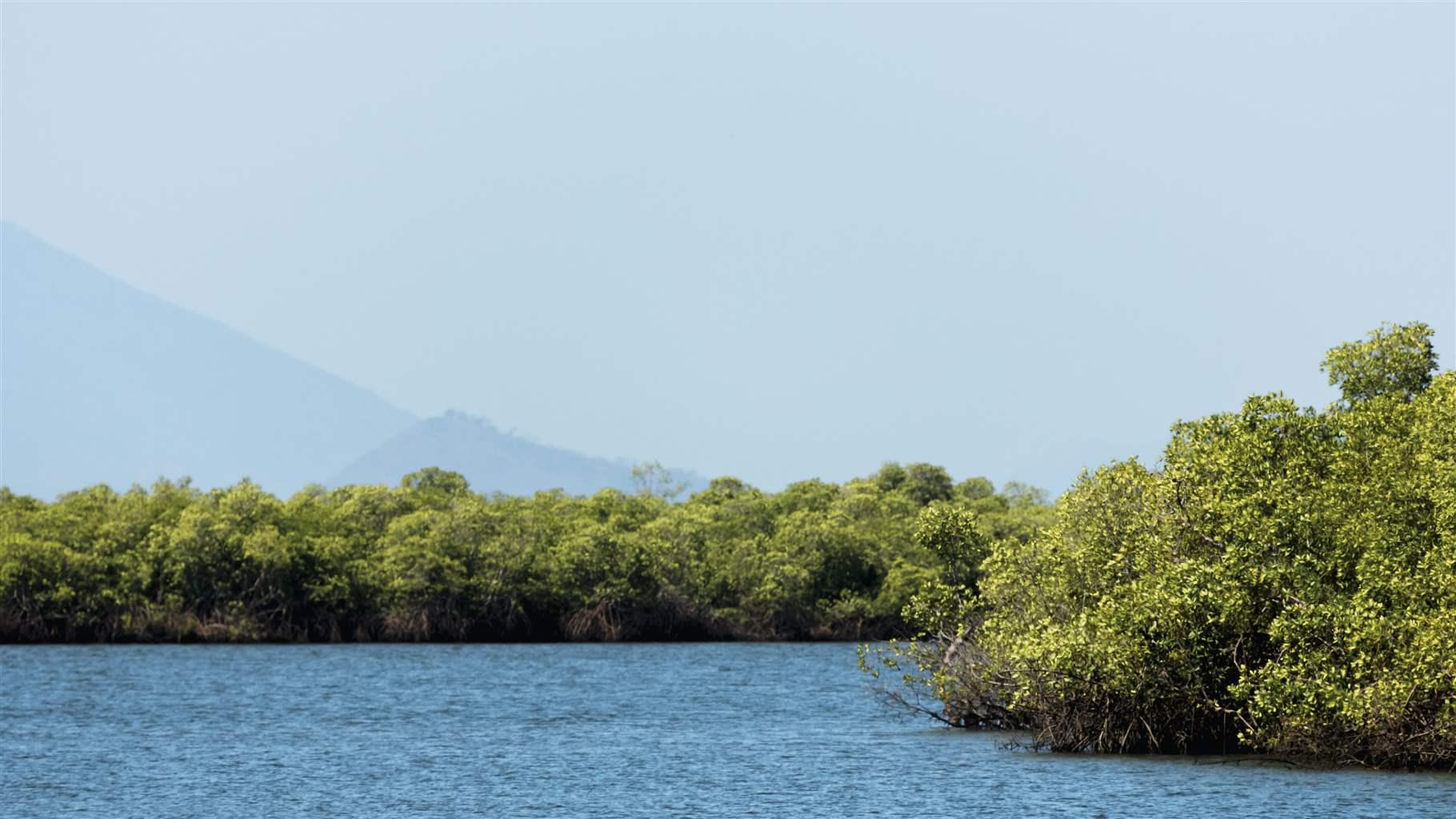
The Central American nation of Honduras has more than 600 miles of shoreline between its Caribbean and Pacific coasts and encompasses over 1 million hectares (2.5 million acres) of coastal and island areas. Within this biodiverse, bicoastal country are abundant mangrove forests and seagrass meadows—two types of coastal wetlands that provide enormous benefits for nature, wildlife, and people. Known for their ability to store carbon and protect coastlines, healthy mangrove and seagrass ecosystems are important nature-based tools for climate resilience.
Through its latest nationally determined contribution (NDC), the Honduran government has outlined specific, measurable, and science-based commitments to protect and restore the country’s mangroves and seagrasses. NDCs are the cornerstone of the Paris Agreement—the legally binding international treaty on climate change—and are revised every five years to reflect increased ambition toward meeting its goals. While Honduras has submitted climate mitigation and adaptation policies under the agreement since 2016, this is the first to set specific targets for mangrove and seagrass ecosystems.
Honduras’ NDC commitments to safeguard coastal wetlands
In its NDC 3.0, Honduras sets forth ambitions for the next decade to strengthen the sustainable and resilient management of marine and coastal ecosystems. These goals include inter-institutional coordination, expansion of conservation areas, and implementation of integrated actions for monitoring, conservation, restoration, and protection against the impacts of climate change.
Specifically, by 2035, Honduras has committed to:
- Increase the national marine and coastal area under official conservation schemes by 5% to strengthen the resilience of ecosystems and communities.
- Establish a baseline of seagrass coverage to identify vulnerable areas and risk zones.
- Aim to restore at least 10% of mangrove forests.
- Promote actions to maintain or improve ecological integrity in at least 65% of conservation areas that include wetlands.
The value of mangroves and seagrasses for climate resilience
Mangroves and seagrasses, along with salt marshes, are the only marine ecosystems currently recognized by the Intergovernmental Panel on Climate Change for their ability to make measurable contributions to reducing a country’s emissions. These “blue carbon” ecosystems not only sequester carbon at a rate three to five times greater than that of terrestrial forests but also store this carbon, often for millennia, within their submerged soils. They also protect shorelines from storms and erosion, provide habitat for coastal fisheries, and help coastal communities adapt to the impacts of climate change. Including these coastal wetlands within NDC adaptation or mitigation commitments recognizes the many benefits that they provide beyond emissions reductions—and helps to protect them from the effects of a changing climate.
With many of Honduras’ coastal and island communities dependent on activities related to fishing, tourism, and maritime transport, science-based coastal conservation goals—like those put forth in the country’s recent NDC—are vital for local-level adaptation and resilience.
“There was a great opportunity to highlight the key role of our mangroves and seagrasses through the NDC process,” said Alejandra Ramírez, coordinator for the climate change project at the nongovernmental organization Centro de Estudios Marinos, who works closely with the Honduran government to support the national response to international climate agreements. “With the NDC 3.0, Honduras intends to measure and better protect ecosystems, which we know are essential for coastal economies.”

Laying the groundwork for a national policy
By connecting national science baselines with climate policy, Pew, the Honduras-based Centro de Estudios Marinos, and partners at the Smithsonian Environmental Research Center helped to provide the enabling conditions necessary for the development of these new commitments. Key among them were the reestablishment of Honduras’ National Biological Monitoring Board and National Wetlands Technical Committee. The reestablishment of these governance bodies—for which Pew provided funding and technical support—led to the improved institutional coordination that brought multiple stakeholders together for this collaborative process.
Honduras’ latest NDC sets a new standard for the country by integrating coastal wetlands into national climate policy for the first time. And the updated policy is a testament to what can be achieved by centering science-based collaboration and sustained policy engagement.
Kate Meyer works on The Pew Charitable Trusts’ advancing coastal wetlands conservation project.
People


