How States Can Prepare for an Expanded Role in Disaster Aid

Last July, historic flooding killed at least 136 people and left a path of destruction through more than 150 miles of the Texas Hill Country. With local first responders overwhelmed, the state government quickly deployed more than 1,300 personnel and 900 vehicles and pieces of equipment from 15 state agencies—numbers that continued to rise even after President Donald Trump approved a major disaster declaration to supplement recovery efforts with federal funding.

In the weeks after the flood, the Texas Health and Human Services Commission awarded more than $1.9 million in emergency grants to hospitals damaged by the flood, and the state’s Economic Development & Tourism Office made $5 million available for zero-interest loans to micro-businesses (those with 20 or fewer employees) in affected communities. Two months later, in a special legislative session, state lawmakers appropriated $200 million to cover the required 25% match for federal disaster recovery funds and another $94 million for various flood preparedness and response projects.
The layered response to the flood shows how all levels of government—local, state, and federal—have a role in supporting communities after a natural disaster and, importantly, how interconnected the current disaster response system is. But now federal leaders are considering substantial changes to the way these responsibilities are divided. Some state emergency management professionals and policy experts support shifting more responsibility for disaster relief to state governments, arguing that it would incentivize investment in disaster resilience. Still, reform discussions raise an important question: Will states be able to craft budgets that can accommodate a larger financial responsibility for both disaster mitigation and relief?
A new analysis from The Pew Charitable Trusts offers some answers by comparing historical federal disaster assistance with recent state general fund expenditures and reserves. But the prospect of reduced federal funding is far from the only pressure on state and local governments’ ability to fund disaster mitigation and relief. Nationally, billion-dollar disasters are, on average, three times as common today than 20 years ago and cost twice as much as they did then. And economic indicators suggest that states, already constrained by balanced budget requirements and competing spending priorities, are now entering an era of stagnant revenue collection.
Taken together, these risks should prompt states to assess how well their approaches to disaster budgeting meet the current challenge of emergency response.
State Budgets Are Vulnerable To Disaster Costs
Data on state-level disaster spending is limited, but available evidence shows upward trends mirroring national growth. For example, in 2023, Minnesota spent $18.3 million from its disaster contingency account—nearly five times the amount spent in 2014. Some regions are experiencing disasters they historically had little need to prepare for, such as forest fires in New Jersey and hurricanes in the inland Southern Appalachians.
At the same time, many states are losing revenue as pandemic-era federal grants for health care, infrastructure, and other services wind down and tax collections flatten after a brief period of historic growth. By the end of 2024, state tax revenue nationally was 3.2% below its previous long-term trajectory as most states underperformed compared with their collection trends of the previous 15 years.
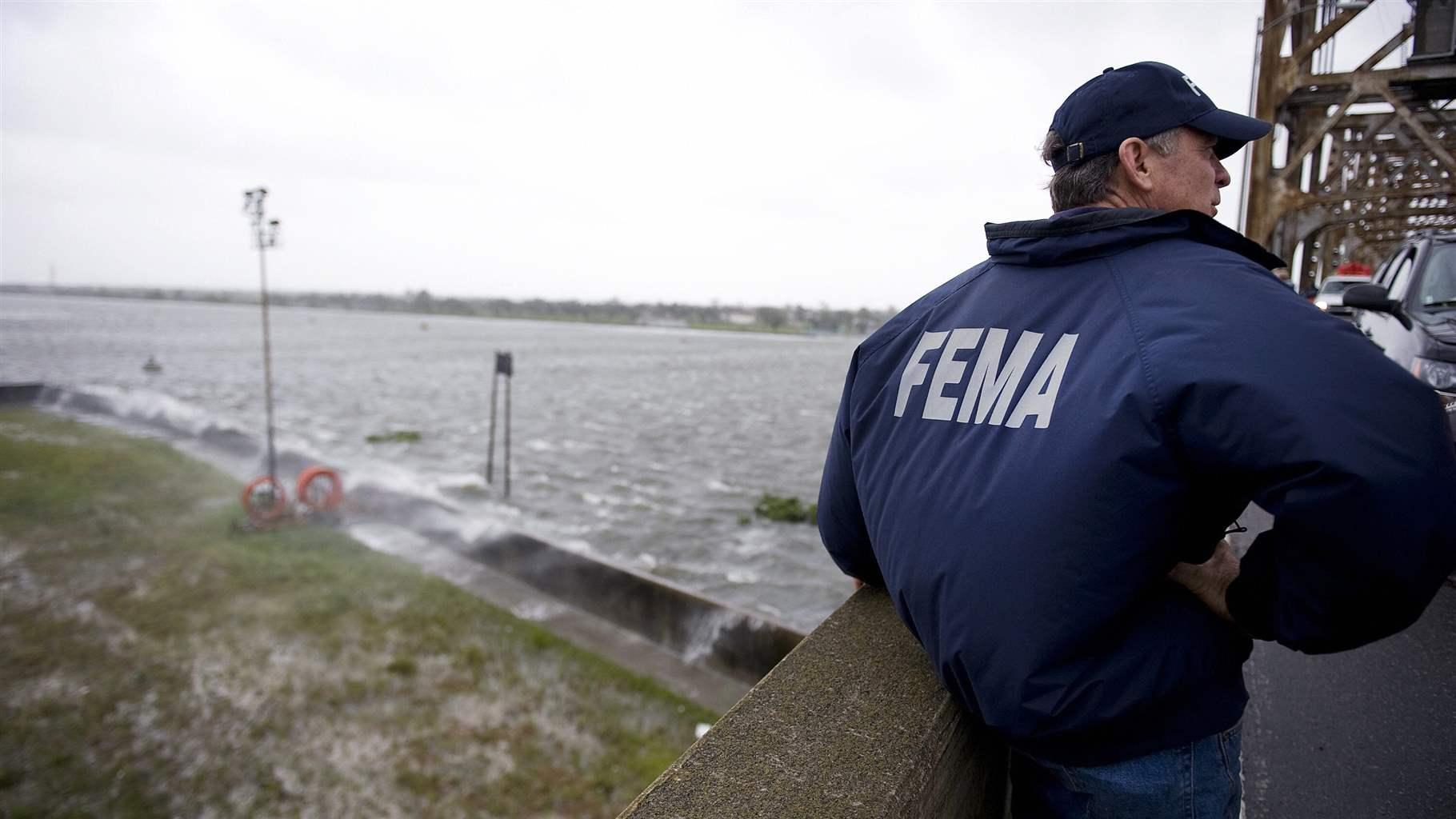
In this context, state and local governments feel added urgency to understand the scope of resources they will need if the federal government decides to scale back its disaster assistance. To quantify this impact, Pew compared federal disaster assistance paid to states from 2003 to 2025 with state reserves and general fund spending in fiscal year 2024. In 20 states, the highest amount of federal aid received in a single year was more than 20% of their fiscal 2024 reserves. And in some states, the percentage was even higher. Federal support in Colorado, Hawaii, Iowa, New Jersey, and New York was more than 50% of those states’ reserves.
Pew also found that average federal disaster aid was equivalent to around 2% of state budgets—comparable to targeted investments in key public services such as child care. Although this is a small share of overall state expenses, losing that amount of federal funding for disaster relief would almost certainly require states to rethink their budget priorities.
Strategies For Disaster-Ready Budgets
Pew has studied disaster spending practices, funding mechanisms, and mitigation investments to identify the gaps and opportunities in how states manage the fiscal impact of disasters. Despite the challenging circumstances, states can make their budgets more resilient to disaster costs—and strengthen their overall fiscal health—by following three principles:
- Measure the total fiscal impact of disasters: Tracking costs can help states plan, avoid the need to abruptly shift funds from other policy priorities, and observe how trends in preparedness and mitigation investments correlate with response and recovery costs.
- Manage disaster funding proactively: This will help to ensure that funds are available when they are needed and minimize disruption from the year-to-year volatility of emergencies. States should define their role in disaster assistance and budget in advance to streamline emergency decision-making and increase fiscal stability.
- Mitigate risks: Anticipating and alleviating disaster risk at scale is rarely easy, but scientific modeling, consultation with experts, and incentives for risk reduction have proved to pay off. In fact, studies show that every $1 invested in disaster mitigation saves $6 in future costs.
Further, sustained support for disaster resilience can help control long-term spending and more effectively protect the public. States can accomplish this in many ways, including implementing policies that promote resilience; building personnel capacity and leadership to coordinate the state’s efforts across agencies and communities; developing a plan that identifies risks, adaptive strategies, and key projects; making strategic investments to ensure long-term continuity of resilience projects; and designing infrastructure that can withstand extreme weather.
Soaring disaster costs, stagnant tax revenues, and a reduced federal role in disaster assistance have come to a head to create an unstable situation for state finances. But lawmakers have an opportunity to meet these challenges with smart, innovative approaches that, in the long run, will save far more money than they cost.
By making resilience a fiscal priority and adopting Pew’s strategies to measure, manage, and mitigate disaster costs, state leaders can help to ensure a safer, less costly future for their constituents.
Caitlyn Wan Smith is an officer with the managing fiscal risks project at The Pew Charitable Trusts.
This op-ed was first published by Domestic Preparedness on Feb. 4, 2026.
People