Collaborative Science Is Key to Conserving Highly Mobile Marine Species
Scientists from around the world are pooling data to help protect some of the ocean’s iconic animals
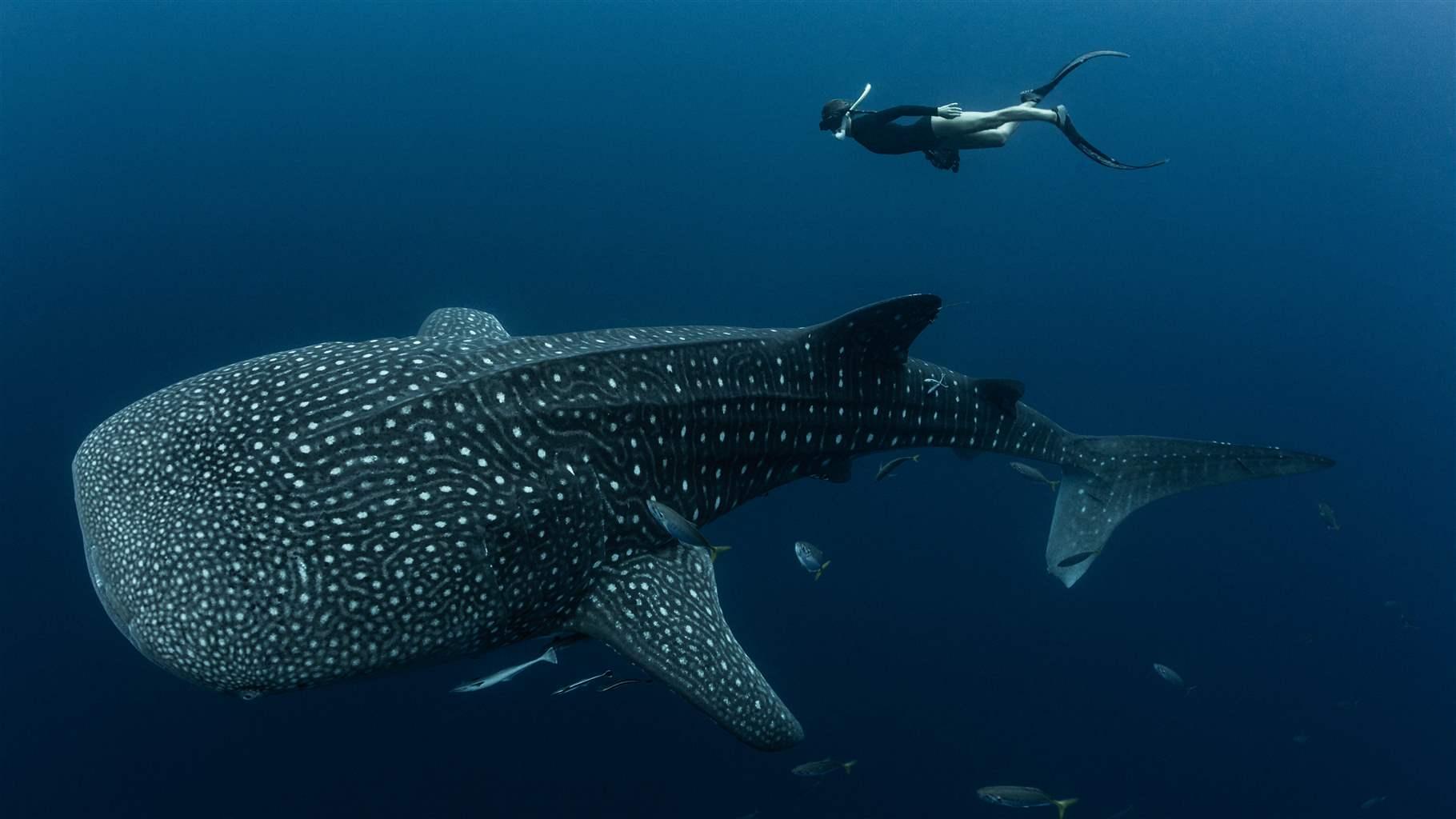
Research from Pew marine fellows is a critical resource for helping to protect large ocean species and can offer invaluable input as a network of high seas marine protected areas (MPAs) nears reality.
In September 2025, the United Nations General Assembly passed the high seas treaty, which sets rules to ensure the conservation and sustainable use of marine biodiversity in international waters that are not governed by a single nation. The agreement also establishes a legal framework to create the MPAs beginning this month.
Selecting the right locations for marine protected areas requires an understanding of where animals live and how they travel through the global ocean. A 2025 study provides timely insights into how iconic marine species use the high seas, and where protections could help them recover and thrive. Led by 2020 Pew marine fellow Ana M.M. Sequeira, this major international endeavor analyzed and overlaid tracking data from more than 12,000 individual animals from 111 large marine species to identify which parts of the ocean are vital for their survival.
The paper, published in the journal Science in June, was a collaborative effort involving more than 350 scientists from around the world, including eight other Pew marine fellows—Randall Arauz, Barbara Block, Matthieu Le Corre, Mark Erdmann, Helene Marsh, Hoyt Peckham, Yan Ropert-Coudert, and Edy Setyawan—who contributed data and analyses. The research, an outcome of Sequeira’s MegaMove project, presents vital evidence for policymakers as they consider next steps for protecting species on the high seas, an area encompassing nearly two-thirds of the global ocean.

The study also raises important considerations for improving conservation of large, highly mobile marine animals such as whales, sharks, and seabirds, which can be challenging to protect because they often move between and beyond the boundaries of national territories. These animals, collectively known as marine megafauna, typically grow and reproduce slowly, making them particularly vulnerable to the impacts of human activities, including fishing, pollution, and ship strikes. More than one-third of marine megafauna species are now threatened with extinction.
Existing MPAs offer limited protection
The researchers used certain properties of the tracking data, such as speed and direction, to identify areas that animals rely on for key behaviors, including residency, migration, and breeding. They found that, on average, only about 5% of the areas identified as important locations for these events fall within the boundaries of current MPAs. They also found that megafauna spend about 85% of their time outside MPAs.
“The results indicate limited opportunity for meaningful conservation of marine megafauna within the current extent of existing MPAs, which were mainly designed to protect specific habitats rather than threatened marine megafauna,” Sequeira said. “However, we could substantially improve conservation efforts in the future by specifically including important marine megafauna areas in the new network of MPAs.”
Location matters
Roughly 60% of megafauna residency and migratory behaviors identified in the study occurred on the high seas. A network of high seas protected areas would be a significant step forward for megafauna conservation, but effectiveness will depend on MPA design and enforcement. To guide efforts to meet global conservation targets, which aim to conserve at least 30% of the ocean by 2030, the researchers developed an algorithm to recognize hot spot areas that many megafauna species use for important behaviors. Researchers also estimated which 30% of the global ocean would offer the greatest benefit for ocean megafauna if protected, and they identified areas such as the northeastern Pacific and north Atlantic oceans and much of the Indian Ocean as high priorities for protection.

Even expanded protections may not be sufficient
The scientists cautioned that although a network of protected areas on the high seas would offer critical benefits for biodiversity, safeguarding only 30% of the high seas would leave many important marine megafauna areas unprotected.
“Our results show that protecting only 30% of the high seas is only less than half of the areas that are important to these big marine animals,” Sequeira said. “This still leaves more than 60% of their habitats unprotected.”
The researchers add that although some threats such as fishing and shipping can be mitigated with effectively managed protected areas, others—such as plastic pollution and climate impacts—will require other forms of conservation action.
Continued collaboration is essential
Although the research offers an unprecedented look at where and how marine megafauna use the ocean, the picture remains incomplete. The dataset used in the study covers nearly 72% of the global ocean, but completing the map requires additional information, particularly from underrepresented regions such as Southeast Asia, West Africa, and the central Pacific.
“The work we provide here shows the power of assembling tracking datasets to answer pressing conservation concerns,” Sequeira said. “The continued expansion of MegaMove through voluntary contributions will allow researchers to fill data gaps, further reduce biases, and improve conservation of some of the ocean’s most beloved species.”
Nathan Fedrizzi works on the Pew Fellows Program in Marine Conservation.


/16x9_m.jpg?mw=1820&hash=4C8AC0442DCF39C08321E82F1DA91C38)