Pew Awards Fellowships to Seven Scientists Advancing Marine Conservation
Leading researchers join esteemed global community of fellows
PHILADELPHIA— The global ocean faces major threats—from illegal fishing to vanishing coastal habitats to plastic pollution. Now, a new cohort of scientists will work to bridge the knowledge gaps hindering effective ocean protections.
The Pew Charitable Trusts announced today that seven fellows—based in Australia, the United States, Canada, Japan, and Thailand—will receive $150,000 grants over three years to pursue conservation-focused research aimed at strengthening ocean health and the communities that depend on it. Their work includes tracing illegal and unreported fishing with advanced genetic techniques, improving reef restoration in Southeast Asia, mapping climate resilient kelp forests, testing local-based incentives for marine conservation, rethinking fisheries governance in East Asia, analyzing the impacts of harmful algal blooms, and developing open-source technology to classify nanoplastic pollution.
This year’s fellows’ cohort also includes the first recipient of the Pew-Gerstner Fellowship in Ocean Plastics Research, which supports research on solutions to marine plastic pollution; and the second recipient of the Pew-Hoover Fellowship in Marine and Biomedical Science, which fosters innovative research at the intersection of the two fields.
“These fellows are tackling some of the ocean’s toughest challenges with creativity and immense dedication,” said Leo Curran, project director for the Pew Fellows Program in Marine Conservation. “Their work shows what’s possible when science, technology, and communities come together to protect our seas.”
The 2026 fellows join a distinguished community of more than 200 Pew marine fellow alumni dedicated to advancing ocean science and promoting the sustainable use of marine resources. The Pew Fellows Program in Marine Conservation supports midcareer scientists and other experts selected by an international panel of leaders in marine science and conservation. Alumni form an active community that promotes collaboration and knowledge sharing worldwide.
“Seeing these scientists turn their ideas into action is what excites me most,” said Angela Bednarek, Pew’s director of scientific advancement. “They’re exploring new approaches, testing innovative tools, and working closely with communities and policymakers, bringing research to life in ways that could shape how we care for the oceans.”
The 2026 fellows are:
Suchana Apple Chavanich, Ph.D.
Chulalongkorn University, Thailand
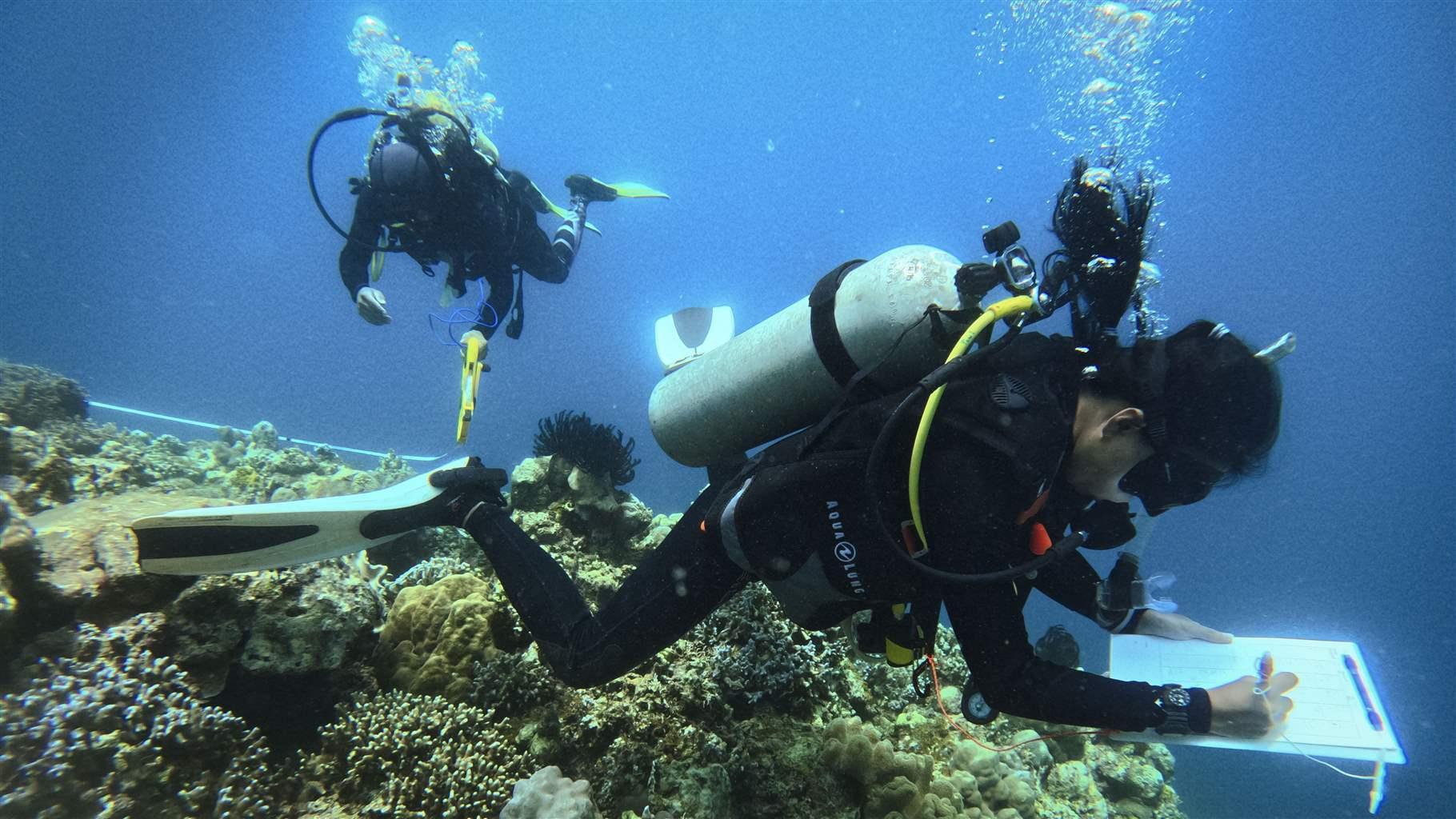
Suchana Apple Chavanich will develop and apply innovative methods to advance reef restoration in Southeast Asia, a region with some of the world’s richest coral diversity. Working in Thailand, Chavanich will refine techniques for producing new corals through sexual propagation and banking frozen coral sperm and eggs—critical methods for preserving the genetic health of restored populations.
Andrés Cisneros-Montemayor, Ph.D.
Simon Fraser University, Canada
Andrés Cisneros-Montemayor will develop a replicable framework to identify the social connections that shape markets in the ocean economy, facilitating the design and implementation of local-scale incentives for conservation. Working with three fishing communities in Sonora, Mexico, Cisneros-Montemayor will apply this framework, conducting field interviews and community engagement workshops to map and understand the layered interactions that influence economic decision-making.
Win Cowger, Ph.D.
Pew-Gerstner Fellow in Ocean Plastics Research
Moore Institute for Plastic Pollution Research, United States
Win Cowger will enhance the capabilities of Open Specy, an open-source tool he developed to help researchers worldwide classify and analyze different types of plastic pollution. He will build a robust reference library and develop new algorithms to improve the identification of nanoplastics, small microplastics, and plastic leachates in the marine environment.
Nur Arafeh-Dalmau, Ph.D.
University of Queensland, Australia
Nur Arafeh-Dalmau will collaborate with partners in California, Mexico, Peru, and Argentina to identify and map resilient kelp forest ecosystems. Using satellite imagery, ecological surveys, and environmental DNA, Arafeh-Dalmau will analyze biodiversity patterns in persistent kelp forests and test their resilience to marine heat waves.
Matthew Gribble, Ph.D.
Pew-Hoover Fellow in Marine and Biomedical Science
University of California, San Francisco, United States
Matthew Gribble will apply an advanced statistical technique called a hidden Markov model to better understand the dynamics of toxin-producing algal blooms. His work will focus on southeast Alaska, where Alaska Native communities have been repeatedly affected by harmful algal blooms, and Andalucia, Spain. Gribble will determine how often areas have been exposed to algal blooms in the past, supporting insights into the health effects of harmful algal toxin exposure.
Shaili Johri, Ph.D.
Stanford University, United States
Shaili Johri will use advanced genetic tools to strengthen seafood traceability and combat illegal fishing. By analyzing fine-scale differences in individual animals’ DNA, her research will help pinpoint the geographic origins of traded species. Focusing on reef sharks, Johri will develop low-cost, rapid, and accurate genetic and visual identification methods to identify shark fishing hot spots across the Western Indian Ocean and detect instances of illegal fishing.
Namhee Kwon, Ph.D.
Kansai University, Japan
Namhee Kwon will analyze the effectiveness and limitations of existing agreements in managing shared fish stocks, with the goal of identifying institutional and legal reforms that are both politically viable and ecologically sustainable. Focusing on agreements among South Korea, Japan, and China, Kwon will examine the legal architecture of each agreement, obligations under the United Nations Convention on the Law of the Sea, and implementation of these agreements within each country’s domestic system.
People