A Navy SEAL Found Solace in Nature; Now He’s Committed to Saving It
Wild places can boost mental health—for veterans and others—and offer myriad other benefits
Navy SEAL point man Brett Myrick sped across the water with his small crew in a 16-foot combat craft as the transport helicopter above his squad screamed with a ghostly wail.
Myrick stared in horror as the chopper plunged into the sea. His squad raced toward the scene, straining to pick out survivors in the dark waters off the Southeast Asian coast. They spotted one man clinging to debris, but, seconds before they could reach him, he slipped beneath the waves.
“It still haunts me,” Myrick says of the 1980s disaster that killed several men.

For 10 years, Myrick parachuted out of helicopters, performed underwater demolition, patrolled Asian jungles, and was the first to burst into buildings on secret overseas missions.
Myrick retired from military service in 1991 a changed man. He couldn’t eat in a crowded restaurant or sit in a bar and enjoy a jazz band, always on edge for sounds of danger and calculating the next moves of everyone he saw.
“I couldn’t live in a city. I still can’t. It’s the noise,” he explains. “I’m like a wild animal in survival mode, looking at everything to avoid being killed. It’s exhausting.”
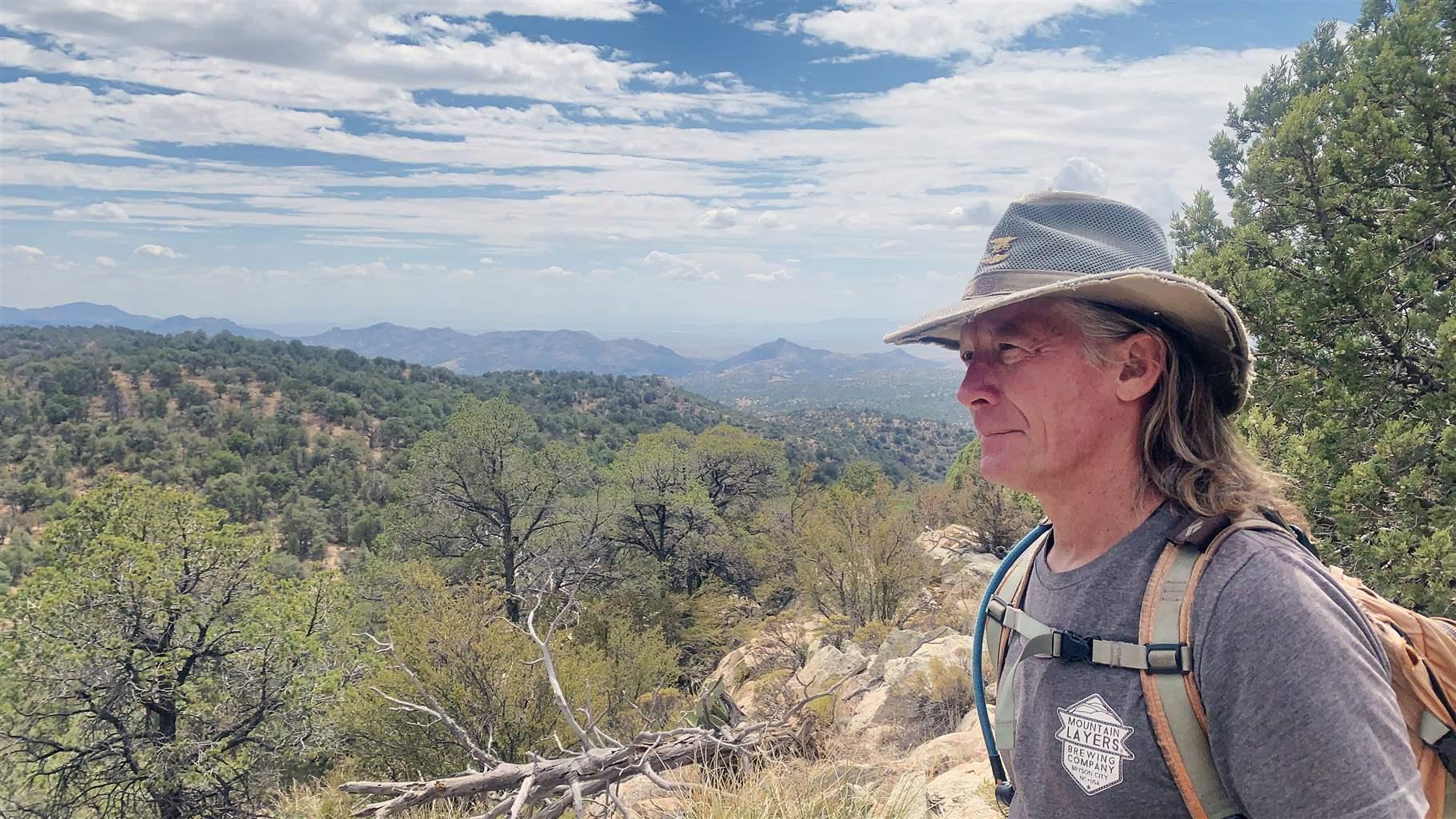
So he went where he could find peace and comfort: the woods. For the past 30 years, he’s lived in off-the-grid camps on acreage he purchased in his home state of New Mexico. For four of those years, he took up working on wilderness trail crews for the U.S. Forest Service.
Then nature gave him a new mission.
Myrick, 64, grew concerned in 2003 about proposed changes to the Roadless Area Conservation Rule, which prohibited some road construction and timber harvesting in national forests. He rode his bicycle across the state to bring attention to the proposal that would have weakened the rule. And the more people he met, the more his voice echoed.
As he and other advocates fought—and eventually defeated—that proposal, he became a well-known advocate for preserving New Mexico’s public lands and waters and its wildlife. In 2017, he hiked through the Organ Mountains-Desert Peaks National Monument with then-Interior Secretary Ryan Zinke to advocate for continued preservation of the area. And he’s organized trips to Washington, D.C., to meet with lawmakers and push for legislative protections for the state’s last large free-flowing river, the Gila.
Across the country, public lands and waterways provide not only respite and recreation for people but also clean air and water, flood control, and economic benefits to local communities.

“These pockets of wild places are imperative to the survival of the entire planet,” Myrick says.
While he’s worked on a grand scale to make a difference for conservation, he’s also used his connection with nature to help individuals in need, particularly veterans who have experienced thoughts of suicide or used substances for relief from post-traumatic stress or other mental health disorders. Myrick, who has lost some of his former SEAL teammates to suicide, says he’s had veterans and others camp with him in the woods, sessions that he says have helped them calm their minds and gain a new outlook on the world.
“More than 17 veterans die by suicide every day, which is double the rate of the general population,” said Kristen Mizzi Angelone, director of Pew’s suicide risk reduction project. “Suicide risk identification and prevention practices should be better integrated into routine health care while we also work to enhance community partnerships and foster environments that support mental health. This infrastructure is all the more important when it comes to serving our country’s veterans.”
Along with veterans, people who use alcohol or drugs or have substance use disorders (SUDs) are among the populations at highest risk for suicide in the U.S. In fact, people with SUDs die by suicide at up to 11 times the rate of the general population.
Although Myrick has never experienced suicidal thoughts or substance use issues himself, he understands these interwoven mental health issues and believes that time in nature can help people with such challenges.

He isn’t alone. Research shows that being around nature reduces stress and negative emotions, restores attention, promotes positive well-being, and helps people feel happier. Some doctors are now even prescribing time outdoors. For example, Park Rx America, a nonprofit founded in 2017, has established a community of health care professionals who share the goal of issuing nature prescriptions to patients as part of their treatment plans.
Myrick recalls one example of nature at work. One day as he was hiking, he came upon a woman in her 30s who was crying at the edge of the Gila River. She told him she was going to kill herself. Myrick never asked why. Instead, they sat side by side for hours talking about simple things and the beauty and power of nature. She eventually accepted his invitation to stay in the woods.
Over three weeks, he taught her some of the ways of Native Americans and how wildlife lives in symbiosis with the land. It gave her time to reflect and see the world and her problems differently. She chose to give her life a second chance. About six months later, Myrick visited her in Topanga Canyon outside Los Angeles, where she was thriving with a home, job, and friends.
“Going deep into the wilderness, you receive peace and tranquility. It offers that quietness where you can really feel and dive in,” Myrick says. “But we have very few wild places left, and I speak for these places and the animals that don’t have a voice.”
Jennifer Browning is a senior director overseeing Pew’s U.S. conservation project.
People