An Update on the ‘Roadless Rule’
USDA intends to repeal widely supported national forest policy
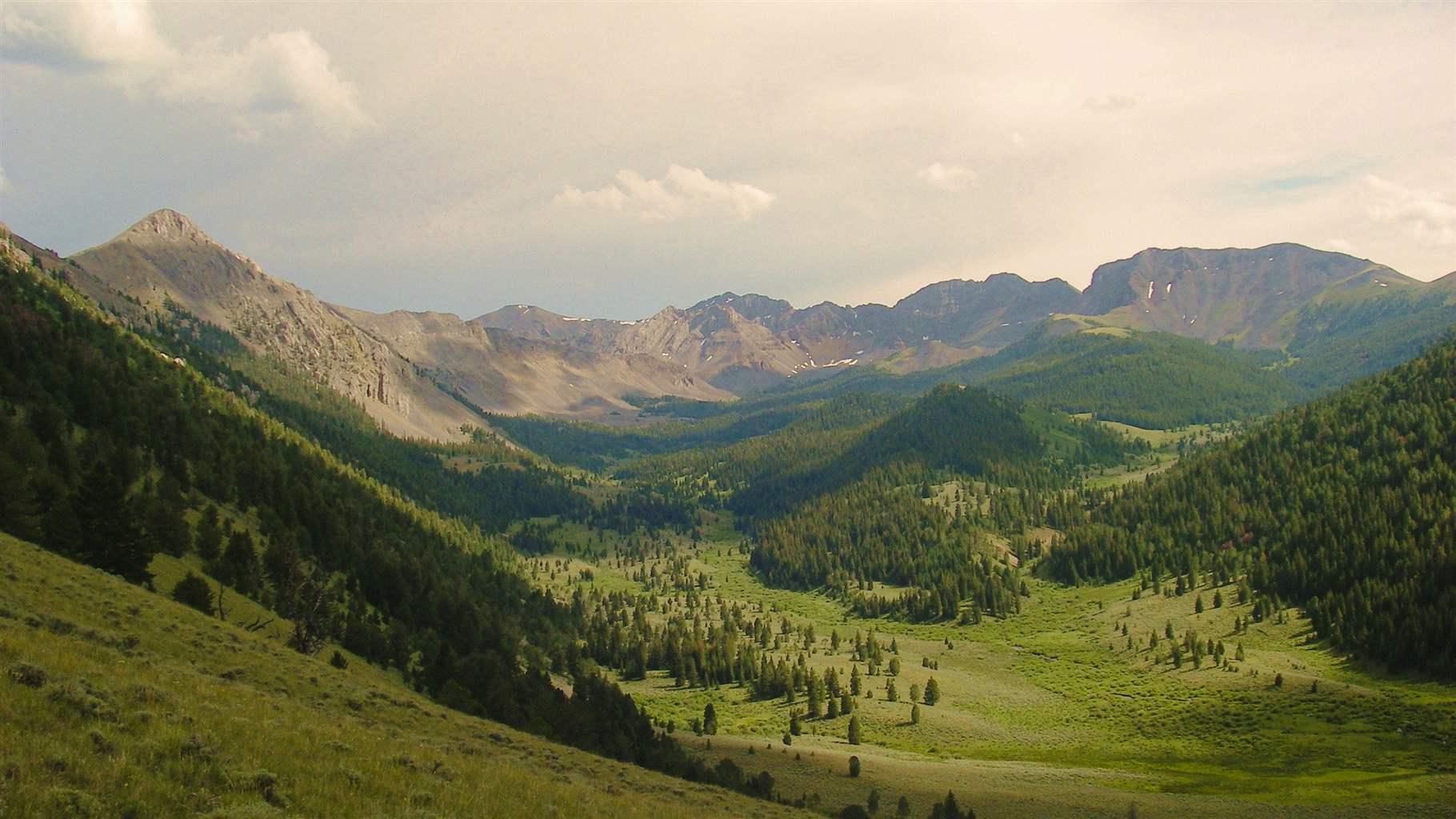
In August 2025, the U.S. Department of Agriculture (USDA) published a notice of intent to repeal the Roadless Area Conservation Rule. Implemented in 2001 by the U.S. Forest Service (USFS), the roadless rule designated nearly 60 million acres of forests and grasslands within the National Forest System (NFS) as “inventoried roadless areas,” placing significant limits on the building of new roads and logging on these lands. These roadless areas—representing some of the country’s least disturbed forestlands—can be found in 38 states and Puerto Rico and represent nearly one-third of the 193 million acres that make up the NFS. Idaho and Colorado have individualized roadless rule policies and would be exempt from the proposed repeal of the national roadless rule.
In the decades prior to the roadless rule’s implementation, industrial-style logging, including clearcutting of large areas, led to wildlife habitat loss and clean water degradation for downstream communities. By the 1990s, more than 380,000 miles of roads had been built within national forests, largely with federal subsidies meant to support timber production. Many of those roads are in need of some level of repair; based on 2024 data, the Forest Service’s maintenance backlog will cost roughly $6.4 billion.
For 25 years, the roadless rule has helped the USFS address fiscal challenges and natural resource management concerns. Recent polling demonstrates that the public continues to be highly supportive of the roadless rule’s core approach to managing federal forests. When given the choice between conservation and development of national forests, 77% of likely voters believe that conserving national forests and other roadless lands for current and future generations is paramount, while only 11% believe that more of these lands should be made available for timber harvesting and mining. This broad support spans political parties, with 71% of self-identified Republicans, 80% of Democrats, and 80% of independent or unaffiliated voters supporting conservation of national forests. When asked specifically about the roadless rule, likely voters support the rule by a strong margin of 76% to 13%.
Although science-based updates to the roadless rule should be considered, the intention and general framework of the 2001 policy should be maintained—and it should not be repealed in its entirety. Here are four reasons why.
1. The roadless rule provides a balanced and flexible resource management approach.
By retaining intact backcountry forests, the rule supports a wide range of recreational, ecological, economic, and social values. The policy’s approach has been recognized by scientists and lawmakers from both sides of the political aisle, and has been upheld by the courts, as an effective way for the Forest Service to achieve its congressionally mandated “multiple use, sustained yield” mission.
The rule provides flexibility by allowing for vegetation management projects (including cutting down trees) when needed to reduce wildfire risk to communities or to restore ecosystem functionality. This flexibility is demonstrated by the approximately 2 million acres of inventoried roadless areas that have already been treated to reduce wildfire risk and the similar use of treatment types, such as prescribed fire and mechanical thinning of trees, occurring within both inventoried roadless areas and general forest areas. Additionally, the roadless rule allows roads to be constructed or repaired to protect public health and safety, and for accessing mineral or treaty rights.
2. It supports wildlife habitat and clean water.
According to the USFS record of decision adopting the rule in 2001, prior to the roadless rule, an average of 3.2 million acres of U.S. forests, wetlands, farmlands, and open space were lost each year to development and urbanization. With the roadless rule, the USFS recognized the broad array of values, such as wildlife habitat, water for communities, and recreation, that are supported by intact and undeveloped lands—places that are becoming increasingly rare.
When asked to think about national forests, 95% of likely voters think they are important for protecting clean water sources for communities, and 96% think they are important for providing recreational opportunities such as hiking, camping, hunting, and fishing.

Many species depend on large and intact blocks of habitat for their survival and can be disturbed by human presence. For example, elk reduce the amount of time they spend feeding when they are closer to roads, which can detrimentally affect the animals’ health. The 2001 record of decision found that approximately 25% of animal species and 13% of plant species categorized as endangered in the U.S. have habitat within roadless areas.

National Forest System lands are important sources of drinking water around the country; when the 2001 rule was finalized, roadless areas alone include 354 municipal watersheds that provide clean water for millions of people. In addition to domestic use, these water sources are important for agricultural and commercial uses. Limiting road building and other ground-disturbing activities that contribute sediment to streams and rivers helps to maintain healthy watersheds for people and wildlife.
3. The rule supports recreation and sustains local economies.
Undeveloped sections of national forests and grasslands provide excellent opportunities for recreation, including hunting, fishing, hiking, camping, wildlife viewing, and rafting. An estimated 159 million visits occur annually to NFS lands, making them an important contributor to the economic and social sustainability of local communities by creating jobs and inducing spending. Nationally, in fiscal year 2023, the NFS contributed more than $45 billion in gross domestic product (GDP) and supported 392,000 jobs. Recreation visitation was the greatest contributor, accounting for 36% of that GDP and nearly 43% of those jobs. Half of all recreational visitors hiked, with significant numbers of visitors also engaging in wildlife/nature viewing, hunting, fishing, and backpacking—all activities supported by retaining intact forests.
4. It follows sound wildfire science.

The roadless rule allows the USFS to pursue a full fire-suppression strategy and authorizes otherwise prohibited activities (such as road building and tree cutting) for public health and safety or to reduce wildfire risk. According to the Western Fire Chiefs Association, humans are the source of nearly 90% of wildfire ignitions. Because the majority of those ignitions tend to occur near roads, in the absence of the roadless rule, the construction of new roads in backcountry forests may actually increase the number of wildfires.
Forest Service data cited in the 2001 rule shows that approximately 98% of wildfires in roadless areas have successfully been suppressed while still small. Therefore, any modifications to the roadless rule should account for the latest understanding of wildfire science, community safety, and natural resource management needs to prevent a reversal of this success. For example, local forest managers should have clear guidance on using the rule’s exceptions to road-building and tree-cutting prohibitions.
Status of proposed roadless rule repeal process
The USDA’s notice of intent to repeal the roadless rule was followed by a public comment process that ran through Sept. 19, 2025. The notice states that the USDA will release its updated proposal and accompanying draft environmental impact statement, along with a request for additional public comments, by March 2026. A final decision is expected in late 2026.
Blake Busse works on The Pew Charitable Trusts’ U.S. conservation project.


