5 Factors Inflate Costs of Maintaining Roads and Bridges
Common challenges hinder maintenance, preservation of transportation infrastructure—but some states have learned to stretch their dollars
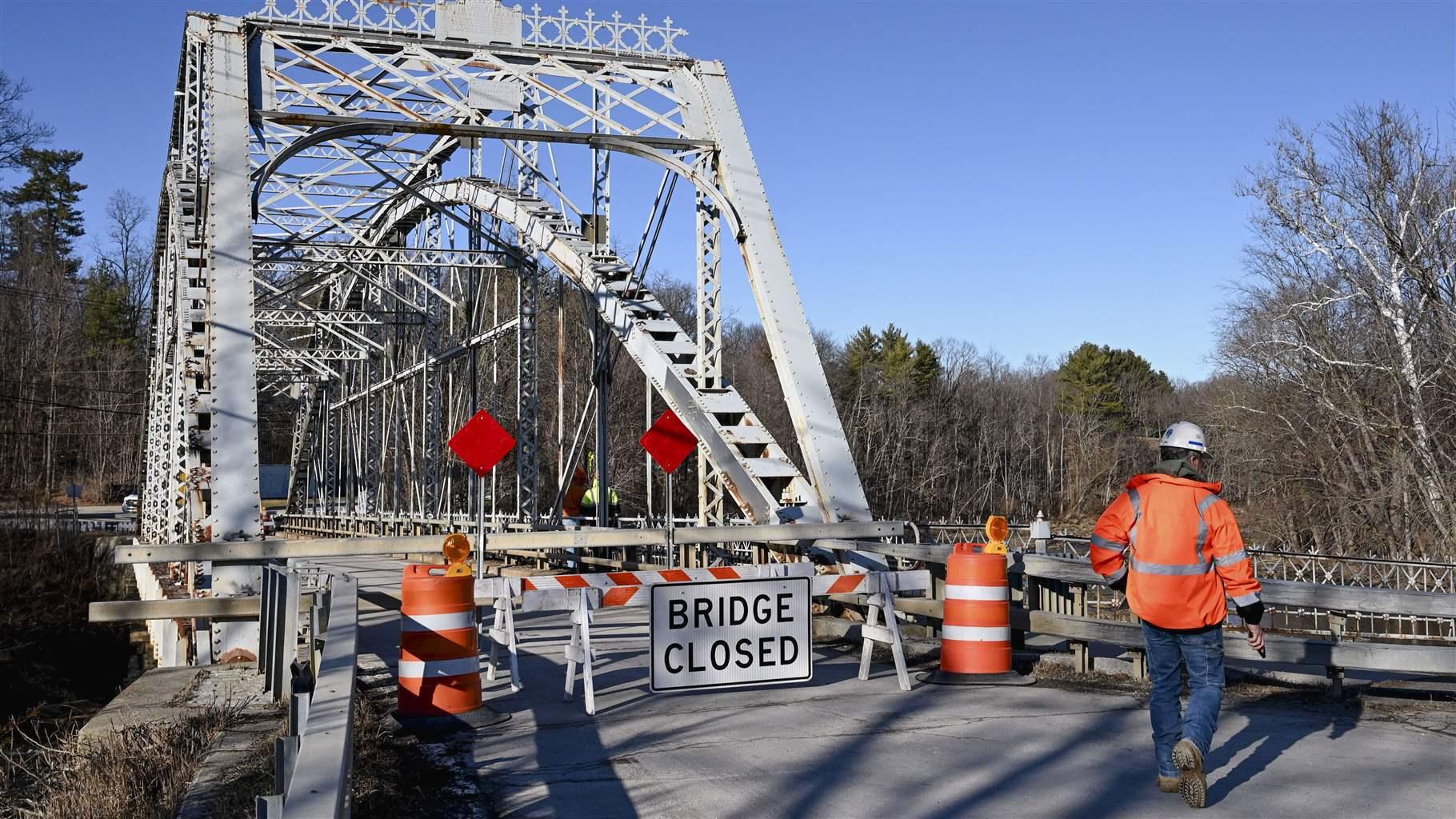
States are facing an $86 billion shortfall over the next decade for maintaining roads and bridges. And the U.S. is among the most expensive countries for transportation construction—projects typically cost more than three times as much as in other upper- and middle-income economies. These high costs have hindered attempts to increase infrastructure investment and with them, states’ ability to maintain and repair their roadways.
Although the specific challenges vary by state, five main factors consistently drive up costs and delay transportation projects:
1. Decades of underinvestment have created a growing maintenance backlog.
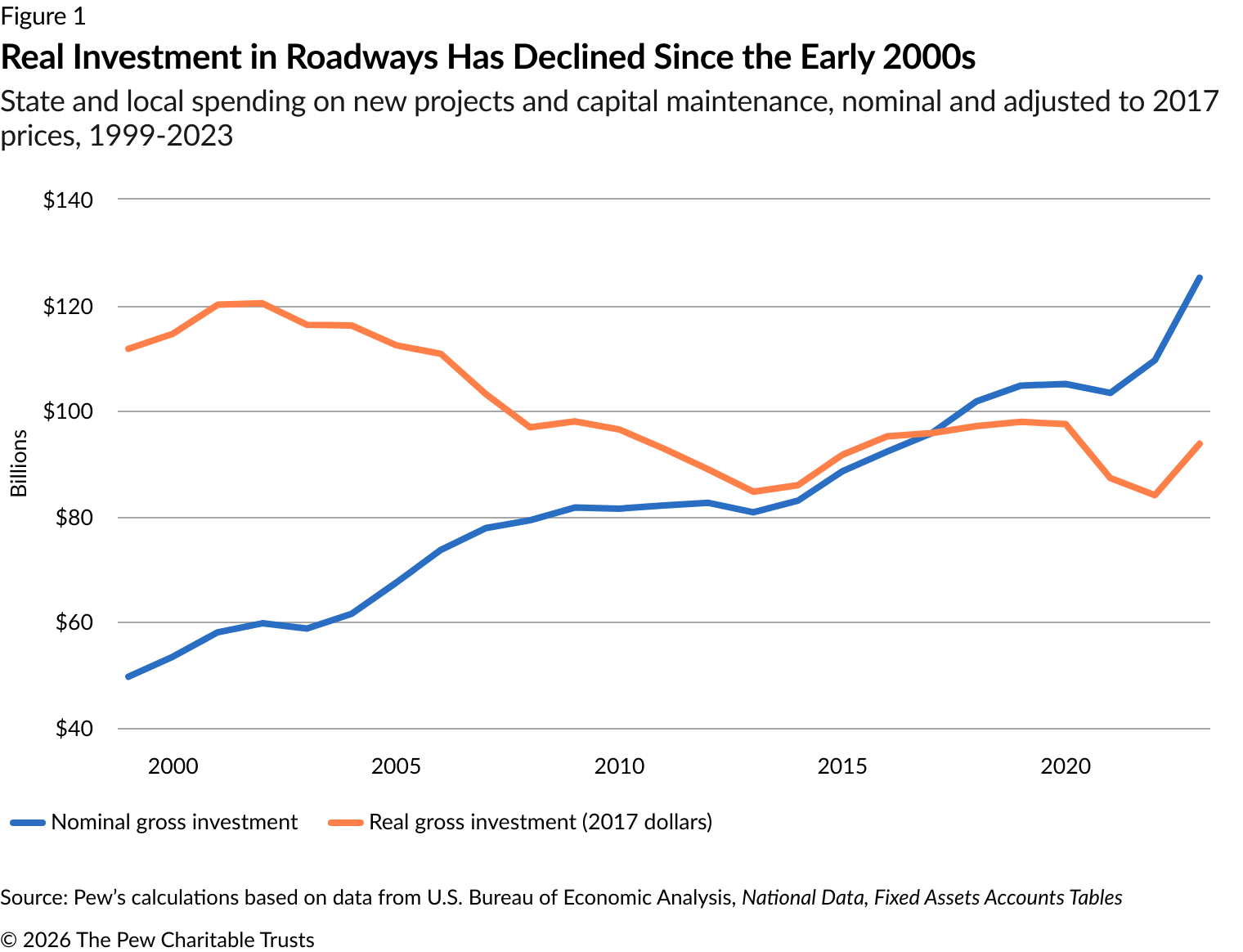
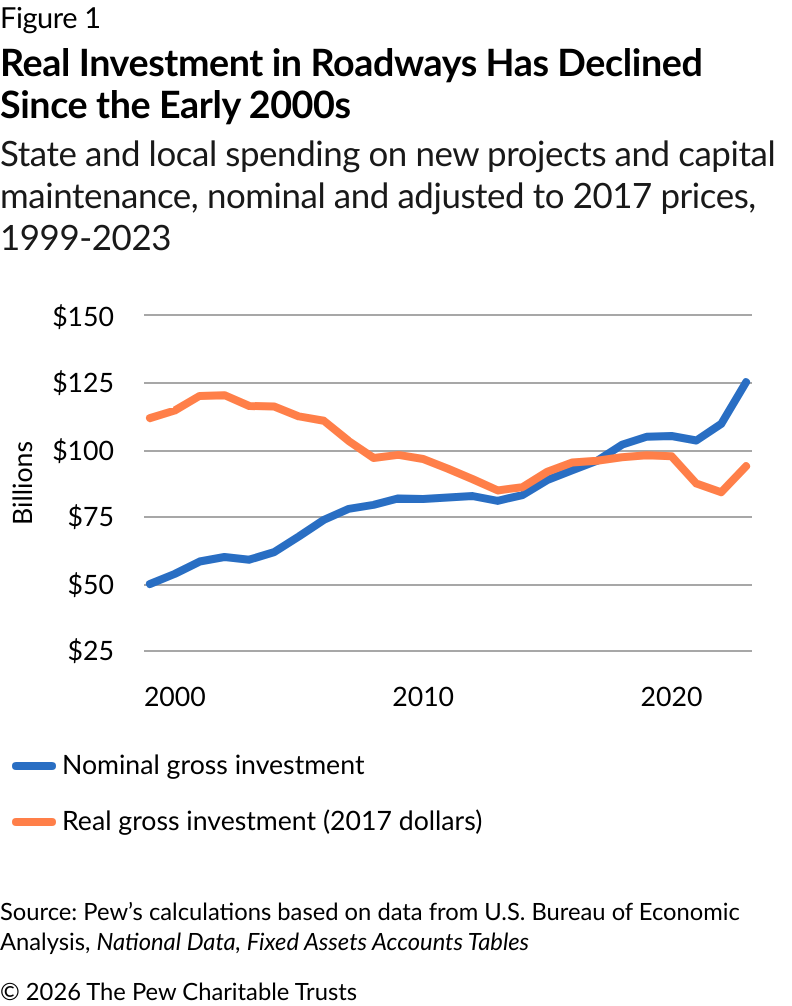
A recent analysis from The Pew Charitable Trusts shows that, since 2004, state and local governments’ real investments, adjusted for inflation, have generally declined since the early 2000s and that capital maintenance investments have failed to keep pace with the rate of asset depreciation—the estimated annual decline in an asset’s value because of wear and tear. (See Figure 1.) In total, states and localities have underinvested in maintaining roads and bridges by about $105 billion.
2. Rising construction costs erode the value of every dollar.
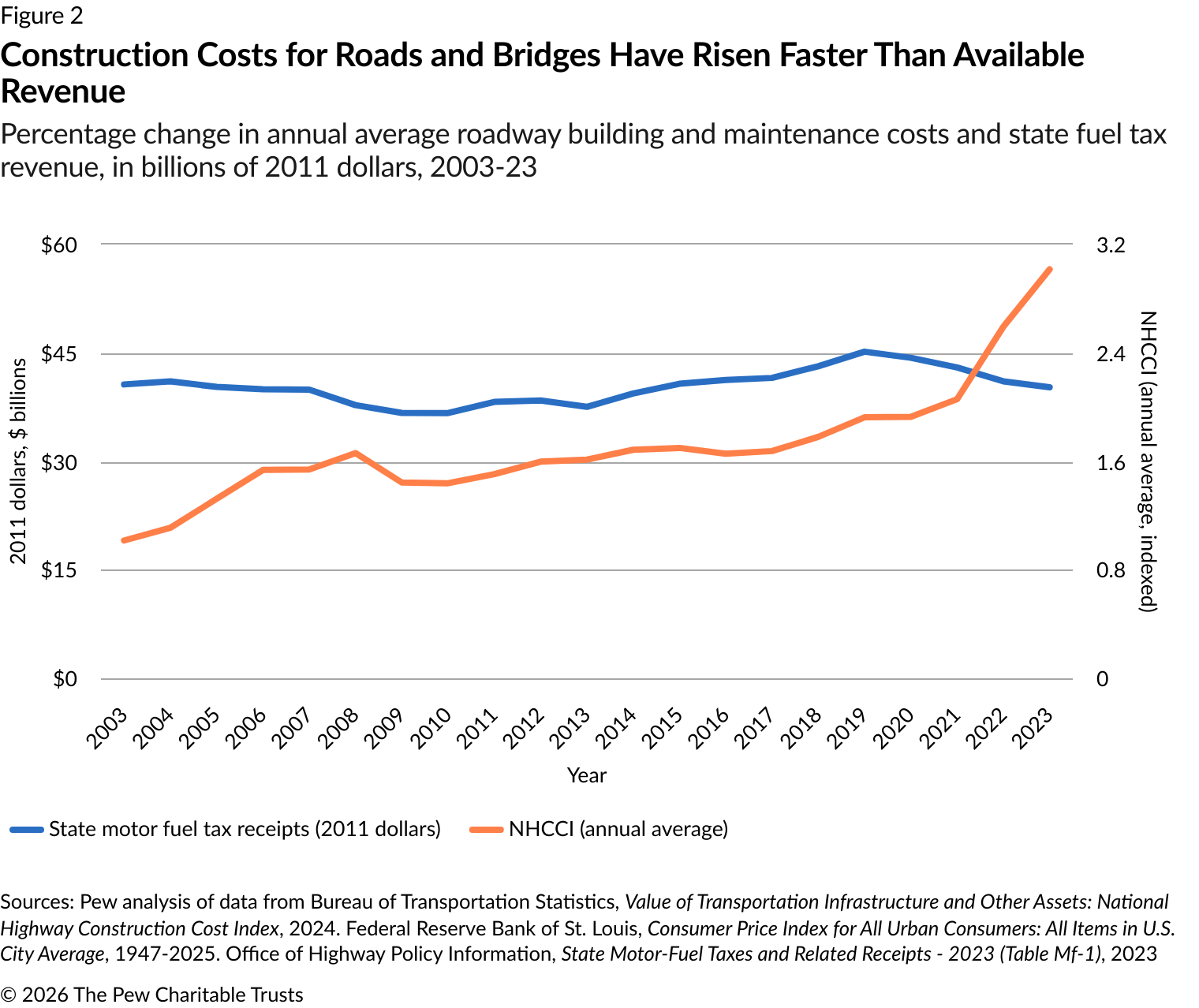
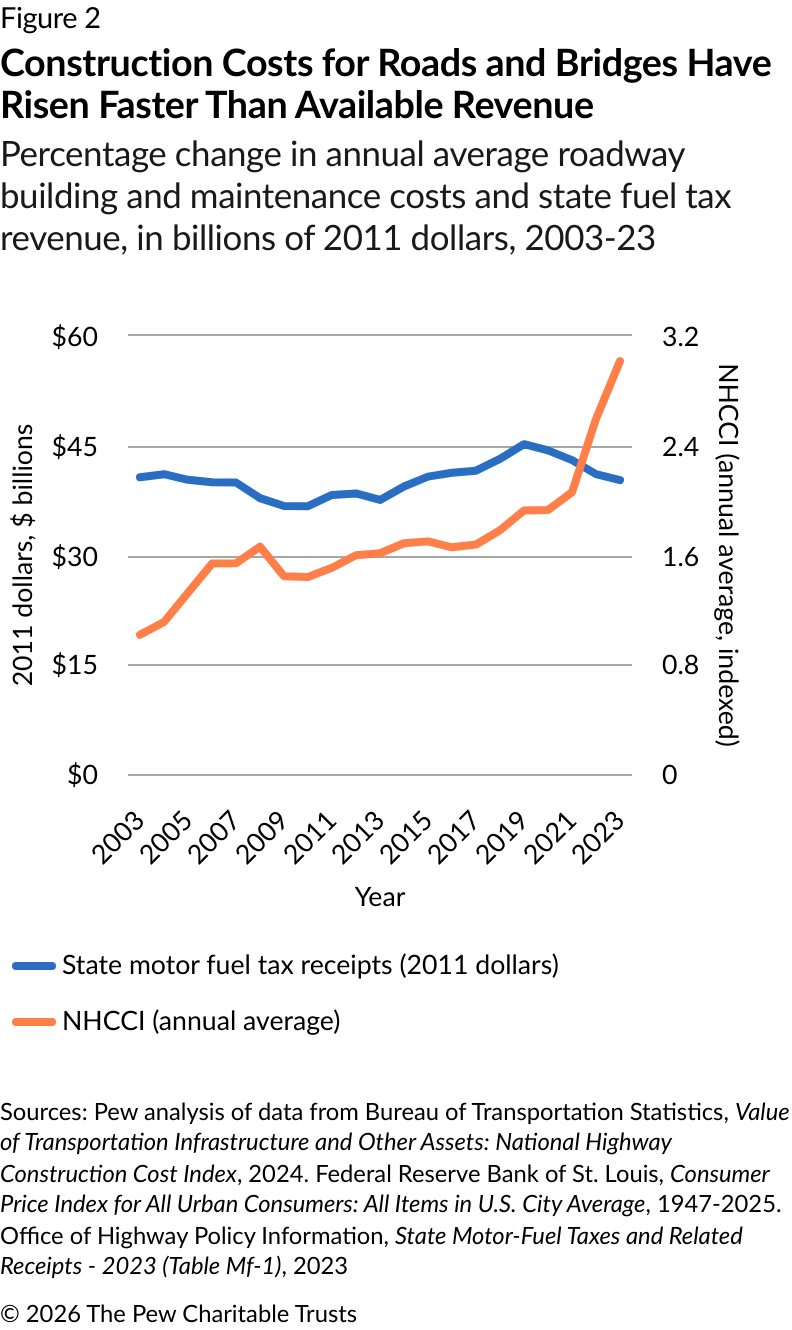
Federal Highway Administration (FHWA) data shows that construction costs have risen about 70% since 2020—the steepest increase in decades—driven by higher prices for construction materials, labor shortages, and surging demand. Even after a modest dip in 2024, costs remain far above pre-2021 levels. (See Figure 2.) At the same time, fuel tax revenue, which is states’ main source for transportation funding, has stayed relatively flat. These inflationary pressures have constrained the value of new spending, complicating efforts to boost transportation investments.
3. Lengthy reviews and other administrative delays can increase costs.
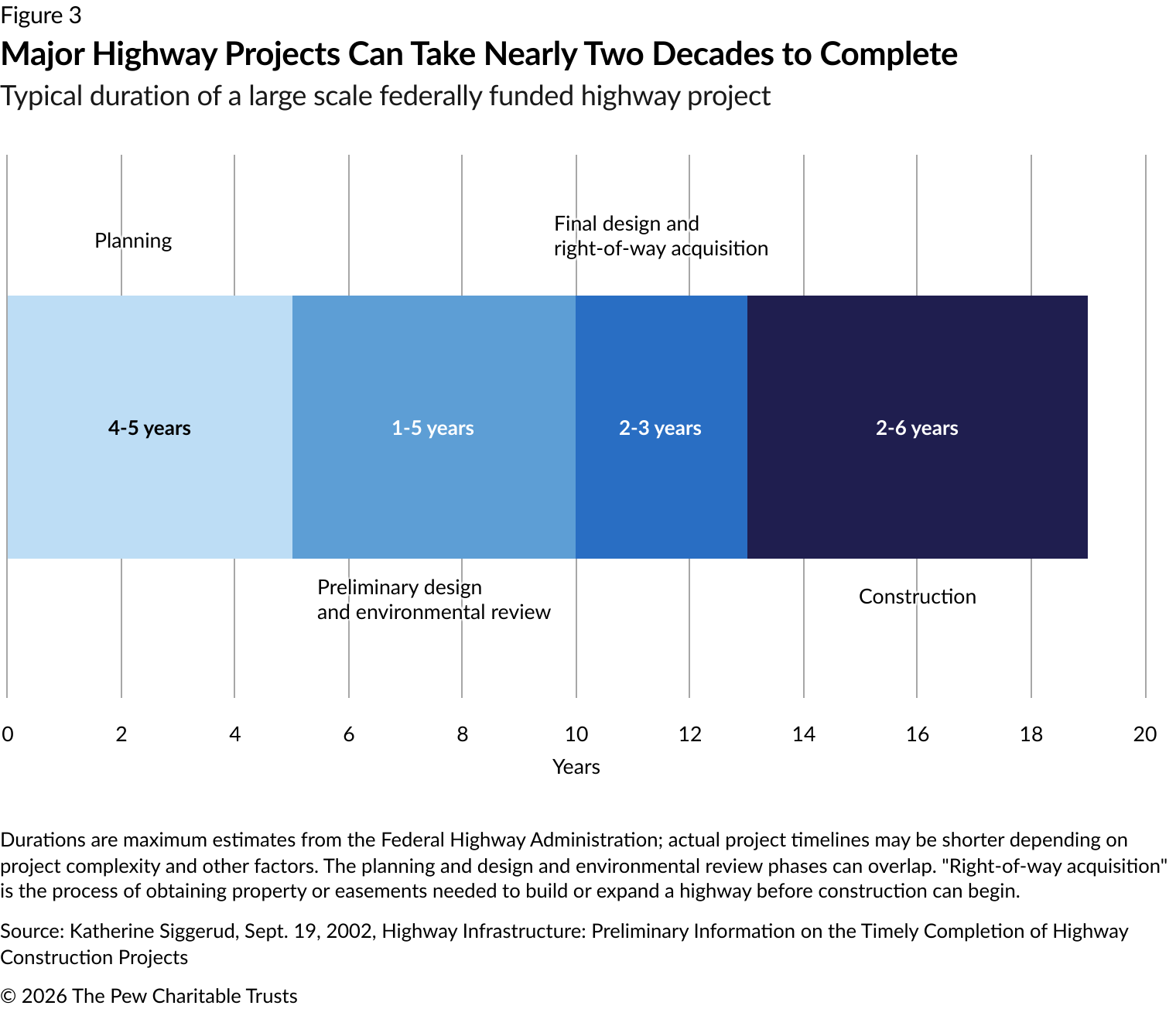
Many large, federally funded highway projects can take from nine to 19 years from planning through completion, according to FHWA estimates in a 2003 GAO report. (See Figure 3.) Despite efficiency improvements from previous Surface Transportation Reauthorization bills, environmental reviews can take several years, and additional pre-construction steps—such as securing funding and coordinating with utilities—can extend project timelines even further, leading to cost overruns. For example, a structurally deficient bridge in California approved for replacement in early 2026 faces a five-to-seven-year wait for required environmental reviews and federal funding approvals. And in Connecticut, a traffic signal safety project has been delayed since the early 2000s by design, public opposition, and permitting, with construction not expected to begin until 2027. These delays compound costs as the assets’ conditions worsen.
4. State capacity and staffing limitations increase reliance on consultants.
Many state departments of transportation (DOTs) are understaffed and rely on expensive outside consultants for project planning and oversight. This can increase costs and reduce departmental control over project timelines. Research from California found that losing just 1% of experienced engineers on the state’s payroll raised project costs by 4.3%, or six times more than the payroll savings. Conversely, projects managed by skilled, well-resourced, state-employed engineers cost about 14% less than those run by consultants.
State DOT leaders from throughout the country have cited retirements, private sector competition, and pay disparities as major barriers to recruiting and retaining qualified staff. According to Yale University researcher Zach Liscow, who conducted the California study, “When it comes to the skilled engineers managing large infrastructure projects, the civil servant quantity and quality pay for themselves many times over. … You need to plan the project well, put it out to bid well, and manage the contractor well. If any of those stages is implemented poorly by the government, costs can skyrocket.”
5. Inconsistent data limits effective planning and asset management.
Pew’s research has found that, while most states report road and bridge conditions and funding projections, these reports vary widely in definitions and scope. Many states still lack a complete inventory of their transportation assets and consistent information on roadway maintenance and repair needs. As a result, major condition and investment gaps remain hidden, making it difficult to benchmark performance or target resources effectively across a state.
What state policymakers can do
To effectively manage rising costs and ensure that scarce dollars are used effectively, state officials can:
- Prioritize maintenance and preservation as part of a balanced investment strategy. States can stretch limited dollars and avoid costly reconstruction by maintaining and repairing existing assets while making targeted investments in new projects. Idaho—one of just 11 states to report in its Transportation Asset Management Plans that all of its roads and bridges met target condition levels—demonstrates this approach by including maintenance and preservation projects throughout its five-year plans and dedicating funding for the work.
- Strengthen data and transparency. States that maintain a complete inventory of transportation assets and regularly track roadway condition and maintenance schedules are better equipped to effectively prioritize repairs and investments. Montana uses clear, publicly reported data to track roads and bridge conditions, identify funding needs, and show progress toward policy goals, which helps the state to target repair dollars where they are most needed and to build public trust. Some states are also increasing transparency. For instance, a 2024 New Mexico law authorized the state auditor to review and publicly report on delayed or over-budget projects.
- Leverage federal resources and proven innovations. FHWA’s Accelerated Construction Guide and the Every Day Counts initiative, which encourages states to use faster, more efficient building and repair methods, can help states adopt approaches, such as bundling similar projects’ procurement processes to streamline design and planning and using prefabricated bridge components to minimize traffic impacts and boost safety. Utah has used accelerated bridge construction to speed up I-15 improvement projects and cut costs. Bridge parts were built off-site and assembled in place overnight, allowing the state to finish the work two years ahead of schedule and save $260 million. Iowa used a similar approach for road repairs. Other states and institutions, including the Texas DOT and Iowa State University, have also developed guidance to help local transportation officials expedite projects.
- Take advantage of recent permitting and review process improvements. Since 2015, federal lawmakers and agencies have improved processes and developed tools to help states and localities better coordinate environmental and permitting reviews. And although project timelines can still be unpredictable, these federal changes and resources can shorten them without compromising important oversight. For example, Texas and Ohio have entered into agreements with FHWA to conduct their own environmental reviews rather than waiting for federal approval. And Maryland lawmakers are exploring ways to test more efficient permitting and environmental reviews for some projects.
- Strengthen DOT staffing and expertise. States that invest in their own workforce through competitive pay and training are better able to plan effectively, complete projects on time and budget, and avoid reliance on costly consultants. And evidence shows that retaining experienced engineers and supporting high-quality staff delivers significant savings: An analysis from California’s DOT found that consultant engineering services can cost about five times as much as comparable in-house work. Similarly, Georgia’s DOT found that strengthening in-house management and oversight led to lower design and delivery costs and improved control of highway project schedules.
Ultimately, stronger data, more efficient processes, and targeted investments in workforce capacity can stretch limited state and local dollars and help ensure safer, more reliable transportation systems for the long term.
Fatima Yousofi is a senior officer and Eli Gullett is a senior associate with The Pew Charitable Trusts’ state fiscal policy project.

People


