Housing Shortage Takes Center Stage
Roundtable explores land-use and permitting reforms, aims to boost affordability

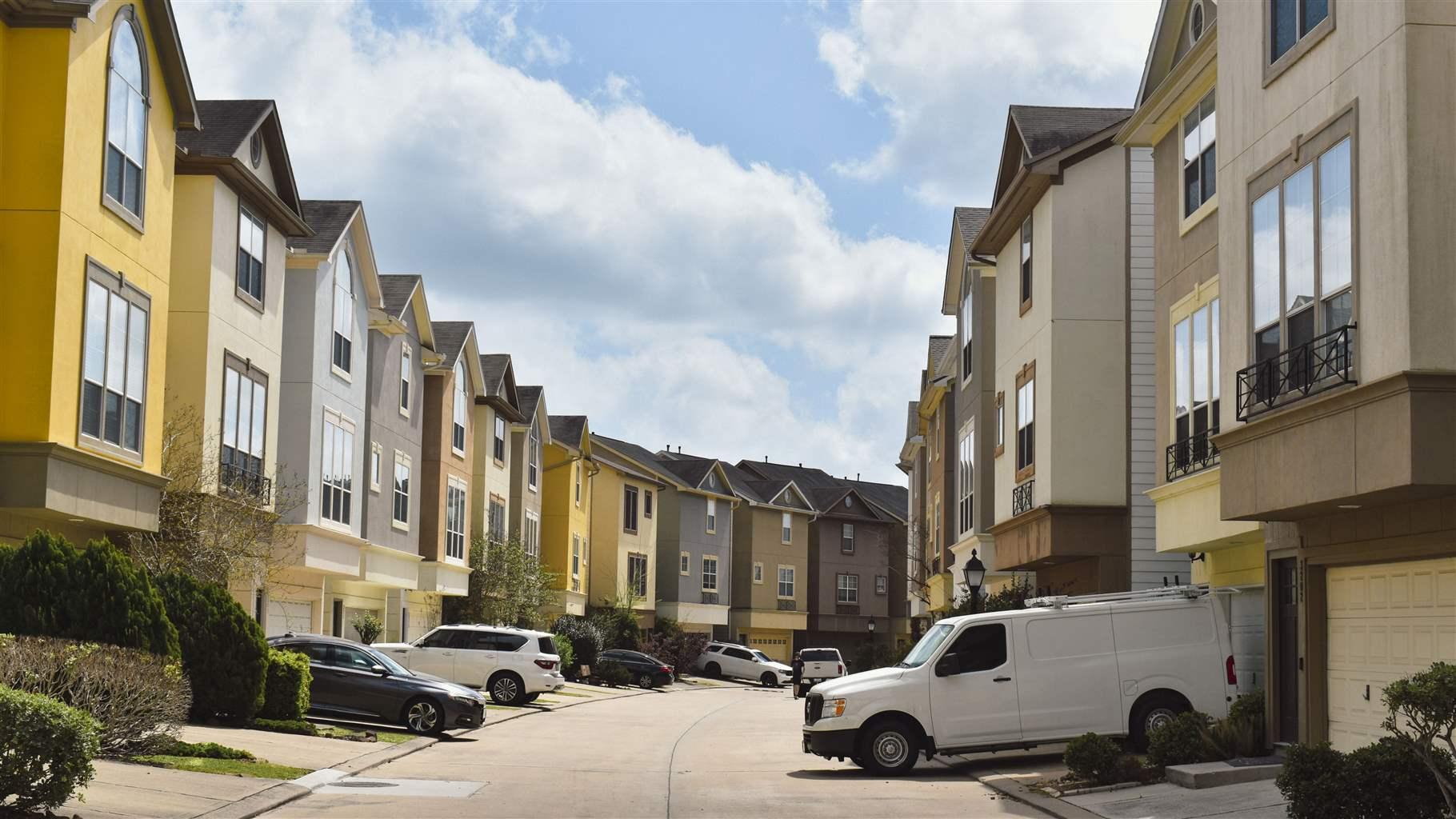
Land-use and permitting reforms have gained increased attention as policymakers throughout the country struggle with the nation’s housing shortage, which is estimated to be 4 million to 7 million homes. This shortage has pushed rents, housing prices, and homelessness to record levels in recent years, with costs to buy and rent much higher than historical norms.
While cities and towns have modernized their permitting and land-use rules to allow more homes to be built, especially apartments and town houses, more work is needed.
To help explore potential solutions, on Dec. 4, 2025, The Pew Charitable Trusts, International Code Council (ICC), National League of Cities, and the American Planning Association hosted a roundtable of local planning and building officials and national housing stakeholders and experts. Participants discussed land-use and permitting best practices to help solve the housing shortage and improve affordability, focusing on recent research and takeaways happening at the local level.
Prior to the event, ICC conducted a survey to explore trends in zoning and permitting. Summary information is available here.
During the event, participants noted a series of successful land-use reforms that have helped to spur more housing, including:
- Allowing apartments on commercially zoned land: Meaning that if office buildings, shopping centers, stores, or restaurants are allowed on corridors or in parts of the municipality, then apartment buildings or sometimes town houses are also allowed to be built by-right, meaning they can use an approval process that doesn’t require a variance or rezoning. Some jurisdictions have specifically adopted this while others have done so through a form-based code that allows a broad range of uses. Examples: Minneapolis; Hartford, Connecticut
- Allowing apartments by-right near transit: Permitting apartments near train stops and sometimes bus stops without a variance or rezoning. Examples: Columbus, Ohio; New Rochelle, New York
- Allowing commercial buildings to be converted to apartments: Letting builders convert offices or other commercial space into apartments without a variance or rezoning. Examples: Denver; Salt Lake City
- Allowing accessory dwelling units: Enabling owners of single-family homes and sometimes duplexes to add one or sometimes two additional small homes on the property. This is done through either converting a basement or garage into an apartment, adding a second story above a garage, or locating a small home on the property, usually in the backyard. Examples: Gainesville, Florida; Phoenix
- Providing clarity on use of off-site construction, including modular and manufactured housing: Off-site construction involves building sections or an entire home in a factory. Manufactured housing is built entirely in a factory to preemptive HUD standards, whereas modular construction is built to state or local codes and then delivered or assembled on site. Clarifying that modular construction is subject to the same zoning restrictions as site-built structures and allowing manufactured housing by-right—without a variance—can significantly reduce costs and timelines by leveraging more efficient production. Examples: Jackson, Mississippi; Hagerstown, Maryland
- Addressing parking mandates: Allowing builders and consumers flexibility around their parking preferences, with jurisdictions increasingly reducing or eliminating parking mandates, sometimes just for residential uses and sometimes including both residential and commercial uses. Approximately 100 jurisdictions have eliminated parking mandates, while others have applied this reform in targeted areas, such as downtown, mixed-use areas, or near transit. Examples: Buffalo, New York; La Crosse, Wisconsin
- Reducing minimum lot sizes to enable starter homes: Allowing smaller amounts of land mandated for each new house can help increase the number of starter homes, which have become a much smaller share of new houses in recent decades, pushing homeownership out of reach for many younger families. Homes on smaller lots tend to cost less than homes on larger lots. Examples: Durham, North Carolina; Houston
Also highlighted by participants were permitting reforms that have reduced pre-construction costs and sped up production, such as:
- Using digital processes for permitting: These include handling applications and payments and reviewing plans electronically. These systems often facilitate transparency for all stakeholders, providing greater predictability and access to information. However, to get the greatest value from investing in such systems, extensive outreach and training of stakeholders is required. Examples: Miami; Morgantown, West Virginia
- Adopting preapproved plans: Some municipalities offer a library of preapproved designs that builders may use. These can address ADUs, single-family detached homes, town houses, and small multifamily buildings, such as those with two to six units. Other municipalities allow builders to reuse their already approved plans for future projects or gradually create a library of preapproved plans submitted by architects. Examples: South Bend, Indiana; Kalamazoo, Michigan
- Allowing third-party inspections and plan review: Generally this means the building department offering applicants the flexibility to work with approved municipal service providers, architects, engineers, or others with credentials similar to municipal inspectors and plan reviewers to conduct inspections and plan reviews and submit the results to municipalities. Municipalities in turn treat those results as if they were conducted by a public inspector or plan reviewer. Examples: Atlanta; Falls Church, Virginia
- Using administrative rather than conditional approvals: Some localities have transitioned certain approvals that used to be discretionary, conditional, or require a special-use permit, into administrative or ministerial ones, meaning they are reviewed by city staff and do not require public hearings or a vote of a planning commission, city council, or other body. Examples: Raleigh, North Carolina; Spokane, Washington
- Pre-submission reviews: Some jurisdictions offer applicants a chance to meet with building officials prior to submitting applications to clarify expectations and offer guidance on how to obtain a permit as quickly and easily as possible. Examples: San Antonio; Perry, Georgia
- Phased approval: Some jurisdictions offer applicants the chance to obtain partial permits for elements such as foundations and other preliminary work so that construction can begin before the full permit process is complete. The International Residential Code and International Building Code address this approach in administrative sections that address construction documents. Examples: Fairfax County, Virginia; St. Louis County, Missouri.
Participants viewed the above policies as beneficial to reducing the housing shortage and improving affordability, mostly by enabling lower-cost homes. But these updates also expedite housing production and reduce development costs so that more homes are financially viable to build. Participants generally viewed permitting reforms as important to increasing housing production but less impactful than zoning reforms. They noted that permitting reform usually faced little opposition, making it fairly easy to adopt politically.
Participants also discussed the appropriateness of “shot clocks” or timelines required by lawmakers for permit approvals. Although there were mixed views of their effectiveness, where they are required, participants indicated that the timelines should recognize and address staffing shortfalls, inadequate submissions, applicant responsiveness, and delays in processing of required reviews by departments outside the building department, indicating the importance of considering all of these measures within any mandated timeline for permit review. Where third-party firms are leveraged to speed permitting, attendees felt they should possess requisite certifications to verify their competence and efficacy and noted it’s important that building officials have processes in place to ensure that the work is consistent with approvals by the jurisdiction.
Not all land-use or permitting reforms discussed at the roundtable were seen as similarly impactful. For example, cities that have seen strong housing growth and improved affordability have mostly done so by making it much easier to build apartments near commerce or transit, including Austin, Texas; Minneapolis; New Rochelle, New York; and Raleigh, North Carolina. Because apartments usually cost less than detached single-family homes and use much less land per home, cities addressing a housing shortage and affordability struggles have found this to be the surest path to success.
While it’s crucial to adopt effective policies, some questions have straightforward answers. Participants agreed that there is a large housing shortage in the U.S., which is driving up rents, prices, and homelessness. They strongly agreed that updating land-use and permitting processes makes it easier to build homes and is a step in the right direction to improve rental affordability, expand homeownership, decrease homelessness, reduce displacement, and spur economic growth and opportunity.
By considering land-use and permitting reforms such as the ones outlined here, cities and towns can help more American families find housing within their budget near jobs, schools, family, and opportunity.
Gabe Maser is the senior vice president of government relations at the International Code Council; Lauren Lowery is the director of housing and community development at the National League of Cities; Jason Jordan serves as the principal, public affairs at the American Planning Association; and Alex Horowitz is the project director for The Pew Charitable Trusts’ housing policy initiative.
People