New Plans Would Conserve Salt Marsh to Protect Southeastern Coastal Communities, Military Installations
Regional partnership details strategies that can reduce flooding and erosion
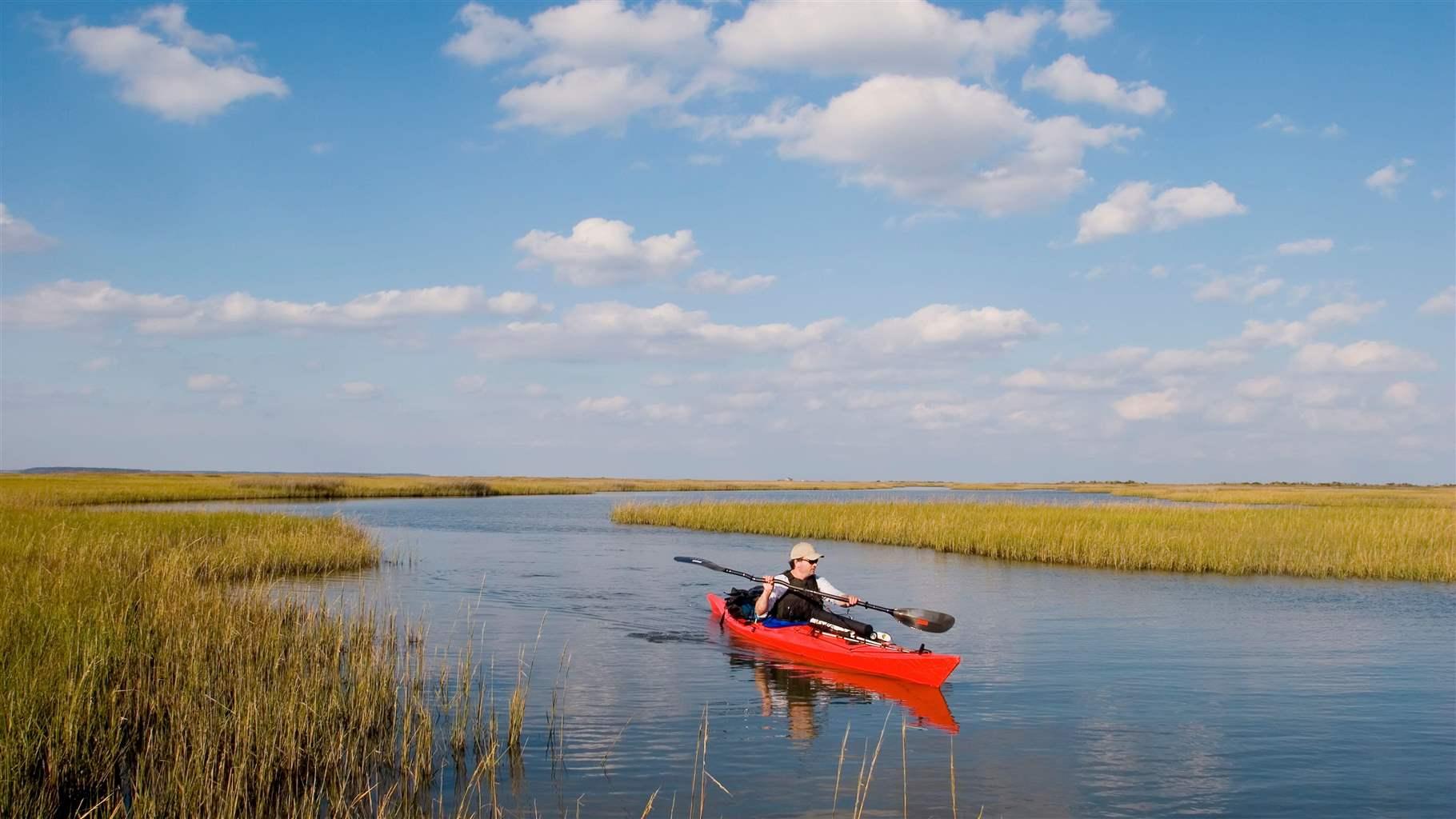
A regional partnership spanning North Carolina, South Carolina, Georgia, and Florida released targeted plans for each state in April 2026 to conserve coastal salt marshes—grassy wetlands that fill with saltwater and drain as the tides ebb and flow. These habitats protect communities and more than a dozen at-risk military installations from floods, provide fish breeding grounds, and offer recreation and seafood to millions of people.
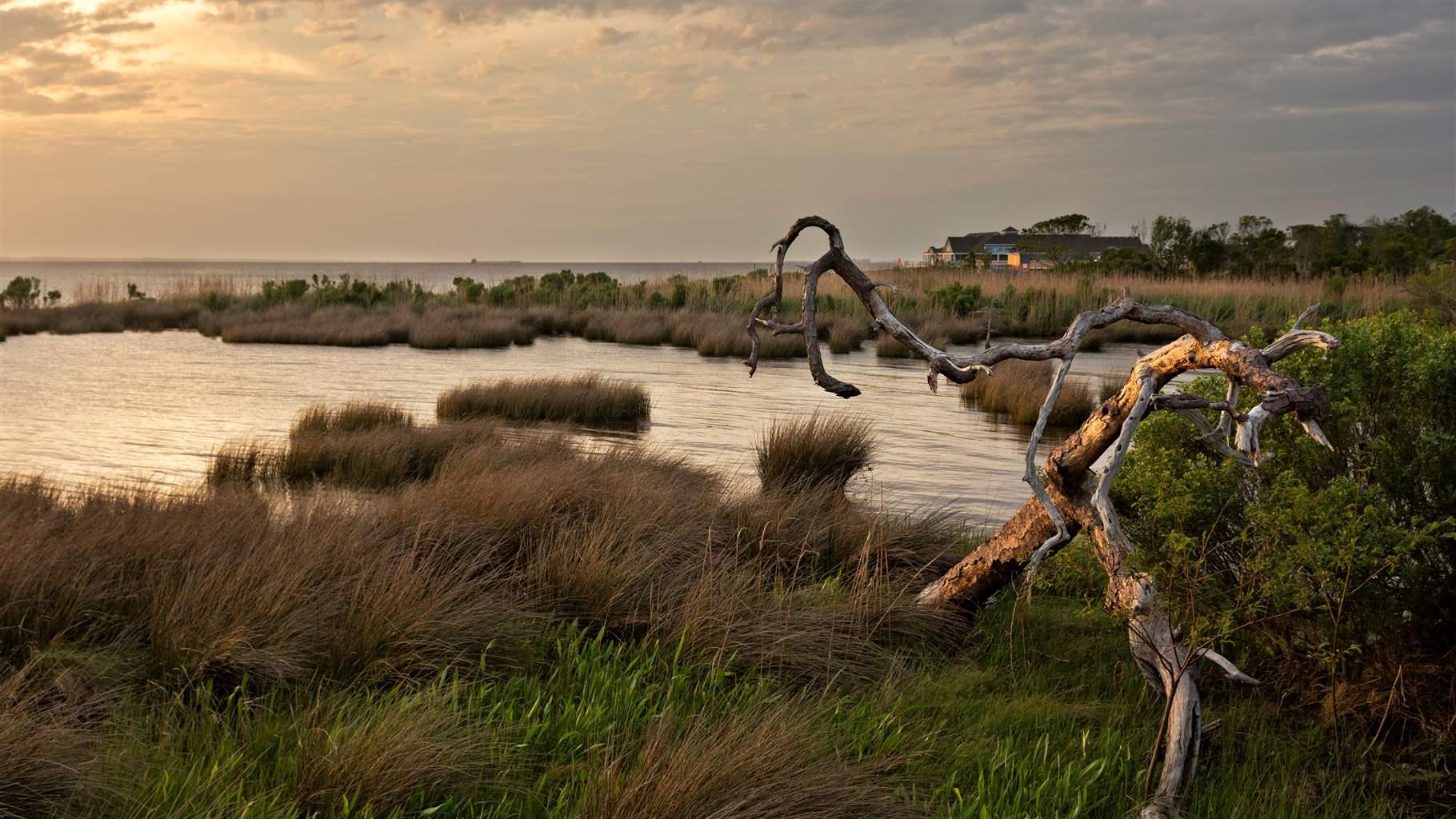
The plans, which are part of an effort to conserve and restore 1 million acres of salt marshes—roughly the size of Grand Canyon National Park—were developed by state-based member teams from the South Atlantic Salt Marsh Initiative (SASMI), a group of more than 400 stakeholders working to save marshes from encroaching seas, polluted runoff, unsustainable development, and other threats. SASMI members include state and federal agencies, the U.S. military, scientists, businesses, Gullah Geechee representatives, and nonprofit organizations, among them The Pew Charitable Trusts. Pew founded SASMI along with the Southeast Regional Partnership for Planning and Sustainability, a group that brings together governments, the military, and others to address conservation and resilience issues.
The initiative released a regional plan in 2023 that outlined broad strategies to conserve and restore marshes. And now, the individual state plans build on that regional plan by identifying actions that are most important for each state.
These are some highlights from the new state plans that are available at these links:
- North Carolina’s plan, led by the North Carolina Coastal Federation, calls for increased use of and funding for living shorelines, which are protected stabilized coastal areas made primarily of natural materials such as plants, oyster shells, or rock and reduce erosion, provide habitat, and enhance resilience. Further, because roads or buildings can block marshes from migrating inland to avoid drowning as seas rise, the plan recommends acquiring marsh-adjacent land from willing property owners and then removing any barriers so the marshes can move. The plan also outlines strategies for mapping priority marsh conservation areas, targeting places where stream flows into marshes can be improved, addressing the effects of invasive species, and educating the public about marshes.
- South Carolina’s plan is led by The Nature Conservancy South Carolina and supports a pilot program already underway that is identifying opportunities to build and monitor living shoreline projects in underserved and low-income communities. The plan also calls for public education, incentives for landowners to conserve important marsh areas, and better analysis of the effects of development on marshes. It outlines the need to inventory and remove or reconfigure culverts and other impediments to water flow that nourishes marshes, and it encourages expansion of a mapping project that predicts where sea-level rise will most acutely affect salt marshes.
- Georgia’s plan, which is led by the Georgia Conservancy, urges development of financial incentives for private landowners to choose living shorelines and other nature-based solutions over hard structures such as bulkheads to enable marshes to migrate naturally as sea levels rise. The plan also calls for helping owners of working lands, such as farms, conserve their property if it’s affected by saltwater intrusion; oyster shell recycling for use in living shorelines; use of sediment to sustain, create, or enhance marshes; and working with transportation agencies to identify and prioritize removal of barriers, such as culverts, that interfere with marshes.
- Florida’s plan, led by North Florida Land Trust, focuses on east central and northeast Florida from the Georgia border to roughly Melbourne, south of Cape Canaveral. It suggests considering whether to create salt marsh migration and protection zones to help limit the effects of development on marshes. The plan also proposes upgrading stormwater systems, developing and funding buyout programs for repeatedly flooded areas, expanding living shoreline projects, working with ecotourism businesses to offer visitor experiences in marshes, establishing cost share programs for private landowners to help with salt marsh restoration, and engaging with insurance companies to research the benefits of nature-based solutions and provide coverage benefits to property owners who conserve marshes.
SASMI partners will work with local and state decision-makers, planners, and others to put these suggestions into action and to pursue funding sources, such as grants and public-private partnerships. The plans are designed to guide salt marsh conservation work for at least the next five years and will be updated as efforts progress.
Salt marshes benefit nature and people. These new state plans offer a roadmap for successful conservation and restoration of a habitat vital to Southeast U.S. coasts.
Lora Clarke is a senior officer and Cameron Jaggard is an officer with The Pew Charitable Trusts’ U.S. conservation project.
People