
Overview
Economic opportunity is the foundation of American society. Pew supports national, state, and local efforts to expand opportunity and promote financial well-being. Our work helps people pay off student loans, navigate court proceedings such as debt collection, buy or rent a home, access affordable internet, and save for their retirement.

While Black and Hispanic families have seen increases in their wealth since 2013, these gains have not kept pace with the growth of wealth of White families. From 2019 to 2022, the median wealth gaps for Black and Hispanic families versus White families expanded by about $50,000. The result was that in 2022, the typical White family had $240,000 more wealth than the typical Black family and $223,000 more than the typical Hispanic family.

Michelle Gregoire was a server at Purple Toad Social Tap and Grill outside of Colorado Springs in 2023 when the state began facilitating a retirement savings program. Until then, Purple Toad had not offered a retirement plan. Once the plan, called Secure Savings, became available, Gregoire said she began depositing a portion of her paycheck into the Colorado Secure Savings’ individual retirement account, or IRA.
Trust Magazine

The Post-9/11 GI Bill offers a robust set of education benefits designed to help veterans make successful transitions into post-military life and careers. For those with 100% eligibility, it covers in-state tuition and fees at public schools or up to $29,921 annually at private institutions, provides a monthly housing allowance, and includes a stipend to defray the cost of books and supplies.

Small mortgages—loans below $150,000—play a critical role in enabling affordable homeownership, particularly in lower-income and rural communities. But would-be homebuyers often find it difficult to obtain such a loan, even when they are otherwise well qualified. This difficulty stems largely from the economics of mortgage lending: Small mortgages cost about the same for lenders to originate as larger ones, but they generate less revenue. Without financial incentives, many lenders won’t issue small mortgages or will deprioritize them as part of their business model.

Retirement security depends on individuals saving for their future, but millions of Americans lack access to an employer-provided savings plan that might help them do so. Research shows that workers are 15 times more likely to save for retirement if they can set aside money through payroll deductions. But many small businesses cannot offer retirement benefits because of high startup costs and a lack of administrative capacity.
Our Work

Good health is important to everyone. Pew conducts research and provides information and fact-based recommendations to state agencies, hospitals, researchers, and other health partners to help them provide better care. We find and share evidence-based practices to improve Americans’ health and well-being, including services that can prevent suicide, improve mental health care, and treat substance use disorder.
Latest In Advance Health & Well-Being

Communities throughout the country share common needs: affordable connections to broadband Internet, modern and reliable energy infrastructure, effective responses to mental health challenges, and ways to resolve legal disputes more quickly and fairly. To address these issues, Pew collaborates with states and local governments to find and promote evidence-based solutions that help provide stability and opportunity.
Latest In Build Communities

Nonpartisan, fact-based improvements in federal policy can create jobs, lower costs, and help the nation prepare for the future. When our research shows that small changes can have a big impact, we work across party lines to improve national challenges like housing affordability, internet access, energy reliability, and health care.
Latest In Improve Federal Policy
/16x9_m.jpg?mw=1820&hash=5F8FAF0A76E455308483138D9B65A461)
Economic opportunity is the foundation of American society. Pew supports national, state, and local efforts to expand opportunity and promote financial well-being. Our work helps people pay off student loans, navigate court proceedings such as debt collection, buy or rent a home, access affordable internet, and save for their retirement.
Latest In Improve Economic Advancement

The global ocean teems with life, and it contributes to the vital cycles that keep people and our planet healthy. But the seas are vulnerable to overfishing, loss of habitat such as seagrasses and mangroves, ineffective fisheries management, plastic pollution, and declining biodiversity. These mounting losses affect the coastal communities that depend on the ocean for food and jobs.
Latest In Protect Marine Life
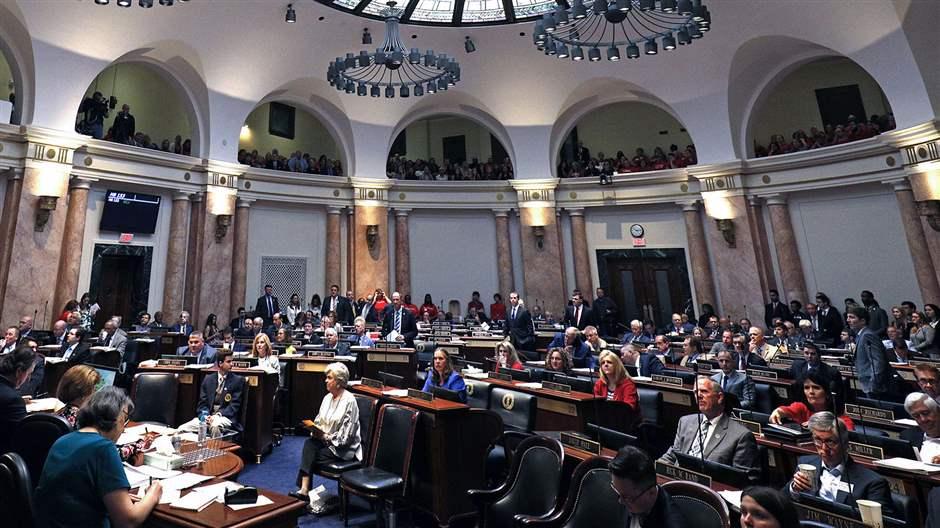
States and cities are the “laboratories of democracy” in America—the places where lawmakers and governors look for new ways to help their communities succeed. Whether in Pew’s hometown of Philadelphia or any of the 50 state capitals, we help elected leaders respond to the needs of their citizens, use public dollars wisely, fix outdated policies, and build a better future for all.
Latest In Strengthen State Government

Conserving natural spaces conveys benefits far beyond the gains to wildlife and their habitats. As scores of studies show, protecting and restoring lands and waters, particularly when done in close partnership with local communities, also improves people’s lives—and local economies—by increasing tourism and outdoor recreation.