Solutions That Unite Us

In libraries throughout the country, people gathered to watch a livestream of speakers from the main stage at TED Democracy Philadelphia: Founding Futures. Pew sponsored the livestream to help everyday Americans engage with the day’s conversations. There were 77 participating libraries in states from California to Maine; some libraries also added programming of their own, such as panel conversations. Many attendees noted feeling inspired by the speakers onstage, and perhaps, too, to engage anew in support of democracy.

America has a milestone birthday coming up: This July, the nation will turn 250. As many pause to reflect on the past 250 years, there’s also an opportunity to think about our shared future. While political polarization remains one of the greatest challenges to our democracy, with 65% of Americans saying that they feel exhausted when thinking about politics because of deep partisan divisions, we have more in common than current politics suggest. According to a 2025 Gallup poll, 8 in 10 Americans support compromise between political leaders, and two-thirds agree that democracy—despite its flaws—remains the best form of government.

How do you become an internet-famous curiosity expert (with the TED Talk to prove it)? For Scott Shigeoka, it all began in his home state of Hawaii. There, the aloha spirit and his family's good-natured interest in others imbued him with a "generosity of spirit," he says, and a genuine desire "to know the person that's in front of you, not for any reason or purpose other than to connect."

As recently as 2020, the National Mall’s Tidal Basin was in need of repairs and sinking in certain sections due to sea-level rise and aging infrastructure.

At “TED Democracy Philadelphia: Founding Futures,” thinkers, civic leaders, and volunteers gathered just blocks from where the founders shaped the country to consider one question: How do we recommit to the next 250 years of American democracy?

As the United States commemorates 250 years of independence in 2026, the landmark event has arrived during a time of increased political polarization. According to a recent Pew Research Center study, 69% of Americans are dissatisfied with how things are going in the U.S., and 59% believe the country’s best days are behind it. Yet a majority (68%) still feel hopeful about the nation’s future. Bestselling author, social scientist, and Vanderbilt University professor Dr. Arthur Brooks shares that optimism—in part because he sees a clear path out of the divisiveness.

America’s 250th anniversary is a time to commemorate the country’s formation and the democratic ideals on which it was founded. This milestone also serves as an important time to reflect on who we are as a country, including the values we uphold and how we engage with one another.
Trust Magazine
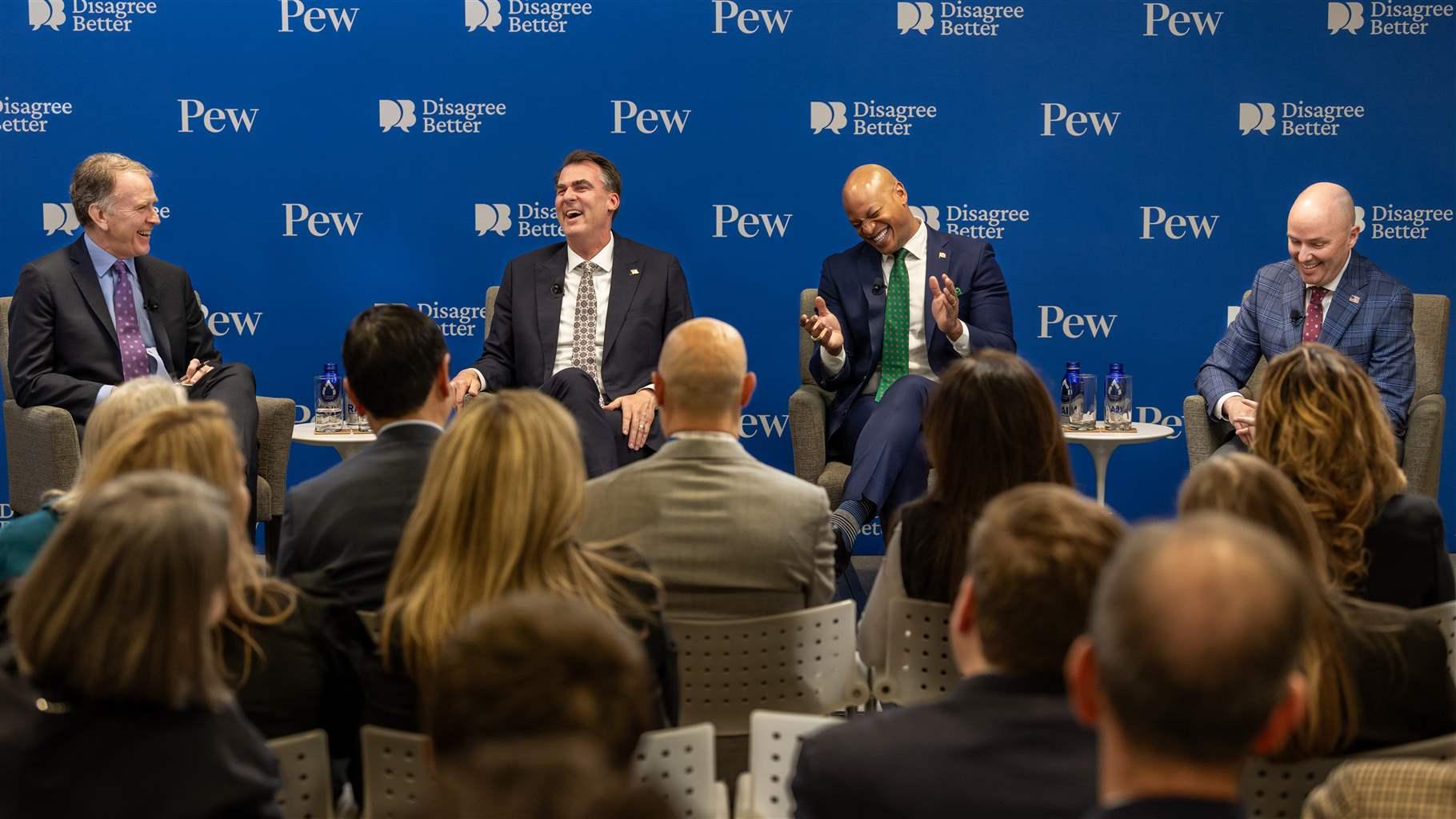
The Pew Charitable Trusts and Disagree Better hosted an event Feb. 18 featuring Utah Governor Spencer Cox (R), Maryland Governor Wes Moore (D), and Oklahoma Governor Kevin Stitt (R) that was moderated by journalist Steve Inskeep, the host of NPR’s “Morning Edition.” The conversation focused on how civil political discourse helps foster a strong republic.

Like two sides of a coin imprinted with the nation’s motto, “E pluribus unum”—out of many, one—America’s political factions are cast in opposition, but they are intrinsically bound together as parts of a larger whole.

Public dissatisfaction with democracy continues to outweigh satisfaction across 12 high-income countries that Pew Research Center has surveyed consistently since 2017.

In our hometown of Philadelphia—where America’s story began nearly 250 years ago—public art helps to tell stories, celebrate identities, and create unexpected layers of color throughout the city.
.jpg?mw=1820&hash=9388FF00421A53C2B3286AD3E0CB161A)
This summer, Philadelphia’s famed Liberty Bell will have to share some of its popularity with a nearby bell tower. As part of celebrations for the country’s 250th anniversary, artist Paul Ramírez Jonas’ interactive sculpture Let Freedom Ring will be installed at Cherry Street Pier, on the Delaware River waterfront.
Trust Magazine
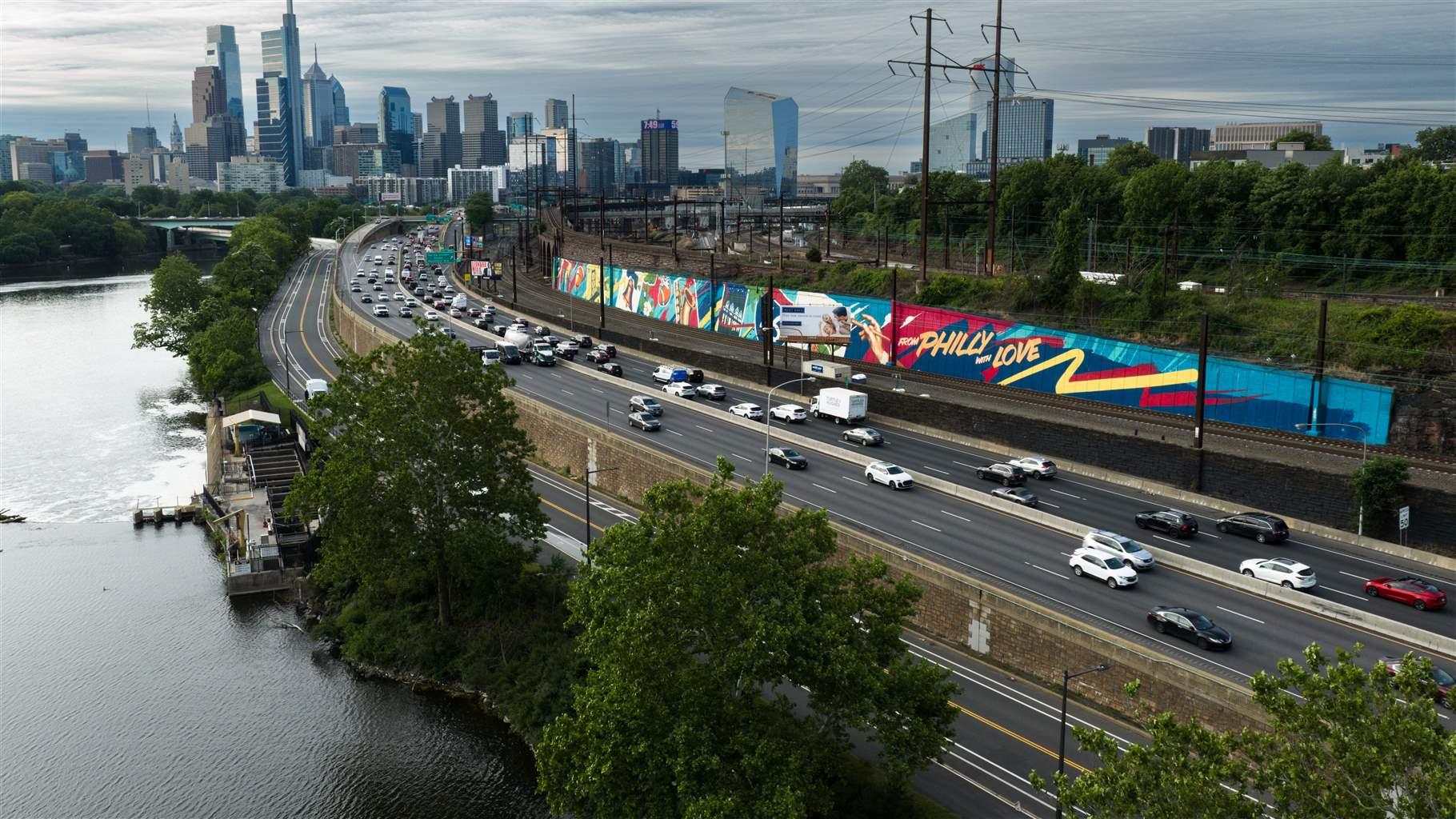
In honor of the United States’ 250th birthday, Philadelphia has a striking new landmark that helps to tell the city’s story in a novel way. The 16,000-square-foot mural “One Philly, A United City, With Love” depicts a series of postcards representing famous sights from the city where America was born two-and-a-half centuries ago.

“Can we eat our way to a stronger democracy?” That question was posed in jest—sort of—to an audience that filled Marian Anderson Hall at the soaring Kimmel Center for the Performing Arts in downtown Philadelphia on Saturday, June 13.

As America approaches its 250th anniversary, it’s essential to recognize the early Black Philadelphians whose leadership and institutions helped shape the nation.

Signed by the delegates of the Philadelphia Convention in 1787, the U.S. Constitution outlines how the American government is organized and operates. Test your knowledge of this key document in American history through these seven questions.
The Declaration of Independence. The Constitution. The Bill of Rights. America’s founding documents were the result of debates and compromises that created a new nation unlike any other. Learn more about the history and content of America’s defining documents.

The executive branch is one of the three branches of the U.S. government; it includes the president, vice president, presidential advisors and Cabinet, 15 executive departments, as well as hundreds of other bureaus and agencies. U.S. government employees within the executive branch play a variety of critical roles, such as issuing passports, maintaining public lands, printing money, monitoring the economy, and supporting health programs.

How well do you know the top leaders of our land?

The framers of the Constitution faced a dilemma: How do they organize 13 independent states — each with its own governing bodies and constitution — into one unified country? Their solution was a system that shared power between the states and a central government, also called federalism. Take the quiz below to see how much you know about how state and federal governments function and interact.
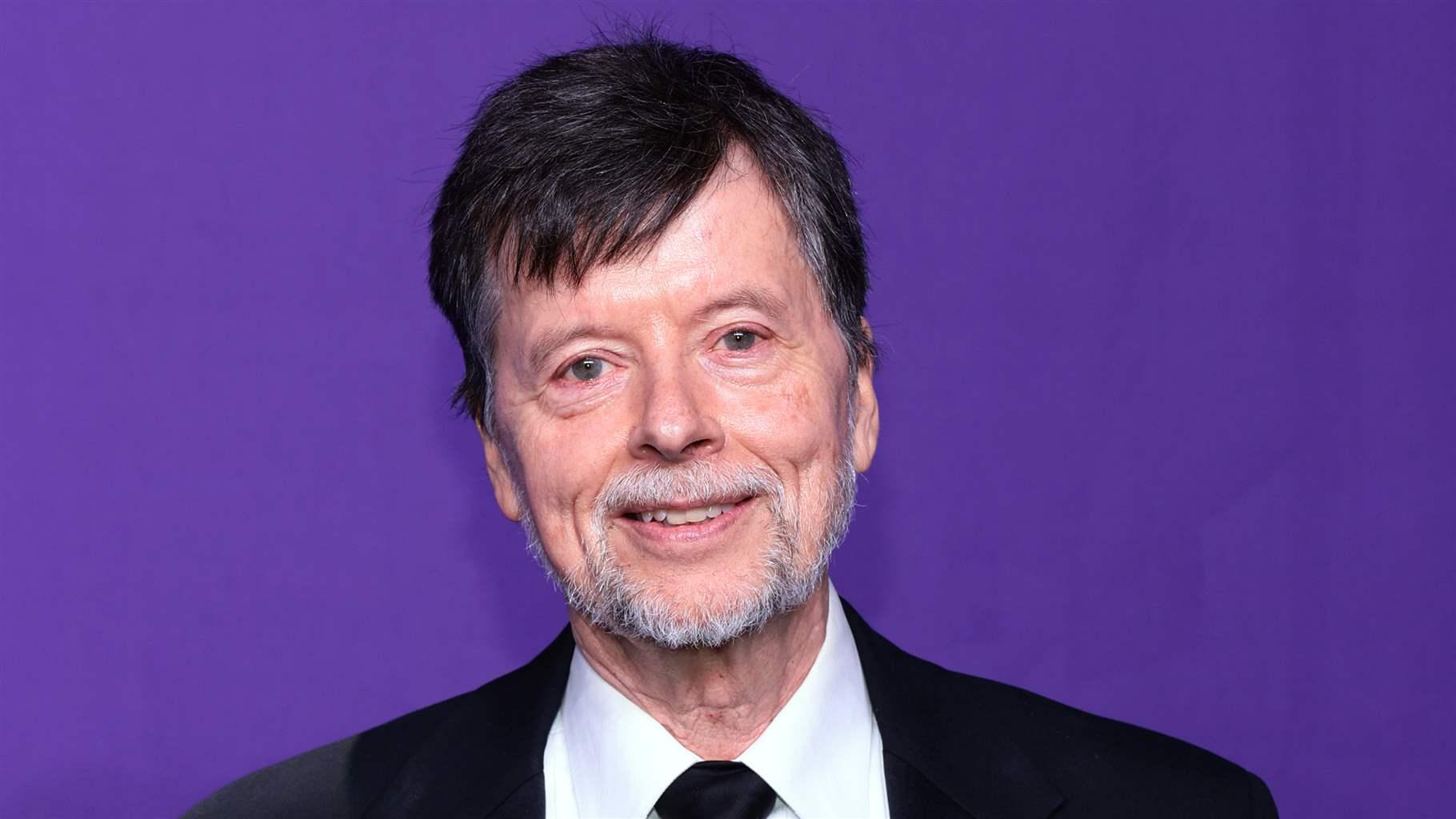
Over the past half century, Ken Burns has become America’s storyteller. His documentaries provide a history of the nation through biographies, sports, music, and other subjects. His most recent film, “The American Revolution,” which was supported by The Pew Charitable Trusts, premiered in November on PBS. He spoke about it with Pew recently in his barn office in New Hampshire.
Trust Magazine

Ken Burns is known for his expansive documentaries on American history and culture. With 33 documentary films to his name, what is the secret to his creative process? We travel to the New Hampshire barn where he works for a conversation about how he tells old stories in a new way and what inspires him to create.

Millions of Americans are behind on their retirement savings goals, and nearly 70% of those already retired wish they had started saving earlier. But Gen Z, the latest generation to enter the workforce, is an outlier, with the data showing that they are saving more than millennials and putting new emphasis on planning for the future. What gives?
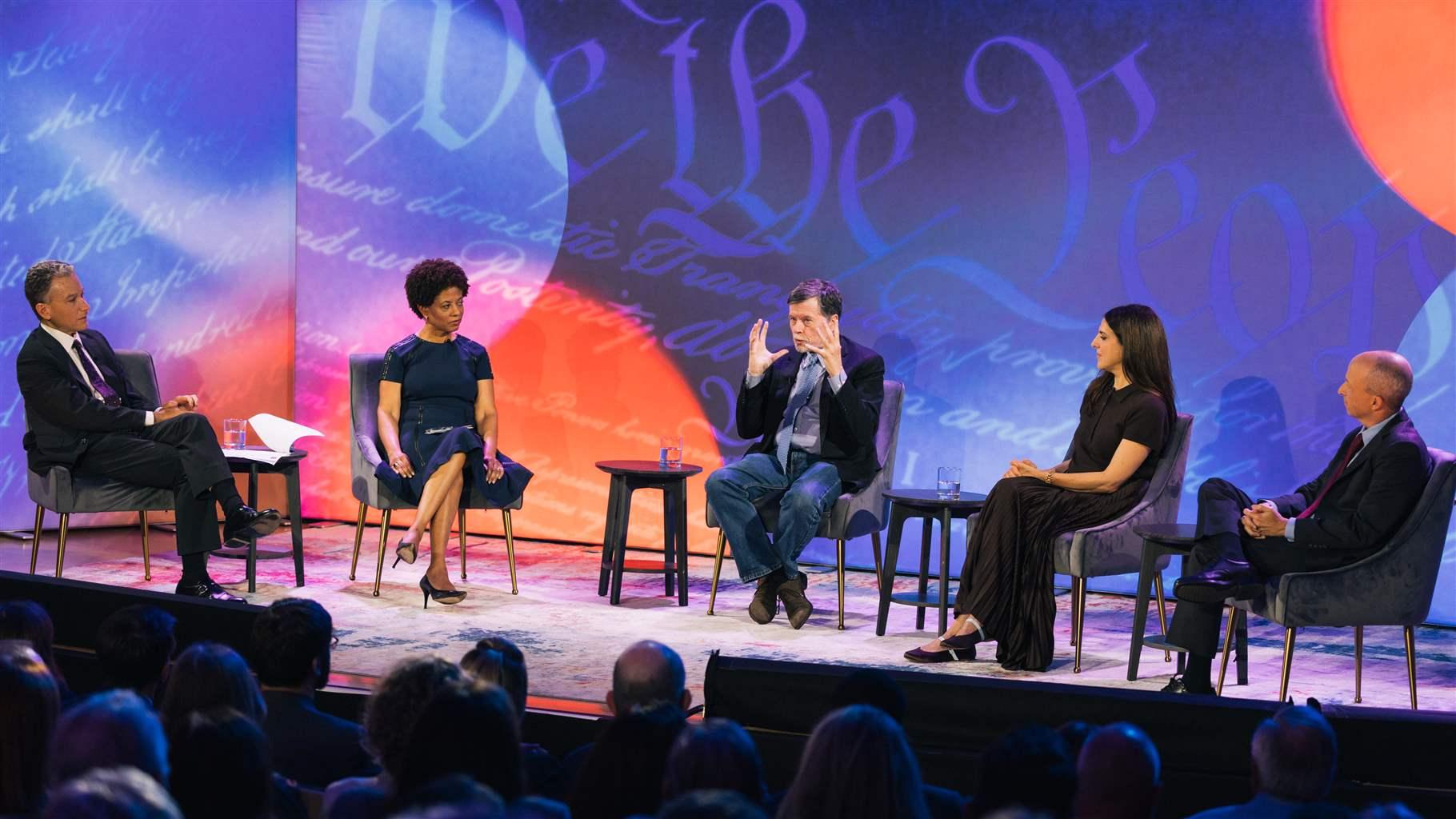
Two hundred and fifty years later, the American Revolution is as relevant as ever. The values and the ideas discussed, debated, argued over, and ultimately written down in the Declaration of Independence and U.S. Constitution as 13 North American colonies broke from British rule in the 18th century remain essential to how we think about government today. Five prominent historians and filmmakers reflected on the war’s epic impact in a wide-ranging conversation at the National Constitution Center in Philadelphia in September that then aired as a national PBS special supported by The Pew Charitable Trusts in November.
Trust Magazine

Understanding the present in the context of the past was the subject of a conversation that kicked off The Pew Charitable Trusts’ “America at 250 Speaker Series” for staff. In April, Pew’s CEO Susan K. Urahn spoke with Burns and his long-time co-director Sarah Botstein to explore what lessons from the country’s founding and what’s been called the world’s most consequential revolution can offer citizens today.
Trust Magazine


