How States Can Lead on Reducing Plastic Waste and Pollution
Tackling the plastic problem will cut costs and benefit communities
Editor’s note: This article was updated on Feb. 20, 2026, to clarify a statistic on U.S. waste generation based on the most recent research.
Plastic bags tangled in trees. Takeout containers scattered along roadsides. Bottles clogging streams and waterways and washing up on beaches. Across the United States, plastic waste and pollution have become familiar and costly problems for communities, ecosystems, and taxpayers.
Each year, the U.S. generates tens of millions of tons of plastic waste. Without action, plastic use in the U.S. is projected to more than double by 2060, driving waste generation and pollution to even higher levels.
But with tailored, evidence-based policies—and states leading the way—the U.S. can relieve the burden on already-strained local and municipal governments, communities, and the environment, while reducing costs, strengthening infrastructure, and creating economic opportunities.
The challenge—and cost—of inaction
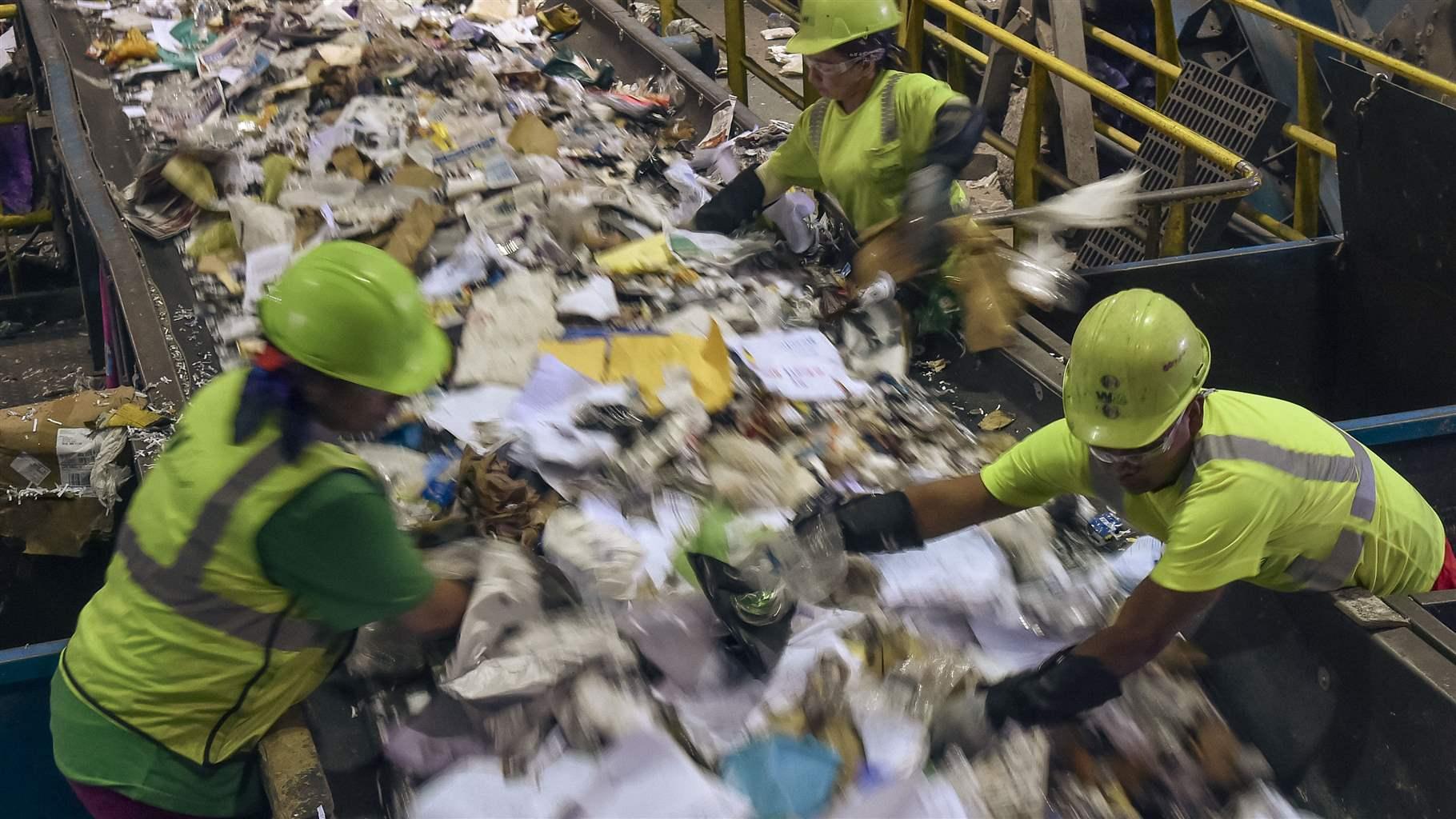
Plastic packaging is among the leading sources of plastic solid waste nationwide. Disposing of and managing this waste falls largely to local and municipal governments, which bear the financial and logistical burden of the ever-growing stream of plastic waste. These costs ultimately fall on taxpayers, who pay for cleanup and disposal, while valuable materials are thrown out. Every year, the U.S. loses an estimated $7 billion in potential revenue by sending plastic that could have been recycled to landfills. That’s money—and material—that could have supported local recycling markets and manufacturing and could have created jobs.
Microplastics: A growing threat
Beyond plastic packaging, microplastics—tiny fragments shed from tires and textiles, microbeads in personal care products, or plastic pellets that escape from manufacturing sites or while being transported—are an emerging and nearly invisible threat. Once in the environment, it’s virtually impossible to remove microplastics, and microplastic particles already have been found nearly everywhere, from remote mountain lakes to the human bloodstream. For example, states in the Pacific Northwest are grappling with the effects of a toxic chemical from tires—6PPD-quinone—on salmon populations.
In the new report “Breaking the Plastic Wave 2025,” The Pew Charitable Trusts estimated that in high-income economies, such as the U.S., microplastics will account for 79% of all plastic pollution by 2040 if the global community does nothing to stem the flow of plastic into the environment. Although research to clarify the risks to human health, ecosystems, and water quality is ongoing, states can take steps now to curb microplastic pollution from various sources.
Solutions across states
The good news: States are already leading. Throughout the country, policymakers are exploring strategies to cut costs, divert waste from landfills, and reduce plastic pollution. These include reducing excessive use of plastic in consumer products and packaging; creating extended producer responsibility programs, which shift the burden of pollution from communities to plastic material and product manufacturers; and bolstering the domestic recycling industry. States can build on this momentum with additional actions to reduce the burden of plastic waste on the American people, communities, and the environment.
Isabel Jarrett works on The Pew Charitable Trusts’ preventing plastic pollution project.
People


