With Revenue at Risk, Cities Seek to Overcome Office Vacancies
New report shares lessons from Atlanta, Boston, Dallas, Denver, and Milwaukee
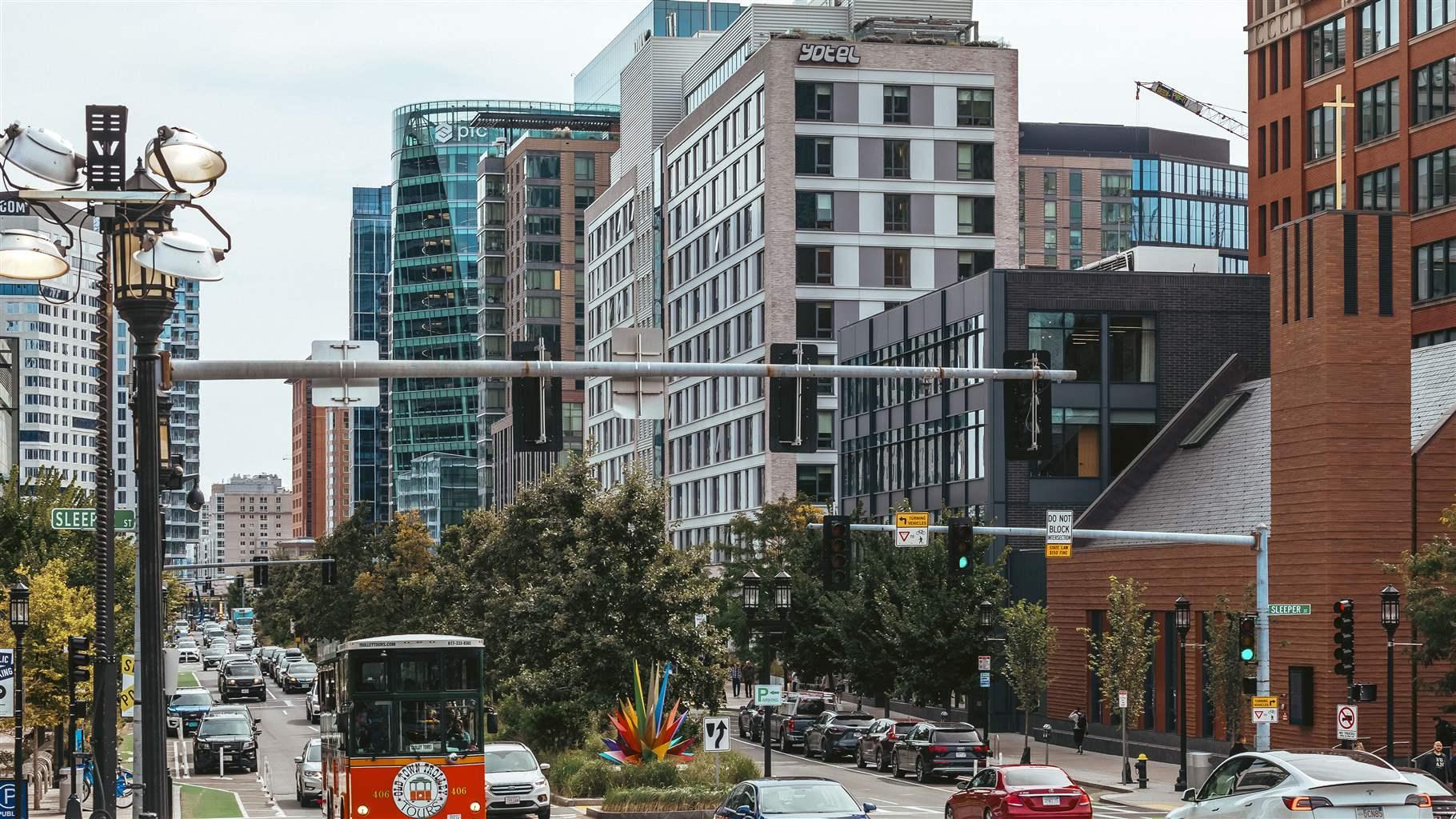
Empty and partially empty office buildings are one of the enduring legacies of the COVID-19 pandemic. Six years after the pandemic sent many employees to work from home, office vacancies remain 50% above pre-2020 rates. As many experts recognized from the start, the shift to remote and hybrid work has potentially far-reaching consequences for city governments that depend on commercial property taxes for revenue and on vibrant downtowns for economic growth.
In a new report, The Pew Charitable Trusts examines how serious a threat office vacancies really are to city budgets, what factors influence a city’s fiscal risk level, and how local and state leaders are responding to the challenges. Grounded in interviews with national experts and leaders in Atlanta, Boston, Dallas, Denver, and Milwaukee, Pew’s findings show that city finances are proving resilient—yet notable vulnerabilities remain. One thing is clear: Cities will need help from state policymakers who establish which taxes cities can levy and who often dictate what services they must provide.
Why do experts worry about the effects of office vacancies on city finances?
For U.S. cities, property taxes are the single largest tax revenue source. Since before the pandemic, the value of U.S. office buildings has declined by hundreds of billions of dollars. This decline foretells a drop in property tax revenue: Owners of buildings that are worth less money pay less taxes.
Some experts, including the authors of an influential paper, “Work From Home and the Office Real Estate Apocalypse,” have warned that these declines could cause a self-reinforcing “doom loop.” They argued that cities with less revenue would be forced to cut back on public services or raise taxes, and that these actions would make the cities less appealing places to work, further emptying office buildings and reinforcing the cycle. Although this particular theory is new, the possibility that fiscal and economic stress can cause such doom loops is well established. For example, the loss of factories starting in the 1950s spurred a decades-long decline in much of the industrial Midwest, in part because affected cities had a weaker tax base to fund public services.
How are office vacancies affecting local tax revenue so far?
Many experts have become more optimistic that any revenue declines will be muted. Three research organizations that have studied office vacancies’ effects on city tax revenue—the Tax Policy Center, Moody’s Ratings, and the Lincoln Institute of Land Policy—have found measurable but generally manageable impacts. Part of the reason for the optimism is that property taxes on office buildings represent a small enough share of overall city revenue to dampen the risk: Taxes on office buildings make up only a portion of commercial property tax revenue and commercial property tax revenue in total is typically less than residential property tax revenue.
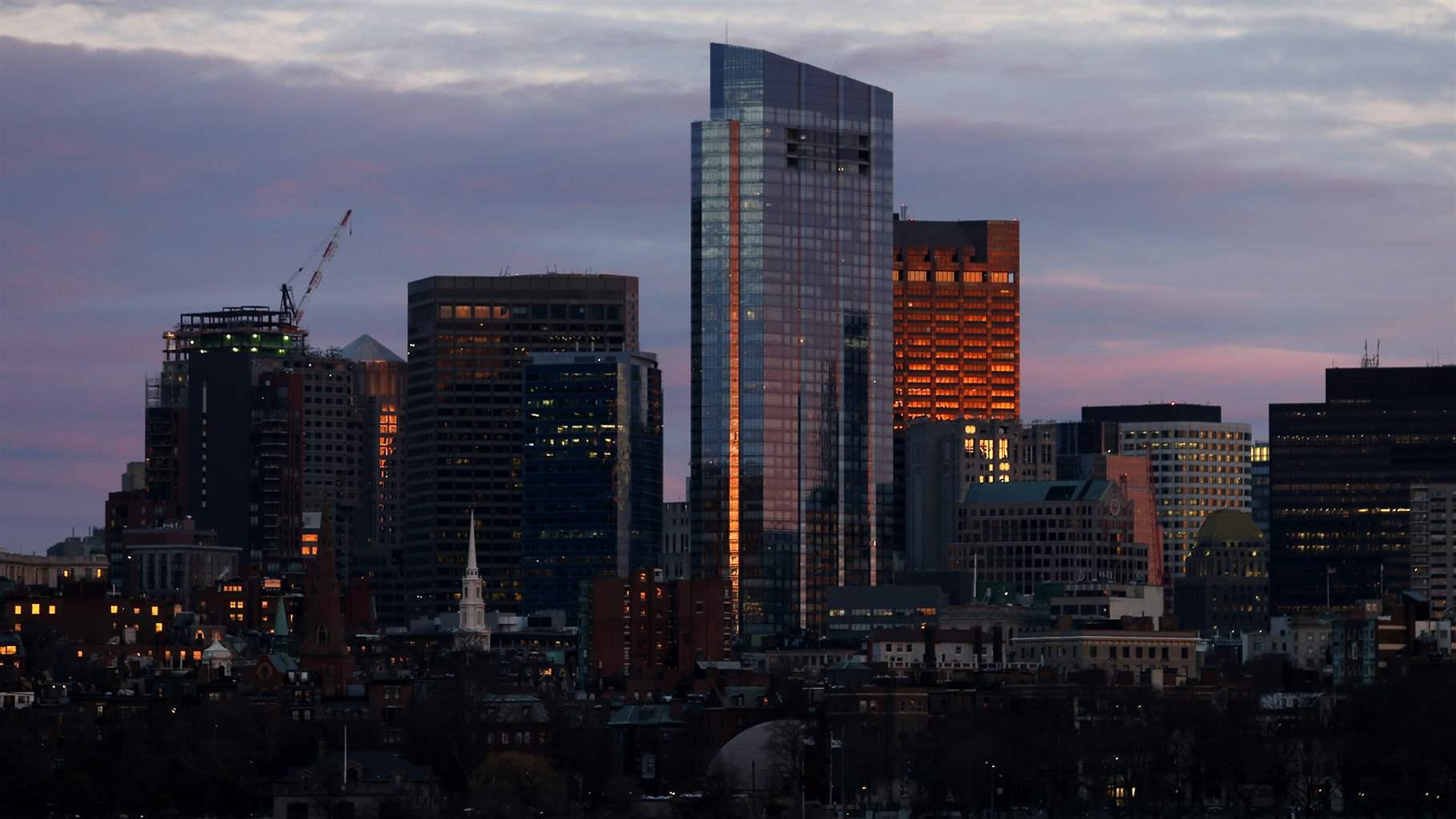
In the five cities Pew studied, officials emphasized their budgets’ resilience in the face of office vacancies. But the fiscal transition could still be difficult. In Boston, for example, assessed values of existing commercial properties have dropped two years in a row. Those declines have forced policymakers to decide between shifting more of the tax burden to homeowners or raising tax rates on commercial properties—even though higher rates could worsen office building owners’ financial problems. These decisions are especially important in Boston because of its property tax dependence: under Massachusetts law, cities cannot levy income or sales taxes.
Proponents of the doom loop theory also argue that it is too soon to know the full effects of office vacancies, as the buildings only gradually lose value as their tenants’ leases expire. After that, lost value only gradually results in less revenue because of local property reassessment schedules. As a result, real risk remains for cities.
How are vacancies affecting city economies?
The most visible effects from office vacancies have not been on city budgets but rather on downtown economies. The loss of office workers means downtown restaurants and retailers have suffered. Even in cities such as Atlanta and Denver where interviewees reported modest effects on tax revenue, interviewees still worried that downtowns were generally too empty.
The problems are particularly pronounced in certain types of downtown neighborhoods: ones with older office buildings that are unattractive to tenants and ones without a sufficient residential population to compensate for the lack of office workers. Downtown challenges matter not only to the downtown itself but also to the broader economy: Even in their reduced state, downtowns disproportionately create jobs and tax revenue. And as the home of many tourist attractions, they also shape perceptions of cities and entire regions.
How are cities responding to these challenges?
City leaders have recognized that they cannot depend on office buildings and workers to create economic growth and tax revenue to the degree they did in previous decades. In response, local leaders are working to cultivate more complete downtown neighborhoods—places that will be attractive to residents and recreational visitors, in addition to workers. For example, Atlanta is turning 50 acres of downtown parking lots and other underutilized land into apartments, hotels, retail, and entertainment venues— what commercial real estate firm Colliers has termed the “largest mixed-use development in the Southeast.” Likewise, Denver is dedicating $570 million over 13 years to remake its downtown, money the city is using for a range of public and private projects such as mixed-income housing, childcare centers, and ground-floor retail.
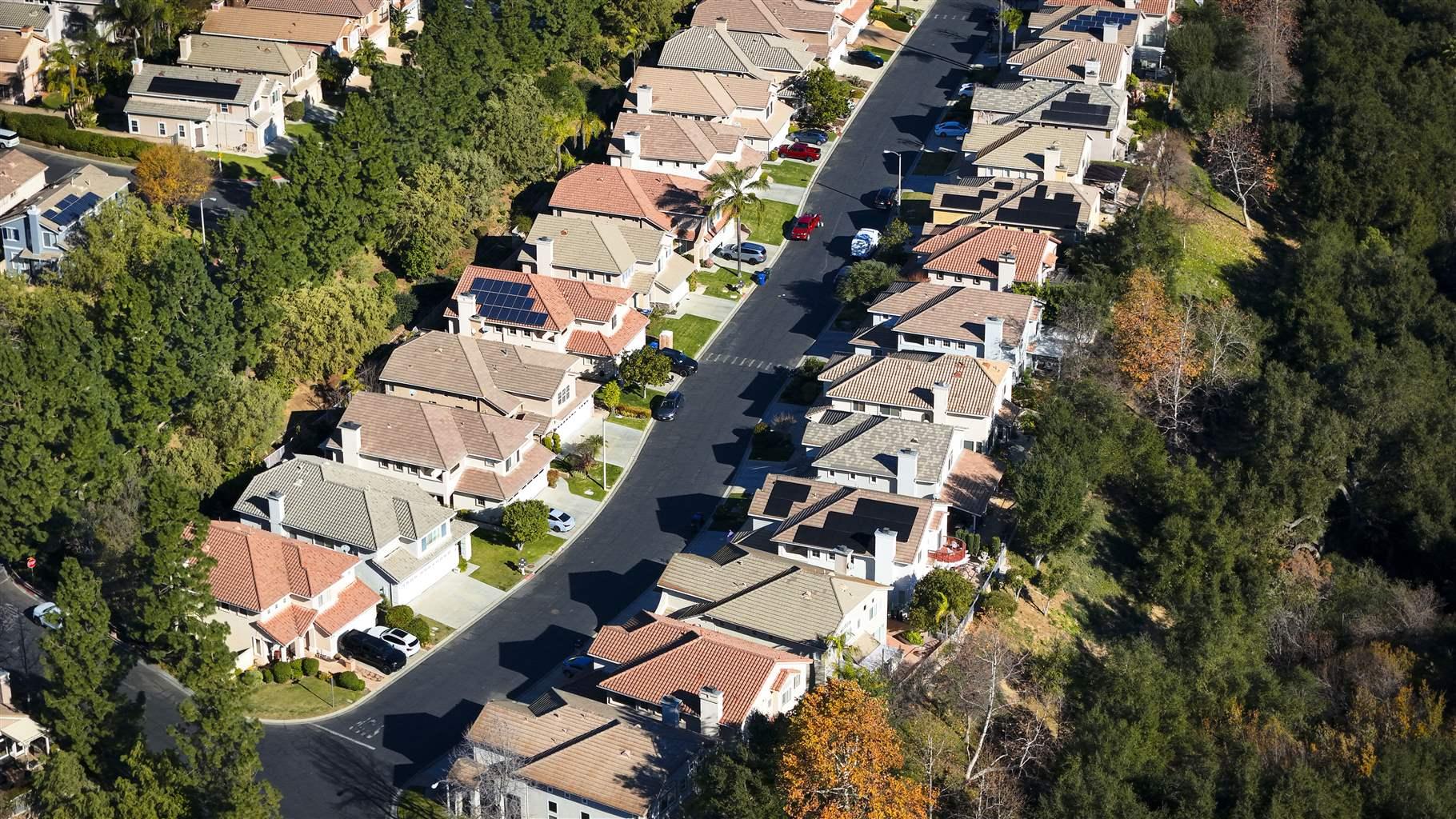
Office-to-residential conversions are central to these efforts because they can simultaneously add much-needed housing units and address the glut of underused office space that is suppressing property values. Cities are trying to spur conversions through a mix of permitting reforms, technical help, and financial incentives. Dallas’ experience shows how these efforts can help transform neighborhoods: In part by converting underused offices, the city increased the residential population of its central business district from a few hundred in 2000 to around 15,000 today.
What role can states play in strengthening the fiscal health of local government?
The success or failure of cities’ adaptation efforts will depend substantially on states. As property taxes on office buildings become a less reliable source of revenue, state policy decisions will determine whether cities have the flexibility to respond—just as states always play a crucial role in the fiscal health of the local governments they created and oversee.
Milwaukee’s recent history illustrates this point. Compared to the other four cities Pew studied, the shift to remote work affected Milwaukee less. But Milwaukee still faced a serious fiscal crisis in 2022 and 2023, with Milwaukee's mayor warning of “insolvency” and “catastrophic budget cuts.” State decisions played a central role in this budget crunch. Over decades, Wisconsin had forbidden cities from levying income and sales taxes, placed limits on property taxes, and reduced state funding for cities in inflation-adjusted terms. In 2023, as the situation came to a head, state lawmakers finally allowed Milwaukee to create a sales tax.
Although Milwaukee’s immediate fiscal crisis has abated, the city’s ability to maintain a balanced budget over the long term remains in doubt. The same thing could also be said about most major American cities, especially office-reliant ones straining to adapt to post-pandemic realities.
Josh Goodman works on The Pew Charitable Trusts’ state fiscal policy project.
People


