How 3 States Value and Invest for a More Resilient Future
Massachusetts, Minnesota, and Rhode Island are anticipating disaster costs and planning for the long term

Throughout the United States, worsening floods, droughts, and wildfires are more than environmental and safety concerns; they are, increasingly, a source of recurring costs to states for relief and recovery. Policymakers now face a set of urgent questions: How much will mounting disaster and extreme weather cost in the coming decades? Which investments should come first to curb disaster impacts? And how can governments pay for them over the long term?
At a May meeting of the Pew-convened State Resilience Planning Group (SRPG), leaders from Massachusetts, Minnesota, and Rhode Island described how their states are beginning to answer those questions by putting numbers to future risk and pairing them with new funding and financing strategies.
Turn climate impacts into dollar figures
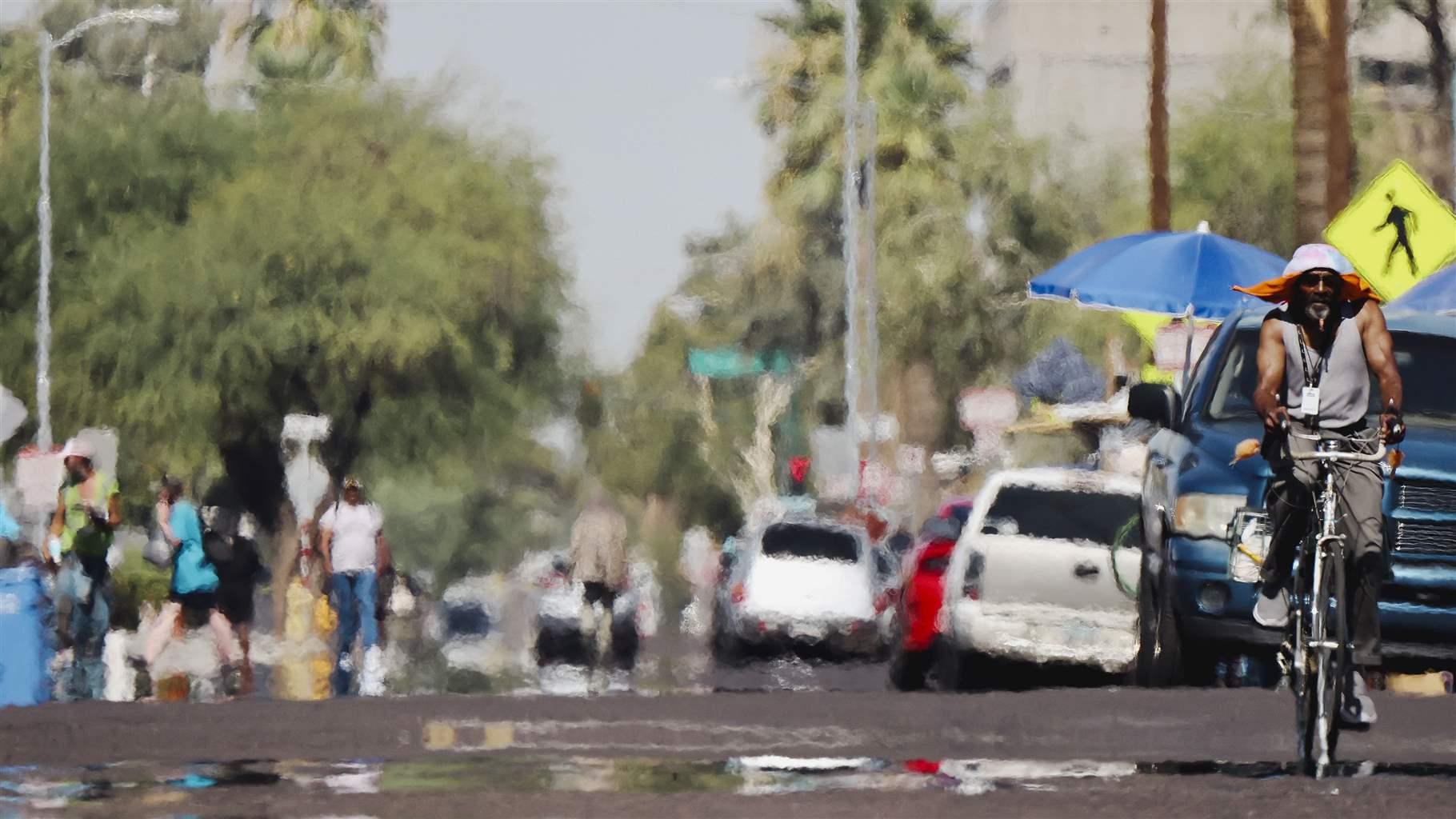
The first step is quantifying the price of inaction. In Minnesota, residents are already bearing the costs, individually and as taxpayers, of heavier downpours, rapid swings between drought and flooding that strain water and agricultural systems, and worsening air quality from wildfire smoke. So, the Legislature directed the Minnesota Pollution Control Agency to analyze the scale of that financial burden with and without further state investments in adaptation. The resulting Minnesota Climate Adaptation and Resilience Cost Study found that absent additional investments, annual climate-driven costs could rise from $17 billion in the middle of the century to as much as $57 billion by its end, but that the cost of investing in resilience would be an estimated eight to 15 times less.
Cost studies such as Minnesota’s can elevate resilience from a general policy issue to a fiscal planning priority. As University of Minnesota Climate Adaptation Partnership Climate Director Heidi Roop noted during the SRPG meeting, “The financial case for adaptation is clear, and we really need to think about and explore how we can prioritize these investments today.”

Use long-term costs to justify near-term spending
Cost projections can be intimidating, but they help put budget requests in context. For example, Massachusetts’ ResilientMass Finance Strategy estimates that addressing climate risks could require the commonwealth to invest $90 billion to $130 billion through 2050. But demand for resilience funding at the local level already exceeds available resources. In 2026, the state’s Municipal Vulnerability Preparedness program awarded $28.7 million, enough to meet about a quarter of communities’ funding requests. In this context, proposals such as the Mass Ready Act, an environmental bond bill that would invest more than $2 billion in community and infrastructure resilience, are framed as major near-term strategies and initial steps toward meeting Massachusetts’s long-term adaptation funding needs.
Prioritize resilience actions and key assets
As states shift from estimating resilience costs to making spending decisions, they will need to establish a consistent, data-informed approach to prioritizing projects for investment. Rhode Island’s resilience plan update, Resilient Rhody 2025, for instance, includes a statewide vulnerability assessment that inventoried and evaluated the risks posed to more than 130,000 publicly owned assets from sea-level rise, extreme weather, and other climate-related impacts. Through technical screening and stakeholder input, the state then narrowed that list to roughly 40 critical assets for further analysis and potential investment. The plan also identified 79 key resilience actions to be taken, defined various agencies’ roles in their implementation, and estimated that completing them would cost $112 million to $304 million.
Further, the plan includes a formal “prioritization framework” that can serve as a guide for nonprofit organizations and community partners in directing limited resources toward the most impactful projects, based on factors such as risk reduction and alignment with local goals.
Measure results to inform sustained investment
As states implement these types of frameworks, measurement and “adaptive management” can ensure that they are making the right investments and are learning over the long term. Massachusetts, Minnesota, and Rhode island have developed indicators tied to their resilience strategies that allow them to track implementation progress and assess whether resilience actions are reducing risk and addressing vulnerabilities.
What Is Adaptive Management?
Adaptive management is a structured, iterative approach to decision-making under uncertain conditions that emphasizes learning and adjusting over time rather than committing to a fixed plan from the start.
Massachusetts’ strategy, for example, outlines a phased approach in which resilience actions can be refined based on new data, stakeholder input, and observed outcomes. The state is tracking progress, evaluating performance, and modifying investments as conditions change.
By building feedback loops into the process, adaptive management helps states make more informed, flexible, and accountable funding decisions.
The ResilientMass Metrics Framework, for instance, is already being used to effectively allocate funding and will eventually also help the state determine whether investments are meeting community needs and guide future funding decisions.
These efforts reflect a growing recognition that resilience is not merely a one-time investment, but rather an ongoing process of learning and adjustment. Measurement helps states track not only the money spent, but also whether it reduced risk and reached vulnerable communities—and informs how future funding should be allocated.
Adopt innovative funding and financing

Even with better data and clearer priorities, states still face the challenge of financing resilience at scale. Grants to localities remain an important tool, particularly for helping communities get projects off the ground, but additional solutions are needed.
“Grants are important. They’re not going to go away, but we know they’re not going to be enough,” said Sarah Alexander, director of resilience and finance, Massachusetts Executive Office of Energy and Environmental Affairs.
To fill that gap, states are exploring new financing mechanisms. Massachusetts is working to streamline grant access through the Massachusetts Environment and Climate One Stop. Additionally, a provision of the Mass Ready Act, now in conference after passing the state’s House of Representatives and Senate, would create the Resilience Revolving Fund to provide low-interest loans to municipalities, water and wastewater utilities, and Tribal governments for resilience projects such as stormwater management, flood plain protection, and implementation of nature-based solutions.

Rhode Island’s Resilient Rhody Infrastructure Fund, approved in June 2025, offers a model for such programs. The state-sponsored revolving loan program provides below-market-interest loans for green stormwater infrastructure, culvert upgrades, wetland and dune restoration, floodproofing, elevating critical infrastructure, and other resilience efforts. By creating a dedicated source of financing that can be repaid and reused, the fund increases the state’s capacity to address local needs on a broader, more comprehensive, and longer-term scale than grants alone.
According to Bill Fazioli, executive director of Rhode Island Infrastructure Bank, “Revolving loan funds transform the financing of projects from being episodic and piecemeal to systematic and predictable.”
Learn from other states to build a resilience investment framework
No state has solved the long-term resilience funding gap, but together these state efforts highlight the key pieces of a comprehensive resilience investment framework. And states are learning from one another’s studies, strategies, and innovations as they build their systems.
“We have a lot of similar challenges, whether it’s financing or resilience standards or metrics,” Alexander said. “So to not reinvent the wheel and make our collective resources go further, it’s important to be talking with each other.”
Kristiane Huber works on climate resilience initiatives for The Pew Charitable Trusts’ U.S. conservation project.
People


