
If there is a more perfect way to experience Athens, Georgia, than the North Oconee River Greenway that runs through this iconic Southern city, it’s hard to imagine.
A paved trail, approaching 11 miles long, snakes alongside the lazy river connecting a wonderland nature center through a tree-covered park, alongside the University of Georgia’s campus, and into a vibrant, picturesque downtown. The sun shines brightly but doesn’t swelter, and birdsong provides the soundtrack. Along the way residents and visitors of all ages jog, stroll, bike, wrangle toddlers, sit alongside the sparkling river, and power walk with cellphones to ears.
But the greenway is more than just an enjoyable throughway. It encompasses the floodplain of the Oconee River, which has seen its share of development over the years. At the same time, extreme storms have become more common. Paved surfaces and buildings hamper water absorption, and, combined with the excessive amount of water from these deluges, homes and other buildings along the river flood.
In response, officials, business representatives, and an active, engaged community in Athens pondered action. “How [could] we protect all the green infrastructure features that naturally provide water infiltration, heat mitigation, pollution mitigation?” says Mike Wharton sustainability department director for Athens-Clarke County, who has been involved with the greenway project from the beginning. The municipality also wanted to create a recreational space—and provide alternative paths for travel.
Their solution was the greenway system. It’s also an example for others to follow.
Standing on the trail listening to Wharton explain how Athens envisioned, created, and funded the project is a group of experts from all over the country. These public officials, known as resilience officers, are responsible for reducing impacts from natural disasters yet to come―including flooding, hurricanes, tornadoes, droughts, wildfires and their resulting smoke, extreme heat, and more. They’re attending the annual meeting of the State Resilience Planning Group (SRPG), the nation’s premier network of officials leading the charge on addressing risk from natural disasters.


Created by The Pew Charitable Trusts in 2019, the SRPG helps members exchange knowledge about how to tackle natural disasters and share what they’ve learned about developing and implementing comprehensive resilience plans in their states. Members meet in person once a year, and on this week in August, the University of Georgia’s Institute for Resilient Infrastructure Systems is hosting. The convening comes at a time when federal policy changes could transform how the United States prepares for catastrophes as natural disasters are becoming more frequent and intense.
“From 2020 to 2024, we saw more disasters that cost at least a billion dollars—and some cost tens of billions— than in the entire previous decade” says Kristiane Huber, a member of Pew’s U.S. conservation project who works on state resilience initiatives. “It’s important that states are proactive about planning for disasters because it’s not a matter of whether a state will have to respond. It’s a matter of when.”
South Carolina was one of the first states to get involved with the group. Starting in 2015, a series of hurricanes caused significant damage in the Palmetto State, which prompted the state’s government to build up disaster resilience instead of just reacting to storm damage, says Benjamin Duncan, the state’s chief resilience officer. His office works to lessen storm impact on residents, the economy, infrastructure, and ecosystems through both mitigation and resilience projects. Duncan says South Carolina has 45 flood mitigation projects in motion, such as buying 200 homes in flood zones and relocating the residents. “Flooding is our greatest risk,” Duncan says. “We want to find a resolution to some of the problems before they happen, and that’s what we’re doing.”
South Carolina’s extensive experience with flood mitigation has become a resource and roadmap for other states looking to start a program. “We have the expertise to help other states determine what they need to do and expand their resilience offices and experts,” Duncan says.

For many states, proactive resilience projects leverage natural risk reduction—and the greenway in Athens is a prime example. As the group walks along the restored flood plain—a buffer zone full of vegetation that acts as a natural barrier within 150 feet of the river’s path—they learn how volunteer community members helped remove invasive species that blocked water absorption and replaced them with native trees and plants that are better adapted to this environment, thus sequestering more carbon and improving water quality by filtering pollutants. The project also opened a corridor for native wildlife, including white-tail deer, owls, and songbirds that naturally spread seeds that will, in turn, sprout a biodiversity of plants, which will improve water absorption and filtration.
“We’re looking at how we build in harmony with nature rather than against it,” Wharton explains. That investment also has another benefit that is more difficult to quantify, he says: “It boosts mental health. People can focus better when they get outside; it’s been documented.”
Across the country, approaches to harnessing natural processes that bolster flood resilience can look very different. Washington state has more than 3,000 miles of coastline susceptible to sea-level rise and erosion as well as freshwater shorelines that now flood more due to increased rain that used to be snow.
“We’re looking at comprehensive solutions that are really nature-based,” says Jennifer Hennessey, special assistant to the director on climate resilience at the Washington State Department of Ecology. For example, in North Cove—known as Washaway Beach because it’s said to have the fastest-eroding shore on the Pacific Coast—massive erosion threatened not just homes that were falling into the ocean, but also nearby cranberries the locals harvest and distribute globally. Residual salt from the ocean’s stormy waves can kill the vines. To help, the state restored the sand dunes using “cobble berms”—mounds of hand-size stones placed at the base of dunes—which have “really reduced the rate of erosion in that area,” according to Hennessey. Locals have also piled up dead trees to build up the eroding shoreline.

Washington is also affected by extreme heat—a heat dome killed hundreds of people across the Pacific Northwest in 2021—and has had its share of wildfires, smoke, and drought (drought was declared in six of the last 10 years). “All of it is impacting our people and communities and the people who rely on our land to make a living,” Hennessey says.
To help, Hennessey’s agency monitors air quality and produces short-term forecasts so that people can plan their activities during wildfires depending on how extreme the smoke is expected to be. “It’s imperative that we plan for these conditions and help people manage them,” Hennessey says. “Data and information are really essential to planning and being more resilient.”
Technology can also help to build with nature in mind. In Rhode Island, where flooding is the primary climate concern, mapping tools show where sea level is most likely to rise and where flooding might occur, says Kimberly Korioth, Rhode Island’s chief resilience officer. “We can look into the future and determine if a location is a ‘safe’ place to be building,” she says.
Over time, resilience projects can also save money. According to the 2024 Climate Resiliency Report by the U.S. Chamber of Commerce, Allstate, and the U.S. Chamber of Commerce Foundation, every $1 invested in disaster mitigation saves $13 in economic costs, damage, and cleanup costs. “It is important that states be proactive, because investing now saves money on the cost and impacts of disasters in the future,” says Pew’s Huber.
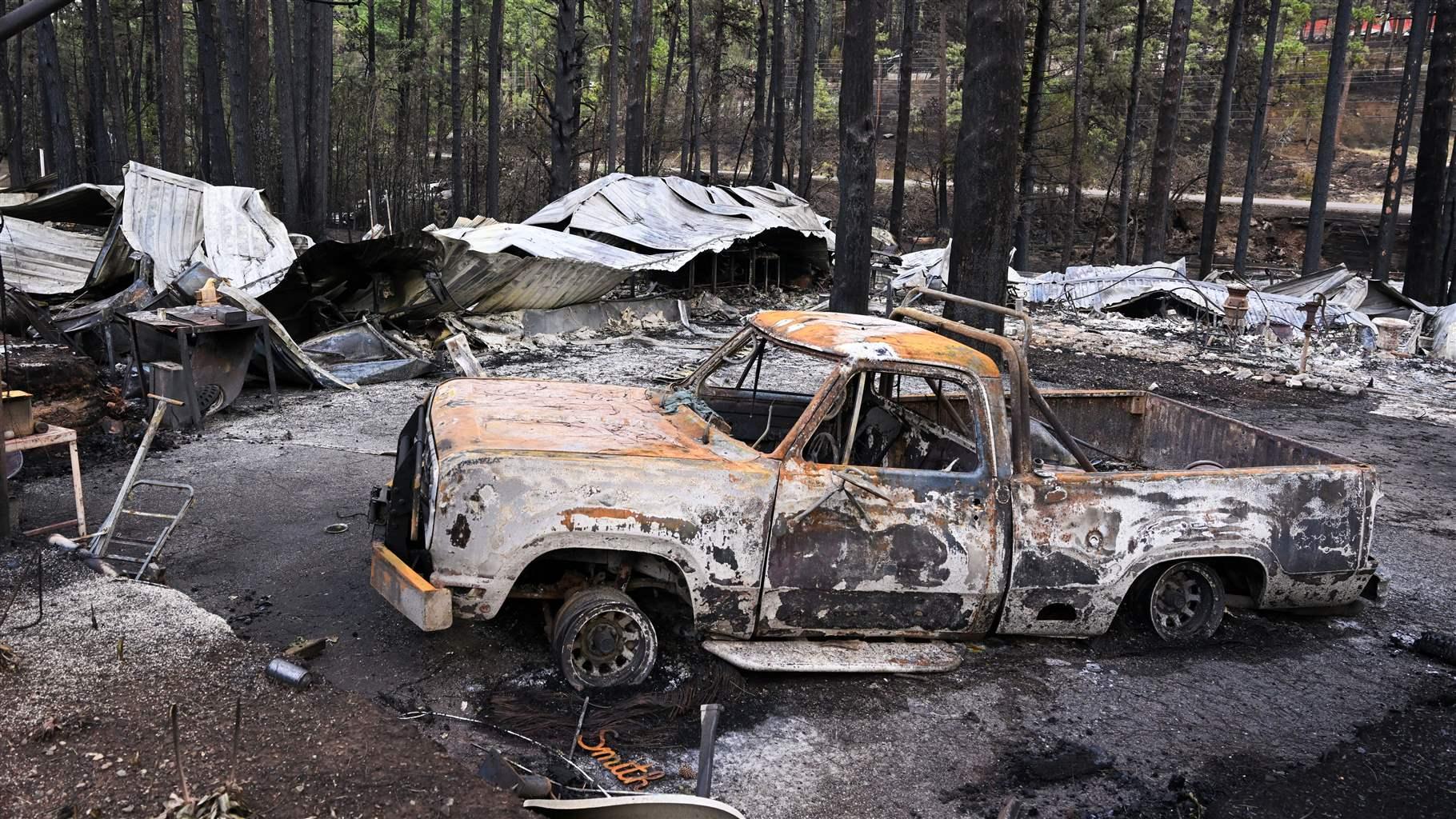
But Hennessey says it can be challenging to measure progress and tell the story of why resilience investments make sense. For example, the Duckabush Estuary project in Washington state’s Puget Sound originally showed $15 million in flood mitigation benefits via traditional analysis, says Glen Delaney of Earth Economics. However, with a price tag of $120 million, saving $15 million in flood damage did not make a strong case for investment. But once analysts quantified the full value of the estuary’s ecosystem—incorporating salmon habitat, carbon storage, recreation, and water quality—the project’s value rose to $75 million, making the argument for investment much more compelling.
Rhode Island’s Korioth says she was particularly interested in strategies for how states could leverage flood insurance. Gina Hardy of the North Carolina Insurance Underwriting Association explains that her state has issued catastrophe bonds, which function like dividends; if no losses occur, the funds support on-the-ground resilience projects—and members of the community who bought the bonds have directly supported resilience projects.
Disaster insurance products can also offer a solution. For example, a “parametric” policy uses predetermined payouts based on certain disaster conditions (like 100-mph winds) rather than a damage assessment—which not only reduces costs but can be quickly paid, explains Helen Wiley of the disaster recovery nonprofit SBP, based in New Orleans. For example, if a Category 3 hurricane passed within five miles of an insured home or business, it would automatically trigger a $10,000 payout. Not only do the funds arrive quickly, but they can also cover gaps like interruption of a business that sustained no physical damage, such as a home-based business that experienced financial losses for months.

Throughout the states, involving communities adds capacity to overwhelming workloads and has proved essential for some long-running resilience programs. Regional authorities focus on financing new projects. Regional coordinators raise much-needed funds and offer advice based on what they see and hear in their locations. States have also partnered with colleges and universities. Athens-Clarke County, for example, has tapped the resources of the University of Georgia for research and technical help. And when overhauling a flood plain to create a green space, officials involved residents to help plan and build it.
Resilience advocates have also championed public feedback forums so state officials can understand what havoc disasters have caused. While Rhode Island was developing coastal resilience plans, Korioth says, stakeholder forums outlined real concerns. “[We] heard about a number of challenges … things like intense storms hitting and flooding on the streets so that people had to take kayaks to get safely away from their houses,” she says. “People can’t get their kids to school, access local community center resources, or get safely to and from work when flooding events occur.”

In 2024, South Carolina mobilized volunteer organizations and nonprofits to assist with recovery from Hurricane Helene and mobilized disaster case managers on the ground. The groups helped affected citizens find clothes and food and began to rebuild homes immediately, without waiting for the federal government, says South Carolina’s Duncan. In the past decades, when four destructive hurricanes caused major damage, those organizations repaired or replaced more than 3,459 homes. Without that effort, “a lot of these people would be homeless,” Duncan says.
Wharton thinks that one important role of a resilience office is to communicate the importance of planning in developing valued community projects. He says the greenway began with a small group of people, and as the excitement built, so did the story. “We went from ‘Don’t build it in my backyard’ to ‘I want it in my backyard,’” he says.
While SPRG members have different ways of addressing disaster threats on their home turf, the problems themselves are similar. “Every time we come together, we’re able to share ideas, whether it’s across policy, planning, budgetary, or funding initiatives,” Korioth says. “And it leads to real change on the ground. People go back to their state and implement these ideas. And it really just starts with conversations here.”
Back on the greenway, the group of resilience officers sees the reclaimed flood plain replanted with native vegetation, learns how it was financed, and hears about how the community came together, got excited about the green space, and made it happen. Seeing a project that works is “key to sparking ideas and exchanging helpful suggestions about how to fortify a place so it can withstand damage and disruption,” Huber says. “It’s also a great way for the officials to ground planning and policy discussions in the reality that resilience starts with people and strengthens communities.”
Carol Kaufmann is a Trust staff writer.
Explore the Issue
This article is part of a magazine issue featuring in-depth stories and insights.
People


/16x9_m.jpg?mw=1820&hash=4C8AC0442DCF39C08321E82F1DA91C38)


