Smart Design for Wildlife Crossings Would Benefit Communities
A new report highlights how better crossings can improve driver safety, reduce flood risk, and protect wildlife

The United States’ transportation infrastructure forms the backbone of the world’s largest economy. But according to a new report, “Built to Last: Resilient Road-Stream Crossings for People, Fish, and Wildlife”—researched and published by Environmental Policy Innovation Center, ARC Solutions, and Wildlands Network with support from The Pew Charitable Trusts—many of the nation’s roads, bridges, rails, and highways were built more than 80 years ago and have exceeded their lifespan. As these old structures are upgraded or replaced, the new ones must be designed to better withstand increasingly frequent and severe flooding. They also must account for intersections with wildlife habitats and migration paths that contribute to dangerous wildlife-vehicle collisions, which the report finds cost Americans roughly $14.1 billion a year.
The good news is that the report offers guidance on how transportation and wildlife agencies can identify outdated “road-stream crossings”—bridges and culverts installed at points where creeks or streams and roadways intersect—and update them with “integrated” road-stream crossings, which are intentionally designed to accommodate increasingly heavy rainfall, sediment, and debris flows while also providing safe passage for fish and wildlife. These crossings are an effective solution for protecting communities, connecting wildlife habitats, and extending the life of the nation’s transportation infrastructure.
The state of U.S. crossing infrastructure

According to the report, the National Aquatic Connectivity Collaborative has compiled data on more than 6.3 million road-stream crossings in the U.S. The data shows that many are undersized, degraded, or require replacement to mitigate flooding and that integrated crossing designs haven’t yet been widely adopted.
The report indicates that the main reasons for the slow uptake of these effective infrastructure solutions are a lack of reliable funding and a shortage of state agency policies that require integrated designs—and it highlights ways that transportation planners, policymakers, and advocates can address these barriers, including:
- Identify regulatory, legislative, and funding pathways that can support data collection, agency coordination, and implementation of integrated road-stream crossings.
- Collect data and case studies to show the costs of wildlife-conflict and flood-prone hotspots and how integrated road-stream crossings can provide economic, safety, and ecological benefits.
- Share lessons learned across regions and states that have applied proven design and implementation guidance.


Crossings save lives and money
Intentionally designed road-stream crossings and wildlife passages over or under highways can reduce wildlife-vehicle collisions by as much as 97%, making roads safer for people and animals and reconnecting vital habitats that species need to thrive. But crossings do not only improve driver safety; they also save communities money. According to the “Built to Last” report, an integrated stream crossing can provide a net lifetime benefit of $540,618 to more than $1.2 million compared with an outdated crossing. For example, Becket, Massachusetts, invested $593,000 to update a crossing that the commonwealth expects will save the town more than $1 million over its lifetime. And in Southbury, Connecticut, upgraded culverts helped manage floodwaters after a severe storm, while the town’s other outdated infrastructure suffered $91 million in damage.

Strategies for more resilient, effective infrastructure
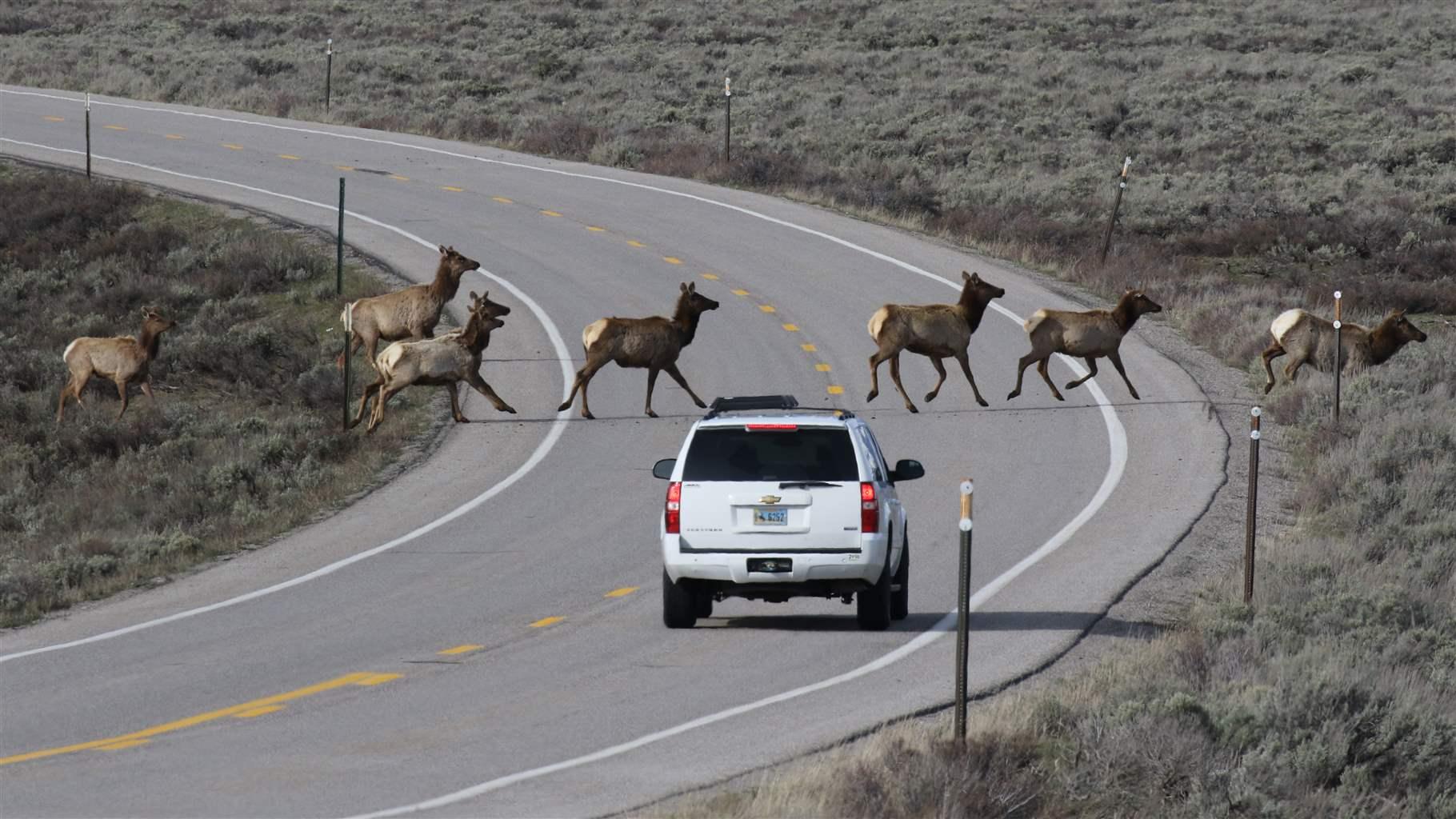
The report breaks down policy and design opportunities across four U.S. regions, highlighting that, although integrated road-stream crossings share common principles, effective solutions must be tailored to local climate, infrastructure, wildlife, and policy conditions. It provides region-specific recommendations to help transportation and wildlife agencies advance flood-resilient, wildlife-friendly infrastructure, including by using wildlife-vehicle collision and flood risk data to prioritize structures in need of upgrade.
The findings from this report show that millions of road-stream crossings in the U.S. are not equipped to handle today’s extreme weather conditions or accommodate wildlife and fish passage needs. But they also reveal how states can embrace integrated crossing design to protect drivers and wildlife, improve flood resilience, and deliver lasting benefits for communities.
Jessica Roberts works on The Pew Charitable Trusts’ U.S. conservation project.
People


/16x9_m.jpg?mw=1820&hash=4C8AC0442DCF39C08321E82F1DA91C38)


