25 Years Later, Northeast Atlantic States Still Need to Deliver on Ecosystem-Based Fisheries Management
Atlantic mackerel remains subject to overfishing, but a comprehensive approach could improve sustainability

In brief:
- What’s happening: This autumn, Northeast Atlantic countries will participate in several key meetings that could determine the fate of Atlantic mackerel and the future of fisheries management in the region.
- Why it matters: Ocean ecosystems are in flux. Changing temperatures, boom-and-bust cycles for predator and prey species, and intensive fishing can change the stability of a fishery and the ecological health of an entire region.
- Governments need to act now: Twenty-five years ago, many Northeast Atlantic governments agreed to adopt ecosystem-based fisheries management to better protect ocean health, but progress is slow.
- What’s next: Northeast Atlantic governments must use the opportunities presented by this season’s convenings to agree to region-wide ecosystem-based protections and to stop overfishing of Atlantic mackerel and other key stocks.
Atlantic mackerel—one of Northern Europe’s most popular seafoods—is in trouble. Years of overfishing by more than half a dozen nations has driven the mackerel population down so low that scientists recommended a staggering 77% cut in the catch for 2026. Recent reporting suggests that the European seafood marketplace may already have moved on—with some companies swapping the Northeast Atlantic species for Chilean jack mackerel.
In better news, the countries – Iceland, Norway, the United Kingdom, the Faroe Islands, Greenland, members of the European Union and Russia – that catch Atlantic mackerel have already agreed to a science-based overall catch limit in their domestic waters for 2027. And now, a forthcoming meeting provides an opportunity to stop the cycle of overfishing on the high seas and to build a more sustainable future for key commercial fish populations in the Northeast Atlantic.
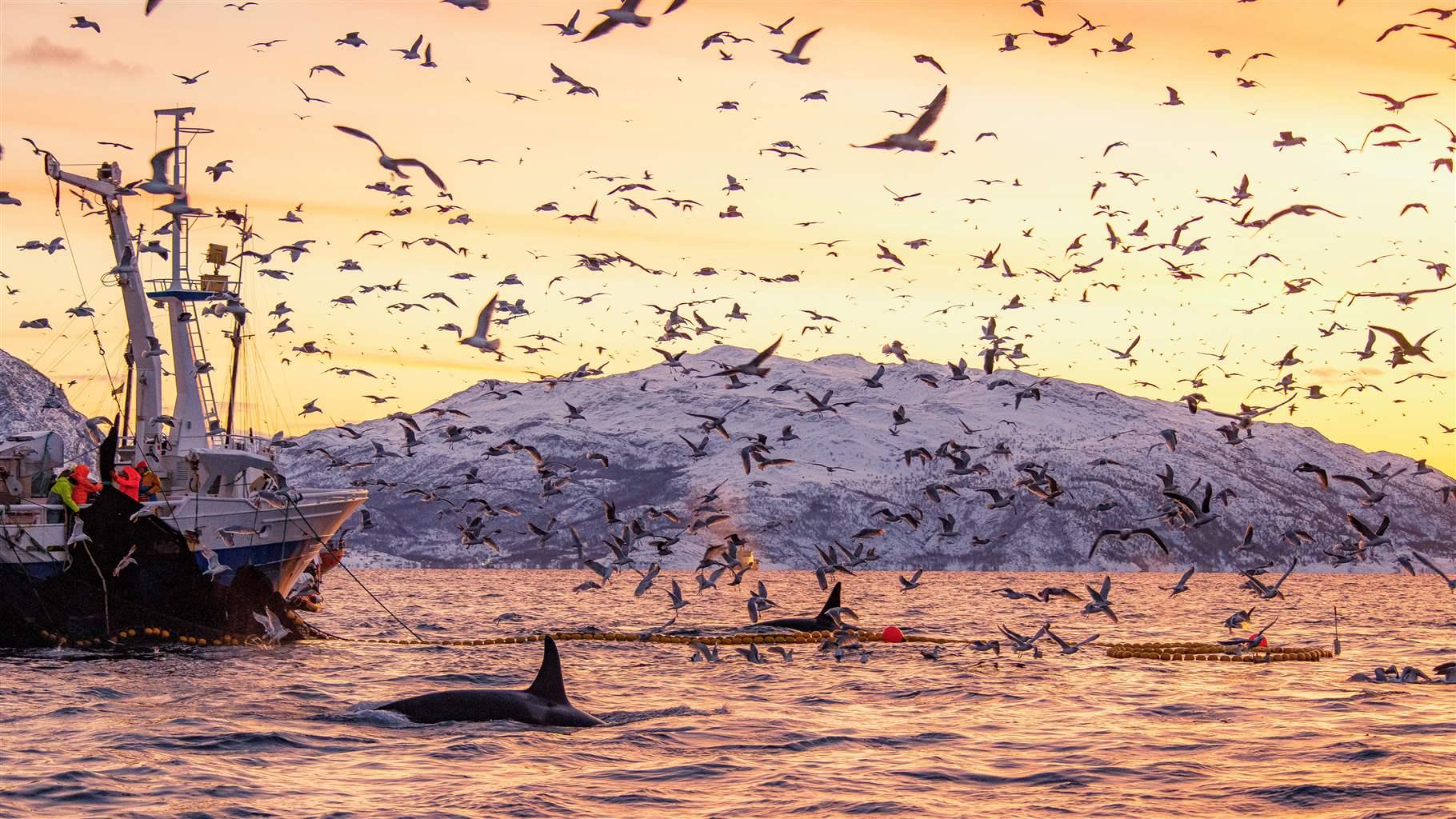
Members of the North-East Atlantic Fisheries Commission (NEAFC), the multinational body that manages fisheries in the region, will meet from 10-13 November to decide how much mackerel they’ll catch beyond their own waters. They also will consider adopting and implementing ecosystem-based fisheries management (EBFM), an approach that, rather than simply assessing and managing fisheries in isolation, strives to incorporate environmental conditions, such as food web interactions and changing ocean temperatures; long-term management objectives; and socioeconomic considerations into decision-making.
Progress towards EBFM is slow
In 2001, more than 60 nations adopted the Reykjavik Declaration to move away from single species fisheries management and to instead “individually and collectively work on incorporating ecosystem considerations.” Although NEAFC countries have taken some action, including a bilateral agreement between Greenland and Iceland to set catch limits for capelin based on the abundance and distribution of cod, one of its main predators; a recently adopted ecosystem-oriented long-term management plan for North Sea herring; and a U.K. ban on all sandeel fishing in its waters in 2024, wider, high seas-focused EBFM has seen little progress.
But beyond protection of individual stocks, NEAFC has other reasons to adopt ecosystem-based rules, particularly a growing body of biodiversity commitments made by its members and the agreement of new ocean protection tools as part of the global high seas treaty. In January, the first conference of the parties to the treaty will convene, and governments are expected to begin considering how to use its tools to protect important ocean areas outside of national waters, including parts where bodies such as NEAFC manage fishing activity. Action now can help ensure that management of Northeast Atlantic fisheries aligns with international commitments and contributes to global biodiversity goals in advance of these new processes.
Governments must stick to their commitments
NEAFC members have the tools to stop overfishing of mackerel, but they continue to disregard the health of this valuable fishery and the wider ecosystem by allowing fishing above the science-based agreed catch limit. This year, ensuring a sustainable mackerel fishery in the Northeast Atlantic must be an urgent priority for all members.

But in addition to fulfilling their basic obligation to stop overfishing mackerel and other commercially important species, NEAFC parties should also finally adopt a concrete measure to protect marine food webs, as well as a mechanism that assesses and adjusts the pressure their fisheries put on the broader ecosystem.
Some members have already shown that this approach is achievable. The European Union, for example, which is also a member of another RFMO, the Inter-American Tropical Tuna Commission (IATTC), recently agreed, along with IATTC’s other members, to adopt EBFM for the eastern Pacific Ocean. The same can be achieved in the Atlantic’s major fisheries.
Managing the fisheries-dense waters of the Northeast Atlantic is challenging. And reliance on annual, short-term, politicized consultation on quotas has allowed overfishing to persist and has prevented adoption of critical ecosystem safeguards.
However, taking bold action at this month’s meeting would show the world that NEAFC members are ready to build the foundations of healthy, productive ecosystems in the region.
Jean-Christophe Vandevelde works to advance The Pew Charitable Trusts’ efforts to embed biodiversity protections in the international governance of large-scale fisheries and Daniel Steadman supports policy solutions to protect marine biodiversity and advance ecosystem-based fisheries management.
People


