Mediterranean Communities and Economies Will Benefit From Sustainable Fisheries Management
October meeting of the General Fisheries Commission could safeguard important stocks and habitats

Over its 70-year history, the General Fisheries Commission for the Mediterranean (GFCM) – the organization responsible for ensuring a sustainable future for fisheries in the Mediterranean and the Black Sea – has at times struggled to effectively combat overfishing.
But in the past few years, GFCM has made important progress. And later this month at its annual meeting in Rome, GFCM will have the opportunity to further strengthen management and conservation efforts for the region’s fisheries, which have supported food security, livelihoods, and economies for thousands of years – and today produces an estimated US$8 billion in revenue annually.
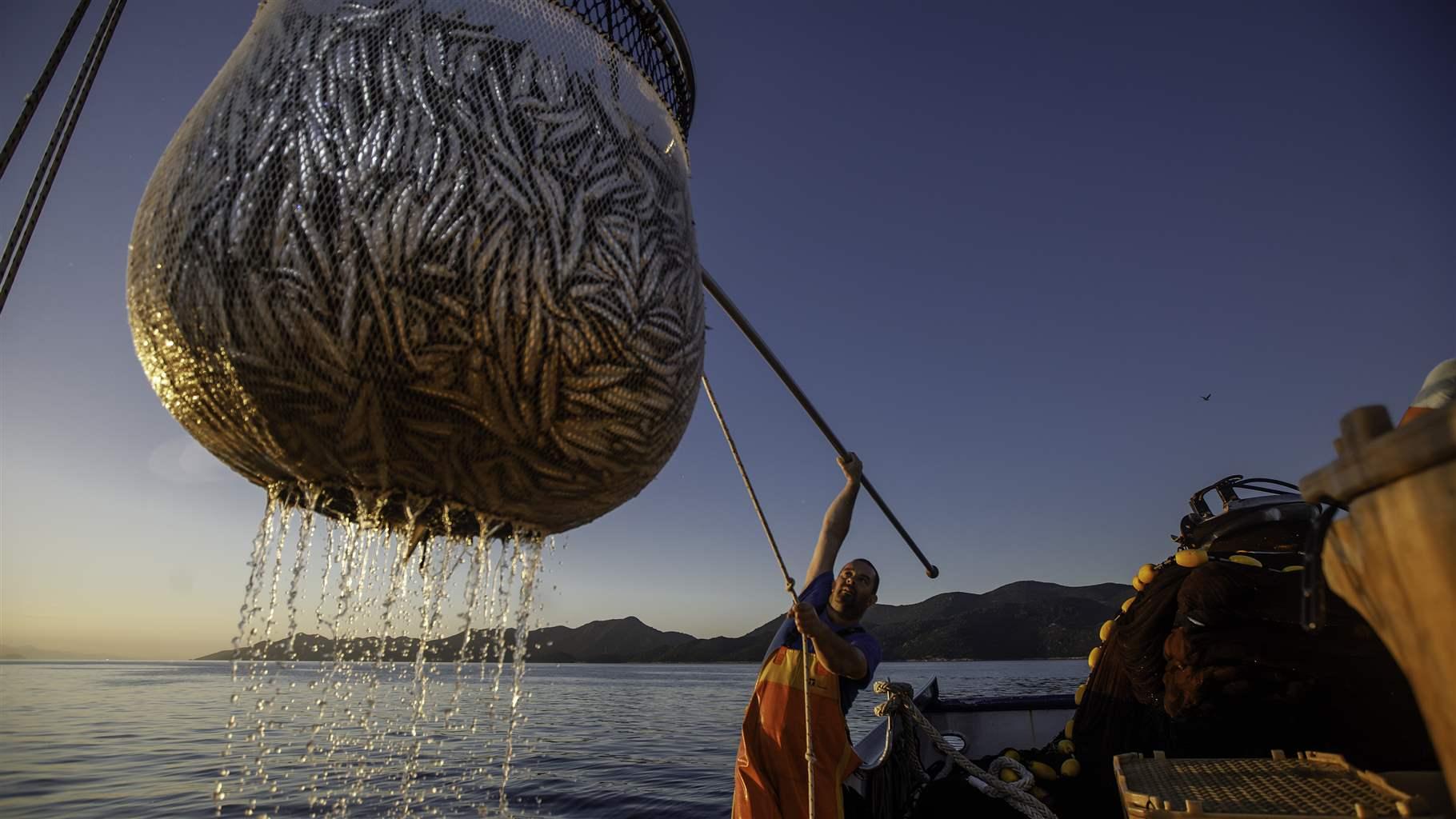
In 2021, GFCM took a key step, adopting its “2030 Strategy for Sustainable Fisheries and Aquaculture in the Mediterranean and the Black Sea,” which aims to build sustainability, conserve biodiversity and bolster climate resilience in Mediterranean fisheries. Although members have since embraced science-based management for sardines, anchovies and blackspot seabream and have identified other fisheries in need of quick action, more than half of GFCM’s assessed fish stocks are still overexploited.
The GFCM annual meeting presents a critical opportunity to move closer to the 2030 goals, but members will need to take concrete action in several areas.
Move to science-based management for key species
Hake and giant red shrimp are two of the most valuable and culturally significant species in the Mediterranean – and they are also overfished.
Giant red shrimp is used in high-end Mediterranean cuisine, while European hake is a symbol of everyday food culture, with a deep tradition in local fishing villages throughout the region. Small-scale fisheries like these now represent 81% of the Mediterranean fishing fleet.


Earlier this year, GFCM’s scientific advisory committee recommended that the Commission adopt harvest control rules for hake in the Strait of Sicily and for giant red shrimp in the Ionian Sea. Harvest control rules are a key component of management procedures (MP) – long-term, science-based approaches to fisheries management that account for a range of environmental scenarios and how they affect fish populations.
Many of GFCM’s member governments have already adopted MPs for several highly prized species under the purview of other management organizations. Together with the rest of the GFCM membership, they should now agree and implement similar MPs, informed by the advisory committee’s harvest control rule recommendations, to ensure the long-term health of these historically important Mediterranean fisheries.
Develop and expand fisheries restricted areas
Fisheries restricted areas (FRAs) are another important tool that can protect Mediterranean resources and ecosystems. FRAs temporarily or permanently ban specified fishing activities to protect vulnerable habitats. FRAs already cover 1,760,000 square kilometres (approximately 680,000 square miles) of the Mediterranean, and GFCM should follow its scientists’ advice to adopt two more at this year’s meeting.
The largest existing FRA in the region bans trawling, dredging and other types of harmful bottom fishing at depths below 1,000 metres (about 3,300 feet) in almost the entire Mediterranean. Members should expand this FRA to waters below 800 metres (approximately 2,600 feet) to protect deep water ecosystems across an additional 100,000 square kilometres (about 38,000 square miles).
GFCM also should adopt an FRA in the Cabliers Coral Mound Province, the only known actively growing cold-water coral reef in the Mediterranean. The scientific committee recommended a ban on destructive bottom fishing practices in a core area of the mound as well as in a surrounding buffer zone. Now members must take the final step to safeguard this unique ecosystem.
Next steps to sustainability
Mediterranean countries have long celebrated their fisheries and the cultural roles they have played over the centuries. But with overfishing threatening many of those fisheries, GFCM members have begun taking steps to protect and rebuild some of their most treasured species.
Governments have a chance this year not only to bring sustainability back to some of the world’s oldest fisheries and to vulnerable Mediterranean ecosystems, but also to strengthen the resilience of the region’s communities to the changing conditions in the global ocean.
Esther Wozniak works to advance The Pew Charitable Trusts’ advocacy for sustainable global fisheries, particularly through Atlantic and Mediterranean regional fisheries management organizations.
People


