Raleigh Rents Fell After Wave of New Townhouses and Apartments
Inflation-adjusted rents dropped 15% from 2022 to 2025 after city made land-use reforms and eliminated parking mandates

The metro area of Raleigh, North Carolina, has seen its population grow by 10% in recent years amid an influx of new residents seeking economic opportunity in the region’s bustling Research Triangle. The city’s rapid economic development put pressure on the housing market, leading to a 38% rise in rents from 2017 to 2022 (compared with a 29% increase in the United States overall). To help ensure that longtime residents and newcomers can find housing, city leaders set out to change their land-use policies to enable more types of homes, especially those that cost less than single-family houses on large lots.
“Of all of the drivers of housing costs—population growth, an influx of high-income earners, high land costs, and high construction costs—we have the most agency and direct control over restrictive zoning regulations,” Patrick Young, Raleigh’s planning and development director, told researchers with The Pew Charitable Trusts.
In 2021 and 2022, local officials reformed Raleigh’s land-use laws to make it easier to add homes. The reforms worked. Housing production increased sharply, especially for townhouses and apartments, which had faced regulatory barriers under Raleigh’s previously restrictive zoning. The city issued permits for an average of 3,301 new units of housing annually from 2017 to 2020; from 2021 to 2024, that figure jumped 74% to an average of 5,731 units. In the rest of North Carolina, the increase in permits grew only 29% during the same period.
Among the city’s successes:
- Raleigh’s land-use reforms have contributed to an increase in housing supply and a reduction in housing costs.
- Raleigh’s reforms have spurred the building of more townhomes and small apartment buildings—a category of housing often called the “missing middle”— including more than 2,000 townhouses since 2021.
- Parking reform eliminated onerous parking mandates for new developments, enabling housing that previously was infeasible.
- Land-use reforms and housing bonds have shifted Raleigh’s affordable housing strategy from focusing mostly on preservation to also including new home production.
Raleigh improved affordability by removing zoning barriers to building more homes
Raleigh pursued a multifaceted strategy to allow more types of housing, lower costs, and fund housing that is affordable for lower-income residents. Changes included overhauling zoning to focus on form instead of number of units; enabling townhomes, plexes (such as duplexes, triplexes, and quadriplexes), and tiny homes; allowing apartments near transit; eliminating parking requirements; and raising a housing bond.
- Form-based code: Unlike traditional zoning, form-based zoning does not regulate density (measured in units per acre) and instead addresses building standards such as lot size and building height. This approach encourages more diverse, creative housing choices. The city passed an ordinance in 2021 that expanded upon the form-based zoning that it adopted in 2013 by removing unit per acre density restrictions in all non-single-family districts.
- “Missing middle”: The city followed its 2021 ordinance with further reforms to enable smaller, often underused housing types such as townhomes and plexes through a second ordinance passed in 2022. Such “missing middle” housing types increase the options for residents at different income levels and stages of life. The ordinance also addressed tiny homes—which can be located on lots smaller than those designated for detached single-family homes—by increasing their permissible dimensions, reducing their minimum lot size requirement, and allowing them to contain two dwelling units. Additionally, a statewide reform in North Carolina in 2023 moved three- and four-unit buildings from the International Building Code, which regulates commercial buildings including large apartments, to the International Residential Code, which covers one- and two-unit homes, aiming to make these buildings simpler and less costly to construct.
- Transit-oriented development: Raleigh increased the number of apartments allowed to be built near transit stops. The city revised its Transit Overlay District zones to allow an additional story of housing near Bus Rapid Transit routes—a high-frequency, efficient bus service that operates more like a light rail. These Transit Overlay District zones can extend a half-mile into some neighborhoods along local bus routes. Raleigh also introduced a density bonus near transit. In those areas, developers can exceed the zoned height limit by 50% to build taller, more profitable buildings if they designate at least 20% of the additional units as affordable. The benefits of transit-oriented development are not limited only to the incoming residents who enjoy accessible transportation; Pew research has found that building homes near transit, as well as near existing jobs and stores, also lowers municipal infrastructure costs and bolsters public finances.
- Parking requirements: In 2022, Raleigh abolished citywide parking minimums. Like many other cities, Raleigh had long mandated large amounts of parking—roughly 28% of Raleigh’s downtown consists of off-street parking, compared with 22% for the average city center. The costs of building parking are either passed on to renters and homebuyers or can prevent construction of homes in the first place. Removing parking minimums allows the market to determine the optimal number of new parking spots to supply.
- Housing bond: In 2020, the city passed an $80 million housing bond that is expected to lead to at least 700 affordable housing units and allocates funds for homebuyer assistance and home repair programs.
- Of the bond funds, $14 million has been directed to four developments that will add more than 240 affordable housing units, many of which are reserved for people facing homelessness or who earn no more than 30% of the area median income (AMI).
- In addition, $24 million has been allocated for rental development gap financing, or lending money for affordable housing developments that otherwise would not be financially viable. Those projects will add more than 470 units of affordable housing, over 90% of which will be within reach of tenants who earn 60% or less of the AMI.
By building more homes, Raleigh has helped slow the rise in rental costs
Supply Outcomes
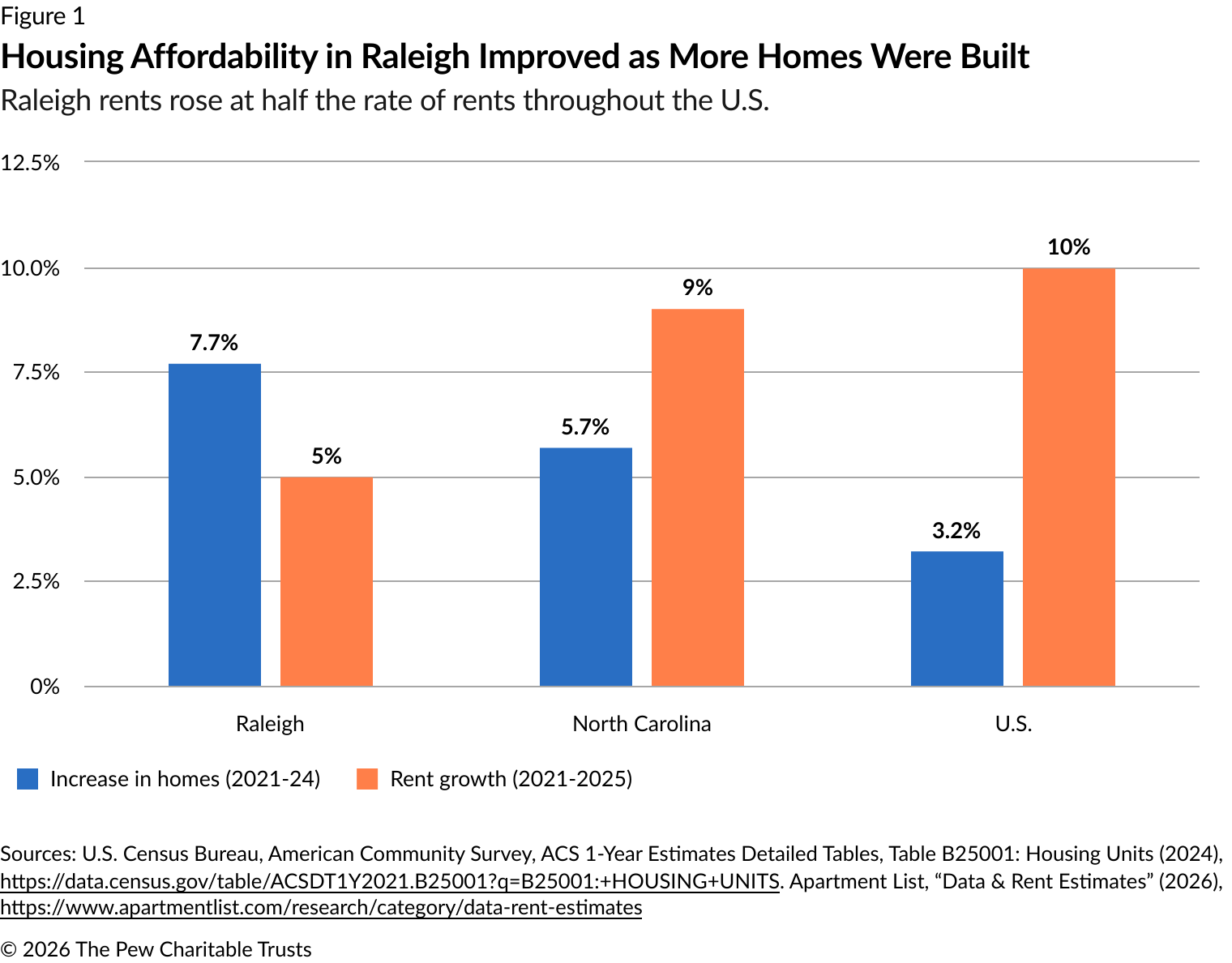
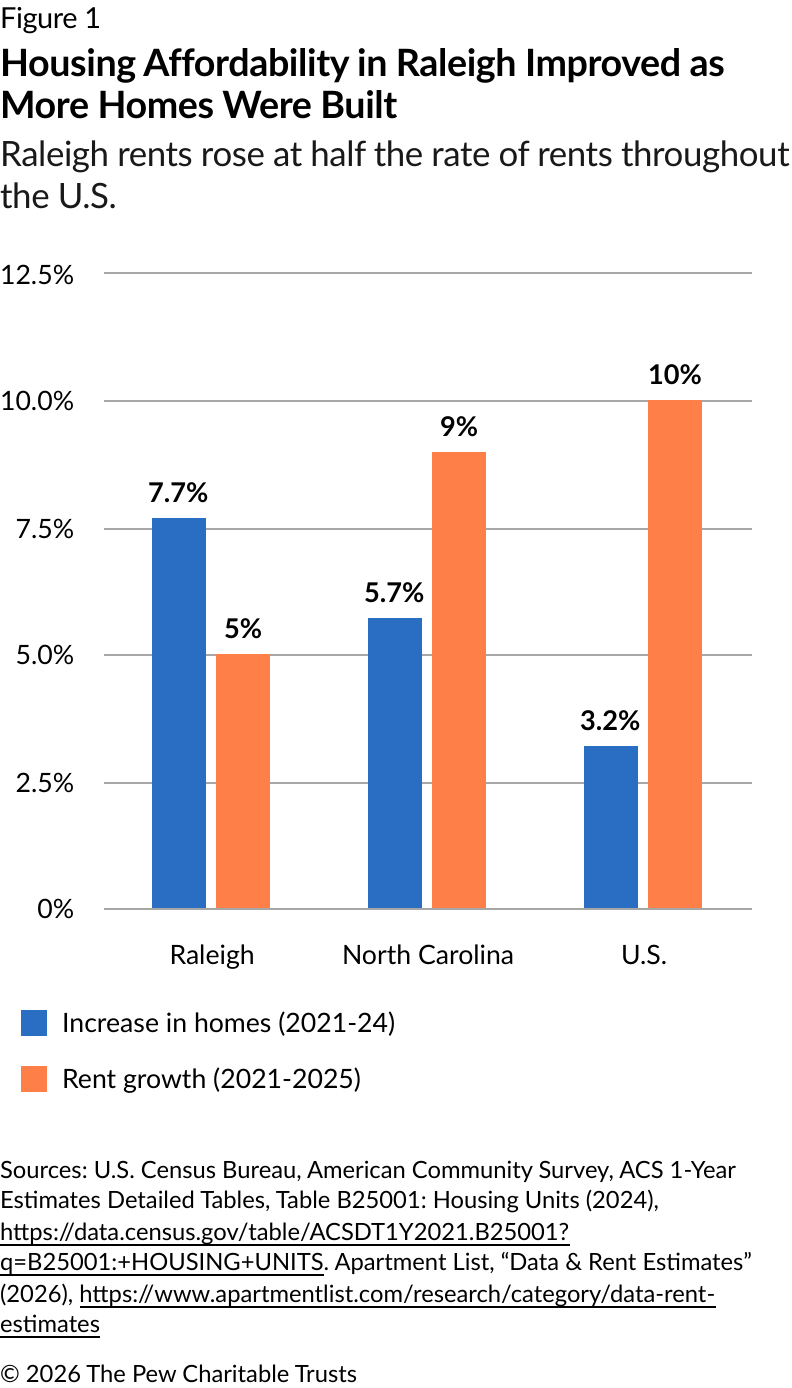
Following the introduction of these policies, Raleigh saw its rate of housing production jump. Between 2021 and 2024, Raleigh produced 16,884 units, adding 7.7% to its housing stock, compared with 5.7% in North Carolina and 3.2% in the U.S. More than 2,000 units, or roughly 12%, were affordable for residents with incomes at 80% or less of the AMI and were produced in part using housing bond funds. Raleigh’s density bonus accounted for about 200 units from 2021 to 2024 and 10% of all affordable units.
With this additional mix of both market-rate and affordable housing, average monthly rent in Raleigh rose at half the rate of rents in the U.S. and fell in inflation-adjusted terms. (See Figure 1.) This success is particularly notable because the city added approximately 31,000 residents from 2022 to 2025—a population growth of 6.5%, compared with 2.5% in the U.S. and 4.6% in North Carolina during the same period. Raleigh’s experience shows that even amid increasing demand, cities can bring down rents by allowing more housing.
Raleigh Has Diversified Available Housing Types
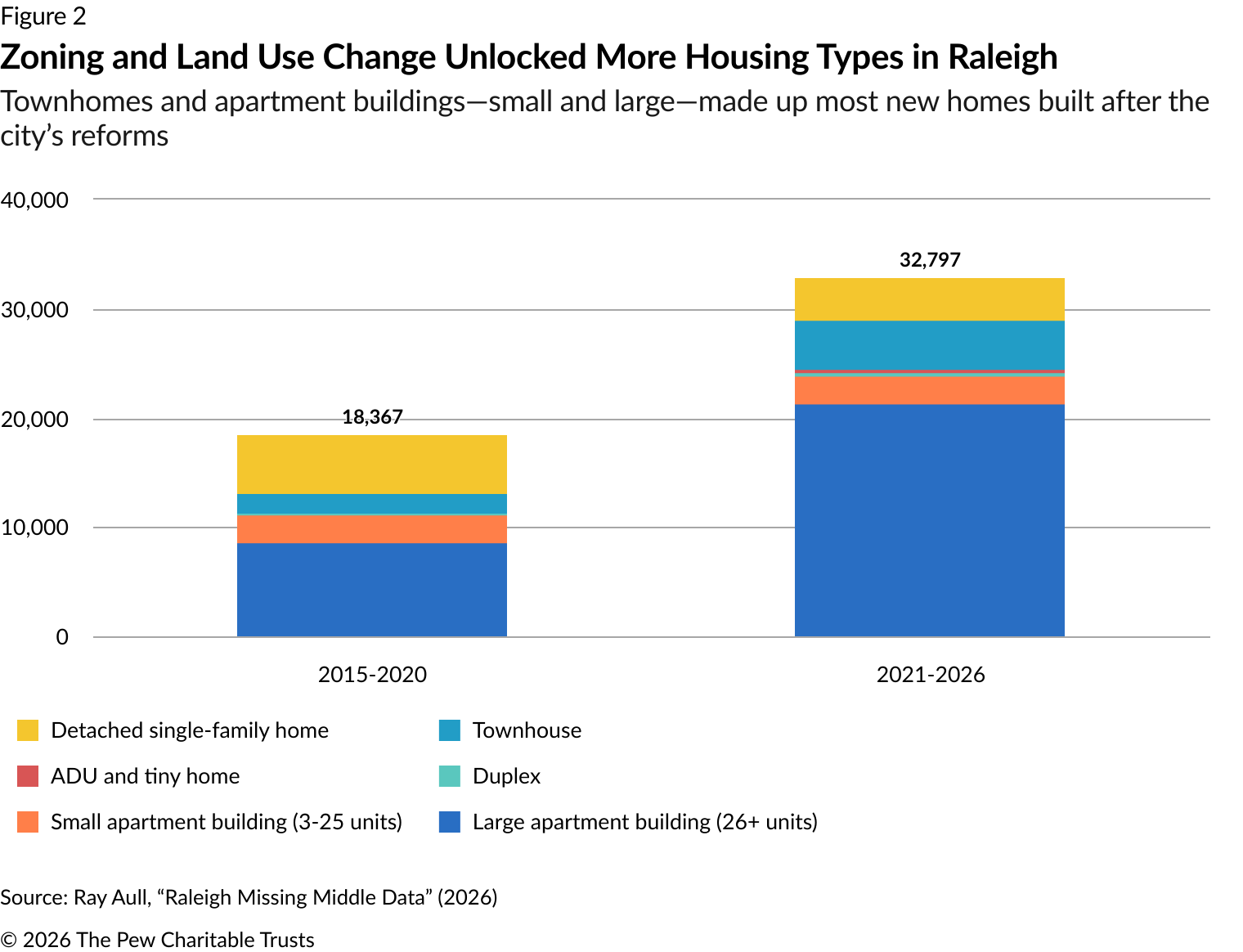
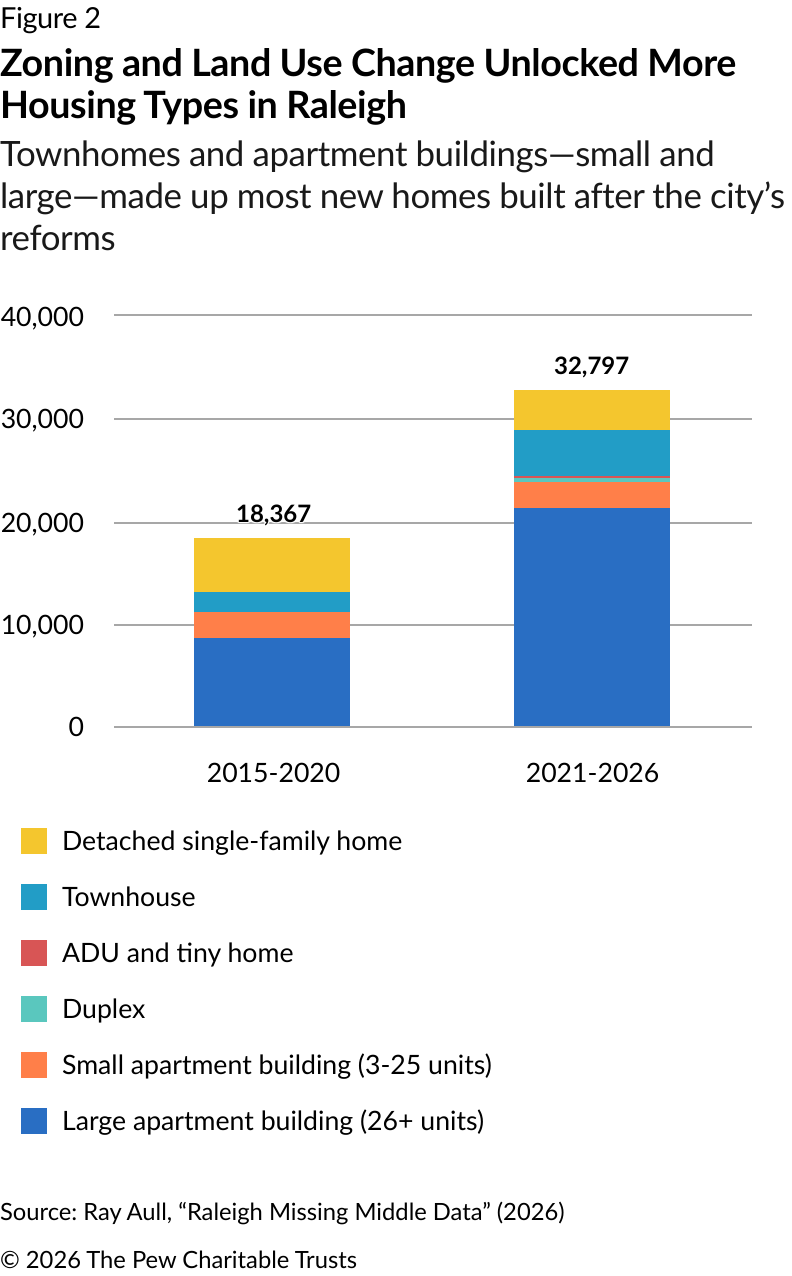
Raleigh’s efforts to provide a greater variety of housing types, such as “missing middle” housing, appear to be paying off. The city has issued more than double the number of townhouse permits since 2021 than it did from 2015 to 2020. The new reforms also enabled permits for more than 200 duplex units and over 200 accessory dwelling units (ADUs) and tiny homes that can be built in single-family zones by right, meaning without a long rezoning process. The city vastly expanded housing opportunities in large apartment buildings while reducing the percentage of new units represented by detached single-family homes. (See Figure 2.)
According to Young, Raleigh’s planning and development director, the city permitted “more [missing middle] units than any other city that made similar zoning reforms.”
Cost Reduction Through Parking Reform
Young also noted that after removing parking minimums, the city has seen annual parking construction decrease by 20%. A single surface parking space can cost between $5,000 and $10,000, depending on land values; one space in a parking structure can cost between $25,000 and $50,000. Removing parking minimums reduces building costs by tens of thousands of dollars and helps create homes where families in Raleigh can live at a lower cost. Raleigh is one of more than 100 U.S. jurisdictions that have eliminated parking mandates and is the second-largest city on the East Coast after Baltimore to do so. In July 2026, North Carolina passed the strongest state-level parking reform in the U.S., removing all minimum off-street parking requirements for all uses in most of the state.
Parking is still being built in Raleigh, but in lower quantities and based on demand. In an analysis of the effects of the parking reform, the city found that a sample of five large multifamily projects had an average of 2.3 parking spots per unit before the mandate was removed. After the mandate was lifted, a similar sample had an average of 1.2 spots per unit. By reducing the costs associated with building housing, the city helped make more housing financially feasible.
Overall, builders still perceive resident demand for parking and continue to provide it, on average, at about 80% of prereform levels. Also, the reduction in parking in Raleigh did not occur uniformly throughout the city and depended on factors including localized demand and the number of spaces that fit on a given site. But Raleigh is not the only city to see a reduction in the number of new parking spots after the lifting of parking mandates. A Sightline Institute analysis found that after Seattle and Buffalo, New York, relaxed parking mandates, 60% to 70% of new homes built in those two cities had fewer parking spaces than otherwise would have been required.
Affordability Outcomes
Raleigh set out to make housing more affordable for residents at all income levels, and an analysis shows that building more housing contributed to inflation-adjusted rents falling 15%, on average, from 2022 to 2025.
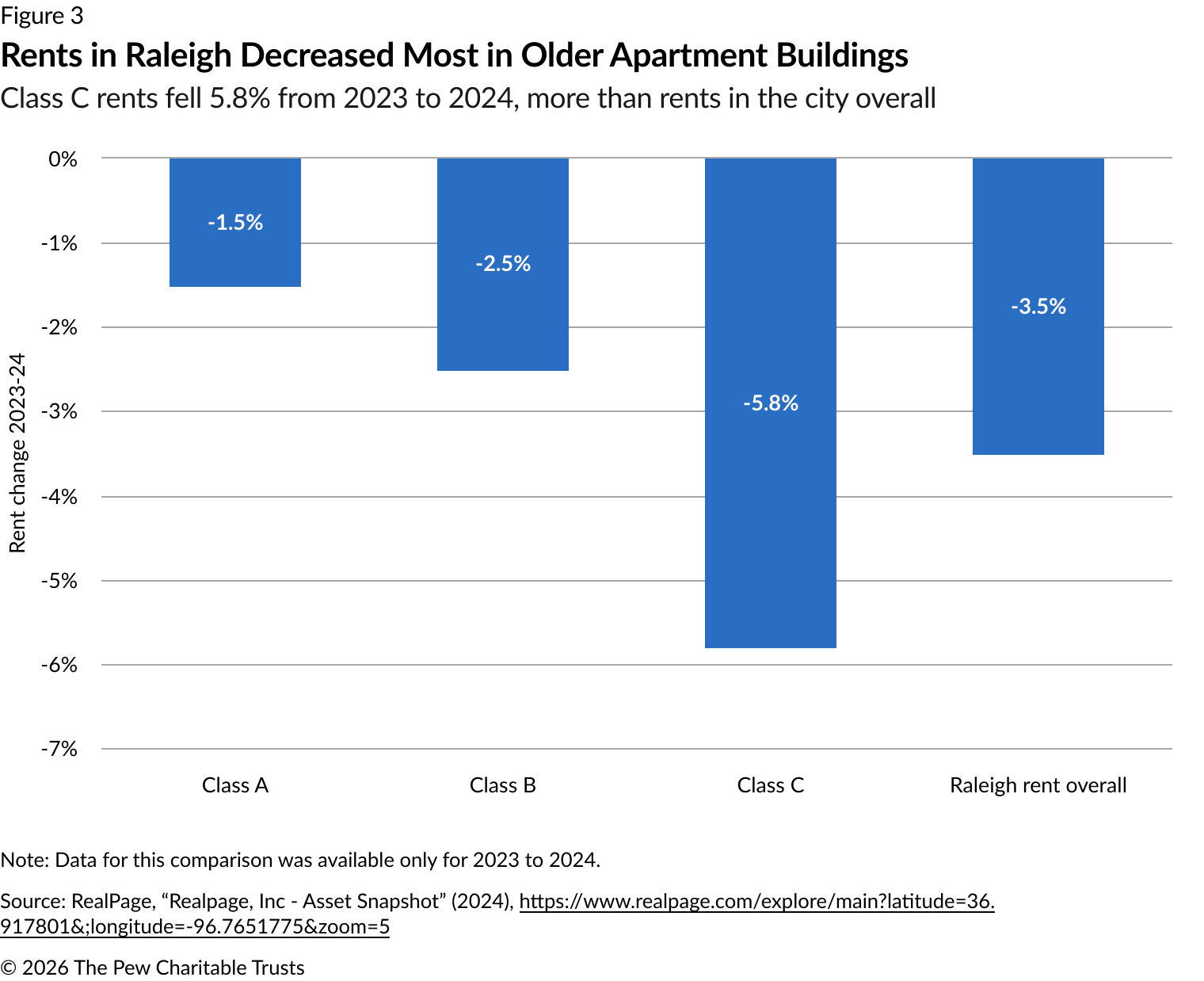
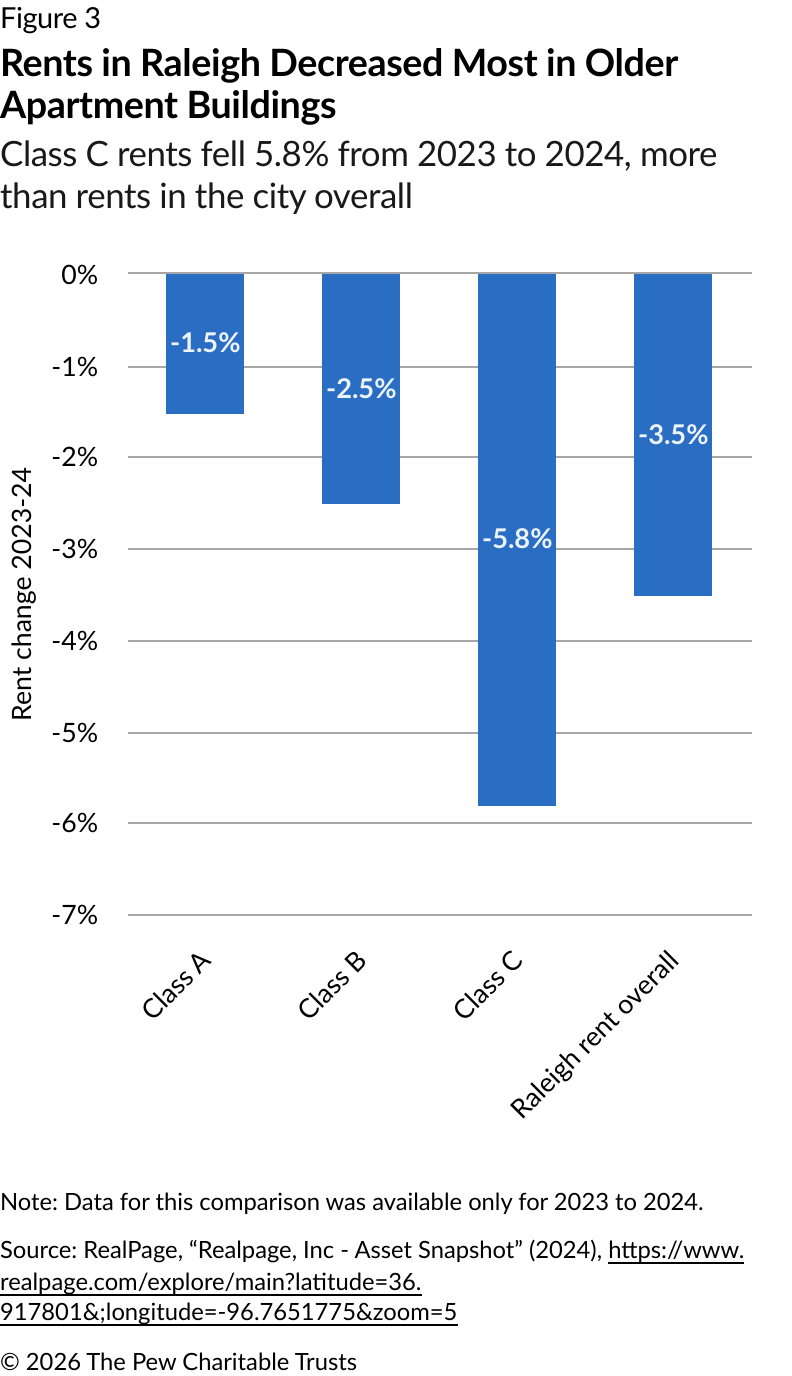
Previous Pew research demonstrates that housing shortages disproportionately drive up costs for low-income renters. The research also found, conversely, that in the metro areas that added the most housing, the steepest rent decreases occurred in Class C apartments, or older, less expensive buildings that generally house lower-income tenants. This pattern holds true in Raleigh: From 2023 to 2024, rents decreased most in Class C buildings. (See Figure 3.)
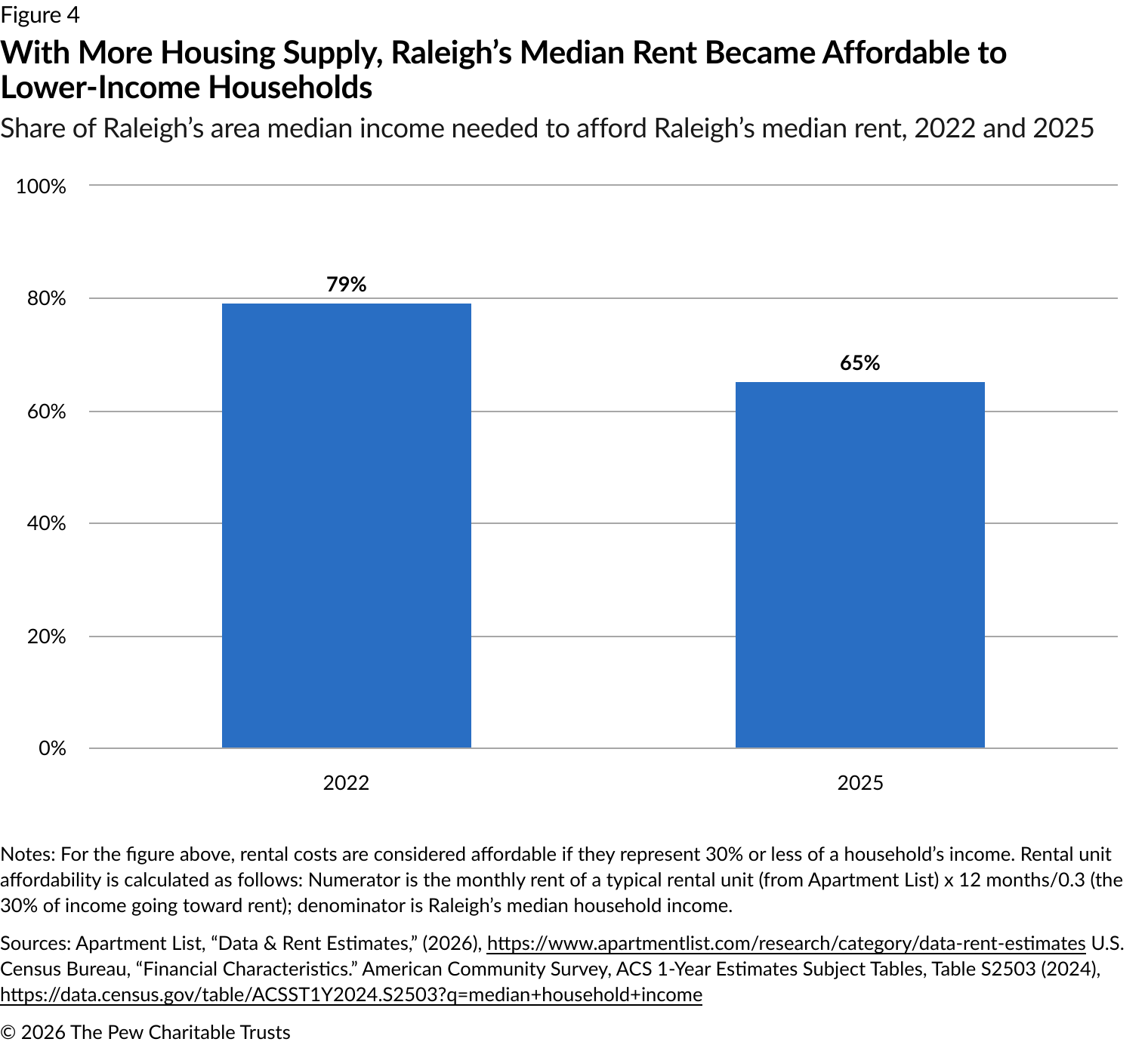
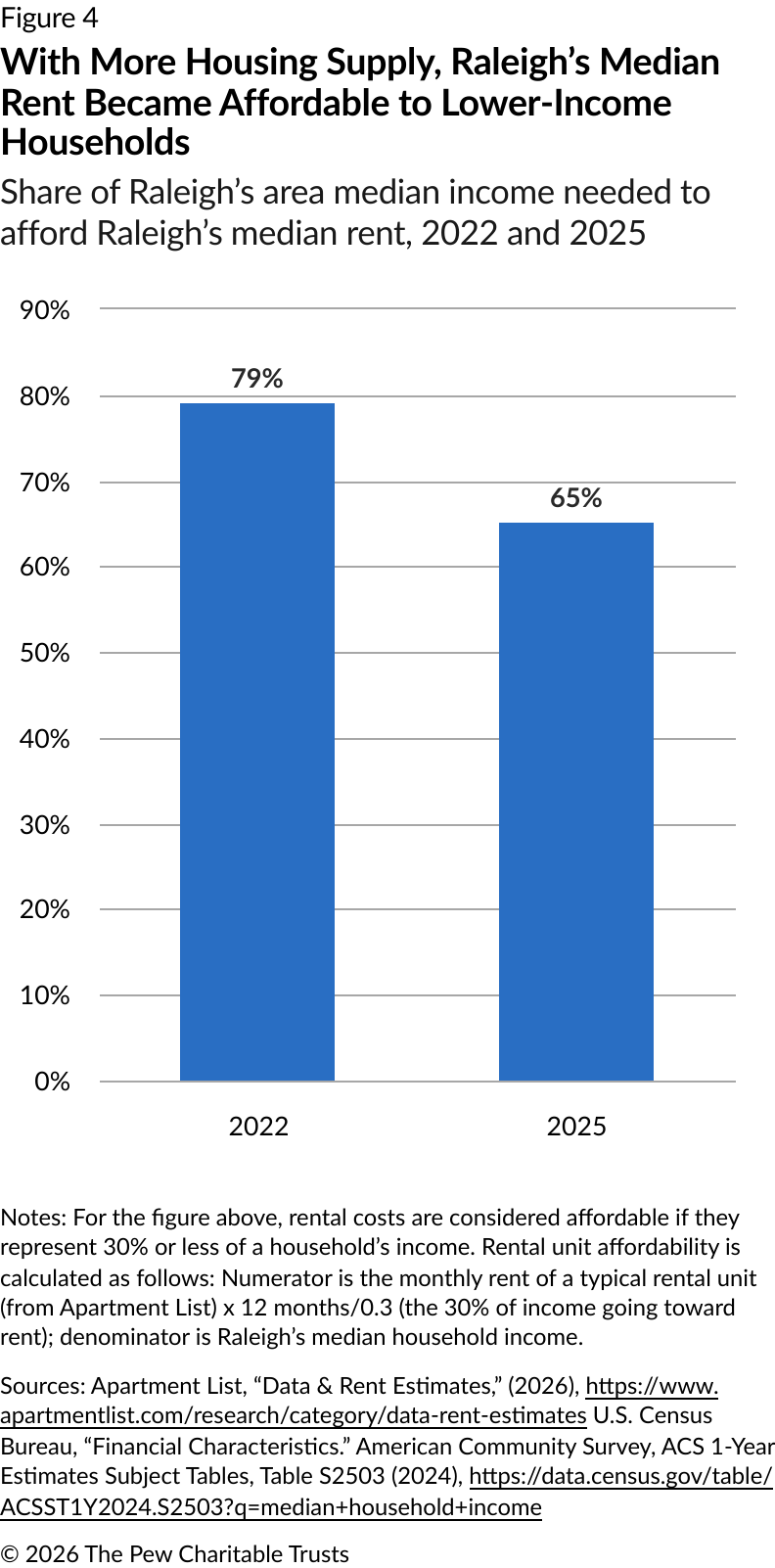
These rent decreases have led to real improvements in affordability for Raleigh renters. In 2022, when Raleigh median rents peaked, a typical apartment was affordable for a household earning 79% of the AMI. Three years later, that number had declined to 65%. (See Figure 4.)
Conclusion
In 2021 and 2022, Raleigh passed several reforms in response to fast-rising rents. The relaxation of zoning and parking laws enabled townhouses, plexes, ADUs, and apartments in more areas. Builders responded by constructing much more of this housing. With the surge in supply, Raleigh held rent growth lower than in the rest of North Carolina and in the U.S. overall, and inflation-adjusted rents fell 15% from 2022 to 2025.
To further encourage new housing types, Raleigh is considering additional ways to streamline its land-use and permitting processes. These include making it easier and less costly to build small subdivisions—a change that would help make practical use of available land in developed areas—and creating a consolidated land development process to save time on large and complex building applications.
As regions across the U.S. strive for job creation and economic opportunity without runaway rents, Raleigh’s experience as a large, growing city shows how reforms to enable housing production are essential policy levers. An influx of high-wage workers can drive up housing costs and put pressure on existing residents, including essential workers, unless policymakers act. By removing barriers to building housing and by expanding options to help people live near jobs, local and state officials can enable sustainable growth and improve affordability.
Gabriel Kravitz is a senior manager, Seva Rodnyansky is a manager, and Dennis Su is a senior associate with The Pew Charitable Trusts’ housing policy initiative.
People


