The Future of News
The Pew-Knight Initiative is studying how Americans get their news at a time of upheaval in journalism and political division
Thomas Jefferson, who believed that the survival of American democracy depended on the free flow of news, once famously said, “Were if left to me to decide whether we should have a government without newspapers or newspapers without a government, I should not hesitate a moment to prefer the latter.”
Today, as the United States approaches the 250th anniversary of the Jeffersonian declaration that led to independence, the traditional newspaper has dramatically declined in influence.

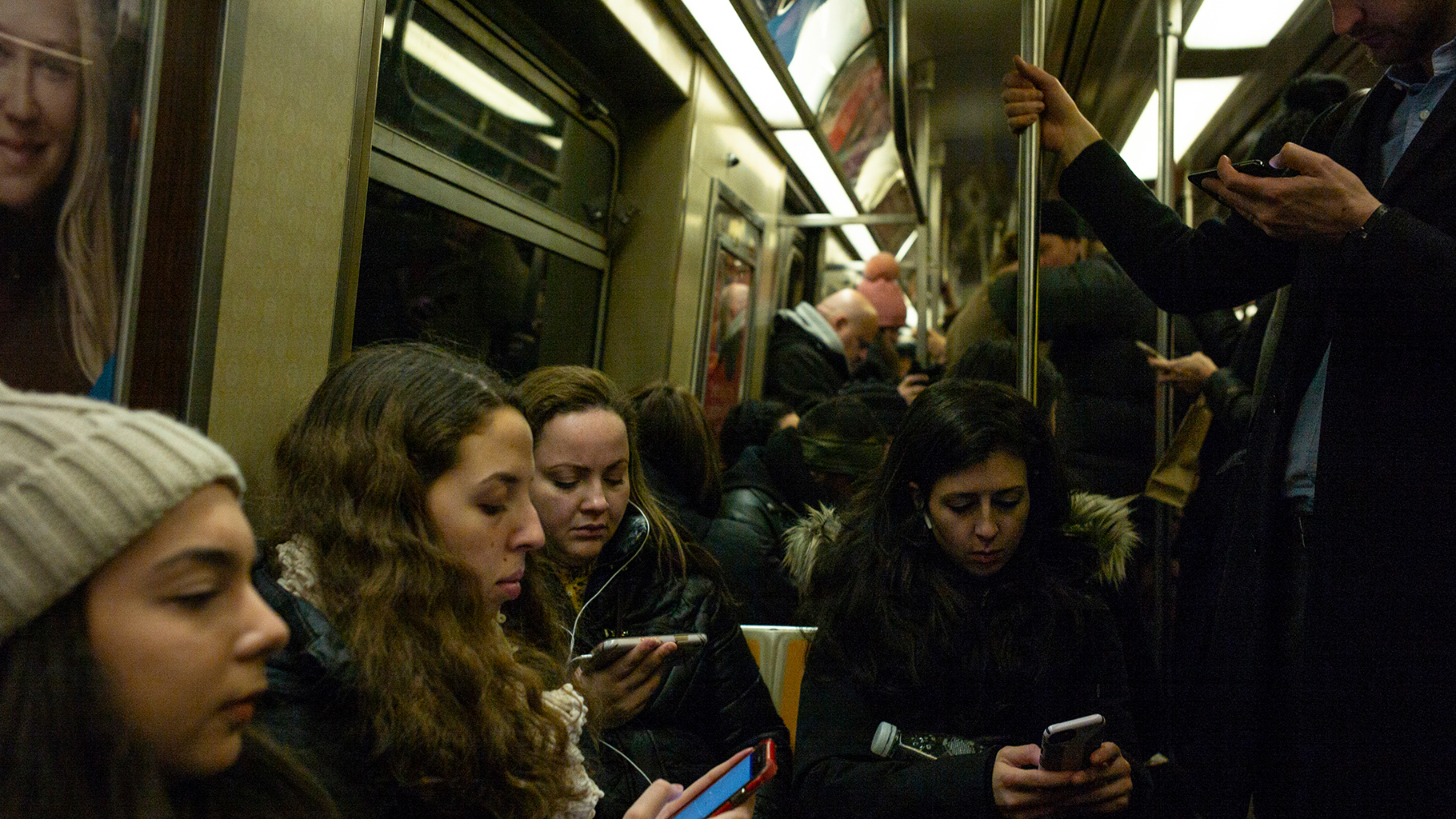
But news itself in a digital age has never been so widely available. It comes at us in torrents and from all directions, whether we’re looking for it or not—on our social media feeds, in phone messages and spam email, in pop-up ads on websites, and on the TV monitors in the dentist’s waiting room or the car repair shop. The information tidal wave can leave us confused by what and whom to trust.
“People can feel overwhelmed,” says Michael Dimock, president of Pew Research Center. “You can’t even control your news diet because it is always hitting you. I think it can add to the sense of frustration and exhaustion that people express in our surveys.”
Pew Research Center, in partnership with Knight Foundation, launched a five-year project in 2024 to look at how the changing news environment is affecting democracy and society in the 21st century. The partnership supports research on how Americans absorb civic information, form beliefs and identities, and engage in their communities.
The Pew-Knight Initiative is looking into an array of issues pertaining to news consumption, including where Americans get their news (from almost everywhere), whom they consider to be journalists (not just media professionals), and how the news makes them feel (often informed and angry).
The Pew Charitable Trusts and Knight are funding the work. The Center uses a mix of research methods across the portfolio, and Knight uses the information to promote civic dialogue, especially in cities and towns that have had Knight newspapers.
“What’s special about this partnership is how it pairs Pew Research Center’s rigorous research with Knight’s expertise in supporting the news and information organizations communities rely on,” says Kyla Elhelo, the foundation’s director for information and society. “We see our role as translating that work and getting insights into the hands of news practitioners and the public to inform their decision-making.”
The work, Elhelo says, is “putting facts on what we sense and feel”—that light-speed changes in technology have produced disruptions in the media ecosystem that Americans are only beginning to understand.

One initiative report that has attracted attention in (yes) the news media looks at the growing impact of news influencers—defined by the Center as individuals who regularly post about current events and civic issues on social media and who have at least 100,000 followers on Facebook, Instagram, TikTok, X (formerly Twitter), and/or YouTube.
“About 1 in 5 Americans—including a much higher share of adults under 30 (38%)—say they regularly get news from influencers on social media,” the most recent data finds.
This includes about an equal share of Republicans and Democrats—21% and 22%, respectively, including those who lean to each party—but not many adults age 65 or older (just 8%). When people who get news from news influencers on social media are asked why they do this, about half (54%) say a major reason is that influencers help them understand current events and civic issues.

Pew sampled 500 news influencers from a review of more than 28,000 social media accounts for the in-depth study. Slightly more of them are right-leaning than left-leaning (27% versus 21%), and a solid majority (63%) are men. The group includes journalists at news organizations who regularly post online personally. It also includes many influencers—in fact, about three-quarters of the total—who have never worked in a newsroom and may or may not have regular, direct access to news events or newsmakers. Those without a news industry affiliation, the Center’s analysis found, are more likely to express their political orientation.
“News organizations used to be the main source of news, but that has shifted,” says Katerina Eva Matsa, Pew Research Center’s director of news and information research. “The large majority of news influencers we studied had no background in news organizations.”
Some people would say that President Donald Trump acts as a news influencer for many Americans. In a Center survey, 2% of adults named him as the first influencer who came to mind.
“They see him as an individual who is on social media a lot and who discusses the news, and they get informed by him,” Matsa says.
The initiative also is examining who now decides what is news and what isn’t. Traditionally, that determination rested with editors. If a story led the CBS Evening News or was on page one of The New York Times or The Wall Street Journal, it was news.
But news organizations have lost their dominance in deciding what qualifies as news in an era when “defining news has become a personal, and personalized, experience,” one of the Pew-Knight studies concludes.
“In the digital age, the power to define news has largely shifted from media gatekeepers to the general public,” the report states.
Most Americans say that, when deciding whether something counts as news, major factors are whether information is factual (85%), up to date (78%), important to society (72%), and unbiased (68%).
“‘Hard news’ stories about politics and war continue to be what people most clearly think of as news,” the report says.
People make clear distinctions between news and entertainment. Titillating as they may be, stories about celebrities and their lives are considered news by only a fraction of adults—17%. Sports information (scores, trades, injuries) is more widely considered news—by about half of people (55%).
And then there’s the question of trust.
A September 2025 survey shows that 56% of Americans retain at least some trust in national news organizations, but that share has fallen by 20 points since Pew Research Center first asked the question in 2016.
The partisan divide has grown. Less than half of Republicans and Republican-leaning independents (44%) cite trust in national news organizations. Democrats remain more trustful, but their trust has fallen, too.
The September survey showed that 69% of Democrats and Democratic leaners hold a lot or some trust in national news organizations. That was lowest since the Center began asking the question and had dropped from 81% in March 2025.
Young Americans see little difference in the trustworthiness of national news outlets and what they hear from social media. “They are trusting news and information from social media at about the same rate as news from national news organizations,” Matsa says. “That is a big shift we are seeing.”
The research shows that people generally trust local news organizations more readily than national ones. The share of adults who retain a lot or some trust in local news organizations remains high (70%), but it has declined from 82% in 2016.
With the breakdown of the print advertising economic model that long sustained newspapers, most local papers have had to cut back on staffing, which inevitably has reduced content. Comparatively, local TV news has remained strong—financially sustained by political advertising every election season.
However, Dimock notes, the long-standing emphasis on crime in local TV news—"If it bleeds, it leads," as the cliche goes—has helped give Americans an exaggerated impression of crime levels in their communities.
Another Pew-Knight report, using data from a March survey, shows that news consumption can bring out striking emotions.
Researchers asked survey respondents to indicate how often news consumption makes them feel certain emotions. Among those who follow the news most closely, 46% said it frequently makes them angry. Other prominent emotions they cited were “sad,” “scared,” and “confused.”
And among those who don’t follow the news closely, 38% say it frequently makes them feel anger. Elhelo says she finds this telling. It suggests that whether people are glued 24-7 to the news or are putting their head in the sand, the noise and the heat are stressful.
Americans seem to have given up on figuring out what to trust. They are turning to news sites that align with their political points of view. More and more, Americans of different leanings are absorbing different sets of facts.
“More people are saying now that they want to choose sources that they agree with because they believe the news they are getting elsewhere is biased,” Matsa says. “They think, ‘Well, since there is bias, I am just going to go to the news that confirms my identity or my own views.’”
Dimock, asked if this alarmed him, replies: “Alarm is a fair word, yeah.”
The phenomenon—different news for different people—is not wholly unique to today, Dimock points out. Many Americans live in cities that have—or have had—a newspaper called “The Republican” or “The Democrat.” Talk radio has long been extremely partisan.
But the sharp divide today in what Americans are seeing and hearing about their country does not bode well for addressing the nation’s problems, Dimock says.
“I don’t think most people believe we are in a post-truth era,” he says. “I think there is still true information out there. But people are extremely skeptical of an institutionally driven information system—government, educational institutions, media institutions.”
The work of the Pew-Knight Initiative is trying to sort out the massive disruptions in news, even while they are still happening.
Tom Infield is a longtime Philadelphia journalist and frequent contributor to Trust.


