Federal Officials Can Honor Bipartisan Legacy of Greater Chaco Canyon Protections
New actions threaten sacred area that presidents and members of Congress from both parties have conserved for more than a century
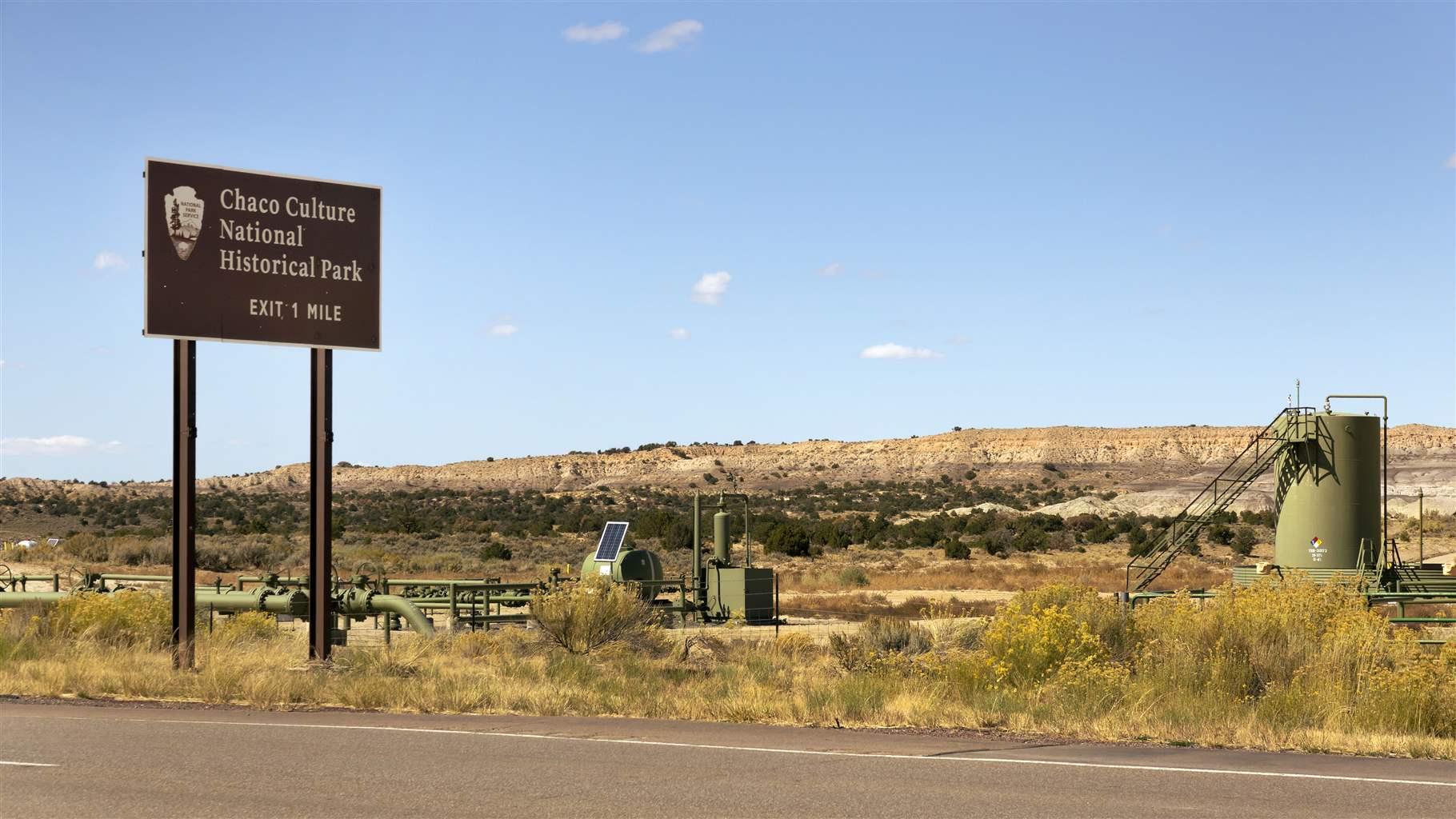
Located in the high desert of northwestern New Mexico, the Greater Chaco Landscape offers a window into the culture of the Chacoan people who lived there a millennium ago and whose descendants, including 20 Pueblo Nations and other Tribes, continue to steward the area today.
Because of its cultural significance, the landscape—which encompasses a vast network of historical roads, shrines, and buildings radiating around Chaco Canyon—has a long history of bipartisan federal protections. Since 1907, presidents, members of Congress, cabinet secretaries, and Tribal leaders from across the political spectrum have united to safeguard this irreplaceable landscape for future generations. But now, a review by the Department of the Interior (DOI) could roll back this more-than-a-century-long collaboration.
Here is a history of key moments for these protections over the past 125 years.

Early 20th Century
A recognition of cultural importance
President Theodore Roosevelt (R) first designated the area as a national monument in 1907, and Calvin Coolidge (R) expanded the monument in 1928 to include additional sacred sites.
Late 20th Century
Bipartisan expansion of protections and global recognition
In 1980, Congress took bipartisan action to convert the national monument into the Chaco Culture National Historical Park, increasing its boundary by 13,000 acres and allocating more funding for maintenance, tourism, and other amenities. In the same year, 39 Chacoan structures outside of the park, commonly known as “outliers,” received federal wilderness designations and protections under the New Mexico Wilderness Act of 1980, first introduced by Republican Congressman Manuel Lujan Jr.

In 1987, the park was named a UNESCO World Heritage Site—places "whose outstanding natural and cultural resources form the common inheritance of all mankind"—one of just 26 in the United States.
Eight years later, the bipartisan Chacoan Outliers Protection Act of 1995 added nine outlying areas as Chaco Culture Archaeological Protection Sites, several of which were then designated as Areas of Critical Environmental Concern by the George W. Bush (R) administration in 2003.
Critical areas remain unprotected
Despite the multiple designations, areas outside the national historical park remained vulnerable to development, and today, 90% of the Greater Chaco Landscape is leased for mineral development with more than 37,000 wells and 15,000 miles of roads already operating. Experts have found that emissions from drilling activities cause significant health issues for residents, and over the first quarter of the 21st century, these effects have driven repeated efforts to expand protections for the area.
Early 21st Century
Tribal advocacy
In 2015, Navajo people living in the area and Chapter Houses—local Tribal governments—passed resolutions and testified before the U.S. House Committee on Natural Resources, urging Congress to protect the region from further oil and gas development. Then, from 2018 to 2021, Senators Martin Heinrich (D-NM) and Tom Udall (D-NM) repeatedly introduced the Chaco Cultural Heritage Area Protection Act, crafted with input from the Navajo Nation and the All Pueblo Council of Governors (APCG), which represents the 20 sovereign Pueblo Nations. The bill sought to create a 10-mile zone around the park that would be permanently off-limits to new oil and gas development. The bill also would codify valid, existing rights held by private, state, and Tribal entities within the 10-mile zone. Identical legislation passed the House of Representatives in 2019 with bipartisan support.
Bipartisan support from the executive branch
During the first Trump administration, then-Secretary of Interior Ryan Zinke (R) in 2018 proposed a one-year moratorium on oil and gas drilling in the Greater Chaco area, noting, “I’ve always said there are places where it is appropriate to develop and where it’s not. This area certainly deserves more study.” Zinke’s recommendation enjoyed broad support, including from area Tribes, members of Congress, and New Mexico Governor Michelle Lujan Grisham (D).

And upon visiting the area in 2019, subsequent Interior Secretary David Bernhardt, who later endorsed the moratorium proposal, said, "I walked away with a greater sense of appreciation of the magnificent site managed by the National Park Service and a better understanding of Tribal leaders' views of its cultural significance.” That same year, the APCG and the Navajo Nation reaffirmed their mutual commitment to protect the region’s sacred sites during a third historic summit focused on the Greater Chaco.
20-year protections
The years of collaboration among Tribes and the federal government eventually led to Public Lands Order (PLO) 7923, issued on June 2, 2023, which withdrew more than 336,000 acres of federal lands within a 10-mile radius of the park from new oil and gas leasing for 20 years. This action does not affect existing leases or mineral rights, but it safeguards the balance of Greater Chaco as an educational, inspirational, and spiritual resource for future generations.

More than a century of protections at risk
On Oct. 30, 2025, the Department of the Interior sent a letter to several Pueblo Nations and Tribes requesting “Government-to-Government Consultation” in regard to the agency’s consideration of a “full revocation” of PLO 7923, and offered an abbreviated 14-day public comment period. Tribal leaders have requested that Interior Secretary Doug Burgum follow the leadership of his Republican predecessors by visiting Chaco Canyon and engaging in meaningful Tribal consultation.
In the spirit of the long-standing bipartisan support for the region, The Pew Charitable Trusts is committed to working with Tribes, DOI, and Congress to keep protections in place for this sacred area.
Myrah rafi'ah beverly works on The Pew Charitable Trusts’ U.S. conservation project.
People