Seaweed May Be ‘the World’s Greatest Untapped Resource’
Author and United Nations adviser discusses the environmental, economic potential of seaweed farming in Alaska

Vincent Doumeizel, the founder of the Global Seaweed Coalition, a senior adviser on oceans for the United Nations Global Compact and author of The Seaweed Revolution, works to responsibly grow the global seaweed farming sector. He champions its potential as a sustainable food source and a regenerative ingredient that rebuilds and restores the ocean ecosystem, while also supporting economic growth.
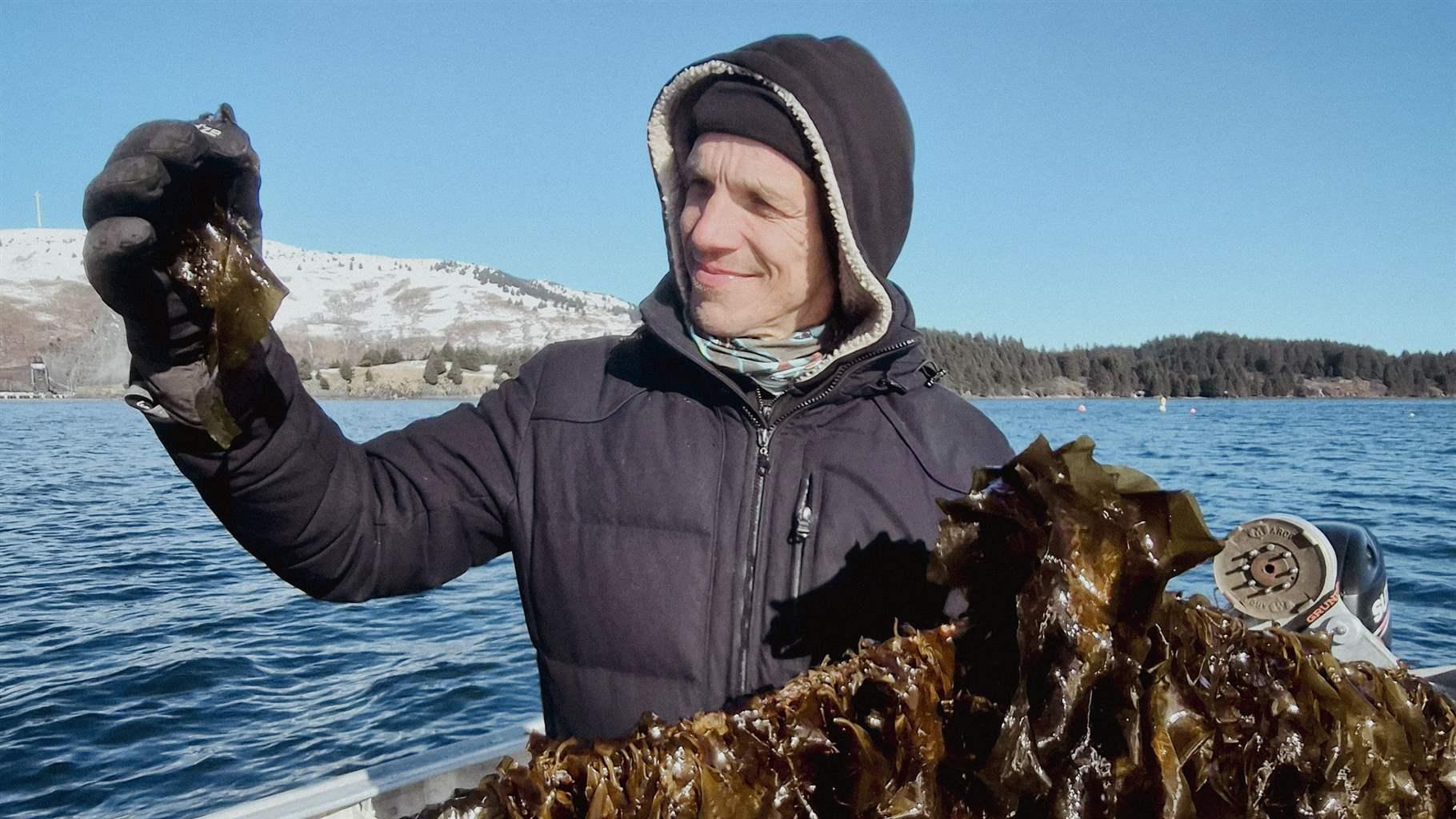
In March, Doumeizel was a keynote speaker at the Mariculture Conference of Alaska. During his visit, he toured seaweed farms and mariculture infrastructure in Kodiak and spoke with The Pew Charitable Trusts about the exciting opportunities seaweed presents for those in Alaska and British Columbia.
This interview has been edited for length and clarity.
-
You’ve called seaweed “the world’s greatest untapped resource.” Why is that?
Because of scale, first and foremost. There is a huge volume of seaweed available on Earth, and we are barely using it. It is one of the only resources that does not need to be fed, does not need pesticides, and does not need freshwater to grow—and yet we are doing almost nothing with it.
Seaweed is a nutritional powerhouse. It is a source of very healthy food, rich in essential nutrients. It is also a valuable source of animal feed, with significant health benefits.
Beyond that, it provides strong ecological and environmental benefits. Seaweed farming is regenerative, recycling nutrients rather than depleting them. It can replace unsustainable materials such as plastic, cotton, and fossil fuel‑based products; help restore biodiversity; sequester and absorb carbon; and contribute to a decarbonized economy.
There is also a strong economic case. Seaweed is a relatively new agricultural sector in some parts of the world—one that can generate new sources of income for coastal communities, particularly as fishing fleets decline and traditional fisheries face increasing pressure.
Seaweed checks many boxes—but we are still only at the very beginning. If we want to restore the ocean and build communities’ economic strength, seaweed is the best place to start—because it sits at the foundation of everything.
-
How many countries have you worked in, and did you encounter anything in Alaska that was new to you?
I’ve worked in roughly 150 countries, and there are some unique things in Alaska. For example, the so‑called “dragon seaweed”—I had never seen anything like that before.
This region is opening up new perspectives for the industry. Globally, we officially know of about 12,000 seaweed species, but recent surveys and analyses suggest there may be as many as 24,000. We have essentially doubled our understanding in just the last six months, and many of these newly recognized species are in the Pacific, which remains one of the least explored regions.
Some seaweed species may even grow in deeper waters or exist mixed with others—we simply don’t know yet. That means the best is still ahead of us. There is so much more to learn, especially in northern regions.
-
From your time in Alaska, what opportunities do you see for the region?
I see seaweed farming as a tremendous opportunity for Alaska. The region has faced relatively high unemployment following the decline of oil, and we know that fisheries alone will not be enough moving forward. Seaweed—and mariculture more broadly—can help fill that gap.
The biological conditions are incredibly favorable. Brown seaweeds, or kelps, love cold water—the colder the water, the faster they grow. But we also know that with climate change, species once found in California are moving north and may now appear in Alaska. All of this points to enormous potential for the region.
When you walk along the beaches in Alaska, you see extraordinary abundance and biodiversity. Some species are unique to the region, which is incredibly exciting. We know relatively little about seaweeds beyond the handful of mainstream species found in the North Atlantic and North Pacific, but these localized cold‑water species may have even greater potential.
-
What is needed to seize those opportunities and realize that potential?
I was struck by the scale and energy of the Mariculture Conference of Alaska. There were many participants, which shows that collaboration is starting. The next step is to connect more deeply with the rest of the world. There is enormous global experience to share, and international partnerships can accelerate learning. That collaboration has started, but it is still in its infancy.
Public support is also essential. Seaweed farming, like any emerging sector, cannot be viable at this early stage without strong public investment. That is true not only in the United States, but globally. Strengthening the sector requires greater support to help farmers and cooperatives build the systems and processing capacities that create reliable pathways to the marketplace.
And we need strong advocacy—to help people understand why seaweed matters, why they should consume it, and how it can fit into everyday life.
-
How can emerging global efforts support seaweed farming in regions such as Alaska and British Columbia, while still respecting Indigenous knowledge and local decision‑making?
It’s a difficult balance, but also an exciting one. There is important Indigenous knowledge here, including kelp use by Alaska Native communities. These traditions continue to inform how communities define their priorities and approaches today. And we need to find ways to combine that knowledge with emerging practices. The challenge is to modernize and advance technologically without losing cultural roots.
What makes seaweed particularly exciting is that we are starting with a blank page. There are no entrenched systems or powerful lobbies preventing us from doing this right. Governance around ocean space and seaweed is still underdeveloped, but that gives us an opportunity to build something new and regenerative.
Nothing exists in isolation in the ocean. We must respect traditional knowledge about ecosystems—what grows where and why—and apply that understanding at a very local scale, even within different parts of Alaska.
-
As the sector grows, what frameworks could help guide development toward safe, sustainable outcomes that include community input?
We need clear regulations and standards for the seaweed industry. There must be some agreed‑upon golden rules—such as using only locally appropriate species.
Training is also critical. Many new participants come from fishing communities and are very comfortable working at sea, but there can be misconceptions about safety. Seaweed farming presents different risks, and proper training is essential to prevent accidents.
Sustainability must also extend through the value chain, including how seaweed is processed and transformed into foods and products. These safeguards are especially important in emerging regions.
-
Are there any final thoughts you’d like to share?
More than anything, seaweed represents hope and optimism, which we need more than ever.
Seaweed is not a silver bullet. It will not solve every challenge we face. But it is a powerful piece of the puzzle that offers real opportunity for innovation, biodiversity restoration, climate mitigation, food security, and social equity.
We need to give the next generation optimism—a vision of a world that can be hunger‑free, biodiverse, innovative, and more just. Seaweed can be part of that ambitious future.
People