Scientist Works to Protect Climate-Resilient Coral Reefs in the Philippines
2024 Pew marine fellow Rene Abesamis engages local communities to identify and safeguard the critical ecosystems
Recent research suggests that the Philippines, home to the third-largest area of coral reefs in the world, may harbor coral reef climate refugia. Refugia are areas likely to experience slower or less overall change despite globally warming waters that increasingly put vital marine ecosystems at risk. These habitats, which may be particularly resilient to climate impacts, could play a critical role in ensuring the long-term survival of many species that depend on reefs.
Dr. Rene Abesamis, a 2024 Pew marine fellow and associate professor at the University of the Philippines Diliman, is working with local researchers and citizen scientists to identify and help protect the country’s climate resilient coral reefs and the diverse range of species that reside in them—for years to come.
This interview with Abesamis has been edited for clarity and length.
Give us an overview of your work identifying climate-resilient coral reefs.

In the Philippines, people have been trying to manage coral reefs by designating them as marine protected areas (MPAs) for the last four decades. However, we still don’t know if our network of MPAs is appropriately located to safeguard climate resilient reefs. I’m collaborating with researchers and local MPA stakeholders to assess and map resilient reef sites in the South Negros Marine Key Biodiversity Area, located in the waters of Negros Island in the central Philippines, and will then share that data with the national and local governments so that the information can be used to help design the country’s coral reef policy.
I’m like a connector trying to bring this ecosystem of different people together to make sure that the necessary resources are eventually devoted to protecting our most resilient reefs.
What do you hope to achieve?
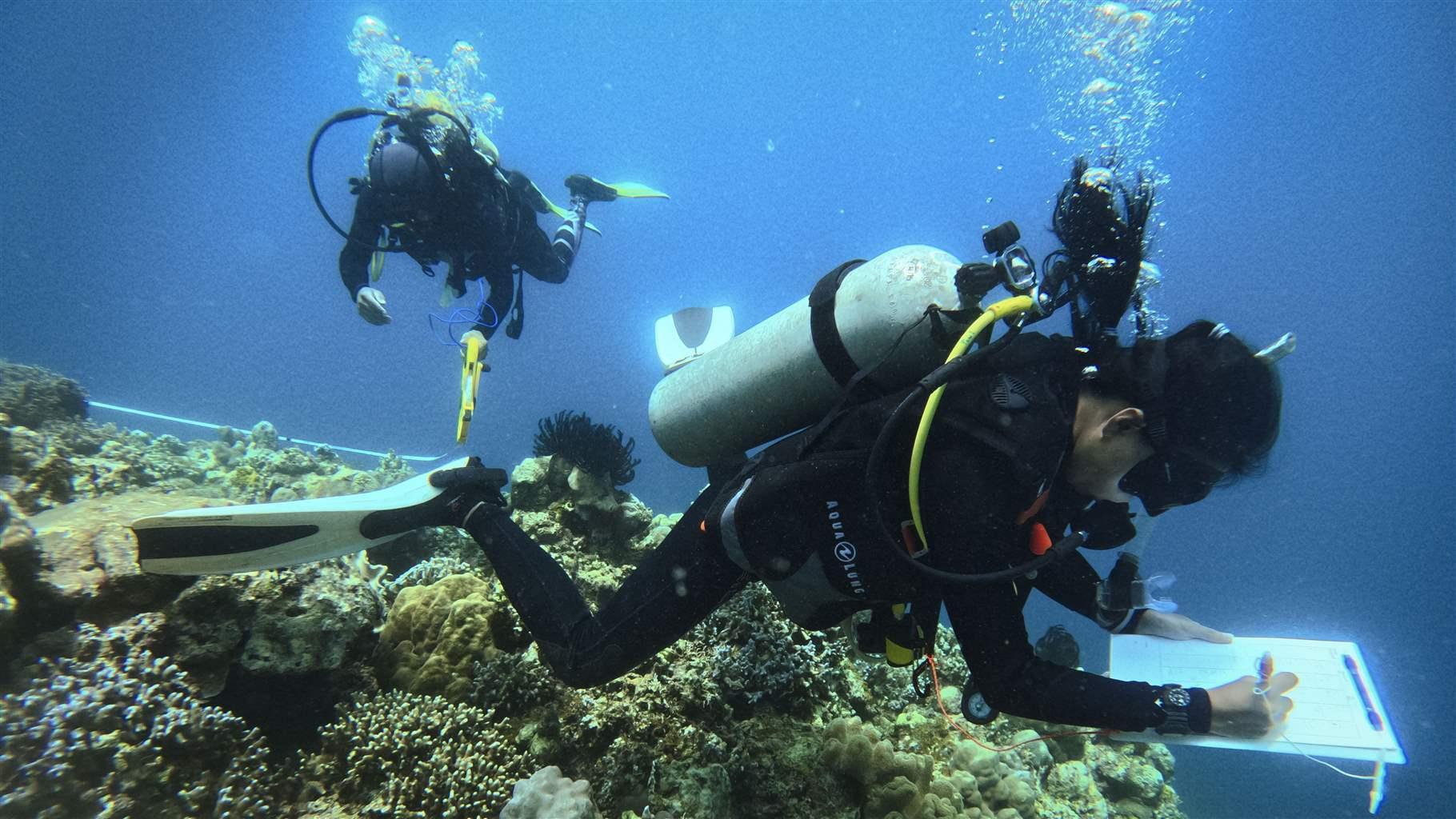
The scientific objective is to measure the relative resilience of the reefs in the MPAs and some areas outside of the protected areas. We also want to determine the extent of the refugia by quantifying factors such as the severity of coral bleaching due to rising ocean temperatures as well as the diversity of corals.
Why is protecting these climate-resilient coral reefs so important?
As centers of biodiversity, coral reefs contribute a great deal to global ocean health, but climate change is going to degrade reefs as we know them. Protecting resilient reefs, which may help species withstand the worst impacts of climate change, is an important component of long-term conservation efforts. It’s better to face that fact head-on because if we ignore it, and the next generation continues to ignore it, eventually it will be too late.
And involving the community is an important facet of the project?
Absolutely. We want to help more people understand how to collect this data and then share it with people who aren’t scientists. We want local citizens to have the capacity and knowledge to measure the condition of reef ecosystems, so that after this project ends, they can still look at those indicators and see over time—five, 10, 15 years from now—which reefs fared better and why. We hope that they can use that information to help manage coral reefs in the future. This project won’t work if I’m the only one doing it. We need to work with local scientists and stakeholders who are on the ground, and we need the government to support those activities.
To me, it’s a win if people can say, “We know the diversity of corals is related to resilience and we now have the tools to measure that resilience.”
How will your team identify climate-resilient reefs?
We look for commonly used indicators, such as the diversity of corals that are present in an area, the abundance of coral babies as well as algae that are competing for space with corals. Typically, a higher diversity of corals suggests that the reef is more resilient.
In addition to the reef data, we can look at how the coral reef communities are responding to stressors, such as storms, or human activities like overfishing. We are also trying to understand thermal stress—how changing water temperatures affect corals—by deploying smart buoys to measure the temperature in the vicinity of the reefs that we are studying.
What has your experience in engaging local communities been like so far?
When this project began in 2024, it was about building trust with local communities—the people who manage MPAs or make decisions that affect reefs. I already know a lot of the people in the study area because I’ve been working there for a long time. But I wasn’t entirely sure if I’d get local support for a project on reef resilience since it’s not that easy to talk about the climate change problem and propose clear solutions. Thankfully, there was a lot of interest. I enjoy the trust building part of the work because if we want to be able to ask and answer these big questions about climate-resilient coral reefs, we need to gain lasting support for possible solutions. And convince community members to get in the water too.