How America's Founding Ideals are Relevant to Countering Religious Biases Today
Nation’s anniversary is a time to reflect on religious tolerance
America’s 250th anniversary is a time to commemorate the country’s formation and the democratic ideals on which it was founded. This milestone also serves as an important time to reflect on who we are as a country, including the values we uphold and how we engage with one another. Our nation’s founders pioneered a government system that has, with varying degrees of success, enabled people of diverse faith traditions to live out their convictions and freely express their beliefs.
Religious pluralism is the understanding of and appreciation for diverse religious beliefs— including none at all—and the willingness to engage respectfully and productively with people who have different convictions and worldviews. This concept is a natural extension of the founders’ commitment to protect religious diversity. Religious pluralism also serves as the basis for The Pew Charitable Trusts’ religion work to support programs that promote pluralism while building an evidence base for approaches that achieve it.

Long before the United States was created, the acceptance of diverse religious traditions came in fits and starts—and often was not applied to religious minorities. The Puritans sought religious freedom for themselves but failed to extend it to others. Facing religious persecution in Massachusetts, Roger Williams founded Rhode Island as a safe haven for multiple faiths and demonstrated that church-state separation enabled people from different religious backgrounds to live, work, and thrive together.
Today we face similar struggles to apply the ideal of embracing religious differences— whether Sikh, Hindu, Christian, Jew, Muslim, Buddhist, or atheist—in America’s communities.
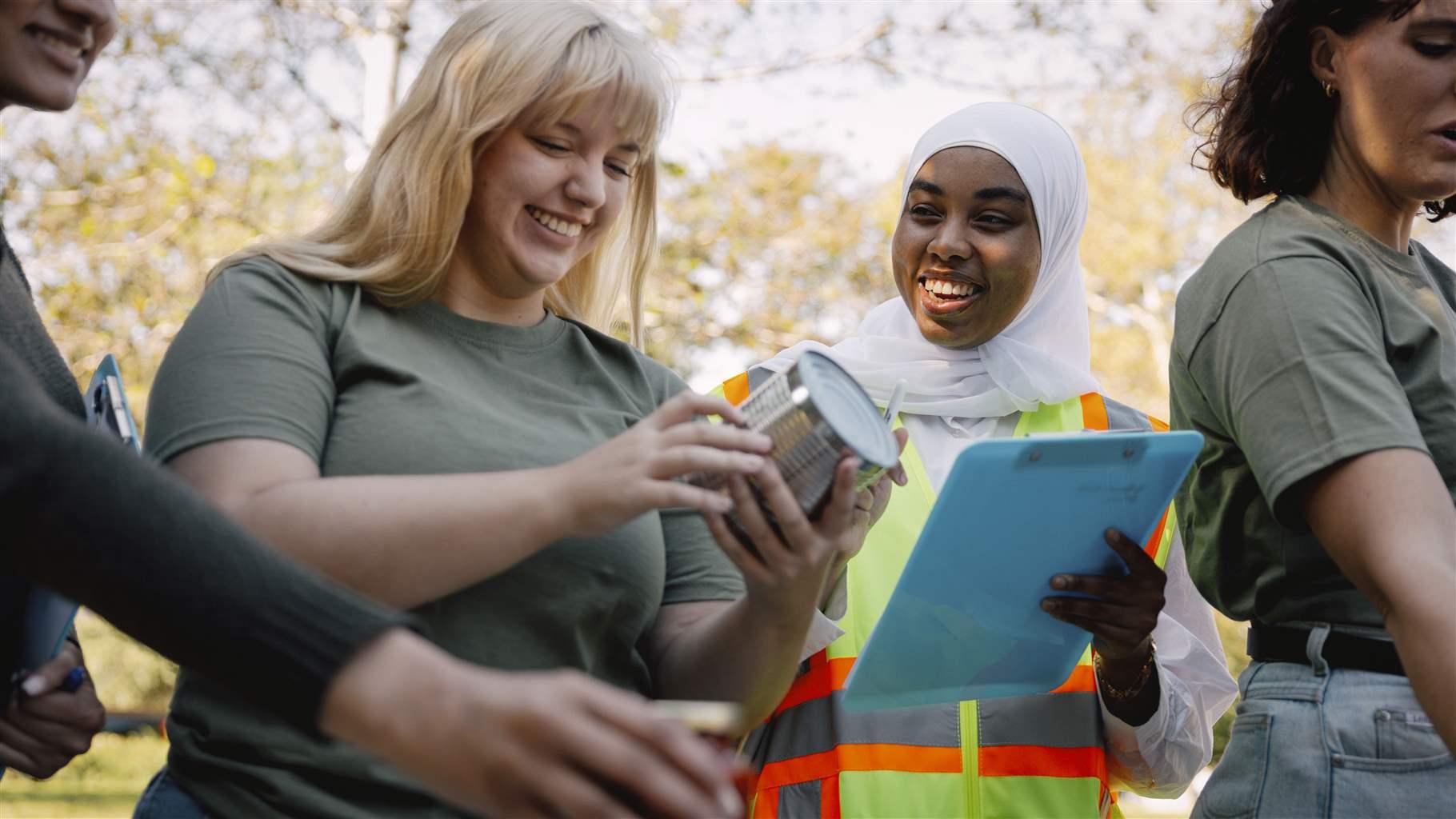
While incidents of religious intolerance and enmity understandably command people’s attention, much good work is also occurring to encourage an understanding of faith differences. Organizations such as Interfaith America aim to foster healthy engagement across religious differences. For example, the Team Up Project, a collaboration among Interfaith America, Catholic Charities USA, Habitat for Humanity International, and YMCA of the USA, connects people of various faiths through service, such as building homes or playgrounds. Such face-to-face programs that engage people of different faith backgrounds have shown promise in countering biases and promoting pluralism. Research also indicates that educational programs on various religious beliefs and practices and on developing skills that promote positive interaction can be effective at bridging religious divides, although more data is needed to be certain.
Pew’s religion work helps to assess and increase the impact of programs that aim to counter religious bias and intolerance and promote religious pluralism. This includes supporting data-driven efforts such as the Interfaith, Spiritual, Religious, and Secular (INSPIRES) Index, designed to measure efforts to accommodate diverse worldviews in higher education. The assessment tool takes an evidence-based approach to isolate specific factors that create a hospitable climate on college campuses for students of different religious backgrounds. For example, for Jewish students, reliable access to kosher food across dining centers signals welcome. Likewise, for Muslim students, dedicated prayer space is pivotal. The research undergirding INSPIRES also shows that improvements for one group (for example, adding prayer space) increases perceived institutional responsiveness among other religious groups and atheists, producing cross‑group benefits.
Pew also supports evaluation that helps programs track and assess the impact of their efforts. For example, Interfaith America is implementing a robust monitoring, evaluation, and learning plan to test the underlying theories that shape its programs to bridge differences on college campuses, in the workplace, and in communities. Ultimately, the goal is to gather data that shows which programs work, under which conditions, and how to replicate approaches deemed effective. By sharing what they learn, such organizations can strengthen the broader movement for religious pluralism.
Programs dedicated to bridging religious divides maintain the spirit that shaped America’s founding by creating spaces where people of all faith traditions or none at all can flourish.
“We have to make sure that … people of diverse backgrounds are respecting each other’s identities, building relationships across communities, and cooperating with one another to serve the common good,” Eboo Patel, president of Interfaith America, observed. “Respect, relate, cooperate—that’s American pluralism.”
Working together toward this common goal will benefit everyone now and for years to come—hopefully even for the next 250.
Julie Sulc leads The Pew Charitable Trusts’ work on religion.
People