New Tool Helps States Quantify Benefits of Coastal Wetlands
Pacific Northwest Regional Blue Carbon Calculator offers data-driven model to measure climate value
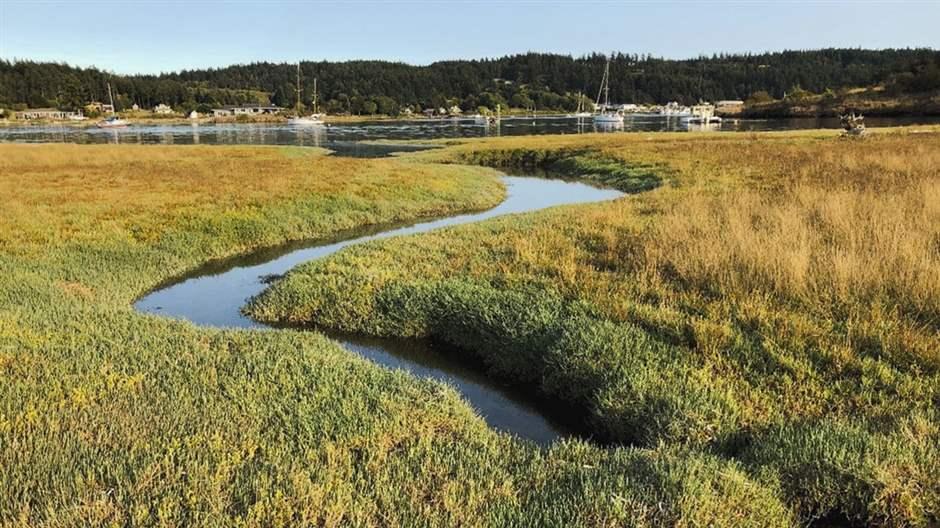
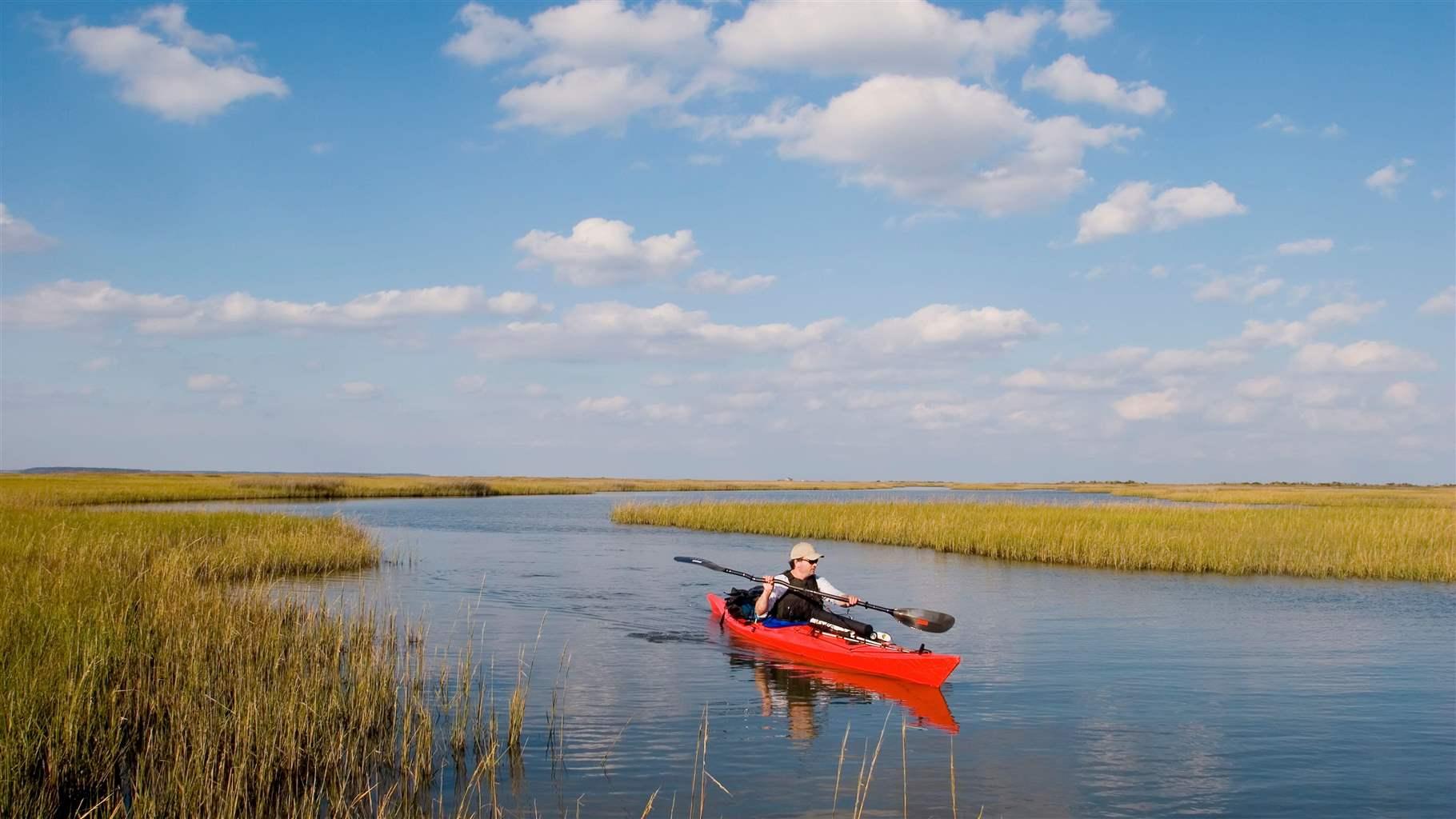
Scientists have long recognized coastal wetlands—marshes, tidal forests, seagrass meadows, and mudflats—as unsung environmental powerhouses. They capture 4.8 million metric tons of carbon dioxide each year, an annual rate equivalent to removing roughly 1.12 million vehicles from the roads, and deliver an estimated $23 billion in storm-protection benefits in the U.S. alone.
Until recently, however, states and local planners in the Pacific Northwest did not have a practical way to measure the benefits of protecting or restoring wetlands.
But now, a new tool aims to change that.
The Pacific Northwest Regional Blue Carbon Calculator was developed by scientists, state agencies, and nonprofit partners to easily estimate how different land management decisions—such as conserving, restoring, or disturbing the region’s coastal wetlands—can increase emissions, avoid emissions, or strengthen these habitats’ capacity to store carbon. The tool’s outputs are easy to incorporate into reports, funding applications, and other resources officials develop and rely on.

The calculator, which is currently available as a downloadable spreadsheet on the Pacific Northwest Blue Carbon Working Group's website and will soon be released as an online platform, draws primarily on blue carbon data from Northern California, Oregon, and Washington. And although this tool is not intended for use outside the Pacific Northwest, it can serve as a model for other states to develop their own instruments using local data.
The Pew Charitable Trusts hosted a webinar in February to unveil the calculator. The event featured three experts who helped develop and inform the tool: Lisa Beers, senior scientist with the San Francisco Estuary Institute; Adrian Laufer, chief executive officer and co-founder of environmental consulting firm Sea & Shore Solutions; and Jason Sauer, research analyst at the Oregon Department of Energy. The speakers discussed the calculator’s value for policymaking, its creation, and its intended future uses.
Why states need this tool
Sauer opened the conversation by positioning the calculator within Oregon’s broader climate policy goals. The state is committed to advancing nature-based climate solutions—interventions that protect, sustainably manage, and restore ecosystems while also benefiting biodiversity and human well-being. He emphasized that, to invest wisely, agencies need the kind of data that the calculator can produce.
In addition, Sauer discussed the importance of better integrating tools, such as the calculator, that can provide a fuller picture of climate risks and benefits into land-use planning decisions. He shared the example of Oregon’s Land‑Based Net Carbon Inventory, which was published in 2025 using data generated by the same scientific community that developed the calculator and which revealed that although some wetlands emit methane, they also capture and store significant carbon each year.
He further noted that the Oregon Watershed Enhancement Board could now consider directing grantees to use the calculator when estimating carbon storage benefits in restoration proposals, helping the state uniformly track progress toward climate goals and prioritize projects with the greatest benefit.
“Oregon’s government is newer in this space, but we are very plugged into regional and national interests in improving blue carbon accounting and the other benefits of blue carbon,” Sauer said.
How the calculator was built
Beers, who has been deeply involved in international, national, and regional efforts to integrate coastal wetlands into greenhouse gas accounting, explained that the calculator builds on 15 years of collaboration and data collection throughout the Pacific Northwest.
She explained that this regional dataset makes the tool exceptionally robust. Rather than relying on global averages, the calculator largely reflects local measurements of carbon stored in vegetation, soils, and organic material as well as estimates of methane emissions, which together provide a more accurate picture of wetlands’ climate benefits.
The tool also includes clear definitions for different land management actions, so users can consistently describe what is happening on the ground and generate reliable, comparable results. “It’s just as important that, not only can we account for restoration, conservation, and enhancement of coastal wetlands, but that we also can account for emissions that occur through wetland disturbance, such as excavation, diking and draining, and filling,” Beers said.
How the tool works in practice
To demonstrate the calculator’s real‑world utility, Laufer walked through two case studies from Oregon: wetland dredging and a tidal wetland restoration project. The examples showed how the calculator supports real-life planning scenarios—from infrastructure projects that necessitate wetland losses to restoration efforts that reestablish the habitat in other areas. Laufer’s examples demonstrated how the tool accounts for potential trade-offs in carbon stored or emitted based on various land-use choices over a one-to-100-year period, rather than focusing only on the short term.
Although specific to the Pacific Northwest, the tool can be adapted to other regions for which appropriate datasets are available. “We’d be happy to start a dialogue with you about how you can access this tool and what it might take to update it for your specific area,” Laufer said to webinar attendees.
National applications
The Pacific Northwest Regional Blue Carbon Calculator makes gains and losses of carbon resulting from land-use decisions quantifiable and comparable. These insights can help elevate wetlands in conservation discussions, strengthen the case for nature-based solutions, support coordination across agencies and governmental entities, and align local actions with state-level climate goals. As states look for practical ways to advance climate goals, approaches such as the Blue Carbon Calculator show how credible, region‑specific science can be embedded into everyday land‑use planning decisions.
Jazmin Dagostino works with The Pew Charitable Trusts’ U.S. conservation project.
People