How Cities Can Reduce Community Violence
6 key capacities show promise in making cities safer

Overview
Homicide is devastating for families and friends of the victims as well as for their communities, undercutting the stability of neighborhoods, eroding people’s sense of safety, and impeding their ability to thrive. But while jurisdictions throughout the United States have invested in a host of programs, cities have uneven experience in achieving and sustaining reductions in community violence.
To better understand what differentiates the most successful city approaches from those that struggle or regress, The Pew Charitable Trusts joined with the Crime and Justice Policy (CJP) Lab at the University of Pennsylvania to identify the factors that effective cities have in common.1 Through literature reviews, interviews with subject matter experts, and case studies, CJP Lab identified six capacities that seem to make the difference:2
- Strong political governance and public sector leadership
- Data-informed problem analysis
- Cross-sector collaboration on a shared strategy
- Effective operational management
- Robust violence reduction infrastructure
- Sustainability planning and institutionalization
The key capacities may prove helpful concepts for the public safety field, but they can be abstract and difficult to grasp. This brief tries to illustrate them through the stories of five cities, and the public sector and community leaders who live them every day. CJP Lab identified the cities—Baltimore; Oakland, California; Los Angeles; Indianapolis; and Boston—based on the presence of violence reduction strategies and their intentional work to build these capacities. While each of these cities demonstrates several (and sometimes all) of the capacities, the discussion here centers on one or two capacities per city.
To be sure, the fluctuating rates of homicide in U.S. cities result from many factors, some of them seemingly beyond the control of the best-designed and best-implemented local strategies. Over the past few years, homicide rates have fallen sharply in many places, including some that do not exhibit the capacities discussed here.
But many practitioners, policymakers, and researchers have come to believe that local governments can make a real difference if they have these capacities in place. This difference increases the odds that a city will outperform the national trends over time—regardless of whether those trends are positive or negative.
Homicide rates in communities throughout the U.S. have fluctuated significantly in recent years
During the height of the COVID-19 pandemic, the United States experienced an unprecedented spike in violence: Homicides jumped 30% in 2020, the most significant single-year increase in more than a century, and possibly ever.3 Researchers speculate that the dramatic change could be due to several factors, including the strain of the public health emergency and the hardships it imposed on Americans; the spike in unemployment; and the inability of law enforcement, community outreach systems, social service programs, and other governmentfinanced services to operate as usual.4
As the pandemic eased and restrictions on the public were lifted, violence levels decreased. Why this happened remains a matter of some debate. But there is a growing sense among criminologists that the rebound of the public sector and the renewed availability of social services and programming—assisted by infusions of federal dollars and the return to more normal operations—contributed to it.
According to data compiled by the Council on Criminal Justice, the average homicide rate in 35 sample cities, including many of the nation’s largest, was 25% lower in 2024 than in 2019, the last full pre-pandemic year.5 In 2025, the homicide rate in some high-homicide cities declined to levels not seen in decades.6 And rates continued to drop in the first half of 2026.7
Yet, even amid this historic drop, in 2025, 49% of 1,000 U.S. adults surveyed called crime an “‘extremely’ or ‘very’ serious problem.”8 So more work remains. Cities can build on post-pandemic progress and continue to work toward sustainably reducing violence.
How a Focus on Capacities Differs From Traditional Approaches
In trying to reduce the number of homicides, cities have traditionally implemented various violence prevention approaches, often by asking an agency or contracting with an organization to implement a specific effort in a specific neighborhood or with a specific population. Some of the most common programs include:
- Hospital-based violence intervention programs that connect victims of violent crime with servicesthat promote their recovery and well-being, steer people away from retaliation, and help preventfuture contact with violence.
- Violence interrupter programs (also known as credible messenger programs) that deploy peoplewho have lived experience with violent crime in affected communities. Interrupters mediate conflicts with the goal of preempting violence and preventing any one incident from leading to a series ofviolent retaliatory acts.
- Focused deterrence strategies that bring together law enforcement, community members, and service providers to directly communicate with individuals at high risk of violence. This approach aims to get those individuals out of the cycle of violence by offering them customized support coupled with a credible message that they could face arrest and prosecution if they don’t change course.
All of these approaches are based on evidence and are important to the work being done in the cities highlighted in this brief.9 These programs have been implemented alongside—and, at best, in coordination with—evidence-based policing efforts, which rely on data to identify the people and places at the highest risk of violence and help to focus police activity and civilian violence intervention efforts. Though, even with greater awareness of these evidence-based approaches and historic federal investment and political backing, few cities have achieved lasting reductions in community violence at the city level.
When cities shift from a series of programs to a comprehensive approach that local government prioritizes and manages, they are more likely to achieve city-level reductions in homicides sustained over time.
Exploring the 6 key capacities essential to reducing community violence
1. Strong governance: Channeling political will into strategy
Commitment from top city leaders is key to the success of violence reduction efforts. Political champions who set community violence as a top priority, publicly commit to reducing violence through a city-level strategy, and hold cross-sector leaders accountable for reducing violence are well positioned to make progress. Strong political governance means ensuring that violence reduction efforts receive the appropriate resources and are prioritized with accountability starting from the top.
When political leaders make public commitments to achieve measurable violence reduction goals, they reinforce the idea that violence prevention is an essential city service that residents and other stakeholders should expect local government to manage, year after year. Making a public vow to reduce homicides—while much harder to deliver than, for example, filling a specified number of potholes—helps mobilize police and other city workers to try to make it happen.
Case study: Baltimore
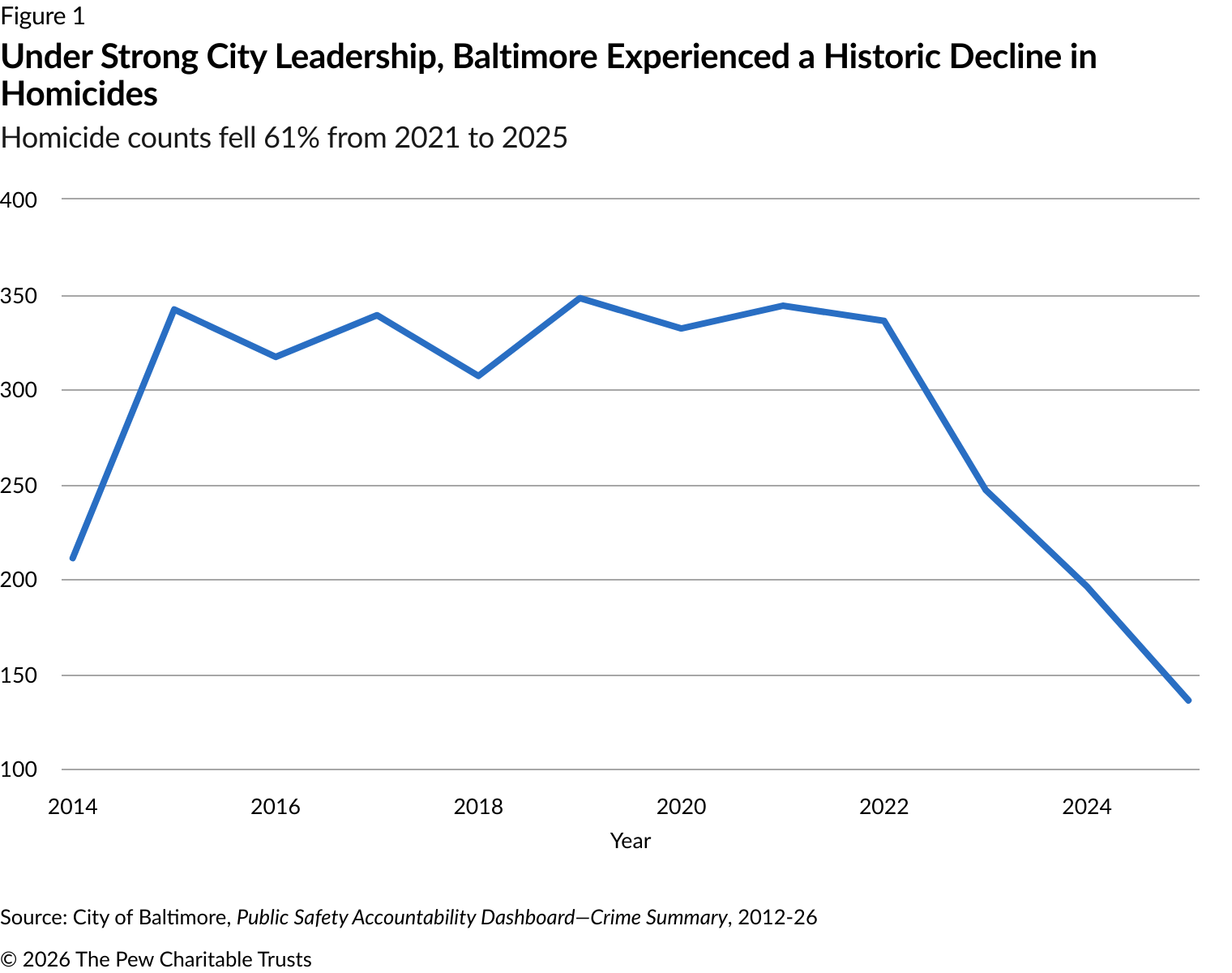
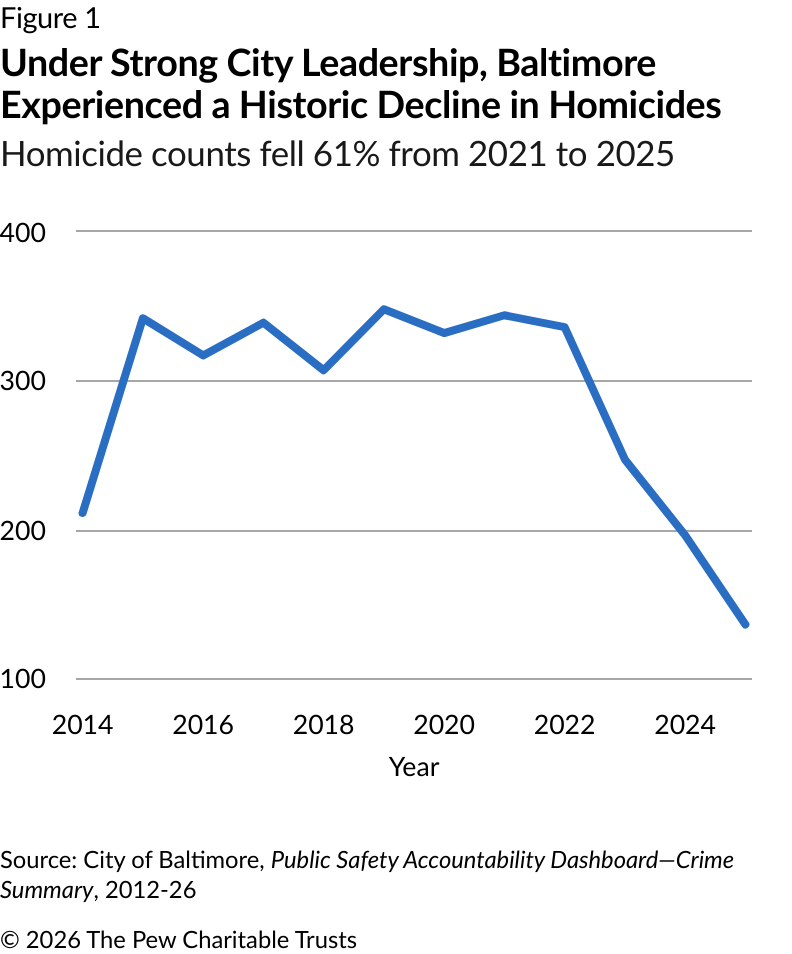
Newly elected in November 2020, Mayor Brandon Scott inherited a problem: Baltimore had undergone six consecutive years of 300-plus homicides—staggering numbers for a city with roughly 600,000 residents. He had made a public commitment to develop a comprehensive violence reduction strategy for the city. His experience told him that this strategy had to focus narrowly on those individuals most closely involved in violence—as opposed to occupying the entirety of the most violent neighborhoods—and that efforts had to go beyond policing.
Six months later, Mayor Scott stood outside an East Baltimore home to announce the plan and declare that homicides would be reduced 15% year over year.
The reaction? “People literally laughed at me,” he recalled.10
To achieve these results, Mayor Scott committed to implementing the group violence reduction strategy (GVRS). It launched in January 2022 first in the Western District, where homicide rates were highest.11 The Baltimore strategy involves identifying individuals who are deemed most likely to be involved in violence, contacting them directly, and letting them know that the city views them as the people at highest risk for lethal violence— as either a victim or perpetrator. They can sign up for a full array of customized social services aimed at getting them to change their behavior.12 The help will be there for them, Mayor Scott said. But if their engagement in violence continues, they should expect police to be watching their every move.
Mayor Scott stuck with his goal and his plan, even after homicides fell by only 2% that year.13 Then, in 2023, the decline was 26%. In 2024, it was 21%, and in 2025 it fell by 31%, the largest year-over-year percentage decrease in homicides ever recorded in Baltimore.14 In early 2023, GVRS was expanded to other parts of the city, and dramatic homicide reductions followed across the city.15 Violence was down in other cities over the same period. But in previous years, Baltimore’s numbers hadn’t moved with national trends.
2. Data-informed problem analysis: Establishing a common understanding of violence dynamics
Misconceptions are common about who is involved in violence, where it is occurring, and what is driving it. A shared, clear, and fact-based understanding of the problem is crucial for building a city-level reduction strategy.
A problem analysis can provide this information by gathering data directly from local partners. The analysis, in part, retroactively reviews nonfatal and fatal shooting incidents one by one to determine who was involved, their basic demographic information, what is known about the circumstances that led to the incident, and whether there was retaliation. While public safety partners look at incidents case by case to solve a crime, a problem analysis is intended to review many incidents to capture bigger trends about violence in the city. There are important policy implications for the information that comes out of the problem analysis process. For example, the results include the networks most active in violent incidents, which should be prioritized for intervention. Another example: The problem analysis provides the age range of victims and suspects, an important data point when considering the types of services needed for a city-level violence reduction strategy.
The problem analysis is vital for developing a strategy, but ongoing data collection and analysis is central to keeping that strategy fresh and relevant. That allows cities to identify the people and places to focus interventions in real time—and refocus efforts as necessary.
Case study: Oakland
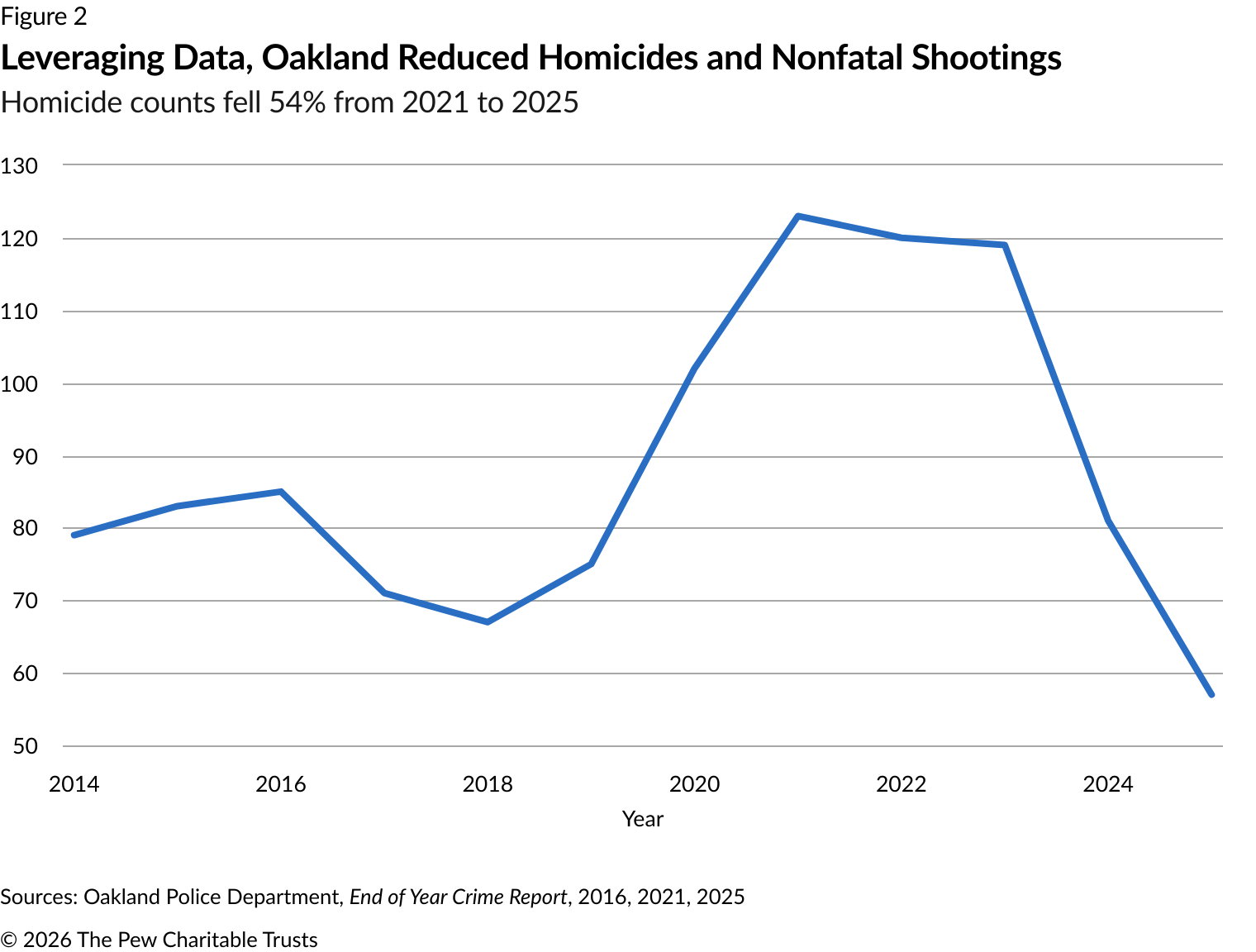
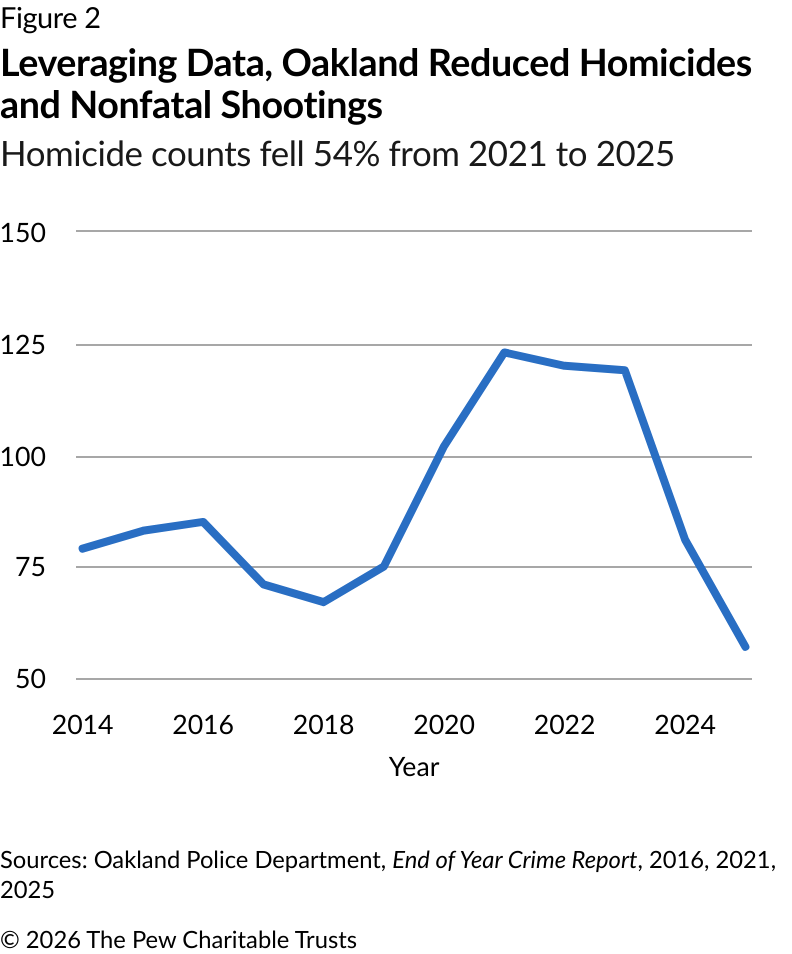
Oakland’s violence reduction strategy, known as Ceasefire, was created in 2012 and revamped by local officials in 2024. It begins with coordination between the Oakland Police Department and the city’s Department of Violence Prevention to identify individuals and neighborhoods most at risk of violence.
Reygan Cunningham, who ran the Ceasefire from 2012 to 2018, points to several instances in which data analysis has affected the work.16 At that time, the conventional wisdom was that juveniles, drug disputes, and economic motives drove the violence. Results from multiple problem analyses painted a different picture: City leaders learned the average age of shooting victims was 30; victims were often connected to each other in groups/networks, with disputes related to group dynamics driving violence; and victims had extensive criminal justice records.17
Using these findings, the city developed a strategy that involved contacting those individuals deemed most likely to become perpetrators or victims of lethal violence; offering intensive services, supports, and opportunities to help them change their behavior; and, as a last resort, deploying focused enforcement if involvement in violence continued. Between 2012, when Ceasefire launched, and 2017, homicides and nonfatal shootings in Oakland fell by roughly 50% and an external evaluation gave the strategy much of the credit.18
Sustained attention on real-time data is crucial to appropriately focus the work, and Oakland has a track record of doing just that. For example:
- An independent assessment of Ceasefire conducted in 2023 found that outreach workers were devoting too much time to incarcerated individuals who were many months away from being released, and thus unlikely to engage in community violence in the short term.19 The Ceasefire team was able to shift the resources to people most likely to be engaged in community violence in the near term.
- In 2020, data showed that gangs from San Francisco were becoming involved in Oakland shootings, a new phenomenon. Once that situation was revealed, the Ceasefire team hired violence interrupters and life coaches with expertise in San Francisco gangs.20
- In late 2023, an outside assessment of Ceasefire found that more Latino groups were involved in group shootings than in years past—and that Oakland was ill-equipped to connect with these groups.21 Holly Joshi, who had just taken charge of the Department of Violence Prevention, hired a violence interrupter and two life coaches with connections to the city’s Latino community.22
“Data and intelligence drive the entire strategy,” said Joshi. “It’s literally trying to get down to the details around who got shot, what group or gang are they related to, what was the issue at the root of the problem, which group or gang are they beefing with, and who are the people most likely to retaliate.”23
Today, one of the most important sources of information Joshi gets from the Police Department is a weekly rundown of all shootings from the past week where retaliation is likely. This includes names of individuals whom police consider likely to become involved in violence in the next 90 days but whom they have no basis to arrest. Joshi’s team reaches out to them, trying to get them out of the cycle of violence by offering access to life coaches and a full range of social services.
Homicides in Oakland fell by 32% in 2024, and by another 30% in 2025. Explaining those substantial improvements, Mayor Barbara Lee called Ceasefire “a critical part of our comprehensive public safety strategy.”24
3. Cross-sector collaboration on a shared strategy: Working together toward a collective vision
Effective violence reduction efforts require a shared strategy that all parties are working on, with clarity and coordination between government agencies, community-based providers, civic leaders, law enforcement agencies, and residents from affected neighborhoods each playing a defined role. To properly manage and coordinate the various sub-strategies and partners, an identified convener or coordinating body should be named by the mayor or other city leadership. An example of a coordinating body is a multisector working group, with representatives from various government and community stakeholders, that is responsible for implementing the strategy and being guided by management structures and metrics (these will be discussed in capacity four, “effective operational management”).
This coordinating body is responsible for understanding both the capabilities of the agencies involved and the intervention needs in order to determine what additional resources and processes are necessary to be effective. This allows scarce resources to be targeted on the situations, neighborhoods, and communities where they are most needed and most likely to have a positive impact. It also permits the police and violence prevention workers to do what they do best: understand, appreciate, and supplement each other’s work, while staying in their respective lanes.
When different stakeholders come together around shared goals, they can produce results more effectively than when they pursue separate agendas.
Case study: Los Angeles
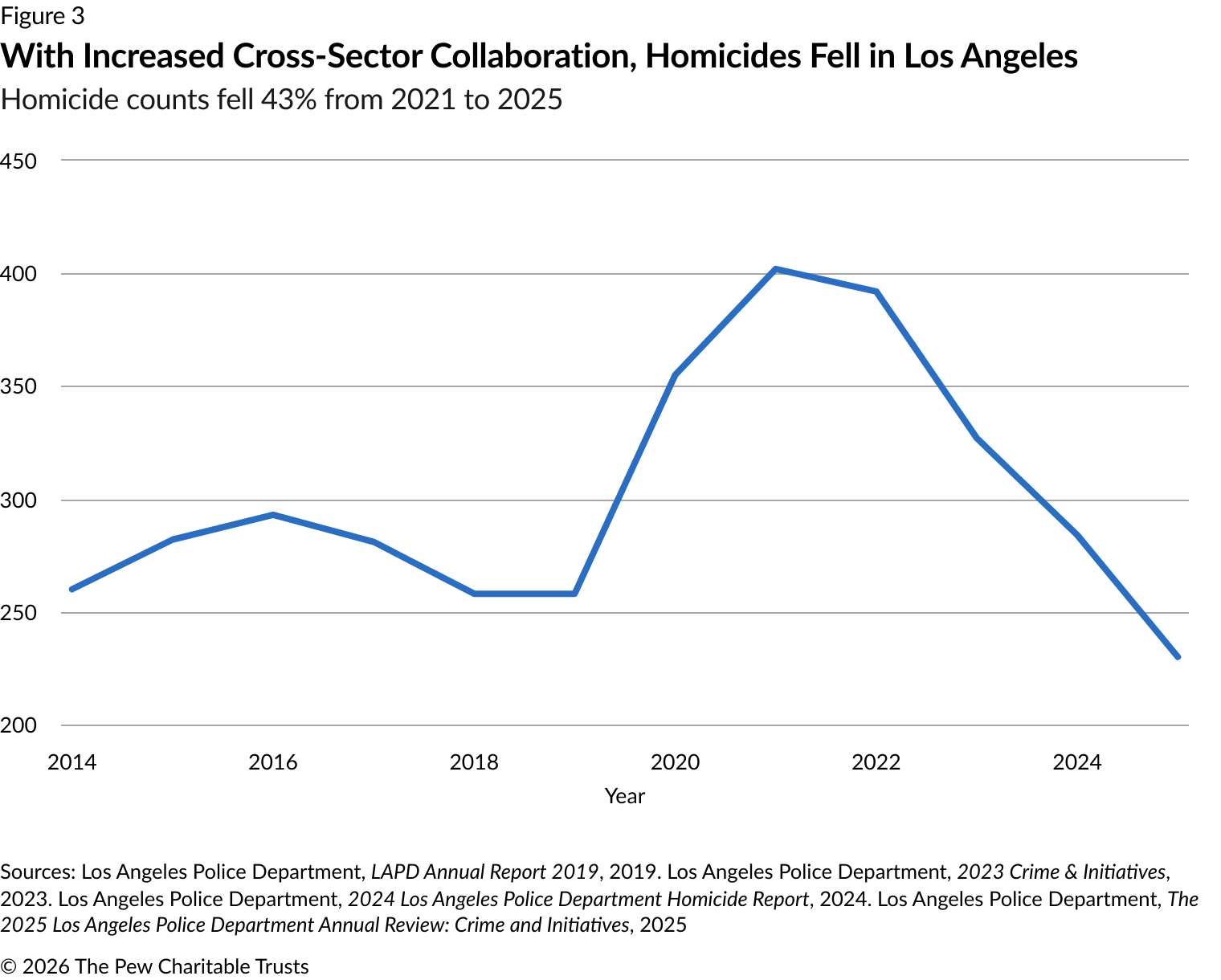
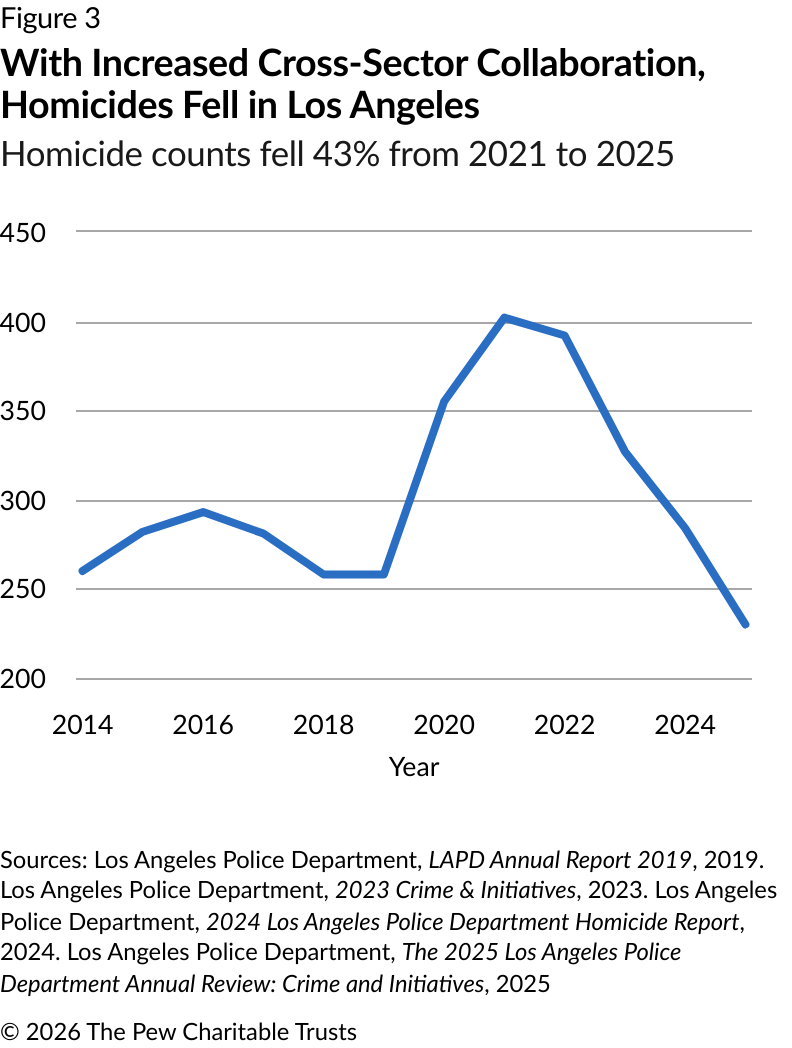
Enhancing cross-sector collaboration has been a primary goal of Mayor Karen Bass’ efforts to reduce homicide and gun violence in Los Angeles. Her approach involves a new Office of Community Safety, police and community partnerships, social and economic investment, public health and safety alignment, and data-driven law enforcement.
A key element in these efforts is a revitalized, evidence-based version of the LA Gang Reduction and Youth Development (GRYD) program, which has been in existence since 2007 and now sits inside the Office of Community Safety. With a budget of $39 million per year, the GRYD program administers an overall violence reduction strategy that goes beyond enforcement and incarceration by coordinating communication and actions between law enforcement, community violence intervention (CVI) workers, and service providers.25 Much of the violence reduction work is done in the 23 GRYD zones, areas known to have high levels of gang-related violence. For instance, the city’s Summer Night Lights program provides a range of activities in those zones with the goal of deterring gang violence.
In recent years, homicides in the 23 GRYD zones have dropped faster than in the city as a whole, down 27% in 2025, for instance, outpacing the 19% citywide decline; the Los Angeles Police Department’s Community Safety Partnership is also active in these areas. As Police Chief Jim McDonnell has noted, the citywide homicide total in 2025 was the lowest since 1966.26
Mayor Bass said the numbers were testament to “community violence interventionalists, law enforcement, and community members and leaders working together to create a safer city.”27 In Los Angeles and other cities, frontline cooperation between police officers and community violence workers must be limited and clearly defined, organizers say. To be effective, the community workers can’t be seen as police informants—a concern police have not always shared.
Fernando Rejón, executive director at the Urban Peace Institute, who has been working on community violence prevention and intervention in Los Angeles for nearly two decades, likes what he’s been seeing, in terms of numbers, collaboration, and building out a community-violence infrastructure. “Right now, there’s good synergy; there’s more accountability in the field. There’s good communication, good leadership. I think things are working,” Rejón said.28
4. Effective operational management: Building the skills and practices to drive success
Having a shared, cross-sector strategy won’t get cities anywhere without effective operational management to implement it, coordinate across agencies and sectors to resolve strategic kinks, and manage performance. Strong management practices, including clearly defined processes and frameworks (such as a theory of change, performance indicators, and regular meetings) are essential components of a violence reduction strategy. Effective operational management ensures that strategies translate into concrete actions and measurable results.
Cities often lack the management capacity required to run complex, cross-sector initiatives such as violence reduction strategies. Traditional government structures and processes may not be well suited to the rapid response and flexibility required. Additionally, bureaucracy and disconnected departments can hinder necessary coordination.
Ways to address these concerns include establishing clear management processes and accountability structures with the authority, skills, and resources to coordinate violence reduction efforts; defining clear performance metrics; and maintaining continuous improvement mechanisms.
Case study: Indianapolis
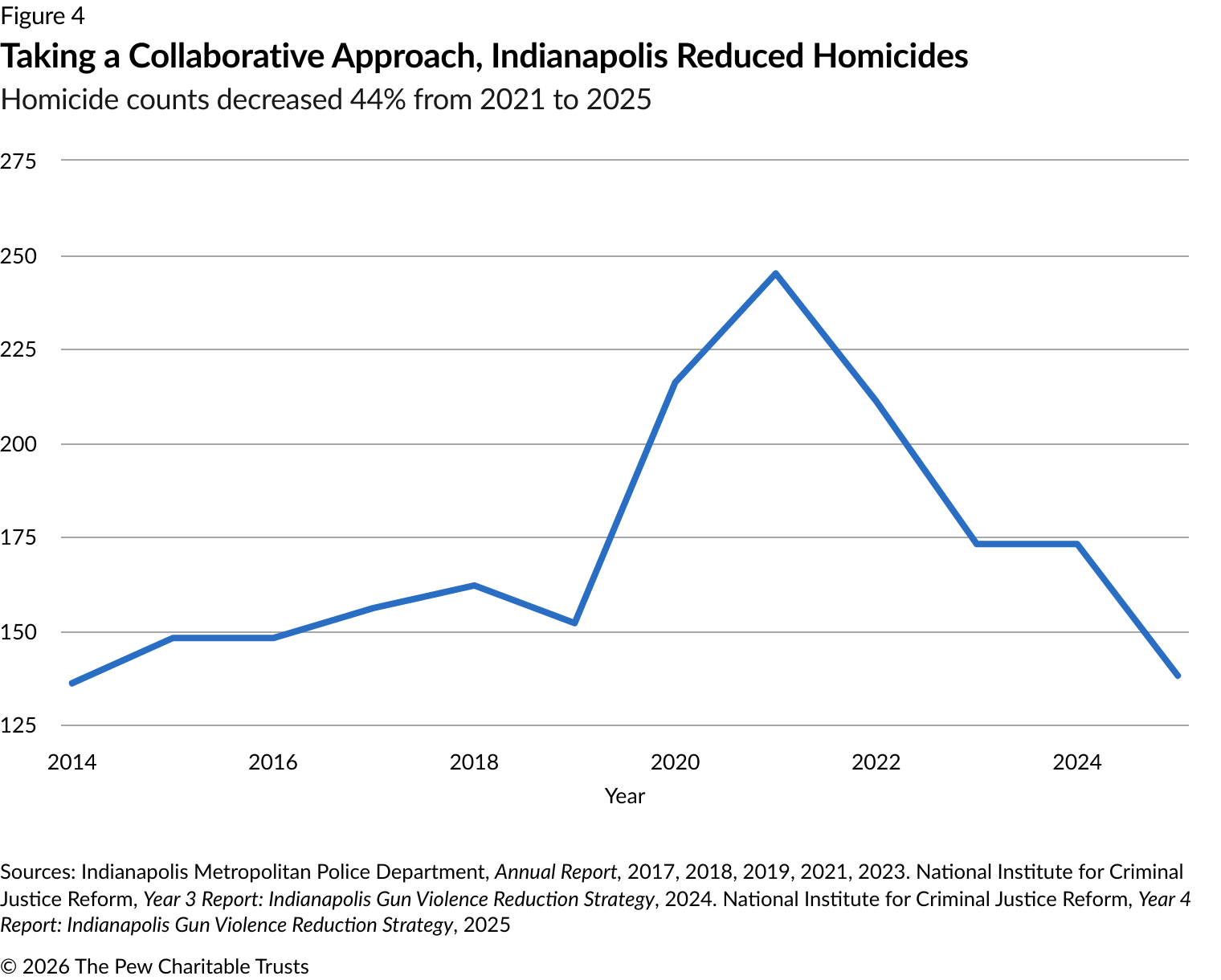
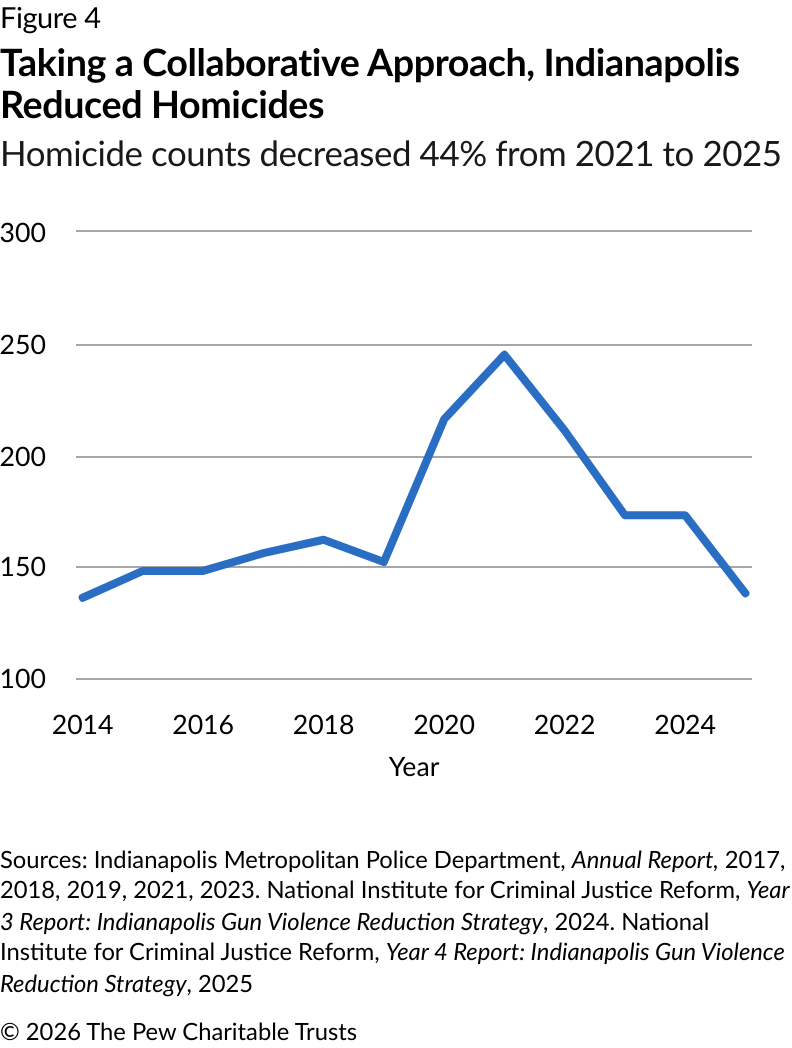
Starting in January 2022, under the leadership of Mayor Joe Hogsett, the city of Indianapolis responded to two consecutive years with over 200 homicides by committing more than $100 million in American Rescue Plan funds to a three-year gun violence reduction strategy.29 Like similar plans in other cities, this one, built with the help of the National Institute for Criminal Justice Reform, was based on identifying the individuals most likely to be killed or to kill someone else.
Now, four years later, the Indianapolis Metropolitan Police Department has 80 officers assigned specifically to combating gun violence. And the city’s Office of Public Health and Safety (OPHS) has a 60-member CVI team working to reshape the lives of the individuals seen as driving gun violence.
Key to this work has been the police, headed by the police chief, and the community violence interruption effort, led by Tony Lopez, the city’s deputy director of public safety. The two camps participate in monthly, data-driven performance management meetings and weekly, high-level shooting reviews run by the police, creating an effective operational system.30
During the shooting reviews, police leaders provide Lopez and his colleagues with names of people for OPHS to contact and try to engage. OPHS staff offer their own thoughts about what can be done to prevent one shooting from leading to another. The outcome may be a move to intensify police surveillance of a particular individual. Or it could be an agreement that the police will ease up, at least for a time, to give the violence intervention staff a chance to see if they can persuade that individual to become part of the Indy Peace Fellowship, which offers up to 18 months of life-coaching designed to change behavior.
The fellowship is operated by the Indy Public Safety Foundation, which works in partnership with the city in the CVI work. That partnership allowed the overall effort, known as Indy Peace, to be more agile than a purely government-run program might have been.31 One example: permitting Indy Peace to more easily hire people with criminal records as violence interrupters.
From 2021 through 2025, with the gun violence reduction strategy in place, the homicide rate fell by a cumulative 45%.32 With the federal funds running out, the City-County Council that governs Indianapolis has given the program a vote of confidence, putting money for its operations into the general fund budget.
5. Robust violence reduction infrastructure: Strengthening front-line responses in the community and with law enforcement
Developing an effective community violence reduction infrastructure includes both an effective CVI system and policing focused on violence prevention. The CVI system requires clear goals, stable funding, and accountability systems. Effective policing for violence prevention looks like police departments focused on reducing gun violence through evidence-based approaches, rather than overly broad enforcement strategies.
Many cities lack dedicated funding for violence reduction or rely on short-term grants, which can create programming instability. The staff and contractors working on CVI efforts don’t always have professional development opportunities, competitive compensation, or support systems to prevent burnout. Separately, institutional resistance to change within law enforcement agencies can impede internal reforms needed to focus policing strategies on those at highest risk for violence.
Cities undertaking violence reduction efforts have an opportunity to address some of these challenges by building durable infrastructure for violence reduction work. Such infrastructures that bridge CVI and policing and are focused on a shared strategy (as discussed in capacity three, “cross-sector collaboration”) have the following components:
- Police department data to identify the people and places most at risk of violence.
- A clear theory of change—based on data and experience, both local and national—about how to change the behavior of perpetrators and potential victims of violence.
- Sufficient CVI funding and staffing to engage with the population at the highest risk.
- Problem-oriented policing approaches, with the ability to focus enforcement operations when necessary.
- Ongoing organizational and leadership development.
- The ability to track and measure data.
Case study: Baltimore
Responsibility for reducing community violence cannot fall only on the police. To be effective, the effort must involve multiple parties, all of whom understand their roles and work in sync. But the role of the police is central. A multifaceted plan has little chance of succeeding unless the police buy into it and change their own operations accordingly.
To a large extent, that has happened in Baltimore, where Police Commissioner Richard Worley describes himself as a true believer in the focused deterrence model. He talks of police being seen less as “warriors” and more as “guardians.”33 He stresses the importance of working together with the local prosecutor and the civilian-led work outlined in the city’s group violence reduction strategy.
“One year in Baltimore City, we made 100,000 arrests and we still had over 300 homicides,” Worley said. This happened during a period of zero tolerance—which, per Worley, alienated much of the community. In 2025, there were 15,000 arrests and 133 homicides.34
Under changes initiated by former Commissioner Michael Harrison and continued by Worley, the department has put an emphasis on selective action. Key to that are weekly shooting reviews: sessions that review recent shooting incidents to identify people (and sometimes groups) most likely to become future shooting victims or suspects, thereby helping shape police strategy for enforcement and investigation, focusing on specific people rather than neighborhoods.
As in Oakland, the day after each shooting review, the names of those people—and police intelligence surrounding their involvement in a recent shooting—are shared with CVI workers, social service providers, and front-line law enforcement personnel, all of whom provide input on intervention opportunities. That dialogue happens in meetings chaired by the Mayor’s Office for Neighborhood Safety and Engagement (MONSE), which manages the GVRS.35
For some of those likely victims or shooters, MONSE gathers an extensive and tailor-made package of city services designed to help them change their ways, often including long-term life-coaching from groups that are part of the city’s community violence ecosystem. A personalized notification team is chosen to deliver the offer of help—a team that may include the police, a city representative, an intervention worker, a community leader, and/or a service provider.
As of September 2025, about one-third of the roughly 850 people who had received offers had accepted them. For them, the results were promising; less than 5% had gone on to commit additional crimes or become victims. And for those who rejected the offers, the police followed through by investigating and arresting many of them.36
Stefanie Mavronis, who heads MONSE, shared that by pursuing an “all-hands-on-deck approach” that includes both targeted work in prevention and intervention, she said, Baltimore is “quite literally breaking and disrupting that cycle of violence.”37
6. Sustainability planning and institutionalization: Building incentives and infrastructure for durable gains
Sustainability is a concern in almost every city that has launched violence reduction strategies. Supporters worry that initiatives will weaken or fade away when a new mayor is elected, grants run out, homicide numbers rise and the efficacy of the strategy comes into question, or homicide numbers fall and policymakers decide they can turn their attention elsewhere.
Creating formal mechanisms that institutionalize effective practices, establish permanent funding streams, and build broad ownership for violence reduction strategies can address these fears. System-level changes can help ensure that progress continues despite political transitions and organizational challenges.
Case study: Boston
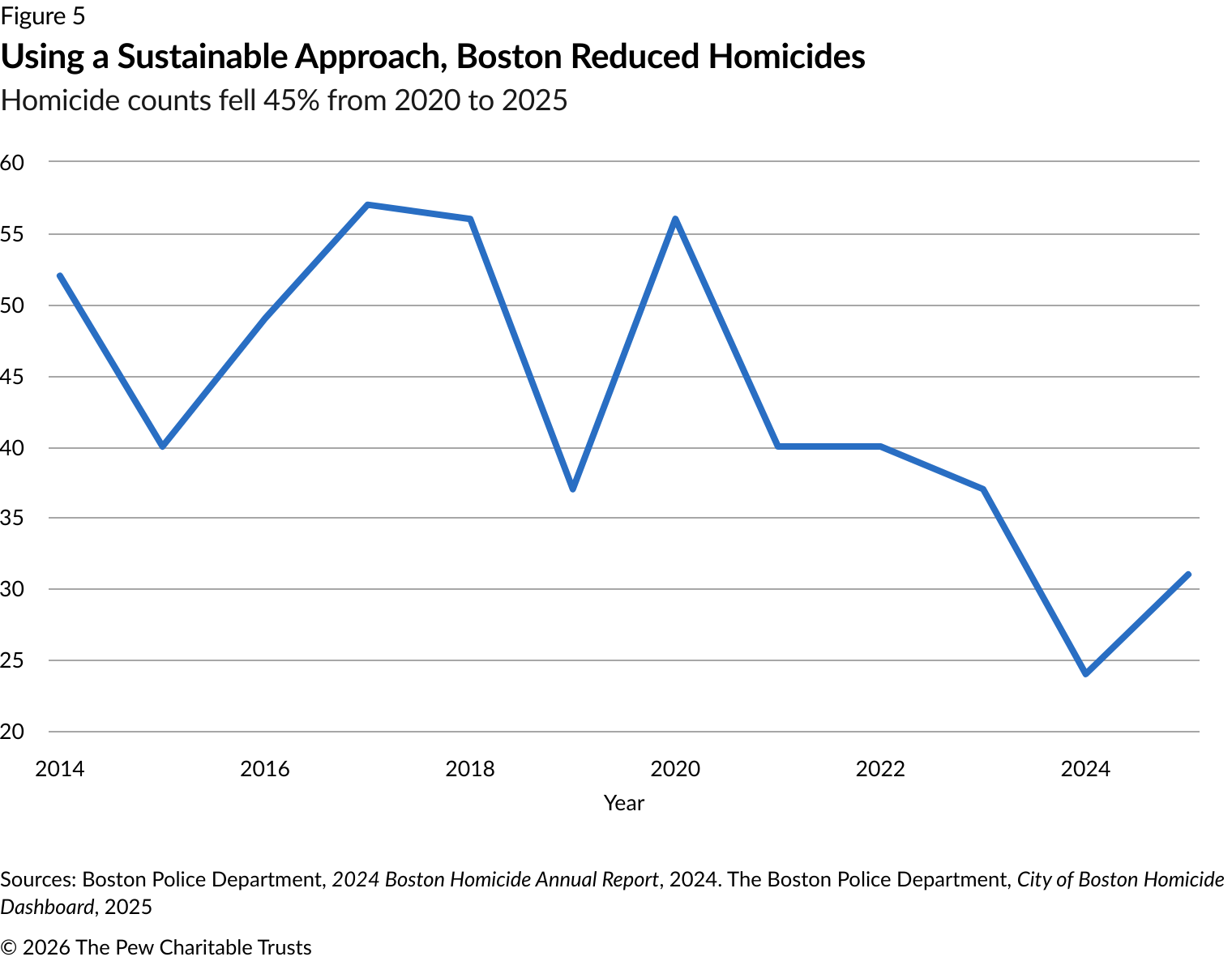
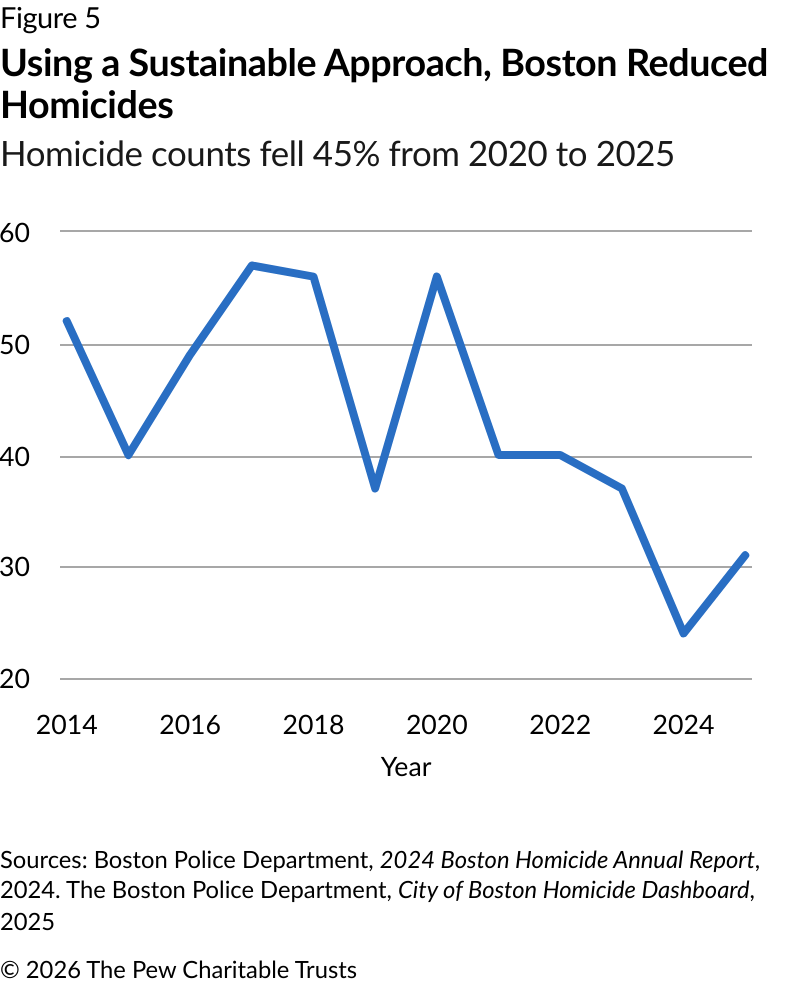
No place has institutionalized a comprehensive, multifaceted approach to violence reduction more than Boston, a city that is widely considered to be the first to have implemented focused deterrence. In the 1990s, its Operation Ceasefire became known as “the Boston miracle” for producing dramatic declines in gun violence among young people involved in gangs and street groups.38 Similar efforts have been in place, in one form or another, for most of the years since.
“We have a long history of it, and it’s shown success,” Police Commissioner Michael Cox said of the multipart approach that includes social workers and community groups as well as police. “So, I don’t know why we would ever get away from that.”39
Multiple city departments and community organizations are involved in violence prevention—work that has continued as mayors and police commissioners have come and gone. In fact, the Office of Violence Prevention is part of the city’s health department, which further institutionalizes the office and gives it access to the department’s range of resources.
Also giving the work a sense of stability are several state-run programs, including the Safe and Successful Youth Initiative and the Shannon Community Safety Initiative, that fund the efforts of community groups in cities across Massachusetts.40
Boston Mayor Michelle Wu has sought to build on the system she inherited, working with Isaac Yablo, her senior adviser for community safety. While continuing to focus on those individuals most likely to engage in violence, the strategy now includes police-community intervention teams and efforts to change the physical environment in ways that make specific locales less conducive to crime—focusing on specific block tracts, intersections, and even floors within a housing development.41
Boston recorded only 24 homicides in 2024, the lowest number since 1957, although the 2025 total (31) was higher.42
To build on the past, the work must be “constantly innovating to meet city needs” and creating “focused coordination of all resources,” Mayor Wu said. Boston has “always been the national model” for violence intervention, she said, and she wants it to stay that way.43
Conclusion
Even with recent declines, homicides remain all too common in many American cities and are corrosive to community and civic life in areas where violence is concentrated. For municipal leaders grappling with how to reduce violence, the six key capacities outlined in this brief offer a promising approach for developing more effective and sustainable solutions.
Violence reduction all boils down to committed leadership, strong management, and an unrelenting focus on people likely to be victims or perpetrators in the near term, said Vaughn Crandall, one of the authors of the CJP Lab report.
“And if any one of those things is missing,” Crandall said, “a city will have to build that capacity to sustainably reduce violence.”44
Acknowledgments
This brief was written by Larry Eichel, a senior adviser with The Pew Charitable Trusts’ Philadelphia research and policy initiative, and Meaghan McDonald, senior officer for reducing community violence at Pew. The project thanks Pew colleagues Sarah Leiseca, Abby Takas, Jake Horowitz, Jasmine Olivier-McGregor, Kimberly Burge, Tamara El-Waylly, Ned Drummond, Casey Reid, John Murphree, Jasmine Ng, and Kate Evans for providing important communications, creative, editorial, and research support for this work. The team thanks the interviewees for the perspectives they shared to inform this report as well as the University of Pennsylvania’s Crime and Justice Policy Lab for designing and supporting this capacities-based approach.
Endnotes
- The research was conducted by the California Partnership for Safe Communities, which merged with the University of Pennsylvania’s Crime and Justice Policy (CJP) Lab under the CJP Lab’s name in 2025. See: https://crimejusticelab.org/merger-announcement/.
- Vaughn Crandall, Marina Gonzalez, and Reygan Cunningham, “Beyond Models: Exploring Key City Capacities for Sustainably Reducing Community Violence,” California Partnership for Safe Communities, 2024, https://crimejusticelab.org/wp-content/uploads/2025/07/Key-Capacity-Brief-FINAL.pdf.
- “What We Know About the Increase in U.S. Murders in 2020,” John Gramlich, Pew Research Center, Oct. 27, 2021, https://www.pewresearch.org/short-reads/2021/10/27/what-we-know-about-the-increase-in-u-s-murders-in-2020/.
- “2020’s Historic Surge in Murders, Explained,” German Lopez, Vox, March 25, 2021, https://www.vox.com/22344713/murder-violent-crime-spike-surge-2020-covid-19-coronavirus. Julia P. Schleimer et al., “Unemployment and Crime in U.S. Cities During the Coronavirus Pandemic,” Journal of Urban Health 99 (2022): 82-91, https://doi.org/10.1007/s11524-021-00605-3.
- “Crime Trends in U.S. Cities: Year-End 2025 Update,” Ernesto Lopez and Bobby Boxerman, Council on Criminal Justice, January 2026, https://counciloncj.org/crime-trends-in-u-s-cities-year-end-2025-update/.
- “The Cities That Saw Historic Murder Lows in 2025,” Jeff Asher, Jan. 12, 2026, https://jasher.substack.com/p/the-cities-that-saw-historic-murder.
- “Murder in the U.S. Fell Dramatically in the First Half of 2026,” Jeff Asher, July 6, 2026, https://jasher.substack.com/p/murder-in-the-us-fell-dramatically.
- “Crime in U.S. Seen as Less Serious for Second Straight Year,” Megan Brenan, Gallup, Oct. 30, 2025, https://news.gallup.com/poll/697124/crime-seen-less-serious-second-straight-year.aspx.
- Anthony A. Braga, David Weisburd, and Brandon Turchan, “Focused Deterrence Strategies Effects on Crime: A Systematic Review,” Campbell Systematic Reviews 15, no. 3 (2019): https://doi.org/10.1002/cl2.1051. Jeffrey A. Butts et al., “Cure Violence: A Public Health Model to Reduce Gun Violence,” Annual Review of Public Health 36 (2015): https://www.annualreviews.org/content/journals/10.1146/annurev-publhealth-031914-122509. Philip Lee et al., “Evaluating the Structural, Financial, and Legal Aspects of Hospital-Based Violence Intervention Programs Implementation on Psychosocial Outcomes and Violence Reduction: A Systematic Review,” Injury 56, no. 3 (2025): 112181, https://doi.org/10.1016/j.injury.2025.112181.
- Chris Hayes, “Baltimore’s Violent Crime Perception vs. Reality With Mayor Scott,” Aug. 25, 2025, in Why Is This Happening? The Chris Hayes Podcast, podcast, https://www.ms.now/msnbc-podcast/msnbc/baltimores-violent-crime-perception-vs-reality-mayor-scott-podcast-tra-rcna226954.
- Max Kapustin et al., “Reducing Gun Violence at Scale” (working paper, National Bureau of Economic Research, 2026), https://www.nber.org/papers/w35292.
- Stefanie Mavronis (director, Baltimore Mayor’s Office of Neighborhood Safety and Engagement), conversation with The Pew Charitable Trusts, Sept. 16, 2025.
- “Public Safety Accountability Dashboard—Crime Summary,” City of Baltimore, 2012-26, https://baltimore-psad.github.io/.
- “Public Safety Accountability Dashboard,” City of Baltimore.
- “Public Safety Accountability Dashboard,” City of Baltimore.
- Jeremy Biddle and Ben Struhl, “What’s Behind Baltimore’s Drastic Reduction in Violence,” Vital City, Aug. 21, 2025, https://www.vitalcitynyc.org/whats-behind-baltimores-drastic-reduction-in-violence/.
- Reygan Cunningham (director of Crime and Justice Policy Lab West, University of Pennsylvania Crime and Justice Policy Lab), conversation with The Pew Charitable Trusts, Sept. 8, 2025.
- Lisa Barao and Anthony Braga, “Oakland Violence Problem Analysis 2019-2020,” 2022, https://kff.org/wp-content/uploads/sites/3/2023/11/Oakland-Ceasefire-report-2022.pdf. Anthony A. Braga et al., “Oakland Ceasefire Evaluation: Final Report to the City of Oakland,” 2019, https://cao-94612.s3.amazonaws.com/documents/Oakland-Ceasefire-Evaluation-Final-Report-May-2019.pdf.
- Anthony A. Braga et al., “Oakland Ceasefire Impact Evaluation: Key Findings,” 2018, https://witnessla.com/wp-content/uploads/2018/08/oakland_ceasefire_impact_evaluation_key_findings.pdf.
- California Partnership for Safe Communities, “Oakland Ceasefire Audit Report & Findings: A Report on Gun Violence Reduction Efforts,” 2023, https://cao-94612.s3.us-west-2.amazonaws.com/documents/Final-CF-Report-Oakland-01.24.pdf.
- Reygan Cunningham, interview.
- California Partnership for Safe Communities, “Oakland Ceasefire Audit Report & Findings.”
- Holly Joshi (chief, Oakland Department of Violence Prevention), conversation with The Pew Charitable Trusts, Sept. 8, 2025.
- Holly Joshi, interview.
- Oakland Police Department, “End of Year Crime Report—Citywide,” 2025, https://cityofoakland2.app.box.com/s/sjiq7usfy27gy9dfe51hp8arz5l1ixad/file/1743494392012. Danielle Echeverria, “Homicides Fell to Record Lows in S.F., Oakland in 2025,” San Francisco Chronicle, Jan. 3, 2026, https://www.sfchronicle.com/crime/article/homicide-san-francisco-oakland-21266798.php. “OPD Shares Crime Statistics for First Half of 2025,” Oakland Police Department, Aug. 7, 2025, https://www.youtube.com/watch?v=fN51BgdZmkg.
- Melvyn Hayward Jr. (senior director, Los Angeles Gang Reduction and Youth Development program), conversation with The Pew Charitable Trusts, Sept. 4, 2025.
- “Mayor Bass, Community Safety Leaders Announce a 27% Drop in Homicides in Neighborhoods Most Impacted by Violence in 2025,” City of Los Angeles, Feb. 17, 2026, https://mayor.lacity.gov/news/mayor-bass-community-safety-leaders-announce-27-drop-homicides-neighborhoods-most-impacted.
- City of Los Angeles, “Mayor Karen Bass and Community Safety Partners Highlight Success of Community Programs Reducing Violence in L.A.,” news release, March 18, 2025, https://mayor.lacity.gov/news/mayor-karen-bass-and-community-safety-partners-highlight-success-community-programs-reducing.
- Fernando Rejón (executive director, Urban Peace Institute), conversation with The Pew Charitable Trusts, Sept. 3, 2025.
- National Institute for Criminal Justice Reform, “Year 3 Report: Indianapolis Gun Violence Reduction Strategy,” 2025, https://nicjr.org/files/galleries/Indy_GVRS_3-Year_Report_Jan_2025_Public-0001.pdf.
- Tony Lopez (deputy director of public safety, city of Indianapolis), conversation with The Pew Charitable Trusts, Sept. 17, 2025.
- “Reducing Gun Violence in Indy,” Indy Peace, https://www.indypeace.org/.
- “Indianapolis Violent Crime Drops From 2021 Peak, Reports IMPD,” Jill Sheridan, wfyi Indianapolis, Dec. 30, 2025, https://www.wfyi.org/wfyi-news/2025-12-30/indianapolis-violent-crime-rate-murders-drop-2025-impd.
- “A Safer Baltimore: Town Hall With Baltimore Police Commissioner Richard Worley,” University of Maryland, Baltimore, Feb. 4, 2026, https://www.youtube.com/watch?v=3BY_3ue_J2Q.
- “A Safer Baltimore,” University of Maryland, Baltimore.
- Stefanie Mavronis, interview.
- Stefanie Mavronis, interview.
- “MONSE’s Stefanie Mavronis, UPenn Expert Jeremy Biddle on Curbing Violence in Baltimore,” Tom Hall, Sam Bermas-Dawes, and Rob Sivak, WYPR, Sept. 18, 2025, https://www.wypr.org/show/midday/2025-09-18/monses-stefanie-mavronis-upenn-expert-jeremy-biddle-on-curbing-violent-crime-in-baltimore.
- “Boston, MA: Group Violence Intervention,” National League of Cities, June 25, 2024, https://www.nlc.org/resource/reimagining-public-safety-impact-updates/boston-ma-group-violence-intervention/.
- Michael Jonas, “Boston Stays the Course, Despite Trump Yanking Violence Prevention Grants,” Commonwealth Beacon, May 28, 2025, https://commonwealthbeacon.org/criminal-justice/boston-stays-the-course-despite-trump-yanking-violence-prevention-grants/.
- “Office of Children, Youth and Family Programs,” Commonwealth of Massachusetts, https://www.mass.gov/info-details/office-of-children-youth-and-family-programs. “Shannon Community Safety Initiative (CSI),” Commonwealth of Massachusetts, https://www.mass.gov/info-details/shannon-community-safety-initiative-csi.
- “Public Safety Media Briefing—December 27, 2024,” City of Boston, Boston City TV, Dec. 27, 2024, https://www.youtube.com/watch?v=GANPS2jHbEo. Isaac Yablo (senior adviser for community safety, city of Boston), conversation with The Pew Charitable Trusts, Sept. 9, 2025.
- Boston Police Department, “2024 Boston Homicide Annual Report,” 2024, https://storymaps.arcgis.com/stories/4002fcf567964188951aaf685d0fcab4. “City of Boston Homicide Dashboard,” City of Boston, https://www.arcgis.com/apps/dashboards/4bbab63c392f44a49c29d8529ae1b48b#.
- “Public Safety Media Briefing,” City of Boston, Boston City TV.
- Vaughn Crandall (director of technical assistance, University of Pennsylvania Crime and Justice Policy Lab), conversation with The Pew Charitable Trusts, Aug. 13, 2026.
People


