Older Philadelphians Share Concerns Over Finances, Access to Housing and Services
Focus group participants ages 65 and up value the free transit and quality healthcare the city offers but struggle with rising costs

Overview
Over the past decade, the population of older adults has been increasing in Philadelphia and nationwide. From 2014 to 2024, the number of older adults ages 65 and over grew by 24% to represent 15% of the city’s population.1 As this cohort grows, so does the importance of understanding their experiences so policymakers and other providers can tailor services to better meet their needs.
The Pew Charitable Trusts has undertaken a series of research projects focusing on Philadelphia’s older residents, specifically examining their economic behaviors and the prevalence of poverty among them, as well as their household demographics, to provide helpful insights on these topics. Pew’s previous research has been quantitative in nature, analyzing estimates from the U.S. Census Bureau’s American Community Survey and other data on Philadelphia.
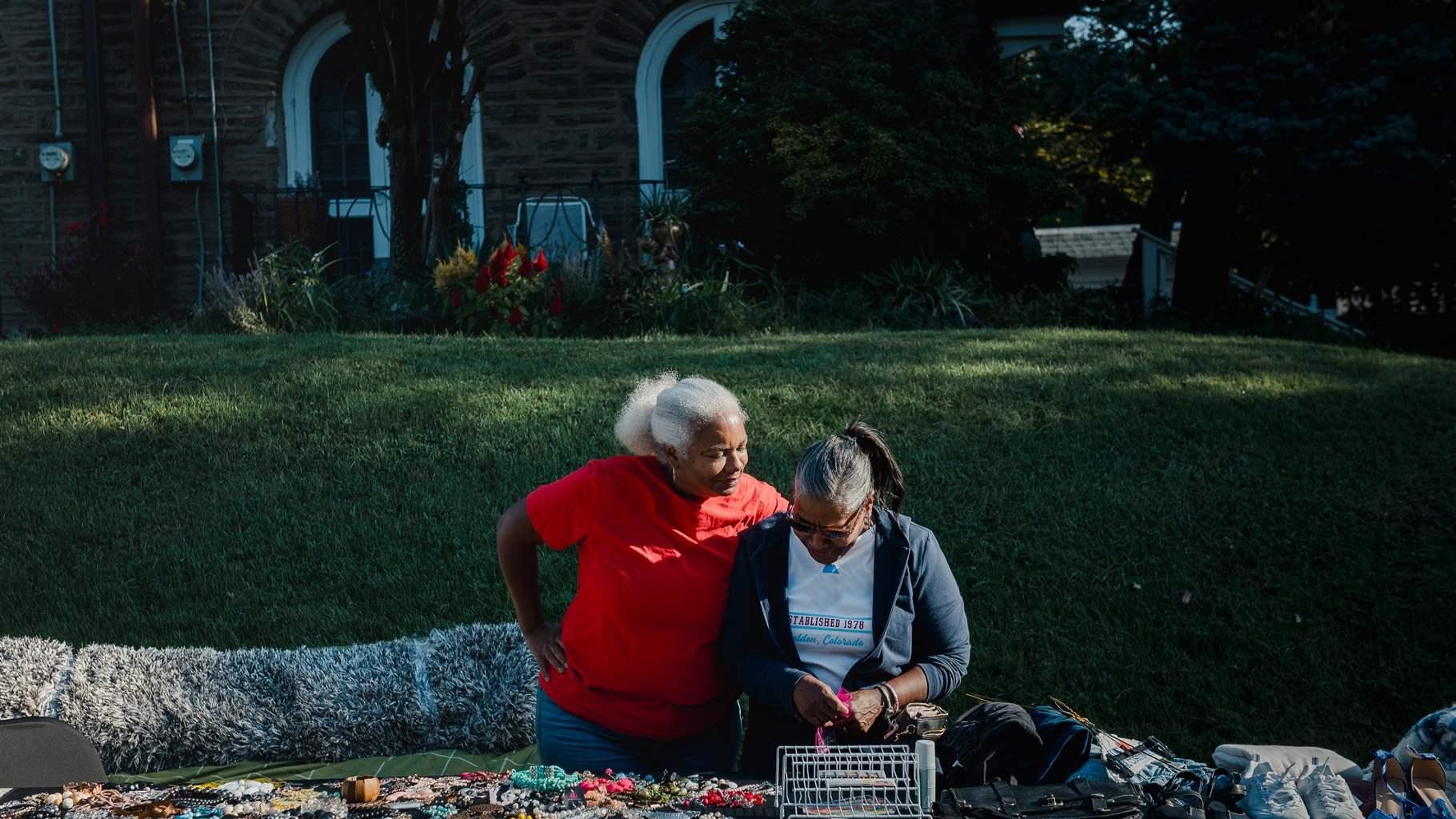
To help key stakeholders better understand the individual and diverse experiences behind these numbers, Pew adopted a focus group model for this study, contracting with the research firm SSRS to interview groups of older adults living in Philadelphia to learn more about their perspectives on and experiences of aging in the city. Because focus groups are qualitative in nature, they are not intended to be representative of the older population overall; and yet, this method provides important depth and context.
The four focus groups consisted of 26 older adults from various backgrounds and neighborhoods, with different levels of economic stability. Two groups included working adults, and two consisted of retired individuals. The conversations centered on participants’ personal experiences in an effort to draw out the nuances required to better understand this population.
During conversations in September 2025, there was broad agreement among participants, regardless of their demographic characteristics, about some of the things that make aging in Philadelphia easy or challenging. Many spoke highly of the ability to get around the city easily and expressed satisfaction with the quality of healthcare available to them. At the same time, many also expressed concerns regarding the increasing cost of living and limited housing options.
Pew is sharing participants’ views in this report in the hope that their insights will help policymakers and service providers in the nonprofit sector consider ways to improve older residents’ lives.
Among the policy options that focus group participants discussed were:
- Lifting income limits for senior benefit programs.
- Improving access to and the affordability of age-restricted housing.
- Developing more programs targeting older adults while improving outreach.
- Ensuring that programs are physically and technologically accessible.
Financial security
Social Security was the most prevalent income source, though levels of reliance on it varied
Some 84% of households led by older Philadelphians receive Social Security benefits, which are based on an individual’s lifetime earnings; 29% of those households report it as their largest source of income, and an additional 16% report it as their only income source.2
Social Security also was the most frequently cited income source for the focus group participants, followed by other forms of retirement income, such as pensions, and then wages.
When asked about the income sources they relied on, many participants, particularly retirees, emphasized the role of Social Security income. Seven participants, five of whom were fully retired and two of whom were considering a return to work, cited Social Security as their only source of income. Many said Social Security alone was insufficient to live on comfortably, and some said they worried about it becoming their sole source of income later in life, when other sources, such as pensions, might be gone.
“In my case, all I have is the Social Security, so it’s everything for me.”
—Black/African American male, 72, who is retired, “getting by,” and rents a home in Northwest Philadelphia
“I think Social Security, so far as my finances, it’s like maybe 50% of my income. I don’t know what’s going to happen once my pension dries up.”
—Black/African American male, 70, who is retired, “getting by,” and owns a home in West Philadelphia
“I’m very fortunate. I waited until 70. … I actually don’t even need Social Security, but it’s nice to have a little extra coming in there too.”
—White male, 75, who is retired, “very well off,” and owns a home in Northeast Philadelphia
Apart from Social Security, participants received other retirement income, including pensions from their former employers and retirement savings accounts, such as 401(k) accounts to which they contributed during their working years.
“I started thinking about retirement at 59. I had a 401(k), so I increased [my contributions to] that. So when I got ready to [retire], I knew I had a pension, I knew I had Social Security, and I took my 401(k) on a monthly basis until it ran out. So I was OK financially.”
—Black/African American female, 77, who is retired, “getting by,” and owns a home in North Philadelphia
Among participants who were still working, either by necessity or to maintain their preferred lifestyles, wages were an important source of income.
“I like to go out to eat, I like to have breakfast out, I like to go for dinner, I like to go to a show or a movie or something, and I like to go shopping occasionally and buy myself something. I’m not ready to give [up] that part of my life, and working enables me to do all that.”
—White female, 71, who is working part time, “comfortable,” and owns a home in Northeast Philadelphia
The importance of non-income supports
In addition to their income sources, participants discussed receiving support from various other programs. Several participants mentioned the Southeastern Pennsylvania Transportation Authority (SEPTA) Senior Fare Program, which provides a free pass for seniors, as a major source of savings.3 Some discussed publicly funded programs, such as the Low Income Home Energy Assistance Program (LIHEAP), and noted how some of those initiatives can help to offset living expenses. (See Table 1.)
Table 1: Non-Income Supports Discussed During Focus Groups
Federal programs
- LIHEAP*
- Lifeline Support for Affordable Communications*
- Supplemental Nutrition Assistance Program (SNAP)*
- Senior Community Service Employment Program (SCSEP)*
- Medicare benefits**
- Grocery allowance
- Over-the-counter cards
- Transportation benefits
State and local programs
- PA Property Tax/Rent Rebate Program*
- Senior Citizen Real Estate Tax Freeze*
- Senior Housing Assistance Repair Program (SHARP)*
- Water bill discount
- SEPTA senior pass
Notes: Items listed in the table were specifically mentioned during the focus groups. This table is not intended to provide an exhaustive list of resources for older adults. Programs marked with a “*” are income-restricted programs. Programs marked with a “**” are available for some Medicare Advantage plans, but eligibility and plan enrollment vary.
Sources: Focus groups and assorted program websites
Despite acknowledging the value of these supportive programs, several participants identified barriers to accessing them. At the most basic level, several participants expressed a desire for fewer technological barriers to accessing programming, lamenting that they had a difficult time finding out what programs were available and then applying for them without a computer or a smartphone.
“About devices and the technology and the computers, cellphones, I struggle with it. I’m struggling to keep up with finding services and things and applying for them over the internet. I’m bad at it. I’m not very savvy at it, and I think there’s probably more seniors who are worse at it than me. ... I think a lot of us have fallen through the cracks, because it’s really rough.”
—Black/African American male, 72, who is retired, “getting by,” and rents a home in Northwest Philadelphia
Sometimes, participants were able to identify and apply for programming but ran into a different barrier: income constraints that rendered some adults ineligible for them, even though they felt they needed the assistance.
“I think the problem sometimes falls if you are in the middle—you have money, but you don’t have a lot of money, but you’re too rich to get the benefit.”
—White female, 71, who is working part time, “comfortable,” and owns a home in Northeast Philadelphia
A third barrier to accessing these programs related to physical access. Even if participants were able to identify a program, apply, and be deemed eligible, redemption of support or benefits required traveling to a different location. One participant discussed this problem in terms of a food voucher program.
“That’s what I’m struggling [with] now. I’m trying to get my food voucher because, before, they used to mail them; now, you have to go to the facility. I have no way to go to the facility, and I want my vouchers mailed to me. And so I’m fighting and trying to get them back in the mail. There are some who can go to those facilities. I am not one of them.”
—Black/African American female, 71, who is retired, “comfortable,” and owns a home in West Philadelphia
In addition to the public programs discussed above, many participants discussed relying heavily on their community networks, getting help running errands from friends and family, or receiving resources from religious institutions. This is discussed in greater detail later in this report, under the section titled “Community, social connection, and other reasons to stay.”
More than half reported getting by, but with limited financial security
Pew’s previous analyses identified elevated rates of older adults living below the poverty line or with low incomes, relative to younger populations. Incomes are higher for older White adults than for older Black or African American adults, and renters pay higher shares of their income for housing than homeowners do.

With lower income levels, higher rates of housing cost burden, and fewer opportunities for income as they age, older Philadelphians cite financial security as a major concern. Labor force participation rates among older adults have increased, and wages continue to make up a significant portion of older adults’ total income. Social Security accounted for more than 60% of total income for households below the median income level of $39,412, keeping a quarter of older households above the federal poverty line.4
Though focus groups were not representative, these quantitative findings were largely reflected in the focus groups as well. Among the 26 participants, more than half (15) reported that they were “getting by, but with limited financial security.” Ten reported varying levels of being “comfortable” or “well off,” and one participant reported “struggling to make ends meet.” (See Table 2.)
Table 2: Self-Reported Financial Stability Among Focus Group Participants
|
Financial stability |
Number of participants |
|
Very well off financially |
2 |
|
Doing well, with a high level of financial security |
2 |
|
Comfortable and financially stable |
6 |
|
Getting by, but with limited financial security |
15 |
|
Struggling to make ends meet |
1 |
Participants still working for pay were slightly better off financially than their counterparts who were retired or considering returning to work, while renters reported significantly worse financial conditions than homeowners did. Additionally, relative to White participants, Black or African American participants reported lower levels of financial stability, with 13 out of 17 reporting “getting by” or “struggling,” compared with 3 out of 9 White participants reporting “getting by” and zero reporting “struggling.”
Worry over rising costs
Participants in all groups expressed concern about the increasing cost of essential items. Homeowners noted that, even with stable income or no mortgage, they still face rising costs.
“Healthcare is going to go up, the cost of prescriptions is going to go up. Real estate taxes go up for those of us who own. And lastly, our condo fees go up. … [It’s] something that I think about and worry about and then try to control my current costs so that I’m better.”
—White female, 83, who is retired, “comfortable,” and owns a home in Center City
Healthcare and medication are other prevalent examples of rising costs. One participant who takes heart medication noted that costs increased from $100 to $1,300 per month. Fortunately, he found a grant that helped, and his experience shows the importance of intervention among older Philadelphians.
“The grant kicked in, and now I don’t have to pay anything for it. But thank God for that.”
—Black/African American male, 68, who is working part time, “getting by,” and rents a home in Northwest Philadelphia
Many participants said that they made considerable efforts to live within their means and had spent their earlier years saving as much as they could, leading to varying levels of stability or comfort now. A couple of participants discussed the benefit of finding bargains and quality clothes at thrift stores, rather than buying new items, as a way to help live within their means.
“I’m pretty good because, to be honest, I live below my means. … I’ve always been kind of a Scrooge McDuck with my money, so I’ve been able to save and do pretty good.”
—Black/African American male, 68, who is working part time, “getting by,” and rents a home in Northwest Philadelphia
A few worried aloud about the stability of their income sources as well. One of the retirees relied on two separate types of income from the government: Veterans Affairs income and Social Security. She expressed uncertainty about the future of these income streams.
“It’s all in the air. So, every day, it’s a prayer.”
—American Indian/Alaska Native and Black/African American female, 74, who is retired, “getting by,” and owns a home in North Philadelphia
Some participants felt insecure about the stability of all kinds of income sources. Participants saw the importance of having different sources in case a single stream of income dries up. While investments—including 401(k)s and stocks—are touted as an important retirement income source, that assumes extra income during working years and additional comfort in investing.
One participant described an experience in which she tried to invest in stocks for future financial stability but felt “uncomfortable” watching the value go up and down, leading her to remove her money from the market. Ultimately, she regretted the choice and has since reinvested money in the stock market, but she is also considering returning to work and describes herself as struggling to get by.
“I tried it once, and then I took it out, and I was a coward then. … I shouldn’t have done it. Where would I have been had I kept it there? So I’m trying it again.”
—Black/African American female, 77, who is potentially returning to work, “struggling,” and rents a home in Northeast Philadelphia
Long-term financial preparedness and security
Most participants expressed concern about the possibility of future health problems and long-term care needs—generally planning for the unknown. That is not surprising: 46% of American adults worry they will not be able to live comfortably in retirement.5
Some expressed feelings of anxiety around “what if” scenarios, not knowing how they would fare if and when conditions took a turn for the worse. Others admitted avoiding the topic altogether, preferring not to think about the possibility of future medical or financial hardships.
“It does sometimes occur to me that hopefully we both won’t need help. ... I don’t like to think that way, but I know anything can happen. I haven’t really thought that far ahead. I just figured we’ll figure it out; and, financially, I think we would be OK, but … if we needed care, I don’t know. We have to figure that out.”
—White female, 68, who is working full time, “doing well,” and owns a home in Center City
“If I had to be in a facility or something, I just don’t have anything set aside for that.”
—Black/African American female, 77, who is potentially returning to work, “struggling,” and rents a home in Northeast Philadelphia
Even among those feeling relatively secure at the moment, there was a sense that one’s life could change if something were to veer off course.
“I’m OK now because I have me and my husband both with pensions and both with Social Security, so it’s good. But if something happened to one of us, things would change. And that’s a little scary.”
—White female, 67, who is working part time, “getting by,” and owns a home in South Philadelphia
Added Emotional Distress
For many older adults in the group, on top of financial concerns, there was an additional layer of emotional distress due to grief, loss, and healthcare complications that accumulate as people age. Navigating daily life with this added emotional burden seemed to weigh on some participants as much as or even more than financial stress.
“[My husband] had a ruptured brain aneurysm, and our life changed overnight. So you don’t know what can happen, and there are always health concerns. As you start to get older and you start to lose friends, it’s a concern, … and I don’t know at any point if anybody can truly prepare for that.”
—White female, 71, who is working part time, “comfortable,” and owns a home in Northeast Philadelphia
“A lot of things kind of fell apart for me about 15 years ago; my wife got really sick, and things kind of cascaded from there. And, financially, we took a huge beating, and she died. And I was starting over to a great extent in my late 50s. So I know what that feels like. Things feel really good one day; the next day, they’re not. And then you say, ‘Oh, I thought this stuff only happened to other people.’ It happened to me.”
—White male, 69, who is working part time, “getting by,” and rents a home in Northwest Philadelphia
Main aspects of aging in Philadelphia
How do older Philadelphians feel about living in the city as they age? Focus group participants’ feelings were more positive than negative. Many said they planned to remain in the city for the foreseeable future. Those who were contemplating leaving often cited reasons such as requiring a different climate for health reasons or wanting to be close to family members.
Housing and cost of living
As Pew’s recent publication on Philadelphia’s older households shows, the number of renter-occupied households headed by someone 65 or older has increased, although most (69%) of the city’s older households are still owner-occupied. Still, older households, particularly those that are renter-occupied, have higher levels of housing cost burden than other groups do.6
Pew’s focus groups consisted of 16 homeowners and 10 renters. On the whole, the renters reported less financial stability than the homeowners did, though nearly every participant expressed concern about affordable housing and everyday expenses.

Regardless of whether they rented or owned, most focus group participants discussed a variety of housing concerns. These concerns included overall affordability, aging in place, and the availability of adequate housing as they aged. Participants talked in-depth about how their housing options influence their planning, both physically and financially.
While most participants expressed some financial concerns related to their housing and its affordability, some described themselves as housing-stable and said they had backup plans in case their current housing fell through or was no longer tenable. These backup plans included moving in with relatives or living in a family-owned home.
All of the renters described their financial security as limited or said they were struggling to get by. Several discussed the rent increases in Philadelphia, which matched national trends, in recent years, highlighting the strain that this can place on older renters with fixed incomes.
“I think that’s not just for seniors but for everybody. … If you’re on a fixed income, it makes it worse.”
—Black/African American female, 67, who is working part time, “getting by,” and rents a home in Northwest Philadelphia
Another renter described her current situation as adequate, with a landlord who does not increase her rent, but said this could change quickly if the landlord decided to sell the property or seek another tenant.
“If he decides, ‘I don’t want to be a landlord anymore; I don’t want you anymore,’ I don’t know where I’d go.”
—Black/African American female, 68, who is retired, “getting by,” and rents a home in Northwest Philadelphia
Homeowners also expressed concerns about affordability, sometimes in the context of the costs of moving, should that prove necessary. One homeowner living with her older husband in a multistory Center City rowhome said that she had begun thinking about where they would go next, particularly as the stairs became more of an issue.
“Looking at an alternative place to move, ... it would be almost impossible to find a good situation. It’s like an outrageous amount of money. And then there’s condo fees, and then there’s parking. You keep adding it up—and taxes. I think that our next step may be moving out of Center City.”
—White female, 70, who is retired, “doing well,” and owns a home in Center City
Addressing the challenges of aging, particularly in rowhomes, may involve renovations to make the home more accessible—such as chairlifts, wheelchair-accessible infrastructure, and bathroom safety measures—which can be cumbersome and costly.
One retired participant shared with his group that he had installed a chairlift in his home for his mother but had it removed after she passed. Now, residing in the same home, he has developed a need for it and regrets removing it.
“I didn’t think that I was going to need it [after she passed], so I had it taken out. Now, five years later, [I need one, and] I’m wishing I hadn’t done that.”
—Black/African American male, 70, who is retired, “getting by,” and owns a home in West Philadelphia
Rental housing stock
Renters and homeowners who may later want to move to a rental unit as they age described barriers to finding affordable, adequate rental housing geared toward older adults. Some participants spoke of insufficient or inadequate housing for older adults in the region. They described difficulties in finding available options and said that some of the options felt unworkable.
“There are at least four senior housing [buildings, but] they are income-sensitive. So, for those of us who may not fit that criteria, there is no place to go that’s accessible at lesser fees. So, I’m in a condo, I have everything on one floor. When I’m ready to leave, I don’t know where I would go.”
—White female, 83, who is retired, “comfortable,” and owns a home in Center City
Due to limited supply, senior-specific housing facilities have waitlists, which several focus group participants mentioned. The Philadelphia Housing Authority offers a list of 28 developments for residents age 55 or older. Some of these developments are managed by other entities, each with their own waitlists, further complicating the system.7 There also are privately operated senior living facilities, where the costs can be high.
Participants expressed a desire for a single, easily accessible list of housing options.
“Like everyone has mentioned, I would like to have some type of a [housing] directory. … Like, say if you’ve got physical issues, you want a place with not a lot of stairs and things like that. … I think that would make it easier for us, less stressful.”
—Black/African American female, 77, who is considering returning to work, “struggling,” and rents a home in Northeast Philadelphia
Transportation
Personal cars, paid and unpaid ride-shares
For many older people, aging can eventually lead to an inability to operate a vehicle or a preference not to do so. While some participants indicated that they still drive or don’t intend to stop driving until they must, others were already limiting their driving, some out of medical necessity. Several participants described having family members drive them to appointments or using paid services such as Uber and Lyft. These options, they said, offer an increased sense of safety and can be cheaper than driving.
“I’m right near a regional rail and right near the 23 and the [71]. So I have a car, but I’m thinking if I can’t drive anymore, that’s why I’m staying in the city, because I’m single and I don’t have kids, so I’m like, I better [be able to] get to something easy.”
—Black/African American female, 67, who is working part time, “getting by,” and rents a home in Northwest Philadelphia
Public transportation infrastructure and accessibility
Many participants spoke positively of the public transit resources available to them in Philadelphia; SEPTA is one of the few large transit systems in the United States that allow all seniors to ride for free.8 The ease and affordability of getting around the city was frequently discussed in focus groups.
“[The] accessibility [in Philadelphia] is a terrific advantage. I have friends who live in cities where ... you can’t do anything without getting in your car. I would hate to have to live that way.”
—White male, 84, who is retired, “very well off,” and owns a home in South Philadelphia
However, there were also some personal safety concerns when it came to riding public transit. Those concerns led some to reduce their usage of public transportation services, while others remained undeterred.
“I’ve had incidents … on public transportation. … So it makes me not even want to get on public transportation. I usually take Uber or Lyft if I have an appointment in Center City or something like that.”
—Black/African American male, 70, who is retired, “getting by,” and owns a home in West Philadelphia
“If I see any inappropriate activity on SEPTA, I get that bus number, and I report it. When I get to my stop, I report it, and it has happened a few times, but not enough that it would keep me off of public transportation.”
—Black/African American female, 71, who is retired, “comfortable,” and owns a home in West Philadelphia
Healthcare and benefits
Challenges navigating Medicare and other benefits
Participants lamented certain aspects of navigating health insurance coverage as they aged, including difficulty identifying the right coverage and unexpected costs associated with it.
“We had to go through this whole thing finding insurance. … It’s a nightmare. My husband has kidney problems … He’s on dialysis … We couldn’t just get any kind of insurance. And now we have to pay for it. We didn’t pay for it before.”
—White female, 67, who is working part time, “getting by,” and owns a home in South Philadelphia
Interactions with healthcare systems and providers
For many participants, access to healthcare—as well as the cost associated with it—was a significant consideration as they planned for their futures. Individuals ages 65 and older have a disproportionately high level of primary care doctor visits, spending on medical services, and inpatient hospital admissions compared with other age groups.9 Philadelphia, with its vast healthcare landscape, is able to offer extensive resources for its older population.10
Participants generally spoke positively about the quality of healthcare they receive in the Philadelphia region. One characterized it as a motivating factor for remaining in the city or nearby. Several others commented on how easily they were able to schedule and access their appointments.
“We literally can walk to the hospital, walk to my doctor. I could take a bus or get there by walking. The quality of the medical care in Philadelphia is exceptional, and we take it for granted because this is where we live, but when you get to our age, it becomes so important.”
—White male, 84, who is retired, “very well off,” and owns a home in South Philadelphia
Community, social connection, and other reasons to stay
Many focus group participants were long-term Philadelphia residents, with deep roots in their neighborhoods. They relied on friends, family, and various communities for assistance with getting groceries and running errands. For some of them, the proximity to their support networks and healthcare providers significantly influenced their decisions to stay in place, if they can afford to do so.
“I get a lot of support from my church. ... I had a lot of health issues, and they ... really surrounded me. They would take me shopping when I had to go shopping, go to appointments when I needed to go to appointments. My family supported me a lot, ... and the neighbors. I’ve been extremely blessed to have the support that I have. I would not have been able to go through all that [without] the church and the family support.”
—Black/African American female, 68, who is retired, “getting by,” and rents a home in Northwest Philadelphia
Some focus group participants reported seeing their neighborhoods evolve around them, and along with those changes came new neighbors from different demographic groups, such as younger residents.
“I’ve been in my house over 50 years, but the neighborhoods change. ... You don’t know your neighbors anymore. And I mean, that’s accepted. ... But it is an adjustment because you’re used to talking with your neighbor, coming on the step and y’all talking, looking out for each other. ... But now, you don’t know anybody. And sometimes the neighbors, ... they’re young people. ... They’re different. But yeah, you lose your community.”
—Black/African American female, 75, who is retired, “comfortable,” and owns a home in South Philadelphia
Participants also spoke enthusiastically about the lifestyle-related amenities available in Philadelphia and noted that leaving the area could mean losing access to them. Among these perks were activities hosted at the city’s senior centers.
“There’s a lot of things to do here in Philly. There’s a lot of activities. You can always find something to do, whether it’s cultural, whether it’s restaurants. ... I mean, I grew up in Southwest Philly, so I see that it has changed a lot, and I think it’s changed for the better.”
—Black/African American male, 68, who is working part time, “getting by,” and rents a home in Northwest Philadelphia
“I really enjoy the city. I do. Parks and restaurants, just everything. Everything about the city. I mean, I know it has a downside, but what city doesn’t?”
—Black/African American male, 71, who is retired, “getting by,” and rents a home in Northwest Philadelphia
Conclusion
As the population of adults 65 and older continues to grow in Philadelphia, it is important for local policymakers and nonprofit personnel to understand the experiences—struggles and positive aspects alike—of being an older person living in the city. While most older adults are retired for a variety of reasons, more of them are working now than in previous years due to various factors and circumstances. It is helpful to consider the range of situations that lead someone to retire or remain in the workforce past age 65, as this can help inform policy and programming targeted at older adults.
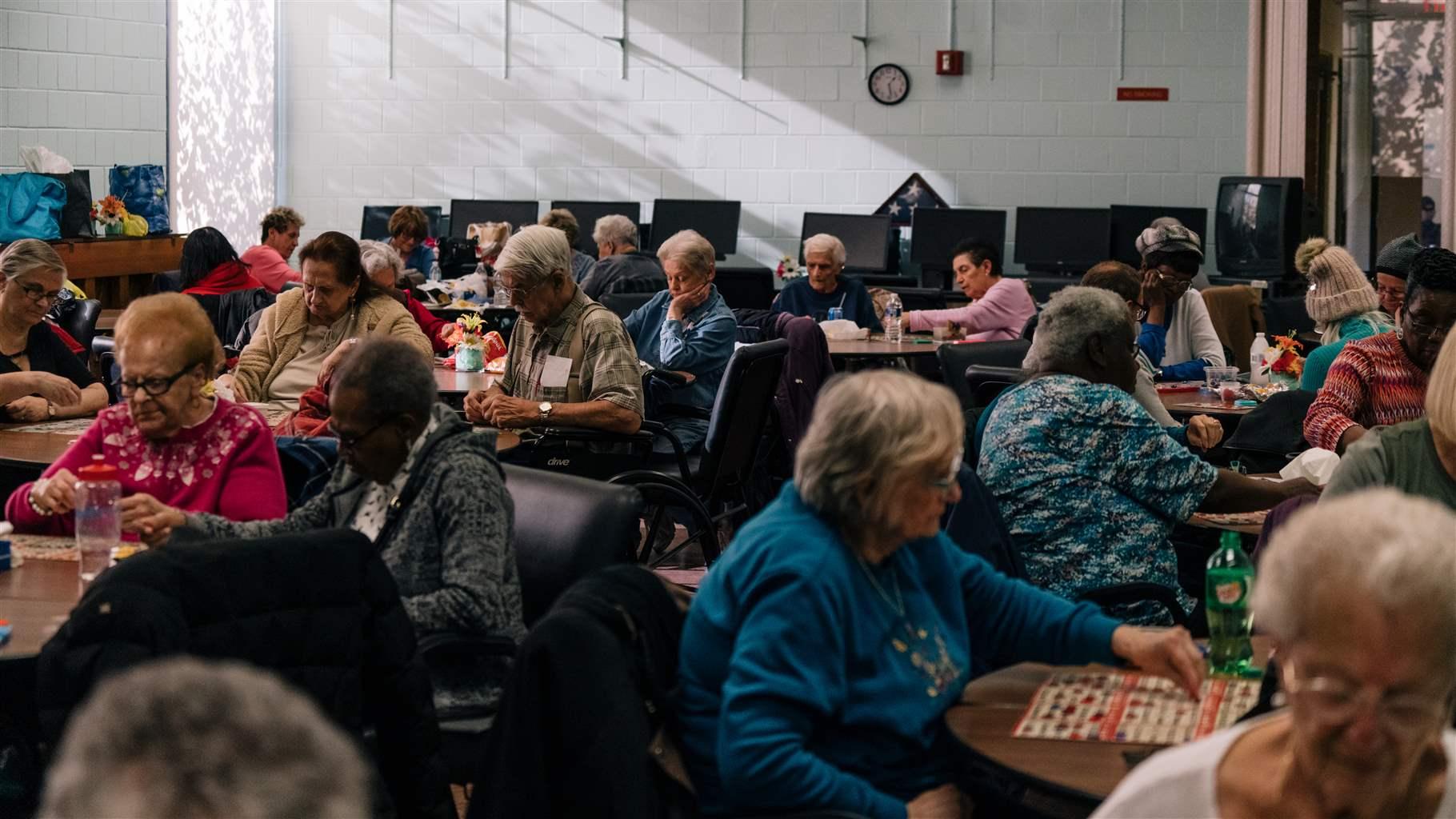
Among the participants in this focus group study, many appreciate the ease of getting around Philadelphia, especially through SEPTA’s transit network. They also expressed satisfaction with the quality of healthcare available in the city. However, they shared concerns over managing the increasing costs of living, navigating and accessing programs designed to help older adults, and dealing with a perceived shortage of housing specifically geared toward seniors.
When asked about solutions that would make their lives easier as they age, participants agreed on some general actions that could improve their daily lives. These included:
- Broadening eligibility for benefit programs to include older adults with incomes above the limit who still need assistance.
- Expanding the supply of affordable housing for people age 65 or older.
- Building out more robust outreach mechanisms to increase participation in programming and improve social connections.
- Improving physical and technological accessibility to programs targeted at older adults.
In the years to come, older adults’ needs, goals, and limitations will affect communities and neighborhoods throughout the city, and more communication and research will be needed to take this growing population’s perspective into account in policymaking and programming.
Appendix A: Focus Group Participant Characteristics
|
Demographic |
Category |
N=26 |
|
Gender |
Female |
18 |
|
Male |
8 |
|
|
Age |
65-69 |
10 |
|
70-74 |
10 |
|
|
75-80 |
4 |
|
|
Over 80 |
2 |
|
|
Race and ethnicity |
White |
9 |
|
Black or African American |
16 |
|
|
Hispanic or Latino |
0 |
|
|
Asian |
0 |
|
|
American Indian or Alaska Native and |
1 |
|
|
Neighborhood |
Center City |
4 |
|
North Philadelphia—upper and lower |
2 |
|
|
Northeast Philadelphia |
4 |
|
|
Northwest Philadelphia/Mt. Airy |
9 |
|
|
South Philadelphia |
3 |
|
|
West Philadelphia |
4 |
|
|
Work status |
Working full time |
1 |
|
Working part time |
7 |
|
|
Retired but looking for work |
3 |
|
|
Retired and not looking for work |
15 |
|
|
Homeownership status |
Owns a home |
16 |
|
Rents a home |
10 |
|
|
Level of financial stability |
Very well off financially |
2 |
|
Doing well, with a high level of financial security |
2 |
|
|
Comfortable and financially stable |
6 |
|
|
Getting by, but with limited financial security |
15 |
|
|
Struggling to make ends meet |
1 |
About this report
This report was researched and written by Alix Sullivan and Karim Sharif of The Pew Charitable Trusts’ Philadelphia research and policy initiative. It was edited by Larry Eichel, senior adviser with the initiative, and Katie Martin, the initiative’s project director, along with Erika Compart and Tamara El-Waylly.
Acknowledgments
Dr. Amy Lorek, director of the Leadership Initiative and assistant director for engagement and learning at Penn State College of Health and Human Development’s Center for Healthy Aging, and Pam Walz, supervising attorney at Community Legal Services of Philadelphia, served as external reviewers for this publication.
This report does not necessarily reflect the opinions of either of these individuals or their institutions.
Methodology statement
Pew contracted with SSRS, an independent research company based in Glen Mills, Pennsylvania, to conduct focus groups with Philadelphians age 65 or older to better understand the experiences of aging in the city, both for those who are retired and for those who are still working for pay. The 26 participants were divided into four groups, which met in person and virtually in September 2025. Please refer to the methodology for more details.11 A table detailing participant characteristics is available in the appendix.
Endnotes
- U.S. Census Bureau, “American Community Survey Table S0103: Population 65 Years and Over in the United States,” 2014 and 2024 five-year estimates.
- The Pew Charitable Trusts, “Over a Third of Older Philadelphians’ Income Comes From Wages,” 2025, https://www.pew.org/en/research-and-analysis/issue-briefs/2025/08/over-a-third-of-older-philadelphians-income-comes-from-wages.
- “SEPTA Senior Fare Program,” SEPTA, https://www.septa.org/fares/senior-fare-card/.
- The Pew Charitable Trusts, “Over a Third of Older Philadelphians’ Income Comes From Wages.”
- The Pew Charitable Trusts, “The American Family: The Not So Golden Years,” May 24, 2019, in After the Fact, podcast, https://www.pew.org/en/research-and-analysis/articles/2019/05/24/the-american-family-the-not-so-golden-years.
- “In Philadelphia’s Older Households, Many Are Longtime Homeowners,” Alix Sullivan and Jun Ho Phue, The Pew Charitable Trusts, Nov. 18, 2025, https://www.pew.org/en/research-and-analysis/articles/2025/11/18/in-philadelphias-older-households-many-are-longtime-homeowners.
- “Senior Only Developments,” Philadelphia Housing Authority, https://www.pha.phila.gov/housing/public-housing/about-developments/senior-only-developments/.
- Based on analysis of the websites of the largest U.S. transit agencies, identified using American Public Transportation Association, “2023 Public Transportation Fact Book,” 2024, https://www.apta.com/wp-content/uploads/APTA-2023-Public-Transportation-Fact-Book.pdf.
- Christopher Barrett Bowling et al., “Research Inclusion Across the Lifespan: A Good Start, but There Is More Work to Be Done,” Journal of General Internal Medicine 38, no. 8 (2023): 1966-1969, https://link.springer.com/article/10.1007/s11606-023-08182-8.
- According to the U.S. Bureau of Labor Statistics’ Quarterly Census of Employment Wages, 32% of private sector jobs in Philadelphia are in the healthcare and social assistance industry. “Quarterly Census of Employment and Wages,” U.S. Bureau of Labor Statistics, 2024, https://data.bls.gov/cew/apps/table_maker/v4/table_maker.htm#type=6&year=2024&qtr=A&own=5&area=42101&supp=0.
- “Methodology: Older Adults Workforce Focus Groups,” The Pew Charitable Trusts, 2026, https://www.pew.org/-/media/assets/2026/03/methodology_olderadultsemploymentfocusgroups.pdf.
People


