State Action Is Accelerating Distributed Energy to Build the Electric Grid of the Future
Policies in Colorado, Illinois, and other states advance untapped energy potential

With rapidly growing demand, an aging grid infrastructure, and threats from increasingly severe weather, the U.S. electricity system is facing challenges on a scale not seen in decades. The demand for electricity—driven in large part by data centers, new manufacturing, and the electrification of buildings and transportation—is expected to continue growing for many years. These challenges put the availability of affordable and reliable power at risk, and state policymakers are at the forefront of the response.

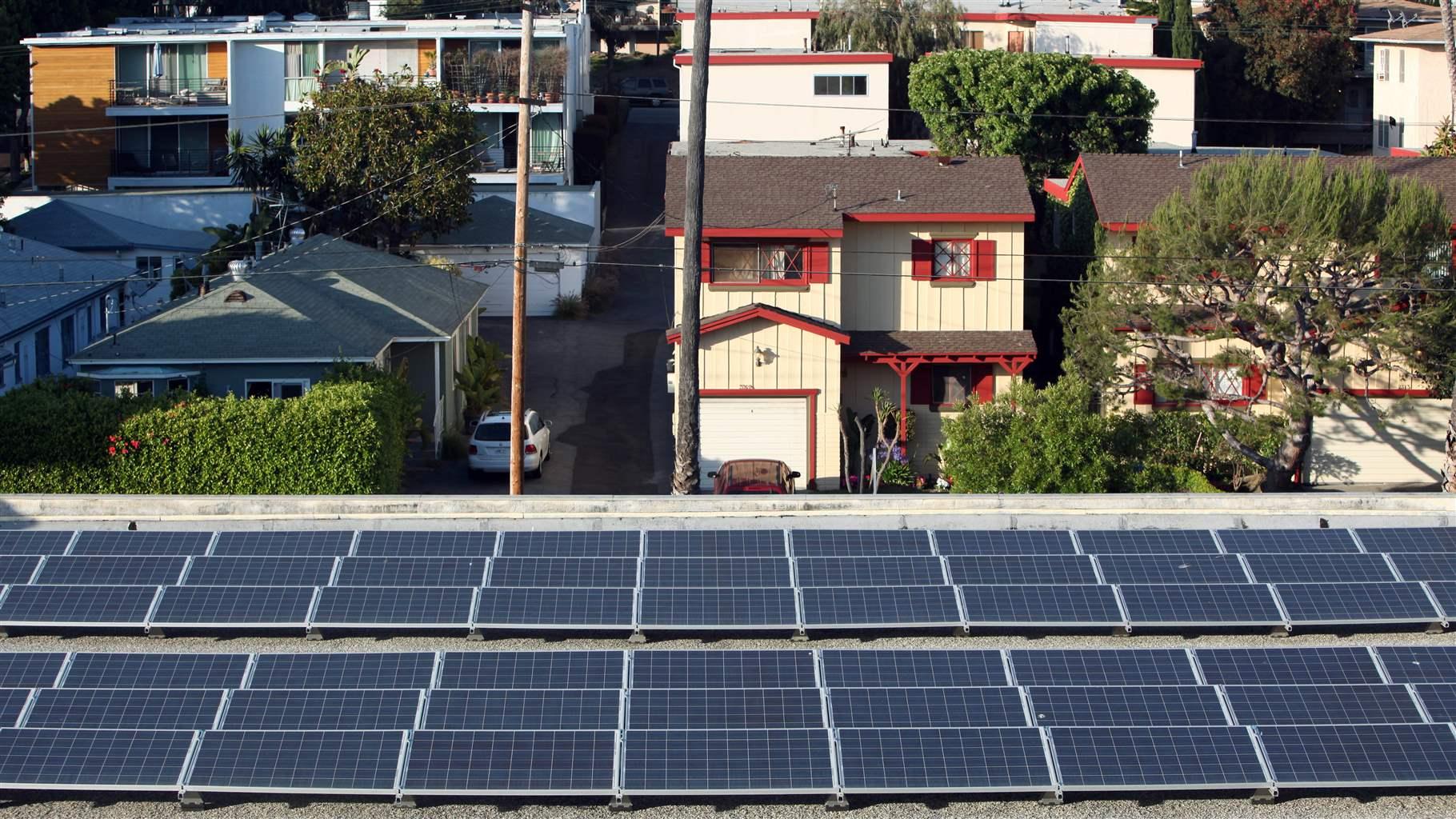
If used strategically, distributed energy resources (DERs)—which include rooftop solar, batteries, smart appliances, and managed electric vehicle (EV) charging stations—can help address the problems of an aging and evolving grid. These technologies are available now and can be deployed in months. DERs can also be aggregated and linked together in a network, allowing grid operators to manage them as a single resource known as a virtual power plant (VPP).
One of the most significant sets of barriers to unlocking the full potential of distributed energy involves U.S. electricity policy and regulation. State rules governing electricity generation and distribution were largely designed for a centralized grid reliant on large, remote power plants.
A playbook for action
The Pew Charitable Trusts, in collaboration with a bipartisan advisory council of leading practitioners and regulators, developed a DER policy playbook that seeks to support states by identifying three core goals for bringing DERs to scale:
- Integrate DERs into utility planning and procurement.
- Reduce permitting and interconnection barriers.
- Strengthen community resilience through DER deployment.
The DER policy playbook is designed to help decision-makers, including state elected officials and public utility regulators, translate these broad policy goals into action. The playbook outlines six recommendations that can be tailored to different regulatory structures, utility models, and market conditions.

States leading the way
Recent regulatory and legislative actions illustrate how state leaders are shaping the policy landscape to support distributed energy, including VPPs.
State efforts to integrate DERs into utility planning decisions
In Colorado, utility regulators approved Xcel Energy’s Aggregator Virtual Power Plant program. This program enables third-party aggregators to bundle batteries, smart devices, and electric water heaters into VPPs that can be considered along with conventional resources in utility integrated resource plans. The program began enrollment efforts in 2026 and aims for 25 megawatts (MW) of new capacity annually, with a goal of 125 MW by 2030.
Earlier this year, Illinois enacted the Clean and Reliable Grid Affordability Act (S.B. 25). The law requires utilities to add VPPs into their integrated resource plans, which are then reviewed by the Illinois Commerce Commission for consistency with state policy goals. The legislation also established a VPP program that allows residents to earn utility bill credits by sharing power from technologies such as EV chargers, batteries, and water heaters to support grid reliability.
Examples of regulatory changes to modernize procurement, market access, and interconnection
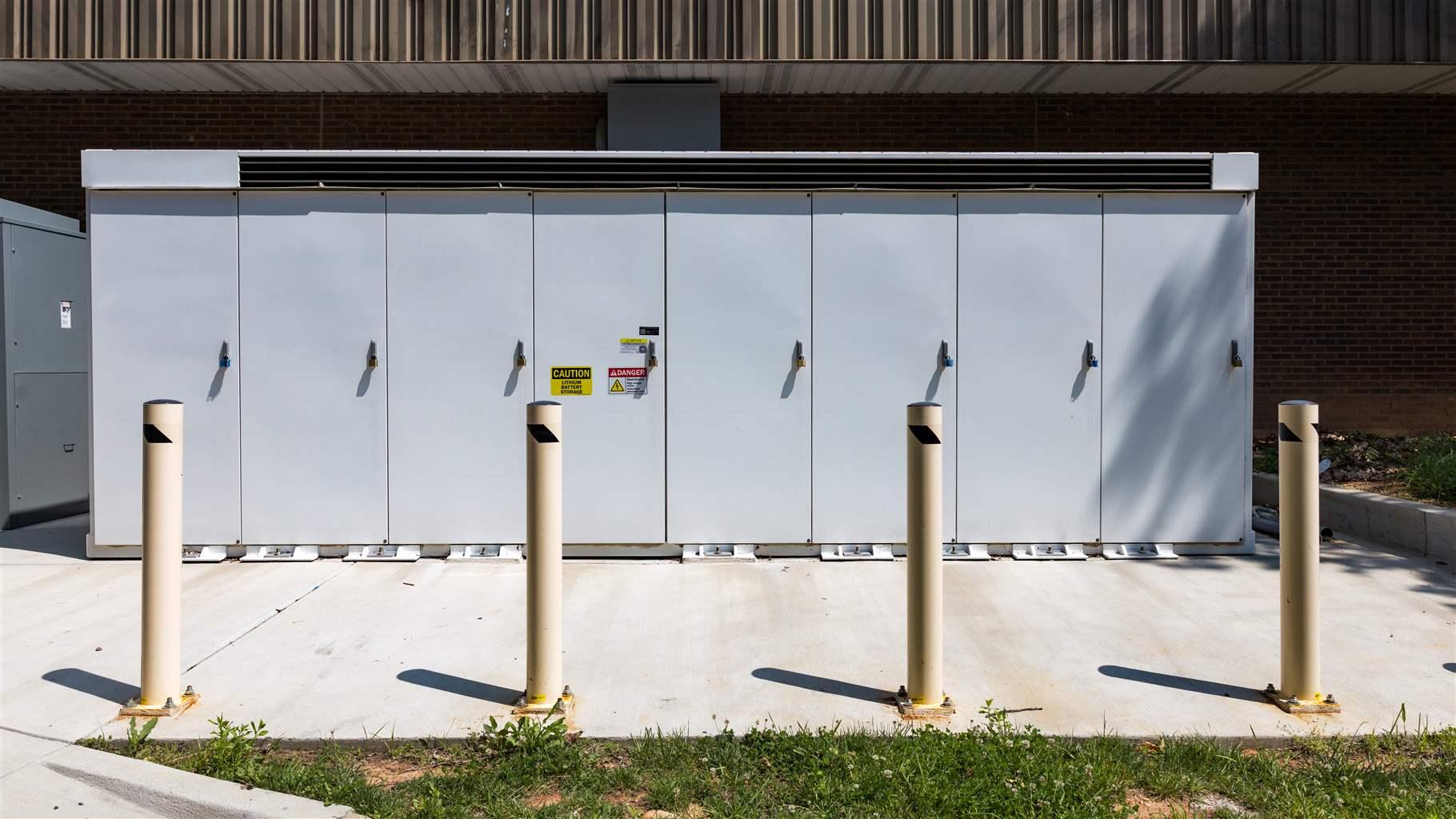
In Georgia, the Public Service Commission approved Georgia Power’s Customer Identified Resource program, allowing large commercial and industrial customers to directly subscribe to renewable energy and storage projects through a contract structure called a power purchase agreement. The program is designed to meet growing clean energy demand from data centers while shielding other ratepayers from associated costs.
Earlier this year, New Jersey modernized interconnection rules for DERs, including solar and battery storage. Led by the New Jersey Board of Public Utilities, the changes enhance developer understanding of local grid conditions through regular updates to hosting capacity maps, which show site-specific availability for adding new DERs.
Moves to improve resilience and grid modernization
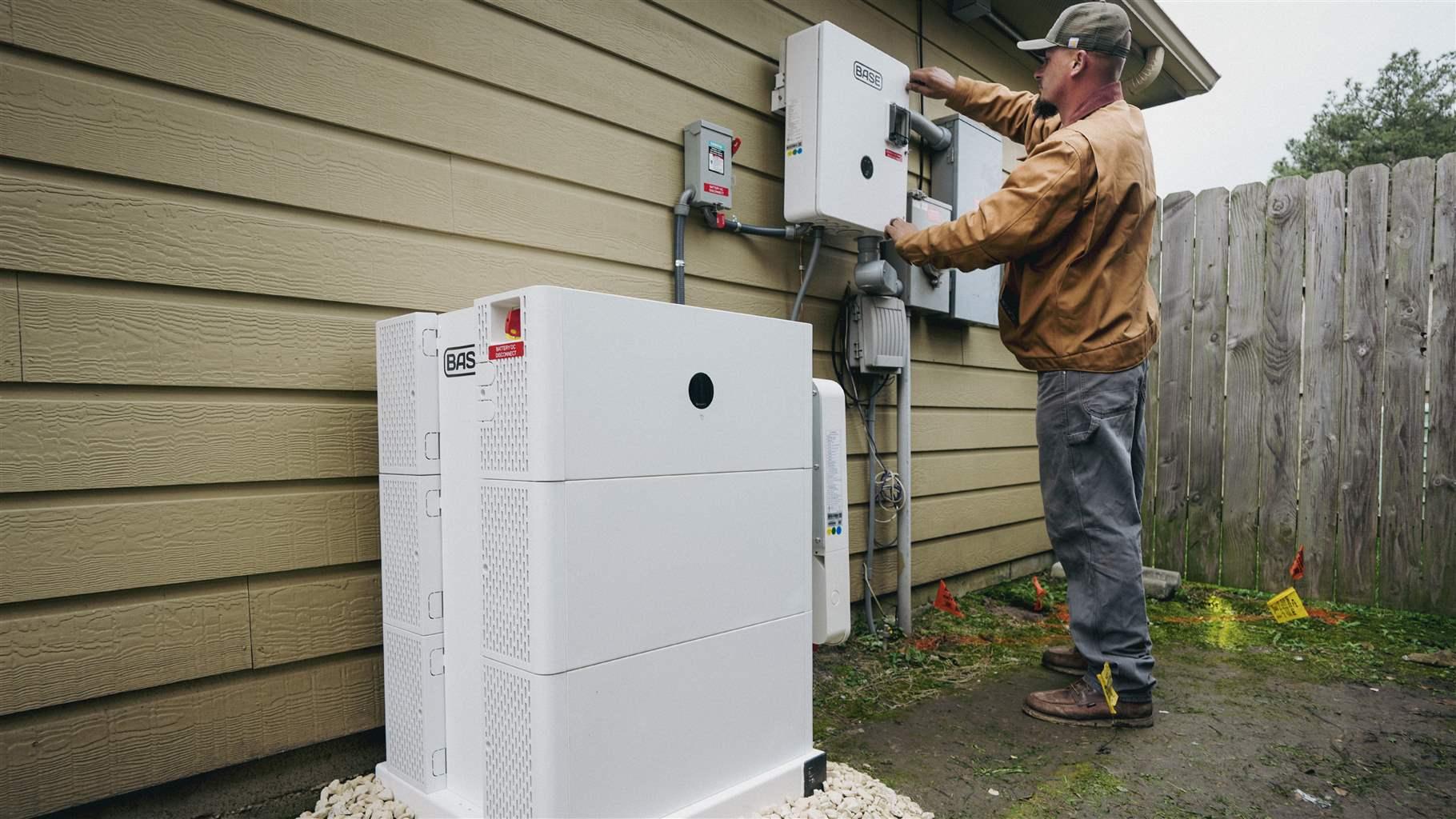
New Mexico has sought to advance microgrid deployment in the state. In 2026, the state created the Energy Affordability and Grid Reliability Council through Executive Order 2026-023, signed by Governor Michelle Lujan Grisham (D). The council is evaluating grid modernization, storage deployment, and rate design reforms that could support broader deployment of DERs, including microgrids.
The Edison Electric Institute, an association that represents all investor-owned electric companies in the United States, recently announced that investor-owned utilities plan to invest nearly $1.4 trillion in grid upgrades over a five-year period ending in 2029—an increase of 21% from earlier estimates and equivalent to utility spending over the prior decade.
Looking ahead
State leaders can help ensure that these massive investments collectively deliver grid reliability, affordability, and resilience, and the DER policy playbook offers a framework that states can apply to support broader deployment of DERs.
Brian Watts is an officer and Laura Lightbody is a director with The Pew Charitable Trusts’ energy modernization project.
People