EU Adopts First Regional Framework to Stop Plastic Pellet Pollution
New regulation marks a milestone but includes concerning loopholes
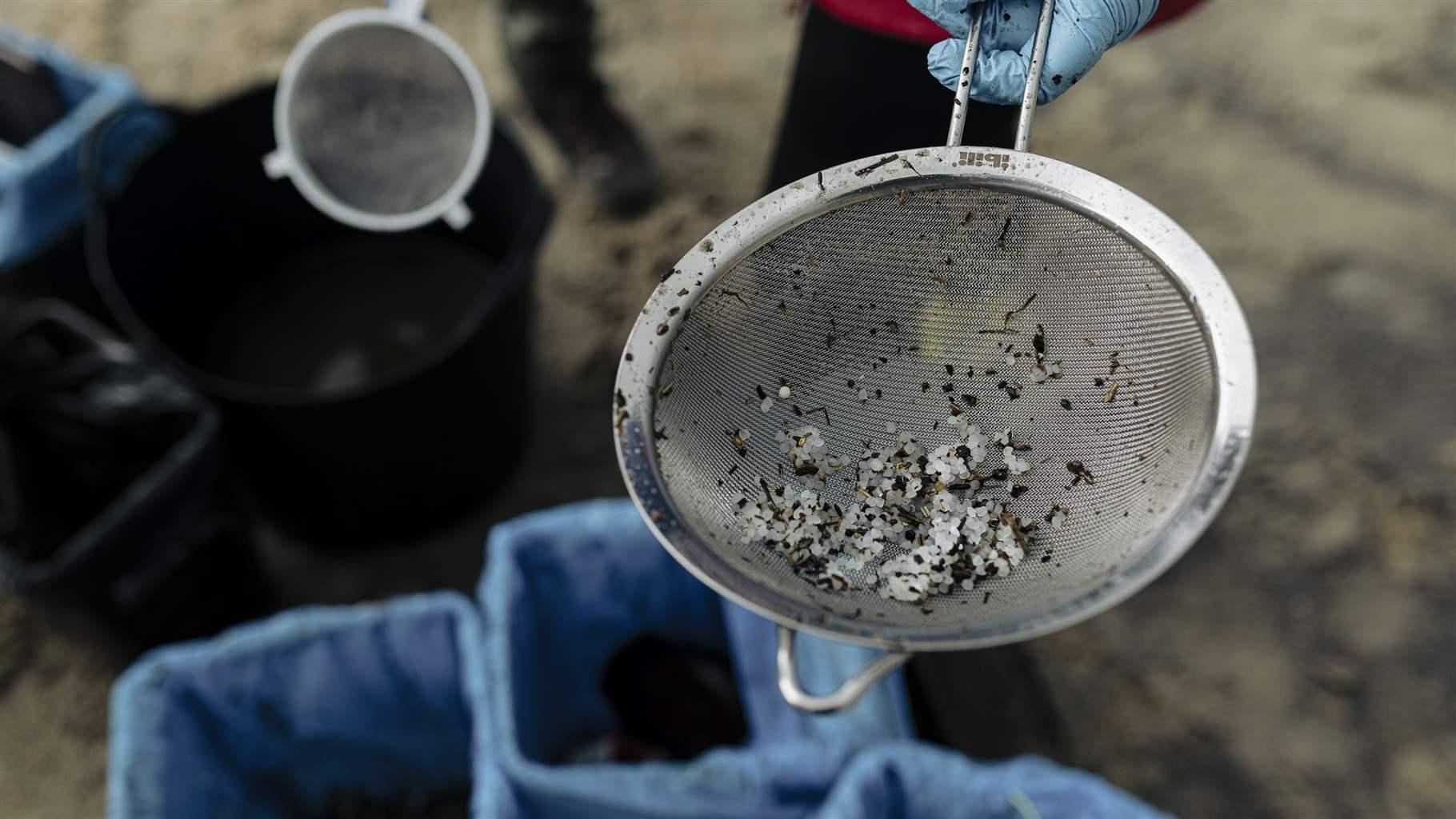
A major source of microplastic pollution, unregulated for decades, now litters forests, rivers, fields, beaches and cities all over the world. That source is plastic pellets—including flakes and powders—that are the starting material for all plastic production. Pellets are lost at all stages of production, from handling and storage to distribution and especially transportation. This represents the third-largest source of microplastic pollution in Europe, with an estimated 184,000 tonnes of pellets ending up in the environment each year.
Pellets are a raw industrial material made from polymers. If plastic makers and others in the supply chain followed industry best practices, pellets would not escape into the environment. But chronic losses of pellets from the industrial cycle, as well as accidental spills and accidents, result in pollution that is almost impossible to clean up.
To help address this, the European Union in October adopted a legal framework to specifically address this issue, with the objective of achieving zero pellet loss. This new framework should help make the plastic pellet sector more accountable and transparent—a welcome development—but doesn’t go far enough to match the scale of the problem.
Towards more accountability across the plastic pellet supply chain
Under the framework, businesses must now establish risk management plans with mandatory actions to prevent the risks of loss during the handling of pellets. These actions could include using spill trays in high-risk locations, or vacuum seals or packaging that are strong enough to withstand shocks during transport.
Businesses will have to describe the procedures and equipment they put in place to prevent, contain and clean up spills and losses. Businesses also must report on how many pellets they handle every year, and map and quantify spills and losses.
But the lists of mandatory equipment and procedures in the framework fall short, specifically by designating crucial equipment and procedures—such as using vacuum seals on hoses and pipework, and physical testing and monitoring of the effectiveness of prevention procedures—as optional.
Auditing for compliance
The framework requires companies that handle more than 1,500 tonnes of plastic pellets per year to undergo an external certification every three to five years to ensure their facilities comply with their risk management plans. Yet, The Pew Charitable Trusts believes that all businesses handling plastic pellets, no matter the volume, should undergo regular audits. One tonne of plastic pellets already represents 50 million pellets, which could have severe environmental consequences if they end up in the environment.
Limiting pellet loss at sea
In April 2024, the International Maritime Organization published recommendations for shippers and manufacturers to better handle plastic pellets, on a voluntary basis.
Under the new regulation, the EU has gone a step further, obliging shippers and other vessels to respect and implement these recommendations, and for pellets to be packed to resist shock and stored under deck or in sheltered areas to prevent spills into the water. Pellet spills from maritime accidents have caused widespread contamination in recent years, from Spain to Sri Lanka. By setting binding requirements for safer packing and stowing of pellets at sea, the EU is sending a strong international signal and addressing an important pathway for pellet loss.
While this paves the way for more harmonised rules around the world, these measures focus only on prevention and how pellets are packaged and stored. More work is needed to ensure communities are not left to shoulder the environmental and financial costs of industrial negligence following maritime accidents.
Stronger action needed
The EU has taken an important first step towards tackling pellet pollution, setting a precedent for other regions. This new framework will require businesses to implement specific procedures to identify and reduce the risks of chronic and accidental spills.
However, because parts of the framework remain voluntary, the continued risk for pellet spills and losses is real. For the regulations to deliver on their full promise, the EU must ensure rigorous implementation of the law as written, while the European Commission should use the future evaluation and review process to close remaining loopholes. Achieving the best possible outcome—meeting the zero-pollution target—will require a steadfast commitment to enforcement alongside an industry shift towards total accountability.
Natacha Tullis works with The Pew Charitable Trusts’ preventing ocean plastics project.
People


