Pew, Partners Offer Recommendations to Reduce Plastic Waste and Pollution in U.S.
Collaborators share guidance on managing packaging and microplastics
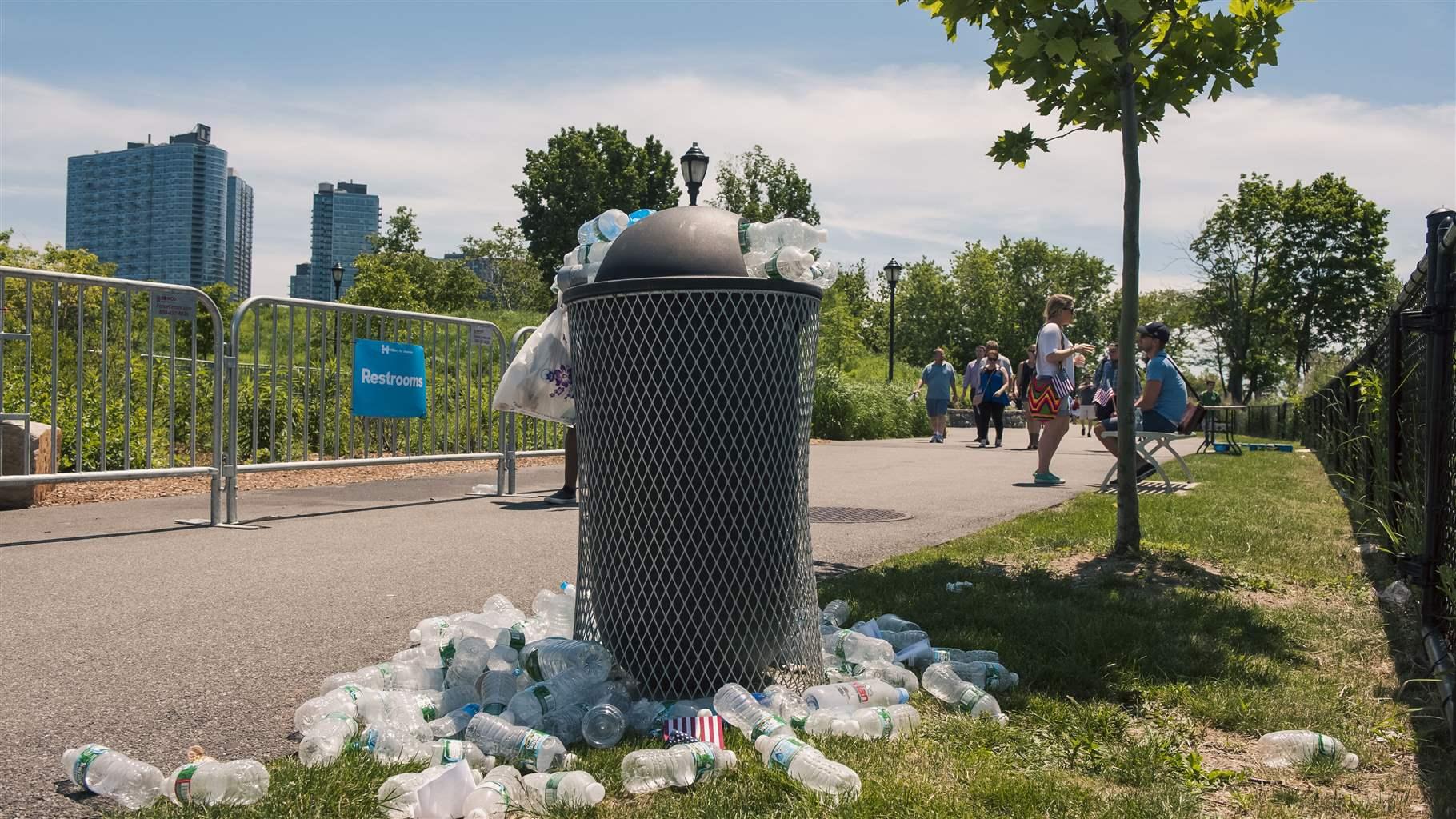
A group of partners from the nonprofit sector and academia is urging U.S. policymakers to address waste management challenges posed by plastic.
The group, consisting of The Pew Charitable Trusts and six partners—Monterey Bay Aquarium, The Recycling Partnership, the University of Georgia, Upstream, U.S. Plastics Pact, and World Wildlife Fund—urges policymakers in a white paper to implement five recommendations based on new research from Pew, conducted with support from consulting firm ICF.
The research detailed in the white paper—“Modeling Policy Options for Reducing Plastic Packaging Waste and Microplastics in the United States”—provides a data-driven understanding of the U.S. plastics value chain, as well as an assessment of the impact of select policy interventions related to plastic packaging from municipal solid waste and microplastics from textiles and tires—all leading causes of plastic pollution.
To date, federal legislation to curb pollution from certain plastic types has not proved sufficient to tackle the growing plastic waste problem and protect the U.S. environment and public health. The report finds that unless policymakers act, the U.S. will generate an additional 1 billion tons of plastic waste from 2025 to 2040, leading to over 30 million more tons of plastic pollution. It also shows that by implementing a complementary suite of policies across the value chain, the U.S. could reduce plastic waste generation by 29% and pollution by 35% by 2040.
Pew and its partners recognize the challenge posed by plastic packaging waste and microplastics and acknowledge that government at all levels and many businesses are exploring a range of policies in response to that challenge. To minimize the economic and environmental impacts of plastic waste and pollution, policymakers must take urgent action, as set out in these recommendations.
People


