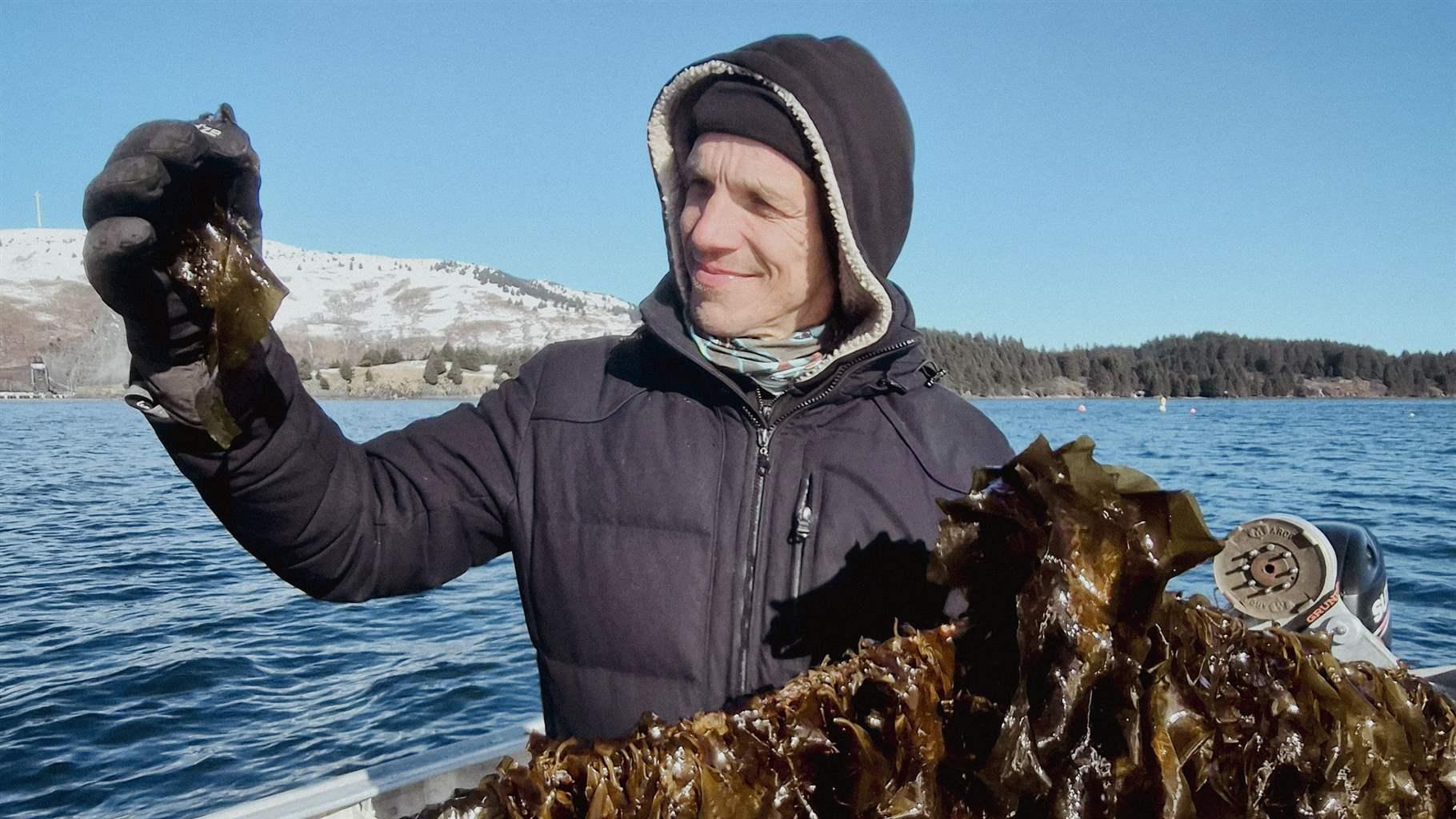
Report Provides First Review of Seaweed Farming Effects and Monitoring Opportunities in Alaska and British Columbia
Analysis funded by Pew can help guide discussions on development and needs in the two locales

The seaweed farming industry is growing globally, driven by demand for seaweed both as a food source and as an ingredient in products ranging from pharmaceuticals and fertilizers to packaging materials and dietary supplements. Today, the global seaweed aquaculture industry is estimated to be worth about $20 billion.
As the sector expands in Alaska and British Columbia, farmers, government regulators, scientists, and local communities need a clearer understanding of how seaweed farms interact with the environment, including their effects on water quality, wild kelp, and fish biodiversity.
“Cultivating With Care,” a two-volume report—funded by The Pew Charitable Trusts and co-authored by ESSA Technologies, Ltd., the Prince William Sound Science Center, the National Oceanic and Atmospheric Administration’s Alaska Fisheries Science Center, and Pew—identifies and evaluates the most important environmental monitoring indicators for seaweed farming in Alaska and British Columbia by synthesizing existing scientific literature and interviews with farmers, regulators, researchers, and Indigenous community members.
Findings are presented across two companion volumes. Volume 1 consolidates the available science and describes the state of the sector in Alaska and British Columbia, alongside existing environmental knowledge and the emerging trends likely to shape future monitoring needs. Volume 2 provides detailed factsheets on each of the 38 identified monitoring indicators.
The report draws primarily on western scientific literature and practitioner input. It does not evaluate the many social, economic, and cultural factors that should also inform decisions about monitoring. Therefore, it is intended to complement existing and future Indigenous-led, community-based, and place-specific efforts that will shape the industry. As the sector develops, these various resources can help support policy and regulatory discussions across state, provincial, federal, and Tribal governments, and be used as part of collaborative efforts to design monitoring systems that farmers, communities, and scientists can trust and use.
Downloads
People