Return On Investment
The Pew Charitable Trusts applies a rigorous, analytical approach to improve public policy, inform the public, and invigorate civic life, as these recent accomplishments illustrate
Improving Public Policy
British Columbia and First Nations begin conservation planning across 40 million acres

In early June, the Canadian province of British Columbia and five First Nations—the Tahltan, Taku River Tlingit, Kaska Dena, Gitanyow, and Nisga’a—began land use planning across a 40-million-acre region, including identification of Indigenous-led conservation areas. The Kaska Dena are advancing one of the largest Indigenous Protected and Conserved Areas in the country, a 10-million-acre site called Dene K’éh Kusān. The effort also includes a one-year pause on new mining-tenure registrations over approximately one-third of the planning area. Completion of the plans and associated Indigenous Protected and Conserved Areas will contribute significantly to Pew’s efforts to help to secure protections for 45 million to 60 million acres of boreal lands by 2028.
Pew provides fiscal research to national gathering of state legislators

In August, Pew state fiscal experts presented research at the National Conference of State Legislatures Legislative Summit in Boston. In a session on transportation infrastructure strategies, the experts shared findings from two recent reports—“State and Local Governments Face $105 Billion in Deferred Maintenance for Roads and Bridges” and “States Fall Short of Funding Needed to Keep Roads and Bridges in Good Repair”—that look at past shortfalls in maintaining and repairing state and local roadways, as well as states’ own projected gaps for funding key roads and bridges. In another session, the experts presented analyses on disaster funding—including Pew’s recently published recommendations, “How States Can Build Disaster-Ready Budgets”—and highlighted states that are making thoughtful, forward-looking investments to reduce their future risk.
Informing The Public
Income shapes the aging experience for older Americans
With the birthrate declining, life expectancy increasing, and a growing number of Baby Boomers in their 60s and 70s, the U.S. population is aging rapidly. A Pew Research Center survey of 8,750 adults released in November found that income plays an important role in how older Americans experience aging. Among adults 65 and older, 61% in the upper income group say they are aging extremely or very well, compared with 51% in the middle group and 39% in the lower group. The survey found that most older adults feel positive about their emotional and social lives. Seven in 10 say they have people they can rely on for support most or all of the time, and 66% feel optimistic about their lives. Four in 10 participate in civic or social groups such as neighborhood associations, religious organizations, sports leagues, or book clubs, and 35% believe their contributions to society are highly valued.
Invigorating Civic Life
Helping Philadelphia reduce barriers to opioid use disorder treatment

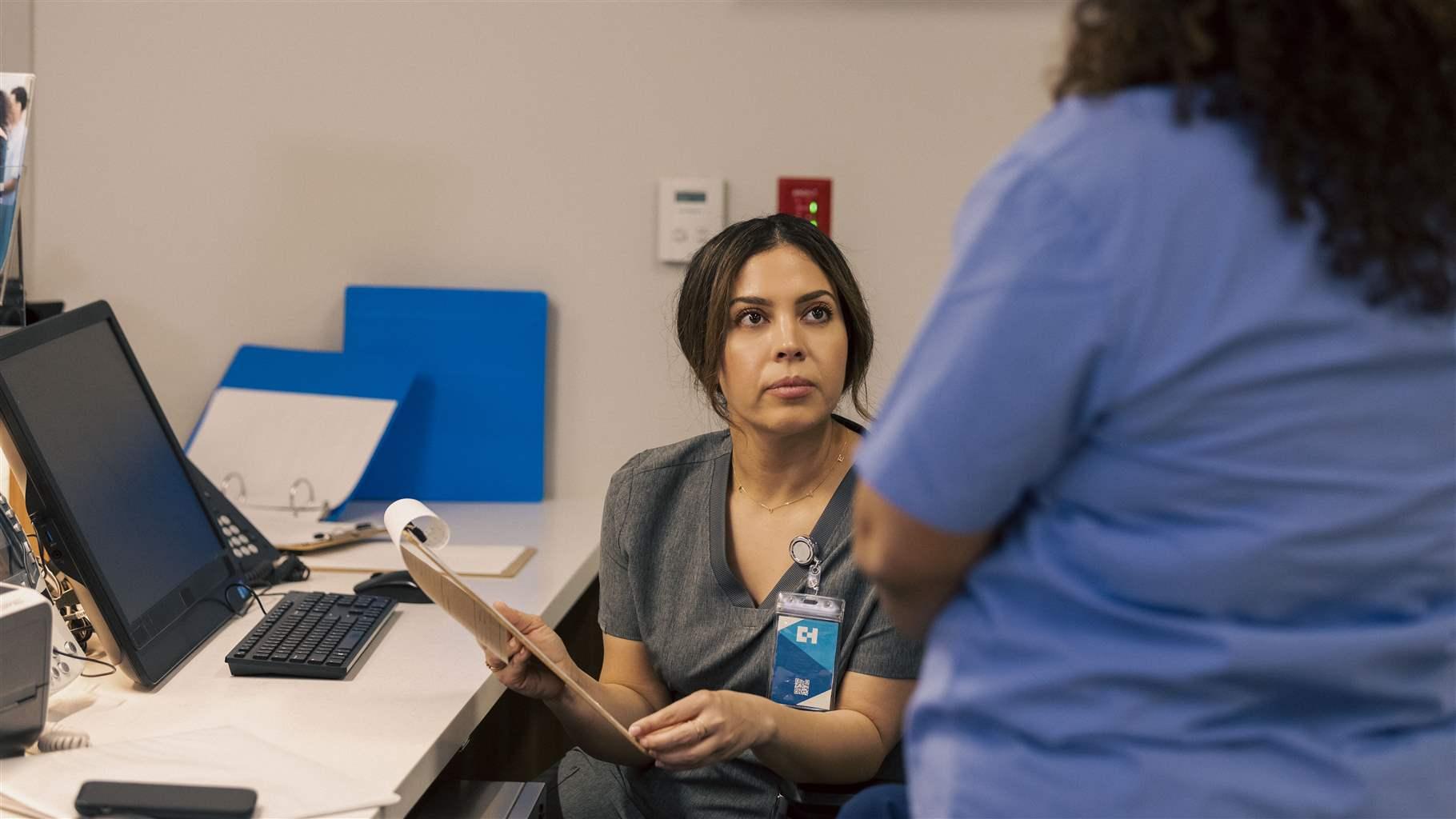
The opioid overdose crisis continues to have a big impact in Philadelphia, which has one of the highest rates of overdose deaths in the country. But access to high-quality, evidence-based treatment remains a challenge for many who seek it. In June, Pew and the University of Pennsylvania’s Leonard Davis Institute of Health Economics hosted a program titled “Improving Low-Barrier Access to Opioid Use Disorder Treatment in Philadelphia.” The session brought together policymakers, public health researchers, and treatment providers to share research and on-the-ground experiences about the practical barriers that people face in accessing buprenorphine, one of three Food and Drug Administration-approved medications for opioid use disorder, and remaining in care after they start treatment.