2 Rivers in Chile’s Patagonia Region Receive Historic Protections
Government approves ecosystem preservation measures for Futaleufú and Puelo rivers
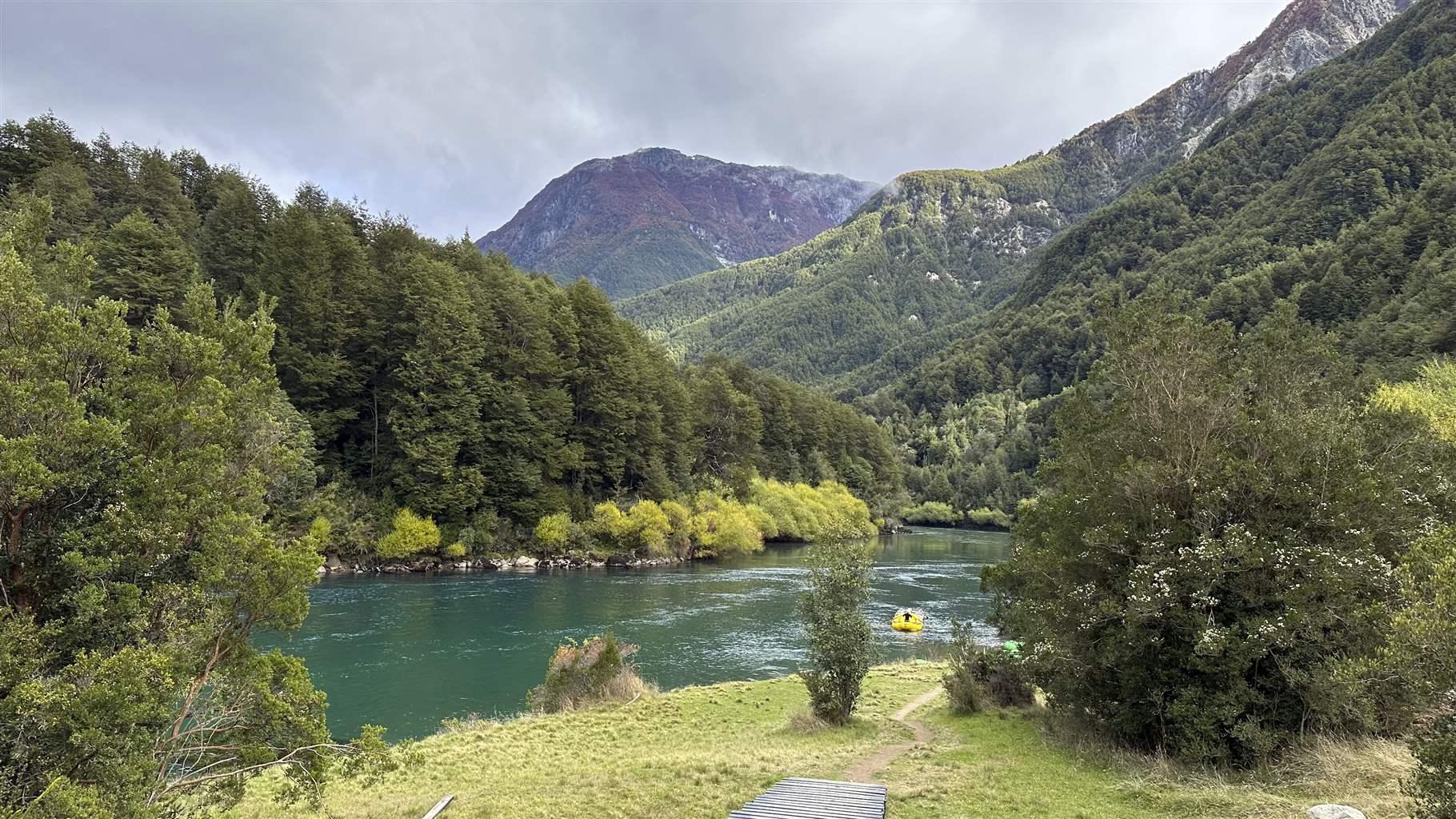
Chilean Patagonia is renowned for its extraordinary natural beauty and healthy ecosystems, yet very few of its rivers have been protected—until now. In early November, Chilean officials declared the Futaleufú and Puelo rivers as water flow reserves. This decree—which communities, nongovernmental organizations, and officials worked together for several years to secure—ensures that a portion of the rivers will remain free-flowing, helping to protect biodiversity and water quality.
The declaration notes that “water plays a vital role not only in satisfying basic human needs but also as an essential resource for ecosystem function and preservation.” It further states that the environment, like people, must be considered a water user and therefore has a corresponding right “to its protection and rational use.”
The water flow reserves offer a prime opportunity as communities and organizations seek to adapt to a changing climate—which causes issues such as water scarcity, vulnerability to forest fires, and food insecurity sparked by soil degradation and drought—and to effectively protect the ecosystems that they rely on.
Protecting the Puelo River
Since 2018, some 39 community groups in southern Chile’s Cochamó Valley (110 kilometers east of the port city of Puerto Montt)—along with the NGO Puelo Patagonia—have petitioned Chilean officials to protect the Puelo River for social, economic, and environmental reasons.
The groups noted the river’s importance to local economic development in the form of agriculture, livestock, and ecotourism. They also highlighted the high degree of endemism (meaning the presence of species found nowhere else) in the river basin, which is home to emblematic flora such as the alerce, or Patagonian cypress, and animals such as the huemul, or South Andean deer; the Patagonian viscacha, a rodent similar to the chinchilla; Darwin’s frog; and a tiny marsupial known as the monito del monte. Additionally, the groups emphasized the river’s cultural and spiritual significance as a place where the Mapuche people believe that the “gnen leufu ko”—the river’s spirit—is manifested, and also as a key source of medicine and energy (“lawen” and “newen,” respectively, in the Mapudungun language).
Safeguarding the Futaleufú
The Futaleufú, meanwhile, is known for its scenic beauty and world-class whitewater rafting and kayaking. Since 2022, communities have championed the For the Waters of the Futaleufú campaign, with support from officials in Palena and Futaleufú as well as the regional government. The campaign has also received technical support from NGOs and research institutions, including Futaleufú Riverkeeper, Bestias del Sur Salvaje, Fundación Ngenko, Puelo Patagonia, the Universidad Austral de Chile’s Austral Patagonia Program, Centro de Investigación en Ecosistemas de la Patagonia, and The Pew Charitable Trusts.
“Protecting the waters of the Futaleufú River has always been essential for locals,” said Genaro Vega of the Futaleufú Fly Fishing Guides Association. “But until now, this long-desired outcome had just not been possible. The water flow reserve assures the community and local entrepreneurs that tourism, recreational fishing, and culture can coexist in harmony with our ecosystems.”
Looking toward the future—and what’s still needed
The decree is an important first step, but there’s a palpable sense of urgency in Chile for moving toward more comprehensive and permanent protection of the country’s rivers via formal legislation. And because nature and people are so closely intertwined in these areas—as communities have developed important cultural, economic, recreational, and spiritual practices there—a holistic approach encompassing these various uses of the river is crucial.
Darío Urrutia, who lives near the Puelo River, urged Chileans to recognize their important shared duty and to continue to do their part.
“These rivers were declared as water flow reserves not only for the benefit of the communities along their banks but for the entire country,” Urrutia said. “Let’s unite to achieve things like this and always keep striving to make Chile a better place.”
People