
Overview
The global ocean teems with life, and it contributes to the vital cycles that keep people and our planet healthy. But the seas are vulnerable to overfishing, loss of habitat such as seagrasses and mangroves, ineffective fisheries management, plastic pollution, and declining biodiversity. These mounting losses affect the coastal communities that depend on the ocean for food and jobs.
Pew’s ocean work supports efforts to build collaborative governance systems to guide activities like fishing, pollution, and conservation, and to create protected areas that maintain and restore the health of marine ecosystems. These activities not only support nature, they also benefit the people who rely on marine resources for their livelihoods.

No âmbito da atual Política Comum das Pescas (PCP) da União Europeia, 2020 tinha sido estabelecido como o ano para alcançar uma grande mudança na gestão de pescas: taxas de exploração sustentáveis para todas as unidades populacionais. Apesar de alguns progressos, a UE não atingiu este objetivo.

A gestão de pesca normalmente é um processo de duas etapas: primeiro, cientistas analisam os estoques, e depois os gestores negociam medidas, como cotas ou fechamentos por tempo-área, para garantir que os recursos – os peixes almejados – sejam usados de forma otimizada e sustentável.
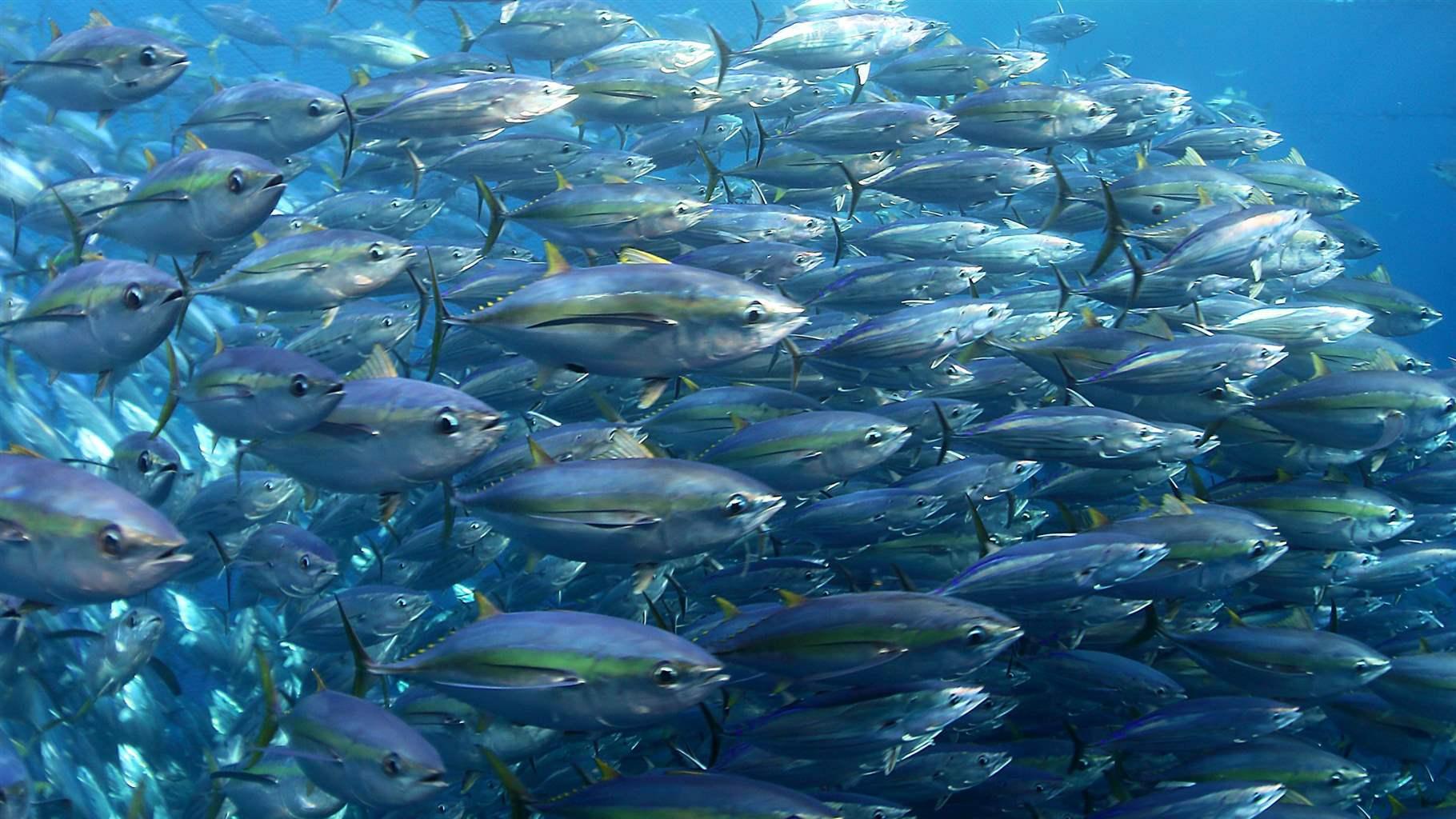
Pescadores de atum de todo o mundo utilizam dispositivos de concentração de peixes (DCP), objetos flutuantes de fabrico humano por baixo dos quais se juntam muitas espécies, para aumentar as suas capturas. No entanto, estes dispositivos também resultam em grandes quantidades de capturas acessórias e transformam-se frequentemente em detritos marinhos, em grande parte porque as organizações internacionais que regulam estas pescarias aplicam medidas de gestão de DCP limitadas.

Tudo o que o Atum patudo do Atlântico (Thunnus obesus) faz, fá-lo depressa. Estes atuns atingem a maturidade sexual em apenas dois a três anos e, nesse espaço de tempo, crescem de um tamanho suficientemente pequeno para passarem pelo buraco de uma agulha até um peso superior a 180 kg. São predadores formidáveis, capazes de ultrapassar, apanhar e comer praticamente qualquer coisa que consigam meter na boca. Contudo, o seu tamanho considerável faz deles alvos preferenciais das frotas de pesca de atum em todo o mundo.

Em 2013, os decisores da União Europeia acordaram ambiciosas reformas da Política Comum das Pescas (PCP) e estabeleceram objetivos abrangentes para a recuperação das unidades populacionais de peixes em águas da UE. A nova PCP incluía um compromisso legalmente vinculativo de acabar com a sobrepesca até 2015 onde fosse possível, e no máximo até 2020, para que a biomassa das unidades populacionais — o peso total de uma população de peixes — pudesse ser restaurada e mantida acima de níveis sustentáveis.
Our Work

Good health is important to everyone. Pew conducts research and provides information and fact-based recommendations to state agencies, hospitals, researchers, and other health partners to help them provide better care. We find and share evidence-based practices to improve Americans’ health and well-being, including services that can prevent suicide, improve mental health care, and treat substance use disorder.
Latest In Advance Health & Well-Being

Communities throughout the country share common needs: affordable connections to broadband Internet, modern and reliable energy infrastructure, effective responses to mental health challenges, and ways to resolve legal disputes more quickly and fairly. To address these issues, Pew collaborates with states and local governments to find and promote evidence-based solutions that help provide stability and opportunity.
Latest In Build Communities

Nonpartisan, fact-based improvements in federal policy can create jobs, lower costs, and help the nation prepare for the future. When our research shows that small changes can have a big impact, we work across party lines to improve national challenges like housing affordability, internet access, energy reliability, and health care.
Latest In Improve Federal Policy

Economic opportunity is the foundation of American society. Pew supports national, state, and local efforts to expand opportunity and promote financial well-being. Our work helps people pay off student loans, navigate court proceedings such as debt collection, buy or rent a home, access affordable internet, and save for their retirement.
Latest In Improve Economic Advancement

The global ocean teems with life, and it contributes to the vital cycles that keep people and our planet healthy. But the seas are vulnerable to overfishing, loss of habitat such as seagrasses and mangroves, ineffective fisheries management, plastic pollution, and declining biodiversity. These mounting losses affect the coastal communities that depend on the ocean for food and jobs.
Latest In Protect Marine Life
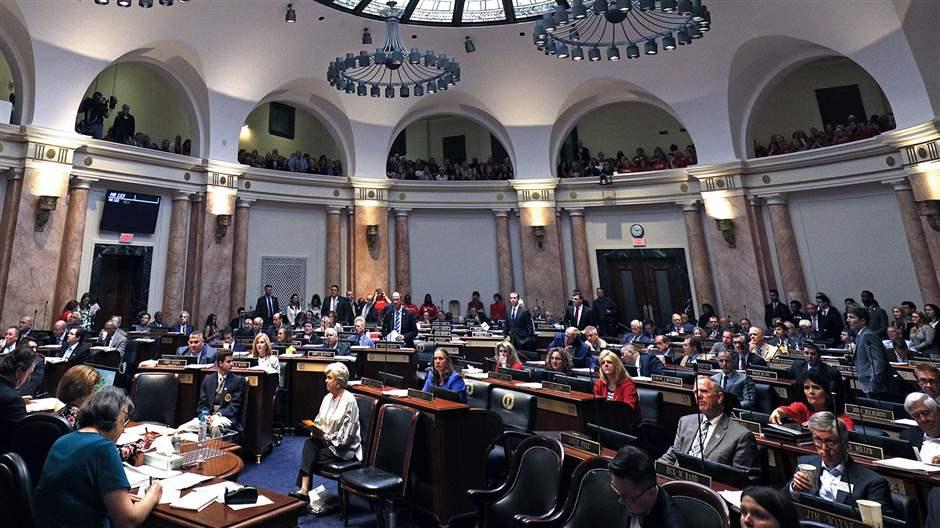
States and cities are the “laboratories of democracy” in America—the places where lawmakers and governors look for new ways to help their communities succeed. Whether in Pew’s hometown of Philadelphia or any of the 50 state capitals, we help elected leaders respond to the needs of their citizens, use public dollars wisely, fix outdated policies, and build a better future for all.
Latest In Strengthen State Government

Conserving natural spaces conveys benefits far beyond the gains to wildlife and their habitats. As scores of studies show, protecting and restoring lands and waters, particularly when done in close partnership with local communities, also improves people’s lives—and local economies—by increasing tourism and outdoor recreation.