Arizona Builds on Leadership With Wildlife Crossings
How the state continues to integrate habitat connectivity into transportation planning
Overview
Across Arizona, wildlife-vehicle collisions undermine public safety and incur economic costs, especially where highways cut through key wildlife migration routes. Species such as elk, mule deer, pronghorn, and desert bighorn sheep need connected landscapes to move between seasonal habitats for food, water, and breeding. When roads bisect these wildlife corridors, wildlife-vehicle collisions and habitat fragmentation increase. With Arizona’s rapid population growth, high-speed rural highways, and extensive public and Tribal lands, designated wildlife crossings are a critical transportation safety solution. These strategically placed crossing structures—paired with fencing and other proven measures—can dramatically reduce collisions while improving habitat connectivity.
Public safety impacts
Each year, an average of 1,270 reported wildlife-vehicle collisions occur in Arizona, with rural counties such as Coconino accounting for 30% of all such crashes.1 These accidents can result in serious injuries or fatalities and pose heightened risks at night and during seasonal migrations.
Progress to date
In the past 25 years, Arizona has emerged as a national leader in the integration of wildlife crossings into transportation planning. The state has undertaken numerous wildlife connectivity studies, including Arizona’s Wildlife Linkages Assessment, research on reducing wildlife-vehicle collisions on state Route 260, and the state Department of Transportation’s Arizona Statewide Wildlife-Vehicle Conflict Study, which prioritizes highway collision hot spots and identifies potential mitigation solutions. Completed projects include elk crossings on Route 260 and bighorn sheep overpasses on U.S. Highway 93, which integrated some of the first video surveillance of wildlife behavior at crossings. These projects have reduced wildlife-vehicle collisions by more than 90% and have enhanced habitat connectivity.
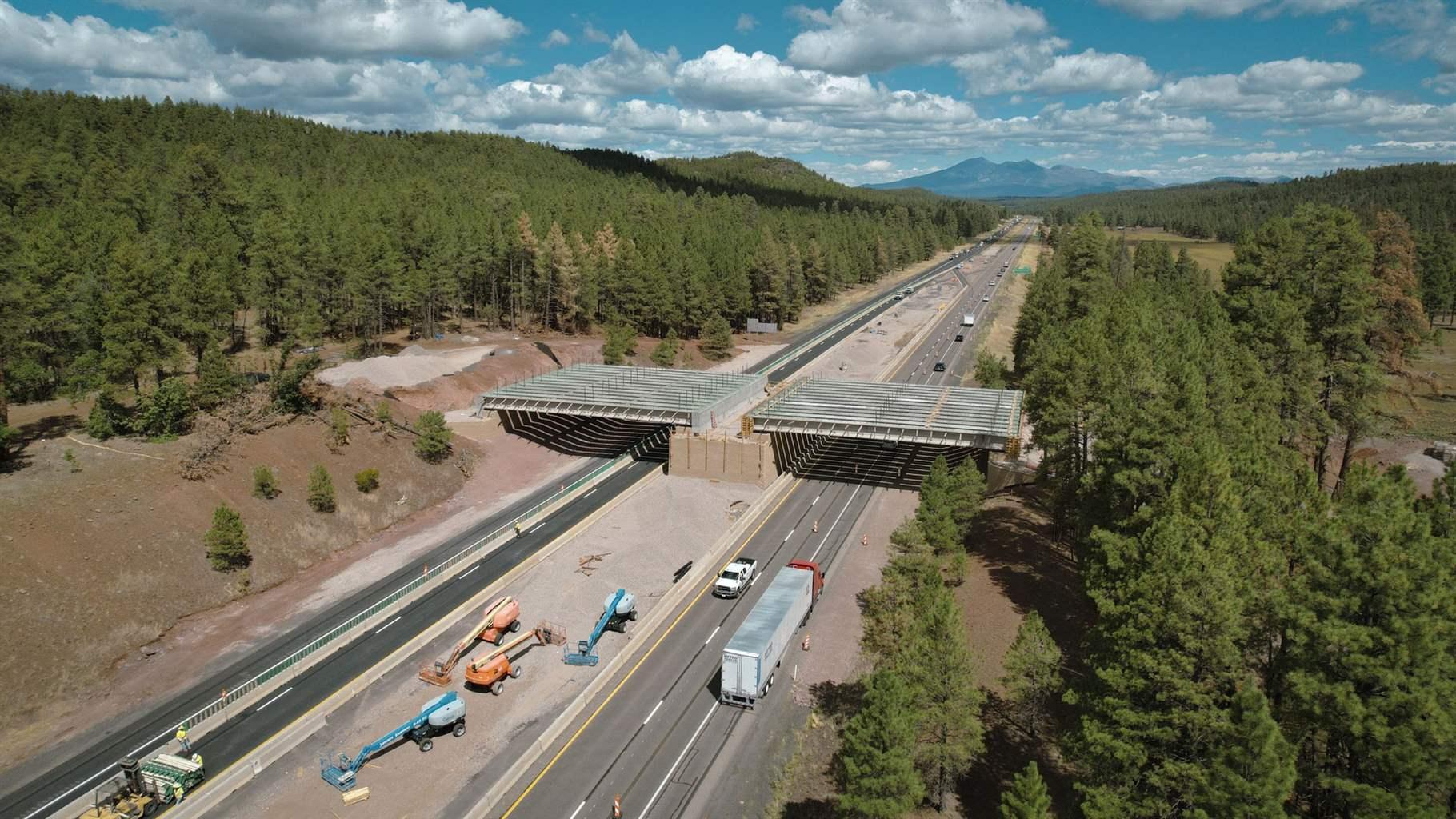
By leveraging federal funding, including a $24 million2 award from the Wildlife Crossings Pilot Program for the Willard Springs project on Interstate 17, the state has advanced the planning, design, and construction of wildlife crossings and related infrastructure. These investments demonstrate how coordinated planning can simultaneously deliver safety, economic, and conservation benefits. Ongoing and future projects include the Willard Springs overpass (shown in the opening photo) as well as crossings on Interstate 40 and Route 260.
What’s next
Arizona has demonstrated leadership in reducing wildlife-vehicle collisions and improving habitat connectivity. An active area of policy development is how states fund this work and leverage additional resources, including federal transportation dollars. Throughout the country, states are exploring a range of approaches to support wildlife crossings, such as dedicated funding streams and federal grant programs. As these efforts evolve, sustained investment, coordination across agencies, and continued research will be critical to advancing this work in Arizona and beyond.
Endnotes
- Michael Baker International, “Arizona Statewide Wildlife-Vehicle Conflict Study,” Arizona Department of Transportation, 2021, https://azdot.gov/planning/transportation-studies/completed-transportation-studies/wildlife-vehicle-conflict-study.<
- “Federal Highway Administration's Wildlife Crossings Pilot Program FY 2022-FY 2023 Grant Selections,” Federal Highway Administration, https://highways.dot.gov/media/48761.
People


