Videos Amplify Important Voices in Philadelphia at America’s 250th
From community and Indigenous leaders to the youths who will become the country’s next stewards, the city celebrates a vast array of people and places

As the birthplace of a revolutionary experiment in democracy 250 years ago, Philadelphia was uniquely positioned to mark this milestone—and the region sought to do so in a deep, meaningful way.
Leaders wanted to honor Philadelphia’s rich tapestry of people and cultures with new perspectives on the weighty questions the founders debated. Among them: What should democracy and civic engagement look like in the centuries to come? What does it mean to be a good citizen? And how are we caring for our neighbors, our communities, and the country—for our good and the good of future generations? A new video series, featuring narratives from across the city, explores these questions and more.
“In Philadelphia, it was crucial to commemorate America’s 250th not just around Independence Hall but throughout the city’s many vibrant, distinctive neighborhoods, with residents and visitors included,” said Donna Frisby-Greenwood, The Pew Charitable Trusts’ senior vice president for Philadelphia and scientific advancement. “This was an important opportunity to invite people to envision for themselves what shape our nation’s founding ideals should take in the next 250 years and beyond.”
For that reason, Pew joined the Philadelphia Funder Collaborative for the Semiquincentennial, which awarded more than 145 grants totaling $16 million to support cultural institutions, civic organizations, and community groups developing programming tied to the 250th anniversary. The Collaborative is led by the Connelly Foundation and includes the William Penn Foundation, the Neubauer Family Foundation, Comcast Corp., the Hamilton Family Charitable Trust, Pew, and the Knight Foundation.
Pew’s video series on Philadelphia’s semiquincentennial events follows five of these grant projects as they share some of the area’s lesser-known narratives.
Following are highlights from the videos:
Building community and celebrating Black leadership: Mother Bethel African Methodist Episcopal Church in Center City, the country’s oldest A.M.E. congregation, has played a key role in supporting and educating city residents and shaping civic engagement in Philadelphia for more than two centuries. Founded in 1794 by the Rev. Richard Allen, who went on to become the first A.M.E. bishop, the church is a cornerstone of Philadelphia’s history and legacy of Black leadership. To commemorate the nation’s 250th, the Rev. Carolyn Cavaness, Mother Bethel’s first female pastor, and members of her congregation shared artworks, artifacts, and stories about their sacred community’s legacy and continuing leadership. “We cannot talk about America 250 without paying homage to early Black Philadelphians who continue to be a critical part of the lifeline of this country,” said Rev. Cavaness. Watch the video to learn about the congregation and its role in helping to nurture the community and the nation.
Helping neighbors find common ground: Breaking Bread, Breaking Barriers is a cultural exchange and dialogue over dinners in various city neighborhoods that brings lifelong Philadelphians and recent immigrants together to share a meal while discussing what it means to be a good neighbor. The model uses food to help build bridges, according to Anuj Gupta, president and CEO of The Welcoming Center, a nonprofit organization that welcomes immigrants as neighbors and leaders and helps them achieve economic mobility. Those who attend the dinners “are contributing to both the reflection of where we should be as a country 250 years later and where we can go from here,” said Gupta. “The recipe might look differently for each neighborhood,” said a participant at a recent South Philadelphia event, “but the overall idea of coming up with something to bind us together again as a country, I think, is really important.” Watch the video to see how food helps people connect across differences.
Sharing the Lenape peoples’ rich history and enduring, evolving culture: Descendants of the Lenape peoples who lived along the Delaware River for millennia have formed a partnership with Pennsbury Manor, a Bucks County museum that lies within the boundaries of their original homelands. Jeremy Johnson is among the leaders who educate visitors about the Lenape peoples’ history and living, evolving culture. “Even though we were removed from our homelands, our homelands stayed with us,” said Johnson, the cultural education director for the Delaware Tribe of Indians. “We were a river people. When we return, we’re always drawn to that river.” Watch the video to learn more about the Lenape and their enduring connection to the area.
Teaching school-age girls to use their voices and lead: For the 250th, Girls Inc. of Greater Philadelphia & Southern New Jersey, an organization dedicated to helping girls become leaders, held workshops on the importance of voting and participating in democracy. “Our students are the future,” said Cherice Gordon, the organization’s associate director of programs and advocacy. “We’re giving them the tools to say … if you don’t like something, you can change it.” Watch the video to learn how Girls Inc. is teaching girls in kindergarten through 12th grade about civic engagement and working together.
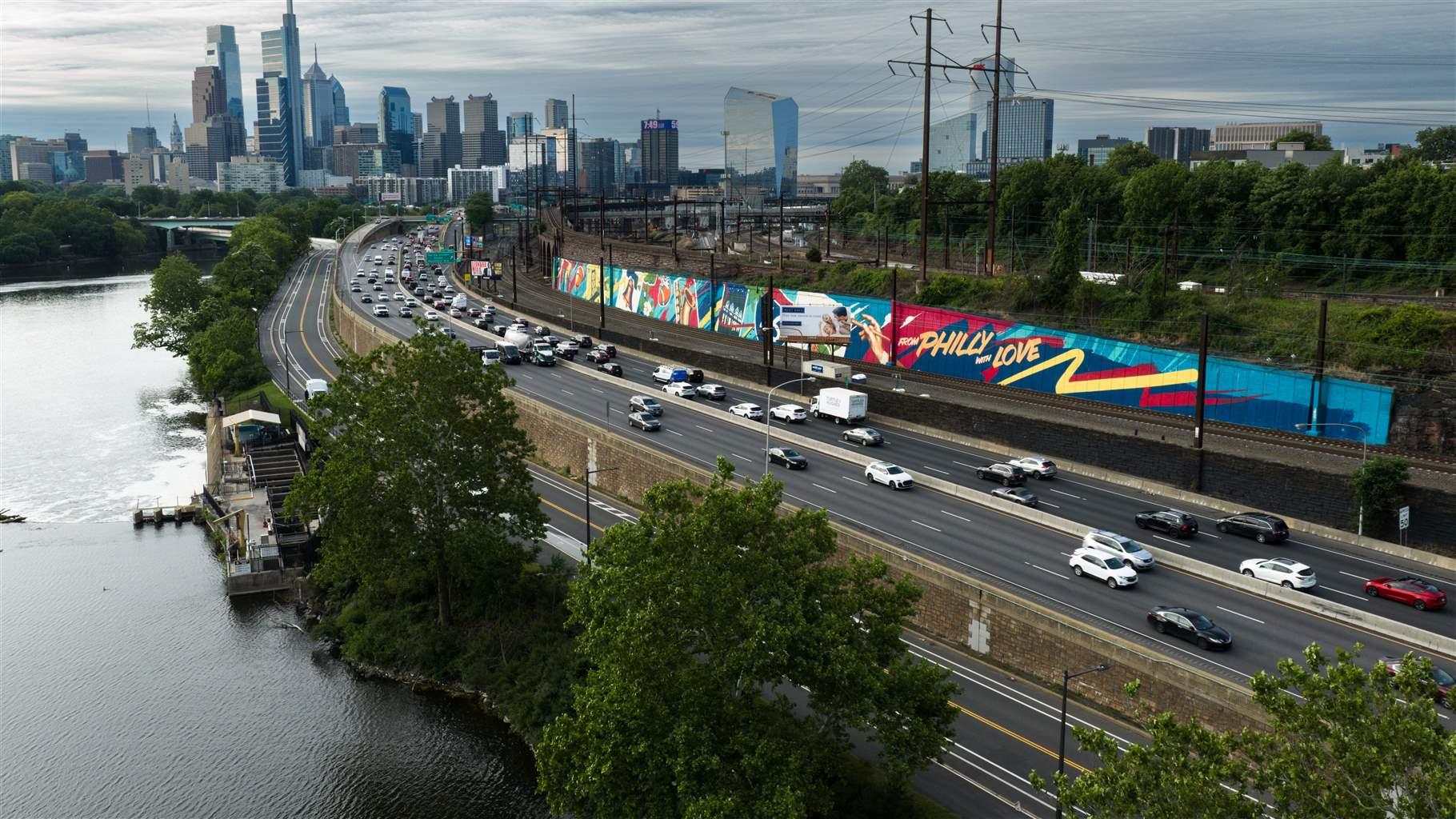
Beautifying neighborhoods and refining “Gateways” to the city: Artist Carlos “Calo” Rosa worked with Mural Arts Philadelphia to create a vibrant new landmark that helps tell the city’s story and welcome residents and visitors to the area. The 16,000-square-foot mural located beside train tracks near 30th Street Station is a massive-scale representation of one of Philadelphia’s strengths: broad access to public art, which helps enhance neighborhoods’ vibrancy and residents’ quality of life. “It’s a way of saying thank you to the city that welcomed me as an artist,” said Rosa, who has painted more than two dozen murals throughout Philadelphia. The city commissioned the mural as part of the Gateways to Philadelphia anti-graffiti and highway beautification projects led by Mayor Cherelle Parker’s Office of Clean and Green Initiatives, the Pennsylvania Horticultural Society, and Mural Arts. Watch the video to learn more about the “One Philly, A United City, With Love” mural and what it represents. And read more about the story behind its creation.
“Philadelphia has a rich and varied history, with so many great stories to tell. Those narratives began thousands of years before the founding fathers put ink to parchment on the Declaration of Independence, when the Lenape peoples were the main stewards of the land and waters along the Delaware River,” Frisby-Greenwood said. “And, today, Philadelphians of all ages and backgrounds are helping to write the city’s and the country’s next groundbreaking chapters.”
These stories are worth celebrating as we look toward the future of our democracy and consider the role we want to play in shaping it.
Catherine Fuller works to advance civic initiatives in Philadelphia for The Pew Charitable Trusts.
People


