In Chilean Patagonia, a Rugged Traditional Trek
Culture and conservation converge in the Andes’ Palena

On my journey to Palena, a small town nestled deep within the Patagonian Andes, I had to travel 1,200 kilometers (745 miles) from Santiago, Chile’s capital. The trip required a commercial flight, a layover, and another leg on a small propeller plane, followed by a three-hour drive along a winding gravel road. Reaching Palena took 15 hours—and this was the fastest, most direct route. For context, that’s two hours longer than a flight from Santiago to Washington, D.C.

I went to Palena, an area in the Los Lagos region with a population of about 1,800, at the beginning of the Southern Hemisphere’s summer. And I traveled there to experience firsthand how some of the environmental safeguards that The Pew Charitable Trusts has supported in Chile for years—in partnership with the Universidad Austral de Chile’s Austral Patagonia Program—benefit local residents. One of these initiatives, the creation of a multiuse conservation area, was designed to balance ecosystem protections with traditional and sustainable uses of the land, such as the Andean transhumance—the process of moving livestock across difficult terrain to their summer grazing areas. I went to participate in and document one of these migrations.
A 3-day trek through rivers and forests
I joined four arrieros, or herders, in mid-December as they led their livestock to higher-elevation pastures, where the animals would spend the summer months grazing in preparation for winter. The trip entailed a three-day journey on horseback across rivers and through native forests and wetlands—terrain much more rugged than the city streets and paved bike lanes I’m used to navigating in Santiago.
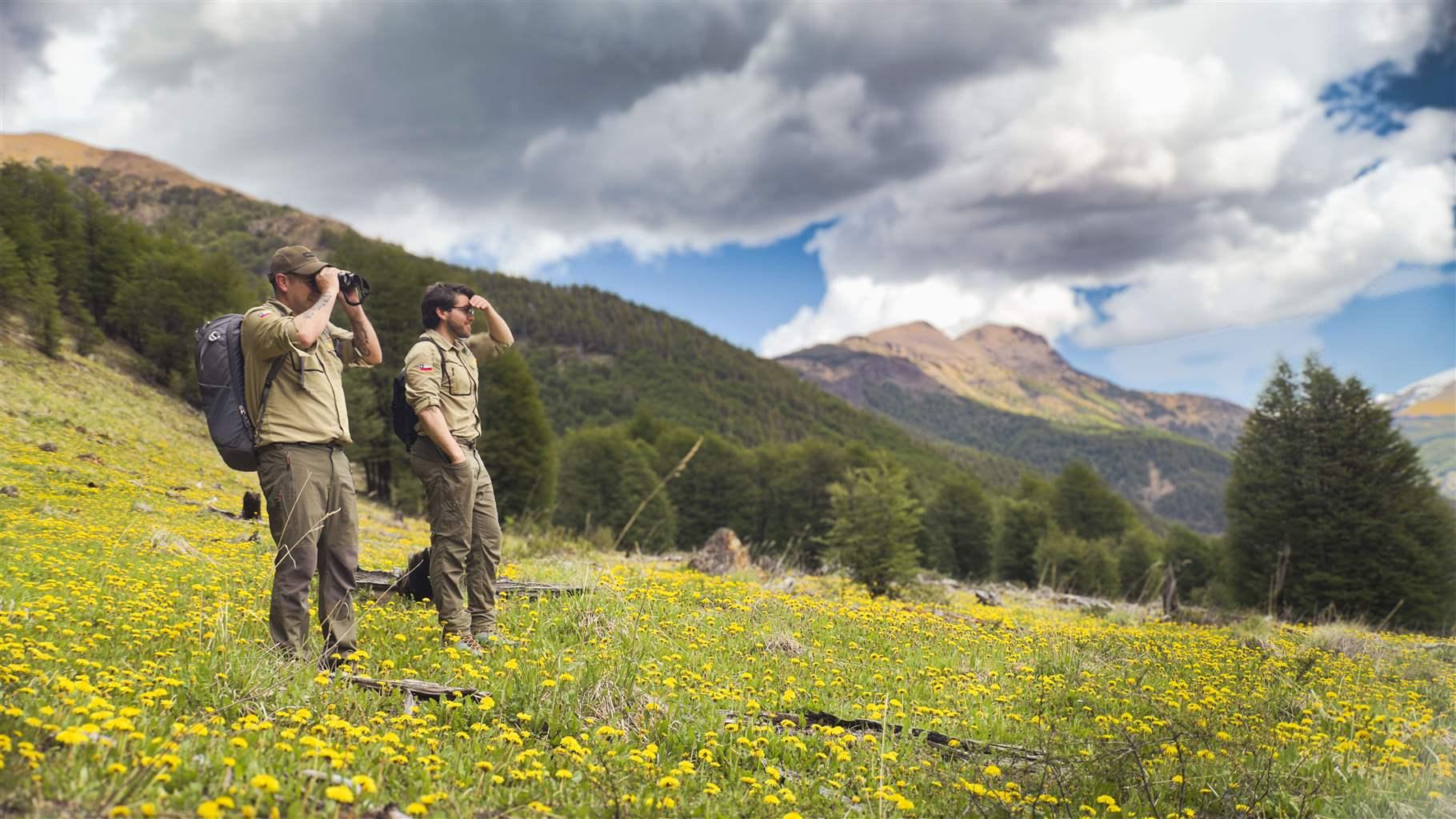
Javier Lavoz, Cristian Galindo, Tomás Videla, and Natalia Ibáñez, who served as the hosts throughout the trek, all grew up around horses, accompanying their grandparents on these summer livestock migrations, or veranadas, as they’re known in Chile (stemming from verano, the Spanish word for summer). In fact, up until two years ago, Galindo’s grandfather, now 95, was still taking part in the veranadas.

As I mounted my horse and began the trek, I was captivated by how seamlessly the arrieros and their animals moved, forging ahead in unison as if they were a single entity. Periodic whistles and shouts from the arrieros served as commands to their herding dogs, which helped them contain the nearly 50 cows and calves in a tight, orderly cluster.
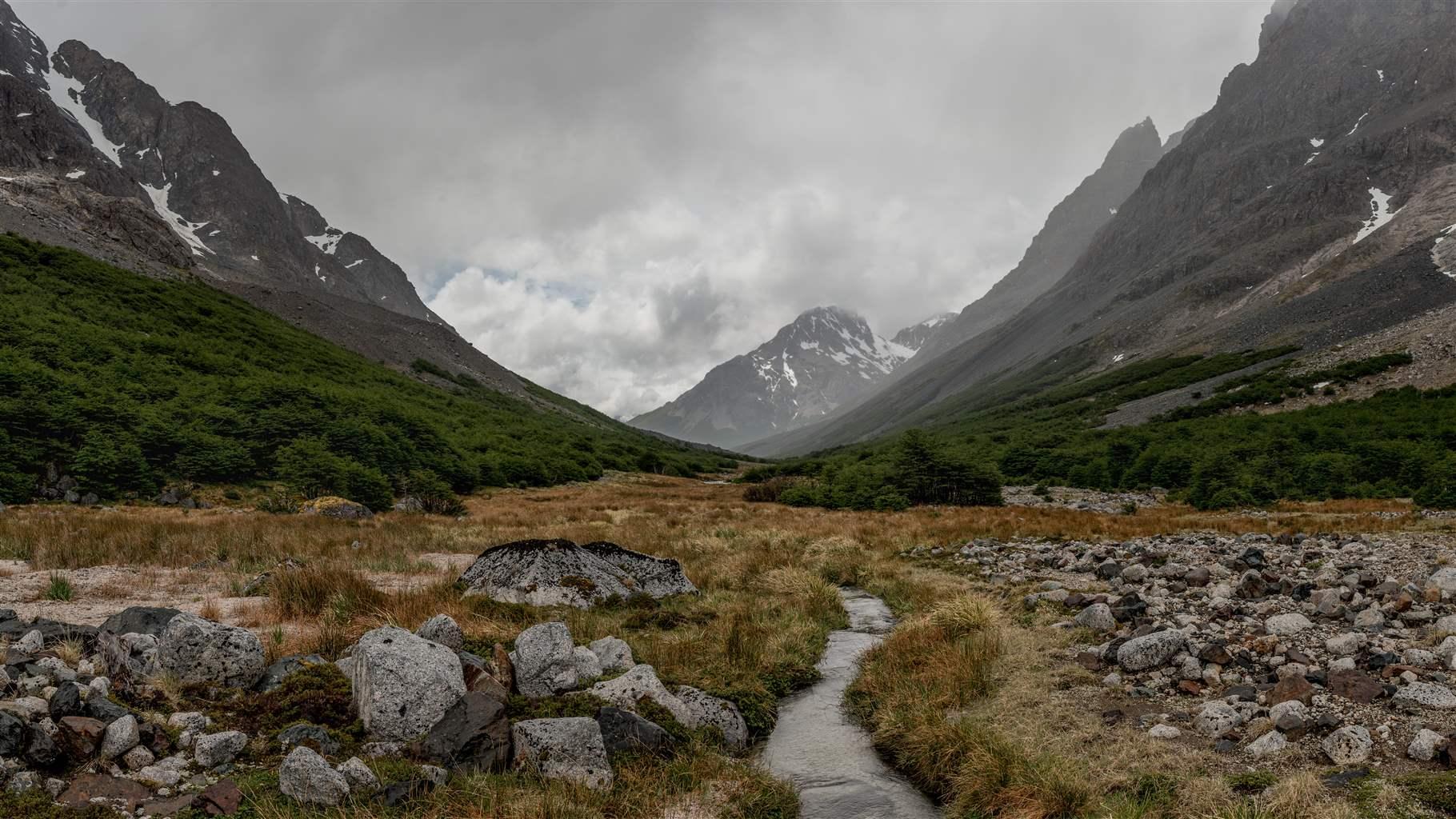
Our group’s pace was dictated not just by the animals but also by the terrain itself: The imposing landscape often compelled us to slow down, observe, and gain a deeper appreciation for our surroundings.

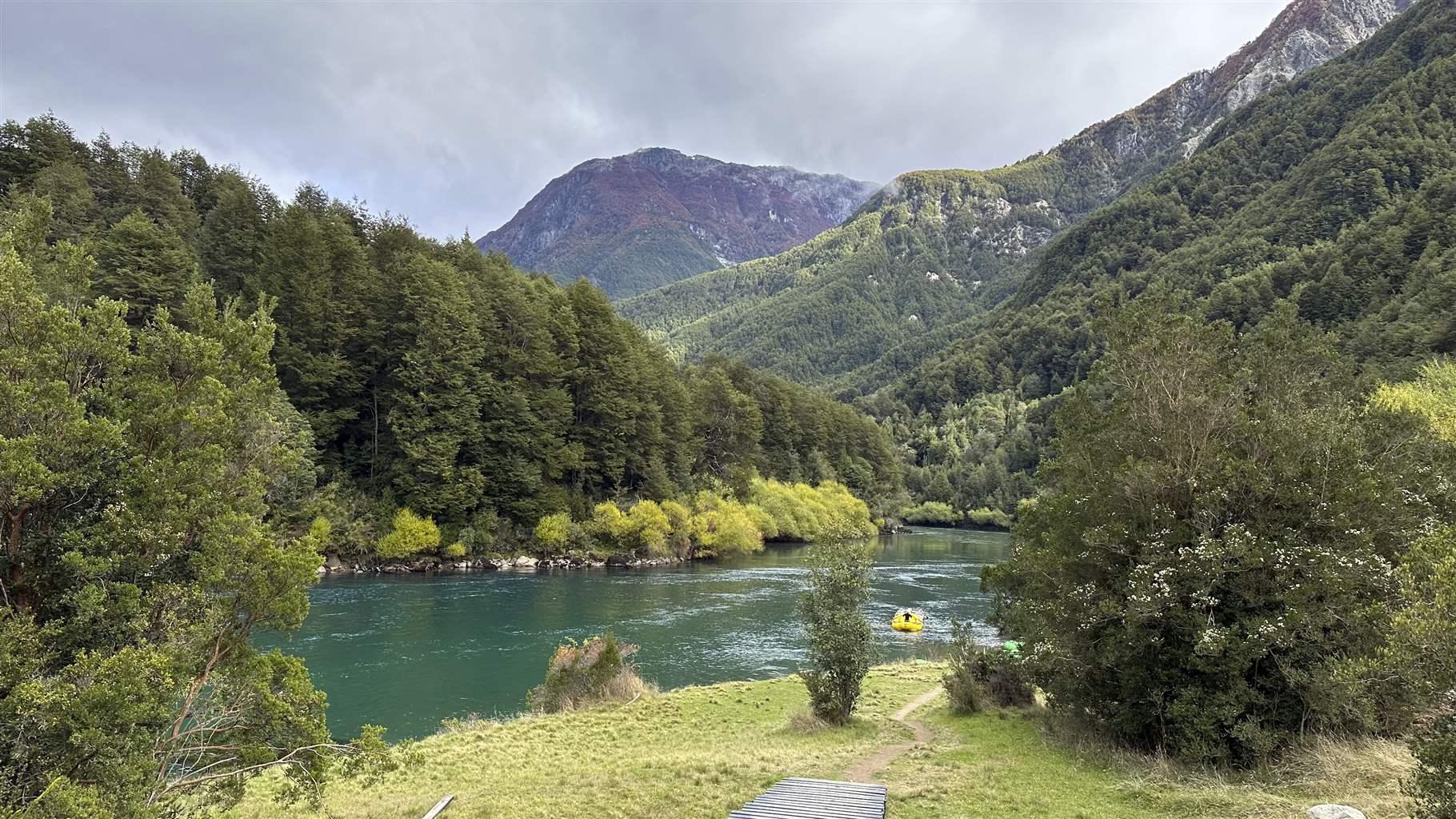
It’s often said in this region that “he who hurries in Patagonia is wasting his time.” We took that message to heart. Consequently, our group learned to move at a deliberate pace, letting the horses carry us along as we took in the beauty of the rugged, glacier-encrusted mountains, centuries-old forests of lenga—an iconic native deciduous tree that can reach a towering 30 meters (100 feet) in height—and emerald-hued rivers. This picturesque landscape also serves as a sanctuary for iconic species such as the huemul (an endangered deer), the puma, and the vizcacha (a chinchilla-like rodent), although we didn’t spot any on our trek, as they can be quite elusive. We did, however, hear constant birdsong from the hundreds of native avian species—chucaos and rayaditos among them—as we made our way.
“It’s like a dream to find a conservation framework that preserves nature while also respecting our customary practices,” said Ibáñez, Palena’s tourism manager and a local entrepreneur specializing in horseback riding tours. Indeed, multiuse conservation areas aim to support both conservation and traditional land uses, acknowledging that protections can support traditional practices in an organized, reverent, and sustainable way.
Allies in conservation
For the past three years, Pew has supported Palena’s community in working to establish this conservation area, offering technical assistance to the initiative and providing tools and expertise to advance the creation of protected areas that successfully integrate biodiversity conservation and local economic development. And the Universidad Austral de Chile has provided key data on local ecosystems, land use patterns, and opportunities for sustainable resource management.
This type of project not only makes a meaningful impact locally but also helps to position Chile as a benchmark for lasting conservation models that consider communities, local authorities, biodiversity, culture, and development.

Carrying crucial traditions forward
Yet, beyond the research and technical support, what truly sustains this initiative are local residents and leaders—people such as Lavoz, for whom conservation is not an abstract construct but a value he lives every day. People who view the land as a core part of their culture and identity, and who care for it accordingly. Now, this organized and vibrant community—made up of arrieros, tourism entrepreneurs, residents, and public officials—awaits official approval of the conservation area from the Ministry of the Environment.
At nightfall, as I helped with setting up camp and preparing dinner, I watched the livestock scatter across the valley. The wind swept down from the mountains, and the sky threatened rain. And in that moment, I grasped even more firmly what was truly at stake in this expansive and largely untouched region of Patagonia: Conservation encompasses more than protecting an extraordinary landscape; it’s also about preserving a unique and important way of life.
Alejandra Sáenz works on The Pew Charitable Trusts’ conserving nature for Chile project.

Explore the Issue
This article is part of a magazine issue featuring in-depth stories and insights.




/16x9_m.jpg?mw=1820&hash=4C8AC0442DCF39C08321E82F1DA91C38)