Jim King and Jayne Cleveland have impeccable timing.
In April 2024, the Weaverville, North Carolina, couple decided to sign up for an energy pilot program called PowerPair from their utility company. Duke Energy was offering customers in their state incentives to install solar panels on their roofs and store the energy generated in a battery in their homes. The couple uses the power but can also get energy from the main grid when needed, like on a sweltering summer day. And Duke can also tap some of the energy stored in the battery, say, when air conditioning isn’t as necessary, and compensate the couple with a lower electric bill, or even credits—creating what is known as a virtual power plant from customers like King and Cleveland.
“The process was pretty easy for novices like us,” says King, and by August 2024, the couple had panels on their west-facing roof and a 5-by-2-feet vertical battery in their laundry room—and were accumulating, using, and storing clean energy from the sun. They quickly learned what activities used the most power—laundry was a big one, the dryer much more than the washing machine—and that the energy gleaned on sunny days would easily provide the power they needed throughout nights, when their energy consumption lowered.
“The infrastructure is reliable,” King says of their town in the metropolitan area of Asheville. “We never had any extended power outages. In our 10-plus years of living here, we’ve only had a handful—and only for a few minutes. We never had to worry about it.”

While the couple never had concerns about power outages in the years before the new battery was installed, they quickly learned about another essential benefit of their new system. Only six weeks after its installation, Hurricane Helene tore through western North Carolina, causing overflowing rivers and mudslides that devasted communities and left most residents without passable roads, communication options—or power.
When King and Cleveland woke up the morning after the Sept. 27 hurricane, they learned that their energy system had switched to stored power and their home was running off the battery.
“We were stuck,” Cleveland says. “But we had power.” And they continued to have power for three weeks, unlike neighbors who had to wait for the main grid to be repaired.
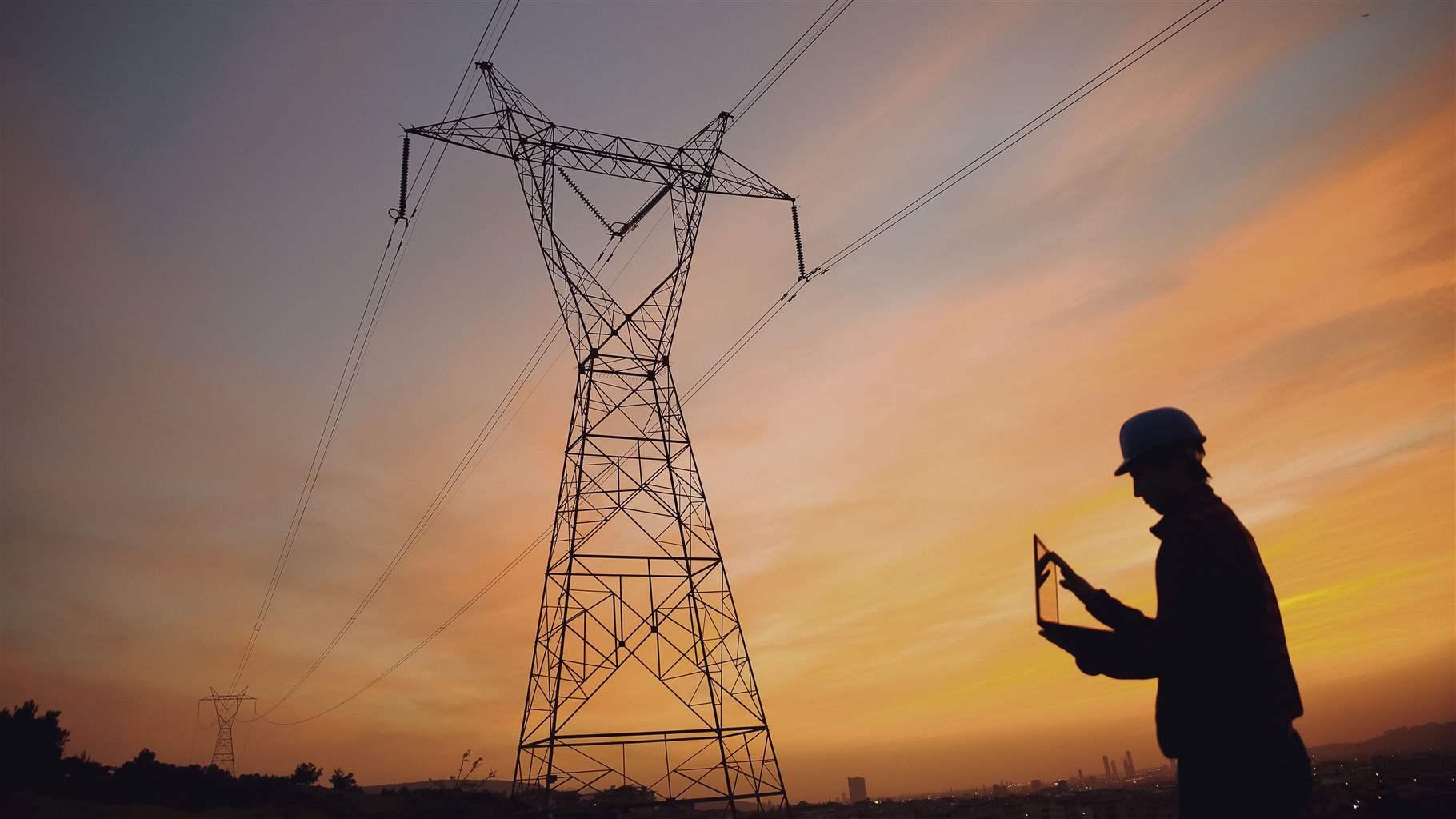
The nation’s electric grid, often called the biggest machine ever built, consists of a vast array of power plants, high-voltage transmission lines that send electricity over long distances, and substations that convert high-voltage power to a lower one so it can be distributed locally. Interconnected throughout the United States and Canada, the grid brings electricity generated from coal or natural gas, solar panels, wind farms, hydroelectric dams, and nuclear reactors to hundreds of millions of users.
As big as it is, it can’t keep up. Data centers, AI, increased manufacturing, and everyday citizens are consuming unprecedented amounts of power.

The U.S. Energy Information Administration has forecast that power consumption in the U.S. will reach record levels in 2026.
Policymakers around the nation are embracing innovations that can meet this demand, and The Pew Charitable Trusts’ energy modernization project provides research that is guiding those decisions. Some of those new approaches include close-to-consumer alternatives such as the batteries installed in homes and other facilities and products that lie outside the main grid. Others target new technologies that increase the capacity of the existing grid, with at least 10 states passing legislation to evaluate the new methods, often with strong bipartisan backing.
Our consumption of electricity is larger than it has ever been. And it’s growing.
“Even in our daily lives, we see energy demand increase,” says Yaron Miller of Pew’s energy modernization team. “So much to plug in!” he says. “Chargers, battery packs, EVs. If we do nothing, that’s a problem for powering businesses. That’s a problem for keeping the AC on in the hot summer or the refrigerator running.”
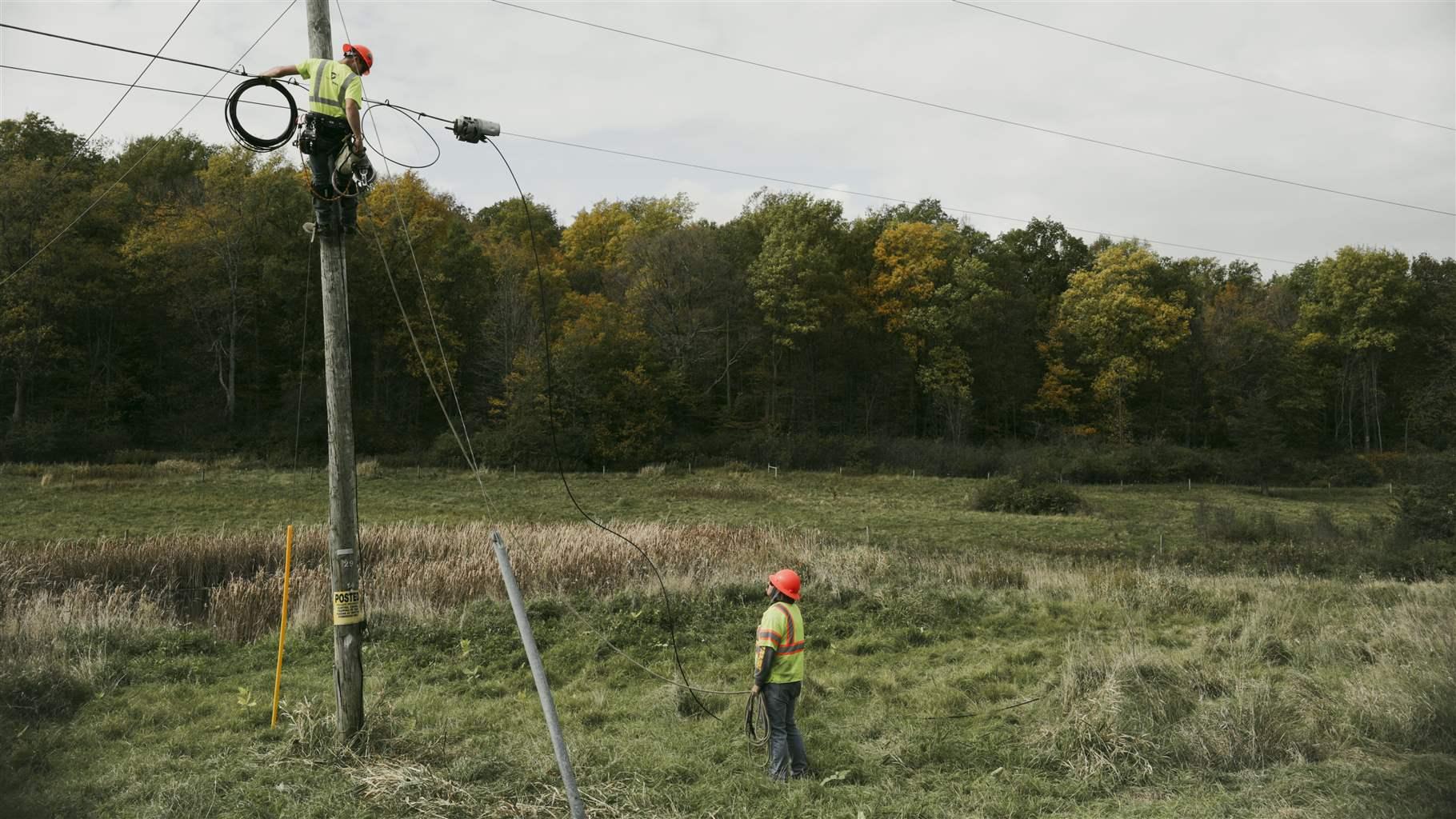
In addition to demand, extreme weather events are becoming more common. Hurricanes such as Helene destroy transmission lines and energy facilities. Heat waves demand more air conditioning, while freezing temperatures command more heat. Ice storms snap power lines and lightning zaps transformers. All can result in interruptions in the power flow—and the lights go out.
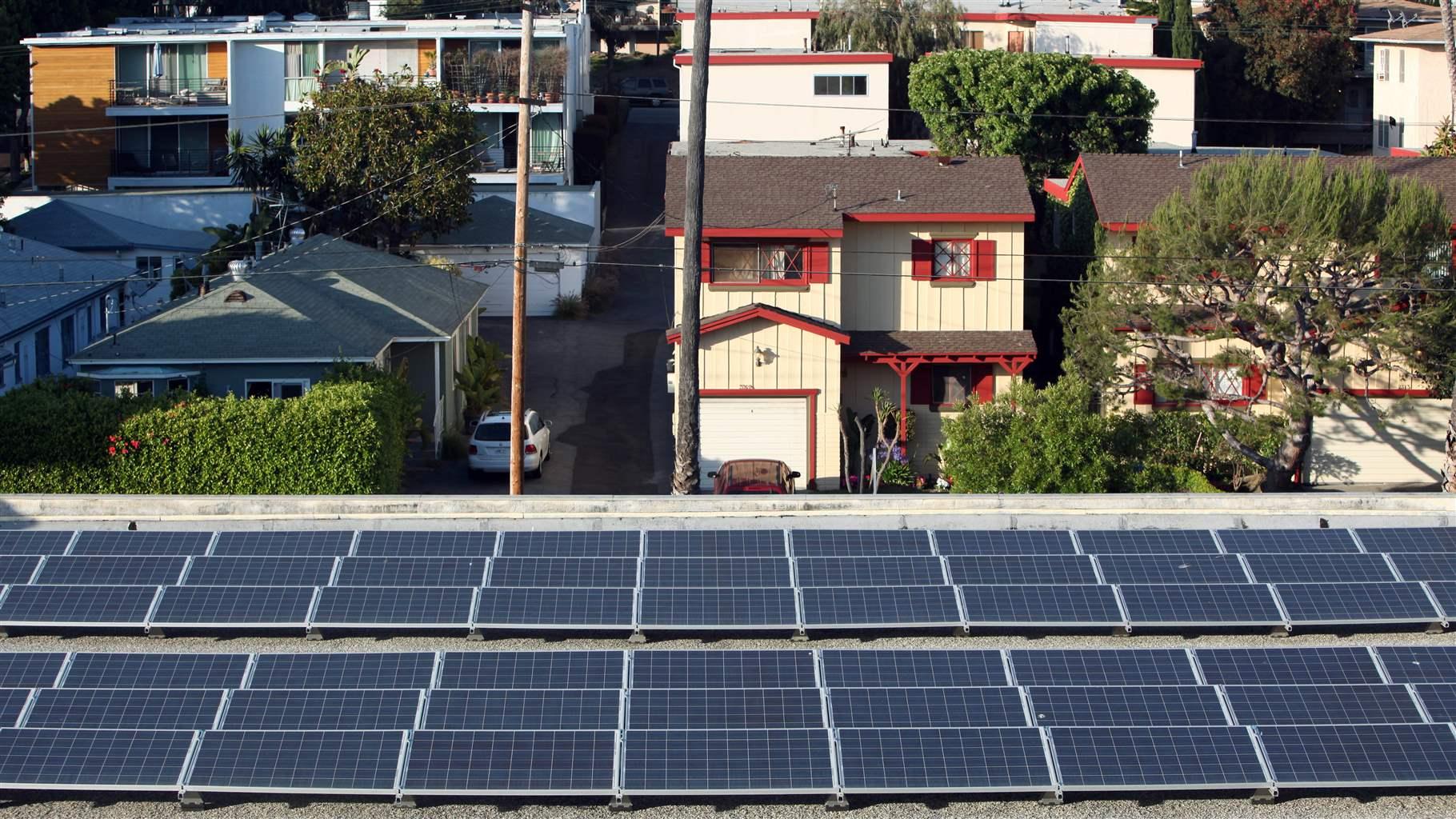
The new energy technologies in King and Cleveland’s North Carolina home are innovative advances called distributed energy resources—or DERs. These small energy generation and storage technologies include solar panels on roofs, batteries, electric vehicles, heat pumps, small wind turbines, and smart thermostats. They can be installed in homes or businesses, generate clean energy, lower energy costs, reduce pollution, and help communities retain power during large power outages.
DERs also reduce electric bills. The system King and Cleveland installed cost $40,000 up front, though they received a $9,000 rebate from Duke Energy, King says. But their electric bills are down. “Though it might take a decade to recoup all the cost, we’ve had electric bills with negative numbers, where Duke Energy owes me,” says King.
It’s one of the technologies that Pew’s team says could have real impact as demand increases.
“DERs benefit the customer, and they benefit the grid,” says Maureen Quinlan of Pew’s energy modernization team. “There’s a great untapped potential here, and we’re trying to create an ambitious vision for the nation.”
Using DERs extensively isn’t unprecedented. Belgium receives 8% of its energy supply from DERs. Brazil receives 14%. Australia, which receives nearly 10% from DERs, has a new national program that began July 1 and offers a 30% subsidy on home batteries, and the country has seen a surge of installations: more than 11,500 in the first three weeks. DERs are expected to be the largest source of energy capacity in Australia by 2050.
“Australia’s program grew quickly, and it’s already seeing the benefits,” says Quinlan. “The United States could learn valuable lessons from their example.”

Some DERs can be grouped into microgrid systems and, if needed, operate independently from the big grid. Instead of transmitting power over long distances, these independent systems send electricity locally into a small community or facility. Hundreds operate in the United States today, particularly in places that provide an essential service, such as fire stations, hospitals, wastewater treatment plants, and military bases. To work, microgrid locations need space, resources, and a single point of connection with local utilities—like a college campus.
Gallaudet University, the world’s premier institution dedicated to the education of deaf and hard of hearing students, is home to one of the first microgrids in Washington, D.C. The school partnered with distributed energy company Scale Microgrids and Urban Ingenuity, an organization that co-develops clean energy projects, to build its own microgrid, which was installed in 2023.
The Gallaudet microgrid can work in tandem with the local utility grid—but if electricity goes out, the entire university could run from the power generated by the DERs that make up the microgrid.
The microgrid is also a smart financial move. The university earns revenue from leasing rooftops for solar arrays to Scale Microgrids. The battery storage system also provides grid stabilizing services to the regional grid operator, PJM, allowing the university to earn revenue from the energy it provides.

Though it required a significant capital investment, the system will soon be a big money saver for the school, says Dave Good, director of Energy, Utilities, and Sustainability at Gallaudet. “It’s a very good investment. We expect to save about 40% on our energy bills every year, which is millions of dollars.”
The school’s microgrid also helps D.C. families reduce energy costs. Through a community solar program, 400 residences subscribe to Gallaudet’s solar system and receive a credit on their electricity bills, reducing electricity costs by about 10%.
Gallaudet’s investment and commitment to managing a physical plant that serves the community was one necessity. The other was the local utility company, Pepco, making improvements on its grid.
“But the steps are all doable. And they’re all scalable,” says Bracken Hendricks, CEO of Urban Ingenuity. “We were able to stitch together this very special thing that shows what can be done in many, many other places around the country.”
To help policymakers enable more DERs, Pew has formed an advisory council of energy leaders to show how people, localities, and states can be a part of innovative solutions, like the one at Gallaudet.
“Every state in the nation benefits from having disaggregated, dispersed energy resources all around the grid, and not just these great big central stations in the middle of grids,” says Pat Wood, who spent much of his career working on what he calls “the big grid” as the former chair of the Federal Energy Regulatory Commission and later the Public Utility Commission of Texas. Now, as CEO of Hunt Energy Network and the co-chair of Pew’s Distributed Energy Resources Advisory Council, he’s much more focused on bringing lessons learned to the little grid.
“The problem is, a lot of the people in the utility industry, and in the government, don’t understand what a transformative potential we have just sitting there ready for us,” he says. “I’m trying to unlock innovation and risk-taking and an entrepreneurial mindset that is missing in energy.”
Power companies are also testing approaches to supplement the grid. In addition to the virtual power plants in homes like King and Cleveland’s, Duke Energy in 2023 installed a microgrid with solar and battery storage in Hot Springs, North Carolina, that has enough capacity to power the whole town, which has a population of just over 500. When Hurricane Helene struck, the town’s substation washed away, but the microgrid powered the town for six days until a mobile substation took over.
Other Duke microgrids generate electricity in Asheville and the Great Smoky Mountains National Park, and more are being constructed in Indiana and Florida, mainly in remote areas.
While extensive cloud cover or solar panel storm damage can compromise those facilities, “in the right setting, microgrids are a strong tool in the toolbox of reliability and resiliency solutions,” says Logan Stewart from Duke Energy.

As energy experts and policymakers look for ways to increase electricity output, they’re also turning to the existing grid itself. New software as well as hardware that is installed right onto power lines is known as advanced transmission technologies, or ATTs, and can allow more energy to be transported more efficiently.
Sensors can be placed on transmission lines that give grid operators real-time information about how much power is being transmitted, which allows them to better estimate how much power they can transmit—and that can increase the amount of power on the grid by 10% to 30%. Another technology is new and improved wires that connect towers that use better materials and have a better design—and transport 50% to 110% more power.
ATTs such as these sensors and wires can be deployed relatively quickly—in two to three years—as opposed to constructing brand new lines, which can take about a decade. According to the U.S. Department of Energy, nationwide use of these technologies could unlock up to 100 gigawatts of additional grid capacity and save consumers $35 billion by reducing bottlenecks that are constraining the grid.
“ATTs make the grid more efficient and able to squeeze more power out of the existing infrastructure,” says Pew’s Miller. “So if you already have some of the infrastructure built, that’s a low-hanging fruit, and a really smart move to get more capacity to connect more projects.”
Pew has been working with state policymakers seeking to understand and install ATTs. In the past three years, at least 16 states have passed laws encouraging ATT deployment, including, in 2025, South Carolina, Indiana, Ohio, and Utah, where Governor Spencer Cox (R) signed a bill that requires the state’s electric utilities to include in their grid planning an evaluation of the benefits and deployment timelines of ATTs. The new law directs the state’s Public Service Commission to encourage the use of ATTs, and if they’re shown to be cost effective, approve the utilities’ recovery of costs for their investments.
“We’re no different from any other place. Our grid is aging, and it hasn’t been maintained,” says Utah Representative Christine Watkins (R), who sponsored the legislation that passed with overwhelming bipartisan support. “It was a no-brainer,” she says.
Indiana also passed similar bipartisan legislation this year with support from utilities, manufacturers, clean energy groups, and advocates for consumers. Utilities will evaluate ATT investments and, if cost effective, the utility commission can approve the recovery of costs for the investment. Indiana officials are particularly motived to find solutions; a backlog of energy projects and storage capacity cannot come on to the existing grid because of capacity constraints.
“Our grid was built 100 years ago and needs upgrading,” says state Senator Eric Koch (R), who sponsored the bill. “Now is the opportune time to capture the latest technology. [Using ATTs] is a way to do that, instead of building new transmission lines—and can achieve many economic advantages.”
Whether adding ATTs to the existing power lines to transmit more electricity or incorporating distributed energy sources in a community to offset the demand on the main grid and provide additional energy, the new—and readily available—technology provides immediate as well as long-term solutions to modernizing energy transmission in the United States.
Modernization also provides consumers with more options—and a say about the source of their energy.
“I love knowing that I’m not pulling power from anywhere but from the sun,” says Cleveland in Weaverville. “I’m sold.”
Carol Kaufmann is a Trust staff writer.