County Leaders Set Clear Disaster Resilience Agenda for States and the Federal Government
Pew, National Association of Counties team up to hear from local officials
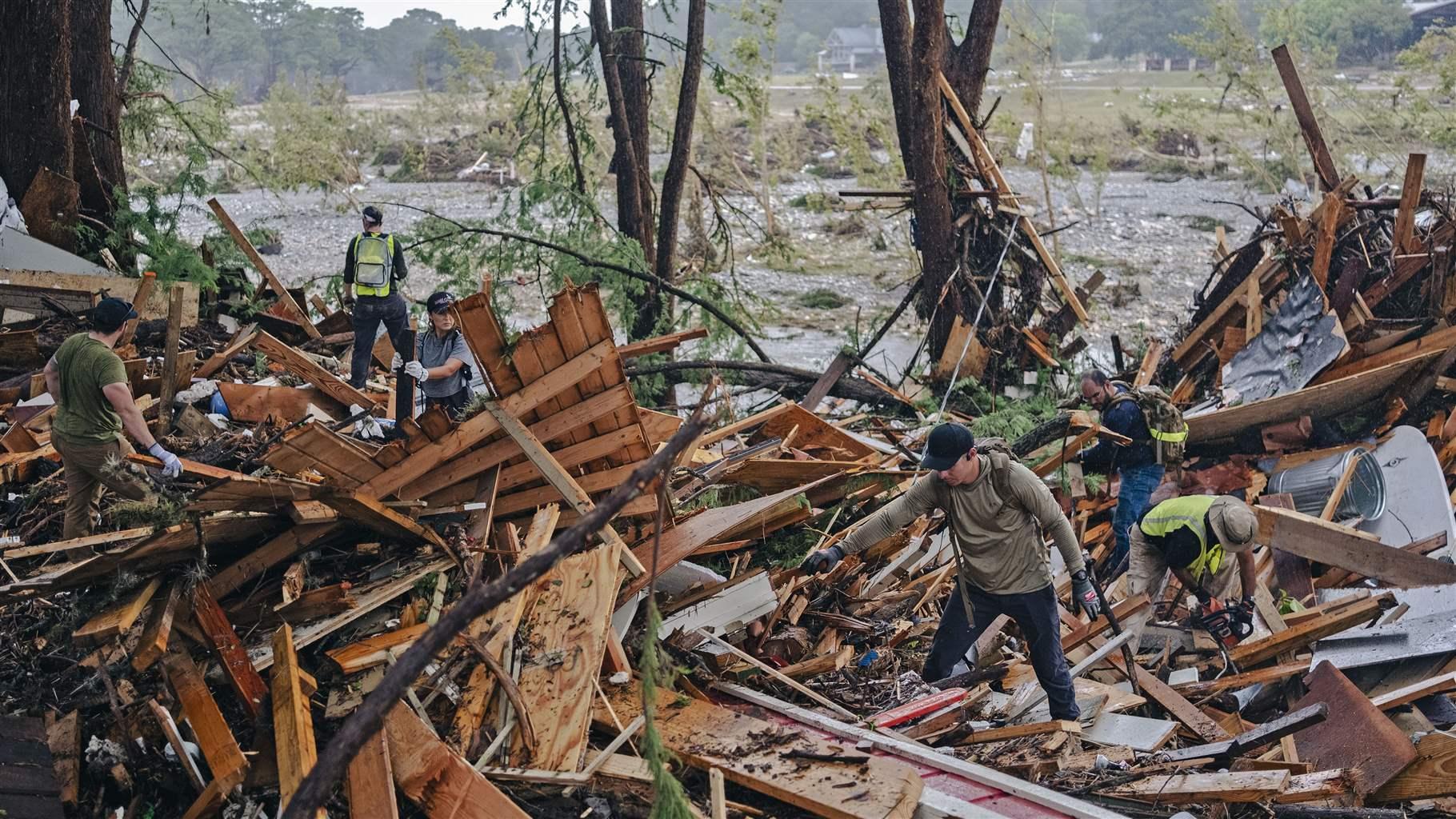
Storms, wildfires, and extreme heat are hitting communities harder than ever, even as the federal posture toward disaster funding and engagement is in flux. To learn more about how these forces are affecting decision-making on the ground, The Pew Charitable Trusts and the National Association of Counties (NACo) in October 2025 held a discussion with county leaders from throughout the country.
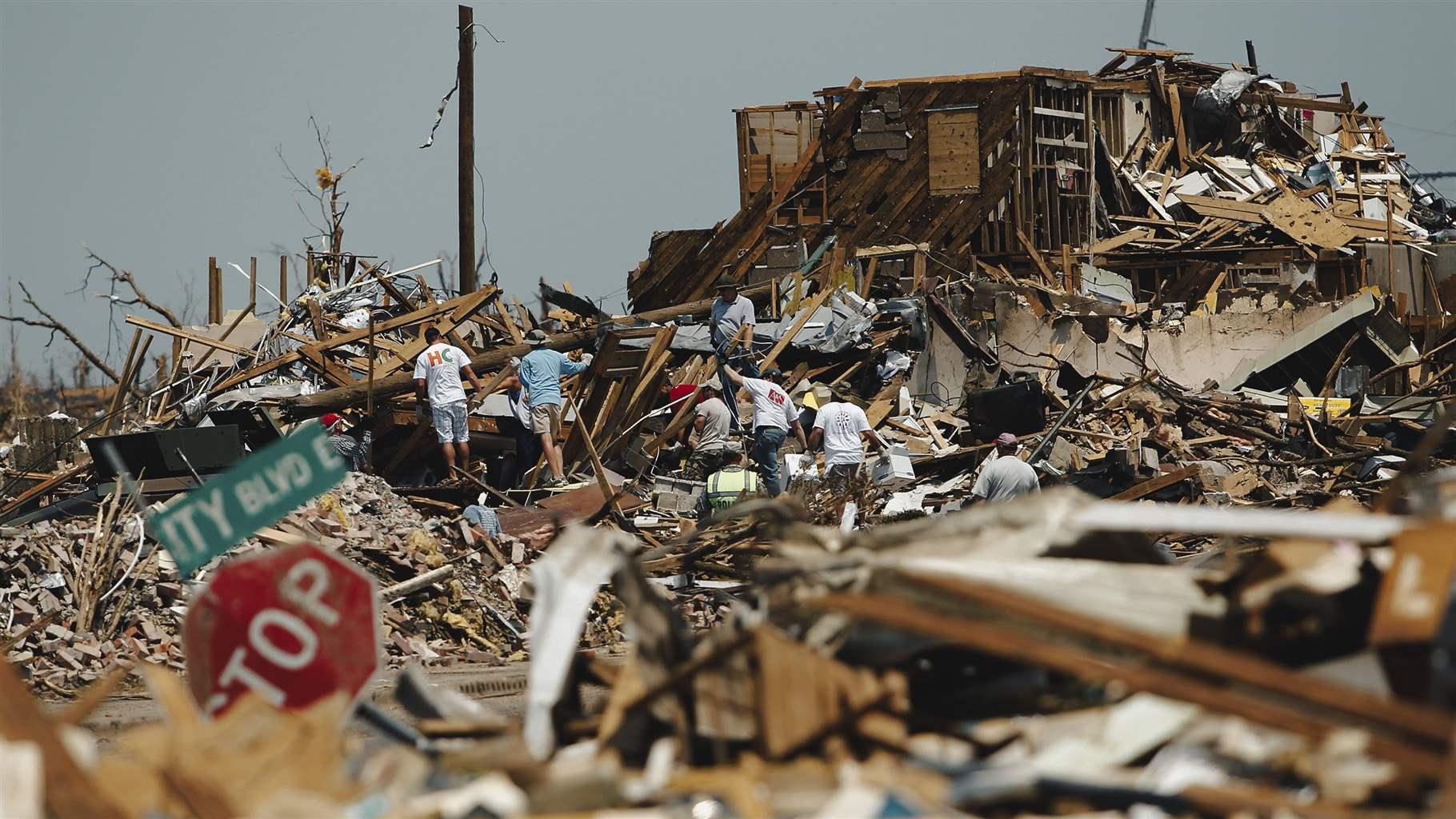
The message for state and federal officials was consistent: Stabilize grants used to build local capacity, provide reliable money for pre-disaster planning, clarify interagency roles and responsibilities, and simplify delivery of assistance so counties can act decisively before, not just after, disasters strike. This county-informed agenda outlines practical steps that states and the federal government can take now to promote disaster resilience.
The following is based on a “Chatham House Rule” discussion; insights are paraphrased and nonattributed.
County leaders report pressing issues
- Post-disaster backstops are under growing pressure. More frequent and extreme weather events are falling short of recently raised federal thresholds for disaster declarations, which could force counties and municipalities to absorb recovery costs that they cannot carry alone.
- Core capacity is at risk. Delays and uncertainty within the federal Emergency Management Performance Grant program, which their emergency management departments rely on to fund staff positions such as planners, grant managers, and duty officers, threaten staffing and continuity.
- Increased cost shares would hit small jurisdictions hard. Rising local cost shares and reimbursement-only models can put many federal programs out of reach for rural and fiscally constrained counties—even when needs are urgent and resilience projects are ready for implementation.
- Process is eclipsing outcomes. Slow, paperwork-heavy reimbursement requirements and shifts in federal staffing cause delays in debris removal, repairs, and other post-disaster funding. Counties support creating streamlined, accountable options, such as piloting debris block grants, that pay for results.
- States are being asked to do more without tools or safeguards. If responsibilities shift downward, states need people, systems, and funds to manage programs, as well as mechanisms that preserve local execution, particularly in Dillon’s Rule states, where municipalities have limited authority.
- Blurry roles waste time and dollars. More needs to be done to pair disaster-related responsibilities and funding with agencies’ in-house expertise. Many said the Federal Emergency Management Agency (FEMA) may be trying to do too much in attempting to manage all aspects of disaster preparedness, response, recovery, mitigation, and resilience.
How states can help fill gaps
- Designate a resilience lead. Empower a statewide resilience lead and create a standing county-state forum to set priorities, troubleshoot bottlenecks, and align approaches before disasters.
- Establish a contingency fund. Provide readily available dollars for events that do not reach the federal designation threshold and for short-term reimbursement advances to sustain essential services while awaiting federal payments.
- Lower cost-share barriers for small and rural counties. Offer state assistance through sliding-scale match programs; allow in-kind contributions where appropriate; and enable regional pooling of federal cost shares, in which groups of states would establish and contribute to dedicated funds that any participating state could tap after a disaster.
- Invest in local capacity to help unlock federal dollars. Fund grant-development-and-compliance support; prearrange debris removal and emergency contracts; and address known gaps, such as providing generators and other upgrades for shelters and continuity equipment.
- Preserve local operational control while scaling state support. Pair any expanded state role with safeguards to maintain local execution and formalize county representation.
Collaboration in Practice
Pew and NACo also recently partnered to develop the Intergovernmental Collaboration on Disaster Resilience Case Study Series, showcasing what effective intergovernmental collaboration can look like when roles and resources align:
- Lake County, California, built a county-led Risk Reduction Authority that coordinates among local, state, Tribal, federal, and nonprofit partners—even routing each grant to the “best-fit” applicant—so projects can move faster and be more competitive for federal grant awards.
- Rogers County, Oklahoma, tightened flood plain and subdivision standards and used a FEMA Safe Room Rebate Program to help residents install more than 170 home tornado shelters, pairing policy with household-level protection.
- Jefferson Parish, Louisiana, combined Department of Housing and Urban Development (HUD) and Army Corps of Engineers funding with a FEMA award—$27 million to upgrade more than 20 miles of power lines—to reduce power outages and keep critical services online during storms.
What counties need from the federal government
- Keep programs predictable. Provide clear timelines, formulas, and performance periods so counties and states can budget for core emergency-management staff and retain talent.
- Right-size thresholds and tests. Revisit recently raised thresholds for federal disaster response and recovery programs and account for the cumulative impacts of multiple successive disasters, including relatively routine events and the tax-base limitations of small and rural communities.
- Streamline reimbursements. Publish a single, simple playbook; expand the use of expedited procedures and fixed-cost estimates for smaller projects; and pilot accountable debris-removal block-grant models to cut paperwork while preserving oversight.
- Clarify interagency roles. Give agencies, such as the Department of Transportation and HUD, clear roles, responsibilities, and resources to focus on disaster issues relevant to their areas of expertise and have FEMA concentrate on people-first holistic disaster management and critical services to reduce duplication of effort and conflicting guidance.
- Sustain and simplify mitigation pathways. Keep mitigation and long-term resilience programs stable and accessible with funding set-asides for small and rural applicants; offer flexible cost-share options; and clarify eligibility for generators, shelters, and hardening activities.
- Protect risk data and increase technical support. Maintain open, reliable hazard data and expand practical assistance, including cost-benefit analysis help, so counties can turn plans into fundable projects.
In this period of uncertainty, county leaders are clear about what they need to build resilience. If states and federal partners stabilize funding, define responsibilities, and reduce friction, local leaders can focus on lowering risk. The opportunity is immediate: Align roles and responsibilities across levels of government now, and the next disaster will be less disruptive, less costly, and less likely to set communities back.
Mathew Sanders leads state-level resilience planning efforts for The Pew Charitable Trusts’ U.S. conservation project.
People