Pew and Partners: Plastic Pollution Growing at Troubling Rate With Significant Environmental, Human Health Consequences
New research assesses the scale of the problem through 2040 and lays out an ambitious pathway for change

WASHINGTON—A major new report published today by The Pew Charitable Trusts and its partners, “Breaking the Plastic Wave 2025: An Assessment of the Global System and Strategies for Transformative Change,” finds that the scale and impact of plastic pollution is far worse than previously thought, with far-reaching consequences for the environment and human health and well-being. Without action, plastic pollution will more than double over the next 15 years, reaching the equivalent of nearly a garbage truck per second of plastic polluting the environment by 2040, driven by production levels that will rise twice as fast as waste management. But these harms can be dramatically reduced using existing solutions if ambitious, fundamental change is urgently enacted throughout the global plastic system.
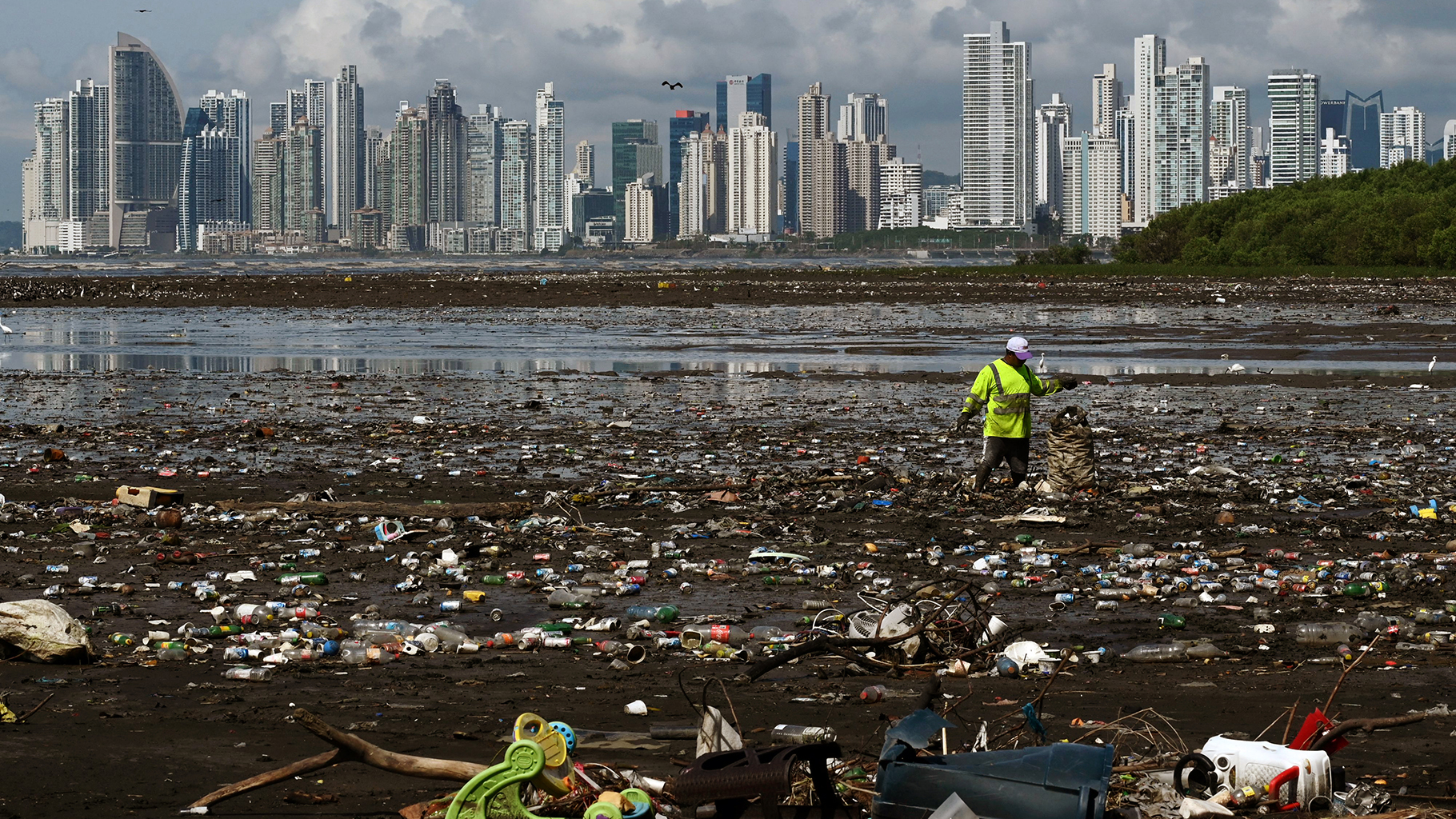
“This research shows that the impacts of plastic extend far beyond just waste in the environment,” said Winnie Lau, who leads Pew’s work to reduce plastic pollution. “Plastic has been found throughout people’s bodies and is increasingly linked to serious health risks, including heart disease, asthma and cancer. Plastic proliferation is also putting the environment in jeopardy and places significant strain on government budgets. The good news is that we already have the tools to fix this problem. It’s urgent that policymakers and companies transform the system now – and they will reap substantial benefits by doing so.”
The research – produced with the support of ICF International and four thought partners, the Ellen MacArthur Foundation, Imperial College London, Systemiq and the University of Oxford – finds that without action:
- Plastic pollution will surge – more than doubling – from 130 million to 280 million metric tons over the next 15 years, driven primarily by increases in plastic production and use that will overwhelm already strained waste management systems. Over this period, plastic production will grow by 52% – twice as fast as waste management capacity.
- Health impacts from plastic production and waste, including heart disease, asthma and cancer, will increase by 75% by 2040, driven mainly by new polymer production and the open burning of plastic waste.
- If the global plastic system were a country, it would be the third-largest greenhouse gas-emitting nation by 2040. Plastic-related emissions are set to increase by 58% over the next 15 years, mainly from production.
- Microplastic pollution will grow by more than 50% through 2040 and will make up 79% of all plastic pollution in high-income economies.
However, the report also shows a clear path forward: Existing policy solutions can cut plastic pollution by 83% by 2040 – and almost eliminate pollution from packaging, one of the leading sources. Reducing plastic pollution will have substantial additional benefits, including a 38% reduction in annual greenhouse gas emissions from plastic, a 54% reduction in health impacts from plastic production and waste, a US$19 billion decrease in yearly governmental spending on plastic waste collection and disposal, and the creation of 8.6 million jobs. Notably, although existing solutions can deliver a 41% reduction in microplastic pollution, innovative strategies will be needed to tackle the balance of this particularly challenging and pervasive problem.
Realizing these benefits will require unprecedented global collaboration to transform the world's plastic system. Policymakers and companies will need to implement and rapidly scale policies that reduce plastic production, improve product and system design, provide better waste management and increase transparency. And these efforts must begin right away. Even a five-year delay will allow an additional 540 million metric tons of plastic to enter the environment, cost governments an extra US$27 billion annually on waste collection and disposal, and risk billions of dollars of investment in outdated infrastructure.
Partner perspectives
- Yoni Shiran, partner and plastics lead at Systemiq, said: “Transforming the global plastic system is not only vital for the planet and human health, it’s also an extraordinary economic and social opportunity. By redesigning how we make, use and reuse materials, we can create millions of better jobs, support local economies and lift people out of poverty, while also dramatically reducing pollution and emissions. This is the kind of systemic change that benefits everyone – people, nature and business alike.”
- Richard Bailey, professor of environmental systems at the University of Oxford, said: “It is clear from this report that the trajectory of global plastic pollution is not a marginal problem but a rapidly intensifying, urgent, systemic risk that small incremental measures will not solve. As we show, substantial reductions are achievable if currently available interventions are implemented at scale and without delay. Compared to business as usual, early, coordinated action can bring tremendous environmental and societal benefits, and this is all within our reach.”
- Dr. Costas Velis, associate professor in waste and resource engineering at Imperial College London, said: “Plastic pollution is a global challenge rooted in systemic failures in how we manage our primary resources and waste. ‘Breaking the Plastic Wave 2025’ helps untangle this complex crisis and offers timely, tangible solutions. But these solutions will only succeed if they are grounded in rigorous science and driven by innovation. Without decisive action, plastic will become even more pervasive. But there is hope. The world has the means to nearly eliminate plastic pollution from packaging and to enable a fair, inclusive transformation. And crucially, informal workers such as waste pickers, who can play a vital role in the solution, must not be left behind.”
- Sander Defruyt, strategy lead for plastics at the Ellen MacArthur Foundation, said: “‘Breaking the Plastic Wave 2025’ is a key report that takes stock of the progress the world has made and puts into perspective the vast scale of the challenge. It clearly shows that while leaders have made progress, the problem has been outpacing the solutions on a global scale.” Defruyt also highlighted the report’s proposed solutions. "Importantly, it also illustrates that known solutions can significantly reduce plastic waste and pollution if scaled. To scale these solutions, significant policy interventions will be required to align market incentives with circular economy outcomes. Collaborative action and collective advocacy by leading industry actors will play a key role in creating the confidence for such ambitious policy interventions.”


