Americans Are Concerned About Harmful Chemicals in Food, Water and Everyday Products
New survey finds 5 in 6 adults want government, business to do more to ensure chemical safety

Editor’s note: This piece was updated on Feb. 26, 2026, to clarify an incomplete statement.
More than 70% of adults in the United States are very or somewhat concerned about their own or their loved ones’ exposure to harmful chemicals in food and drinking water, and a majority is also concerned about chemicals in food packaging, children’s and baby products, farmland, and other sources. (See Figure 1.) Further, about 5 in 6 want government and business to do more to ensure chemical safety and increase transparency around the use of chemicals.
These are the top takeaways from a national survey conducted by The Pew Charitable Trusts and global market research and public opinion firm Ipsos.
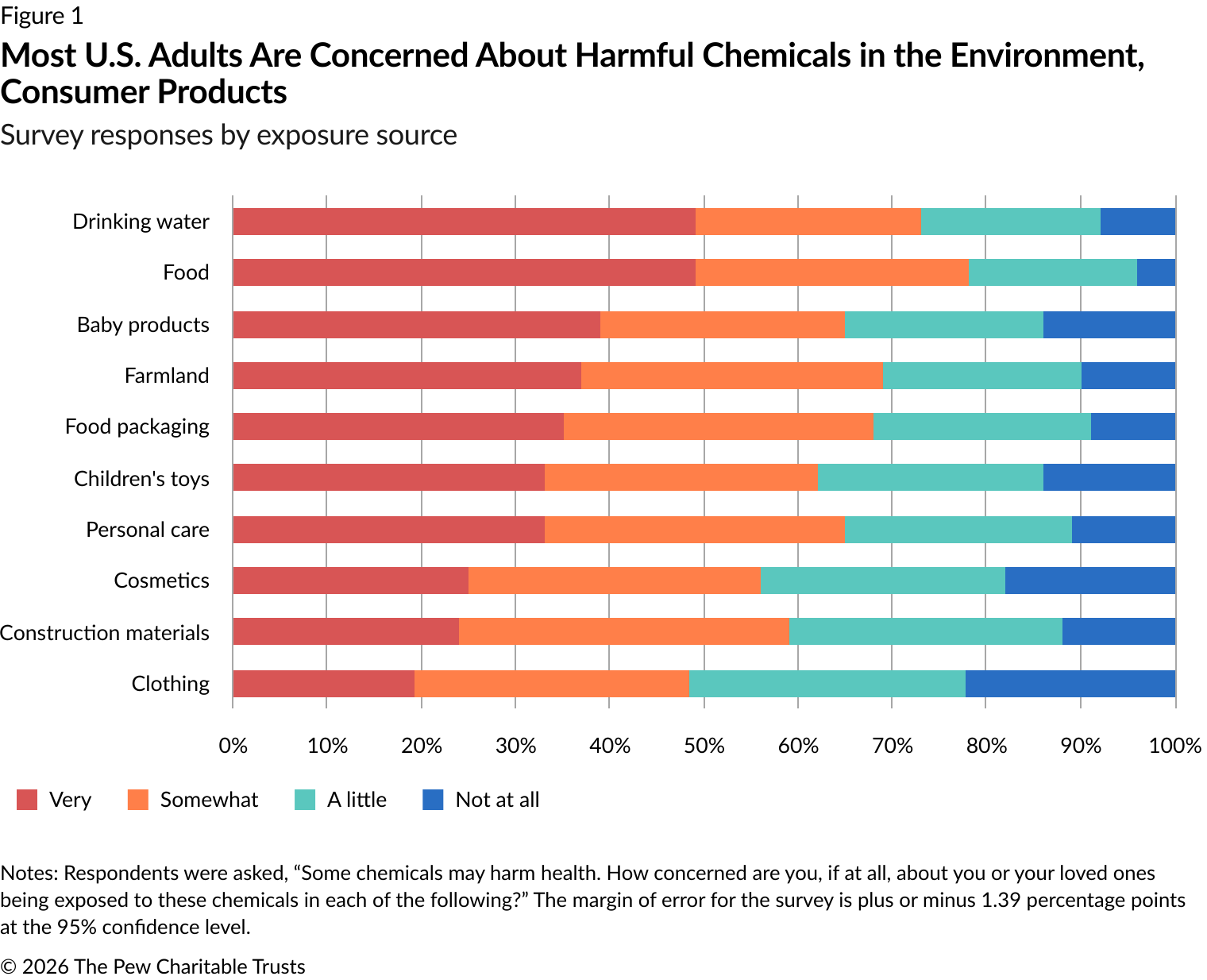
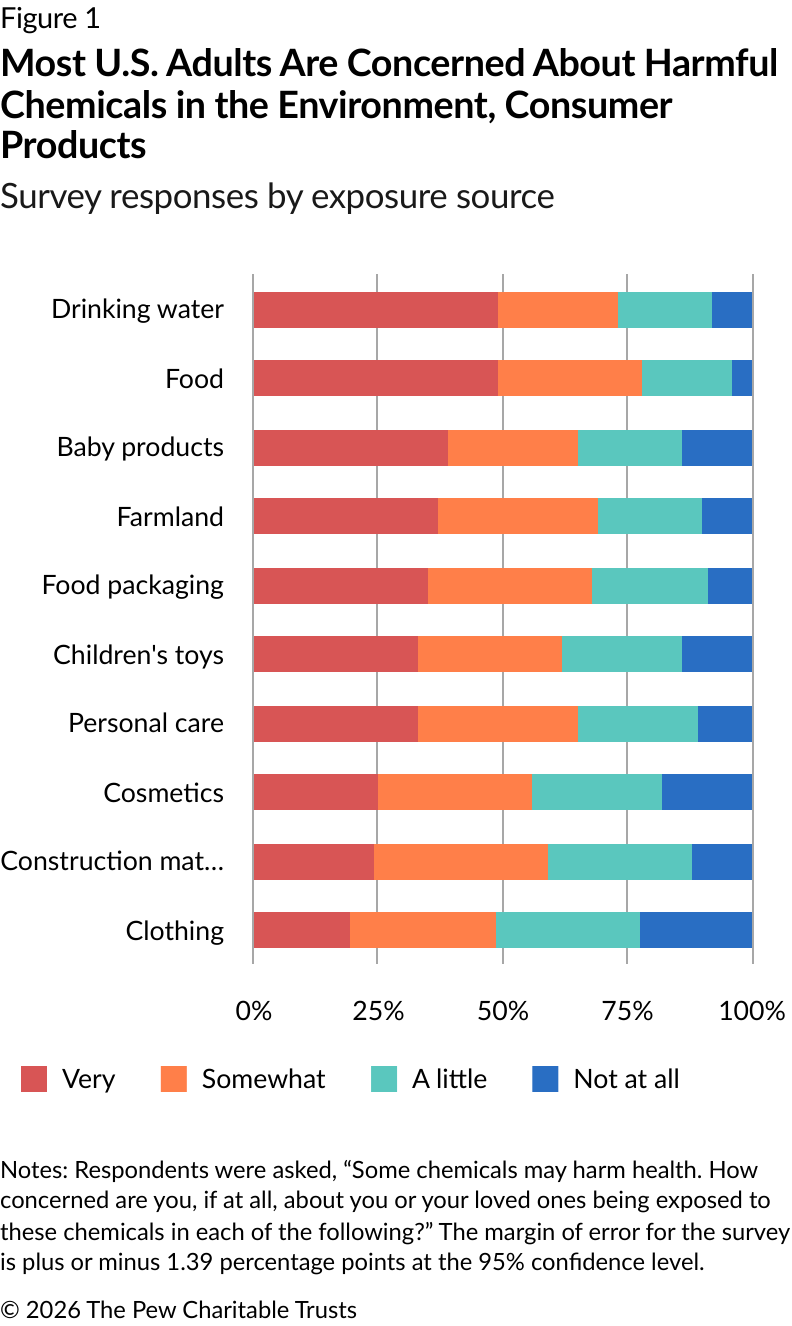
The survey of 5,357 U.S. adults was conducted Oct. 10-17, 2025, as part of Pew’s work to reduce Americans’ exposure to harmful endocrine-disrupting chemicals (EDCs).
The endocrine system is extremely sensitive, producing hormones to manage human development and critical bodily functions such as reproduction, childhood development, puberty, metabolism, and immunity. By mimicking, blocking, or otherwise interfering with hormones, EDCs disrupt these delicate processes, increasing the risk of a range of health effects including infertility and reduced sperm quality, preterm birth, impaired brain development, early puberty, obesity, diabetes, cardiovascular disease, and cancer. And because EDCs are ubiquitous—found in food, drinking water, farmland, consumer products, and construction materials, among many other things—virtually everyone in the U.S. has detectable levels of these chemicals in their bodies.
Common EDCs include bisphenols, such as BPA (bisphenol A), and phthalates, both of which can be present in plastics, food packaging, and personal care products; “forever chemicals” known as per- and polyfluoroalkyl substances (PFAS), which are often used to make surfaces resistant to heat, oil, water, and stains; and certain flame retardants.
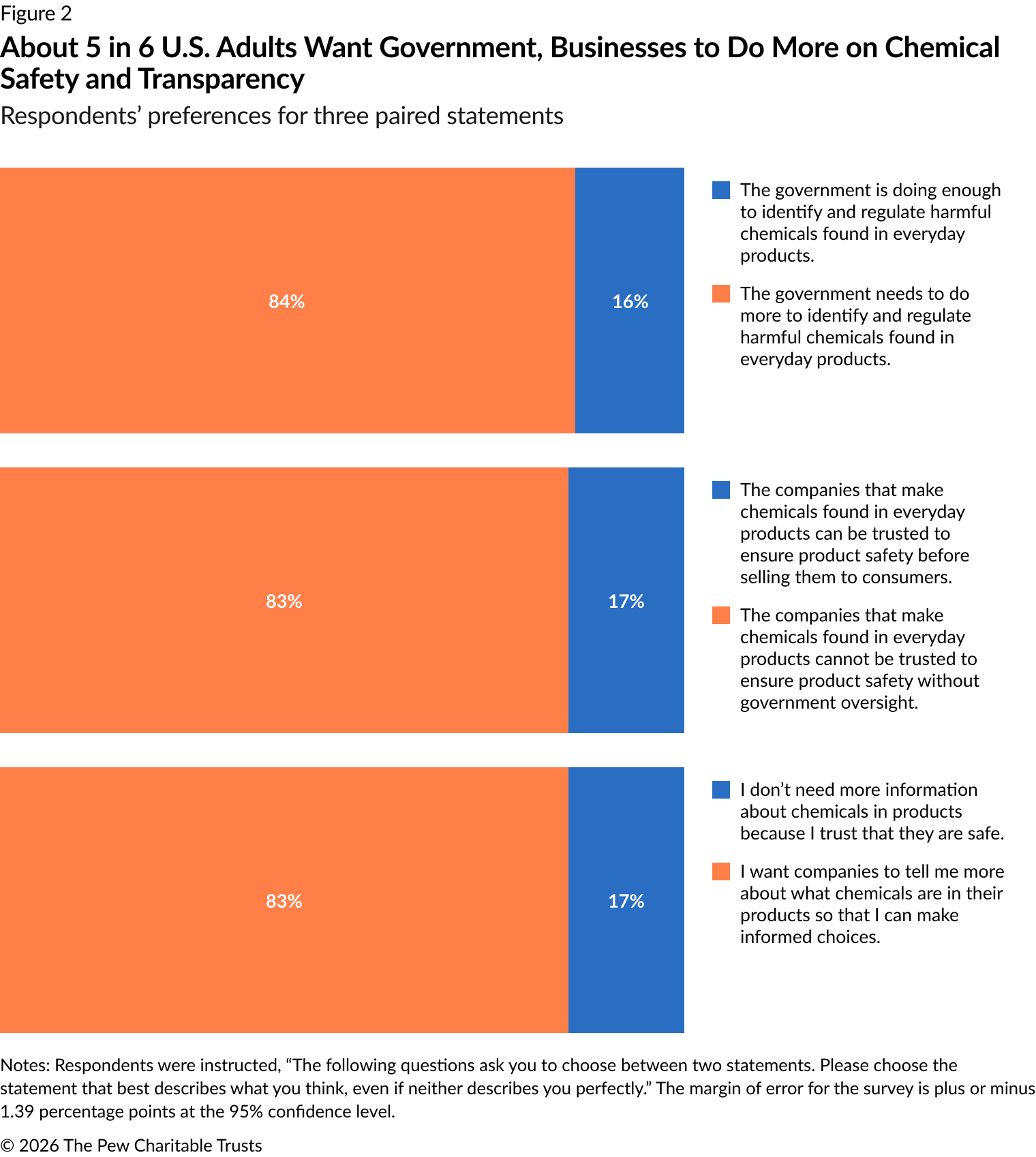
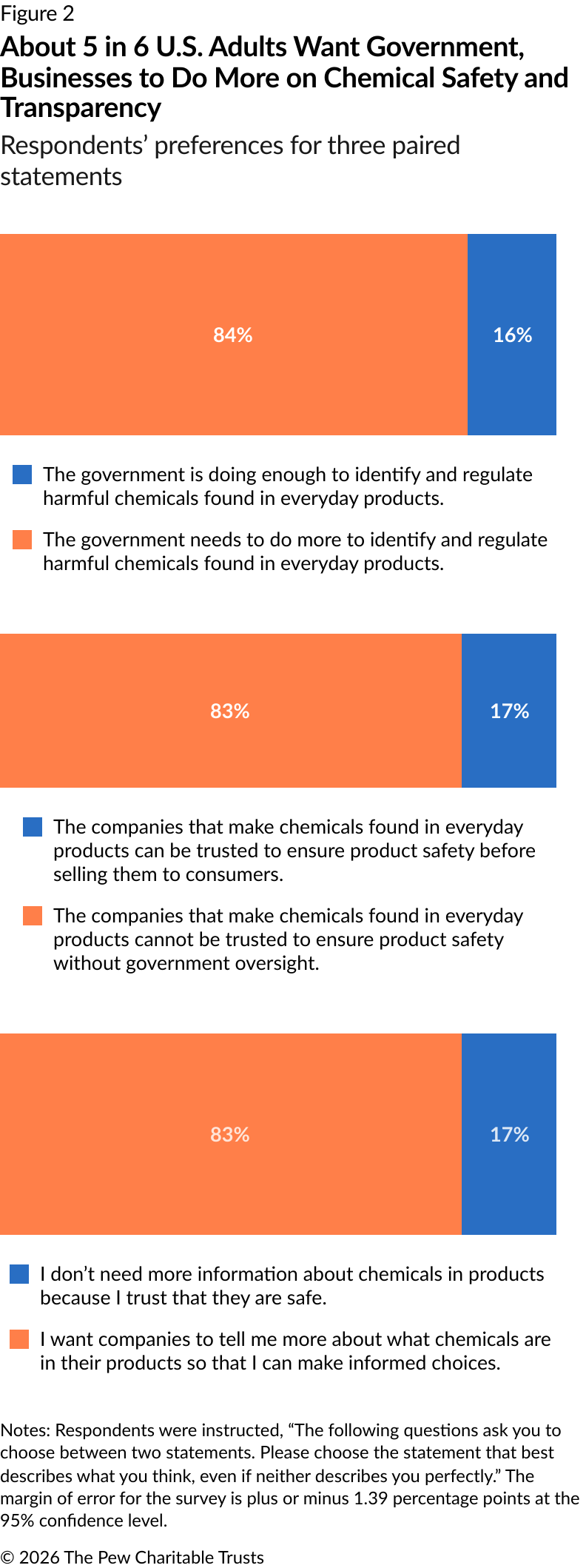
Unfortunately, even when safer alternatives are available, harmful EDCs continue to be used with limited government oversight and transparency about what products they are in. When asked if they were satisfied with the efforts of government and companies to ensure chemical safety, U.S. adults overwhelmingly said that they want more oversight, transparency, and accountability (see Figure 2):
- 84% said that the government “needs to do more to identify and regulate harmful chemicals found in everyday products.”
- 83% said that “companies that make chemicals found in everyday products cannot be trusted to ensure product safety without government oversight.”
- 83% want companies to tell them more about the chemicals in their products.
- 77% said polluters should be primarily responsible for paying to clean up contamination from harmful chemicals; 23% said the government should bear the main responsibility.
Results were high across self-identified demographic categories. For example, respondents who agreed that “government needs to do more” on chemical safety included:
- 79% of Republicans, 77% of conservatives, 85% of moderates, 89% of liberals, 88% of Democrats, and 90% of those who declined to identify politically.
- 86% of people between the ages of 18 and 49, 83% between the ages of 50 and 64, and 81% age 65 and up.
- 83% of people in the West, 84% in the South, 86% in the Northeast, and 84% in the Midwest.
Although significant policy efforts are needed, policymakers and business leaders have taken some actions on chemical safety and transparency. For instance, state lawmakers have introduced a number of EDC-related bills—led by Democrats and Republicans alike. Important steps have also been taken at the federal level. For example, in 2024, the Environmental Protection Agency issued national, enforceable drinking water standards for six PFAS; however, last year the agency announced its intention to revise the standards and delay implementation for all but two of those chemicals. Additionally, major manufacturers, retailers, and consumer brands have removed BPA and phthalates from some products and have made voluntary commitments to phase out PFAS.
Yet many EDCs continue to be manufactured and used. Pew plans to work with federal and state lawmakers, regulators, businesses, community leaders, scientists, and other stakeholders to take further action to reduce the public’s exposure to these hazardous substances.
Jennifer McPartland directs The Pew Charitable Trusts’ safer chemicals project.

People


