Plastic Pollution Is a Major Problem in the U.S., but Solutions Exist
New analysis, focused on packaging and microplastics, models effects of policies
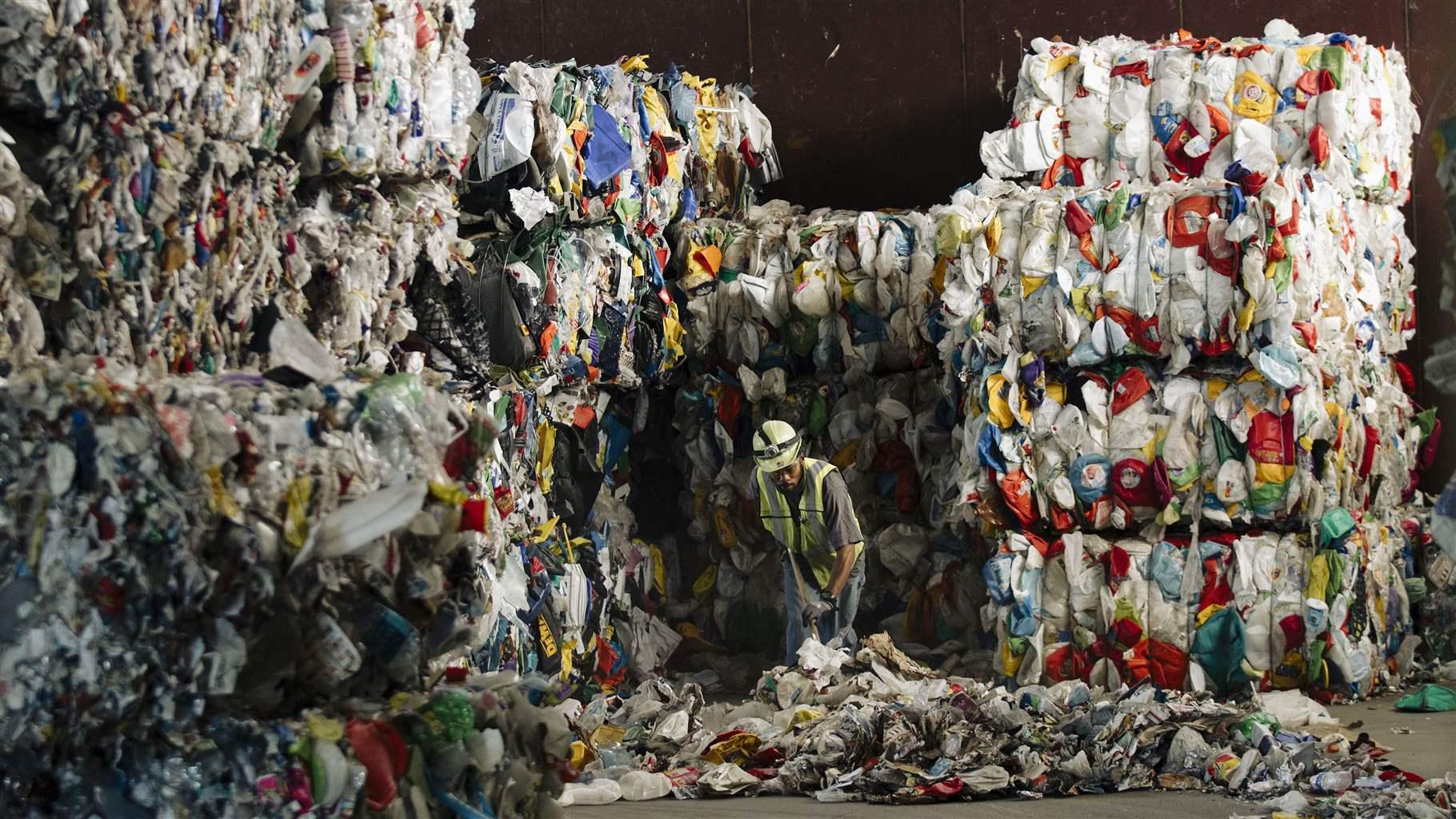
It’s no longer an exaggeration to say that plastic is everywhere, ranging from what we can see—single-use plastic bottles, food wrappers, toys, and more—to what we can’t, including microplastics shed by vehicle tires and clothing. The consequences of this ubiquity are also becoming increasingly obvious: namely, the amount of plastic waste that must be disposed of; the inherent cost of managing all this waste; pollution; and associated greenhouse gas emissions.
The United States is one of the leading generators of plastic waste in the world, and, by 2060, plastic use in the U.S. is projected to be more than double that of 2019, pushing waste generation to ever higher levels unless action is taken. But policymakers, manufacturers, recycling companies, and waste managers have the tools to greatly reduce plastic production, consumption, and pollution.
A new report produced by The Pew Charitable Trusts, with support from consulting firm ICF, looks at potential policy options in the U.S. that could help drive this change. The scenarios, conducted with advisory support from seven academic and nonprofit partners, were informed by current policies that could be adopted more widely.
This research focuses on three of the leading causes of plastic pollution in the U.S.: plastic packaging from municipal solid waste (MSW)—that is, waste from households and businesses—and microplastics from textiles and tires.
The study provides a data-driven understanding of the regional and national scale of plastic waste generation and management in 2025 and projected trajectories based on various policy scenarios that would:
- Phase out some materials and optimize product design.
- Scale up reuse of certain packaging.
- Improve collection and sorting for recycling.
- Implement deposit return schemes (or bottle bills).
- Implement all scenarios together.
Here’s what the analysis found.
Managing plastic MSW could cost taxpayers nearly $37 billion annually by 2040
By 2040, the U.S. will generate an additional 1 billion tons of plastic MSW, leading to over 30 million tons of pollution in waterways and landscapes. This surge in waste will drive up the cost of collection, sorting, and disposal, resulting in a projected 30% increase in overall waste management expenses. Without intervention, taxpayers could face nearly $37 billion annually in plastic MSW management costs by 2040. Packaging already accounts for 54% of all plastic in MSW, and this volume is expected to grow by more than 30% by 2040. Flexible packaging, such as snack wrappers, makes up 50% of packaging waste and over a quarter of all plastic MSW, making it a major contributor to the rising costs.
Reuse policies would reduce packaging waste and pollution
Reuse systems help to reduce demand for plastic. Although reuse is not yet widely employed, several states—Maine, Maryland, Minnesota, Oregon, and Washington—have recently passed extended producer responsibility legislation that requires, for example, restaurants to use reusable service ware, or for certain products to be sold in refillable or reusable packaging.
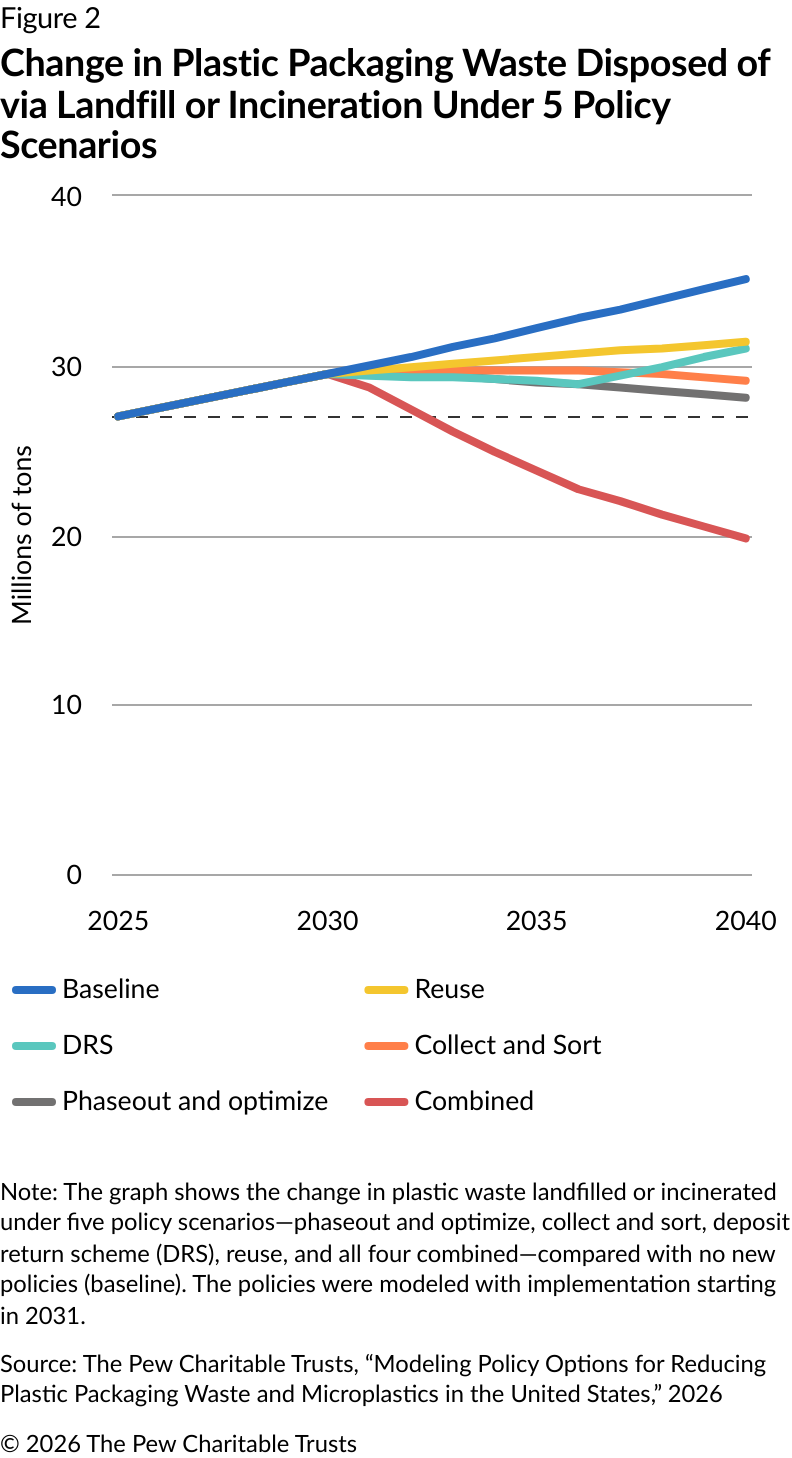
The analysis shows that shifting 13% of single-use plastic packaging to reusable plastic, metal, or glass packaging would reduce plastic packaging waste by 11% and pollution by 12% while reducing the annual cost to taxpayers by over $1 billion. Although jobs in the waste management sector would decrease by 4% under a reuse scenario because less waste would be managed, this decline is offset by the creation of jobs that are safer than waste management and recycling jobs. The analysis also shows that this reuse policy would decrease greenhouse gas emissions by 3%.
Recycling is just one part of the solution
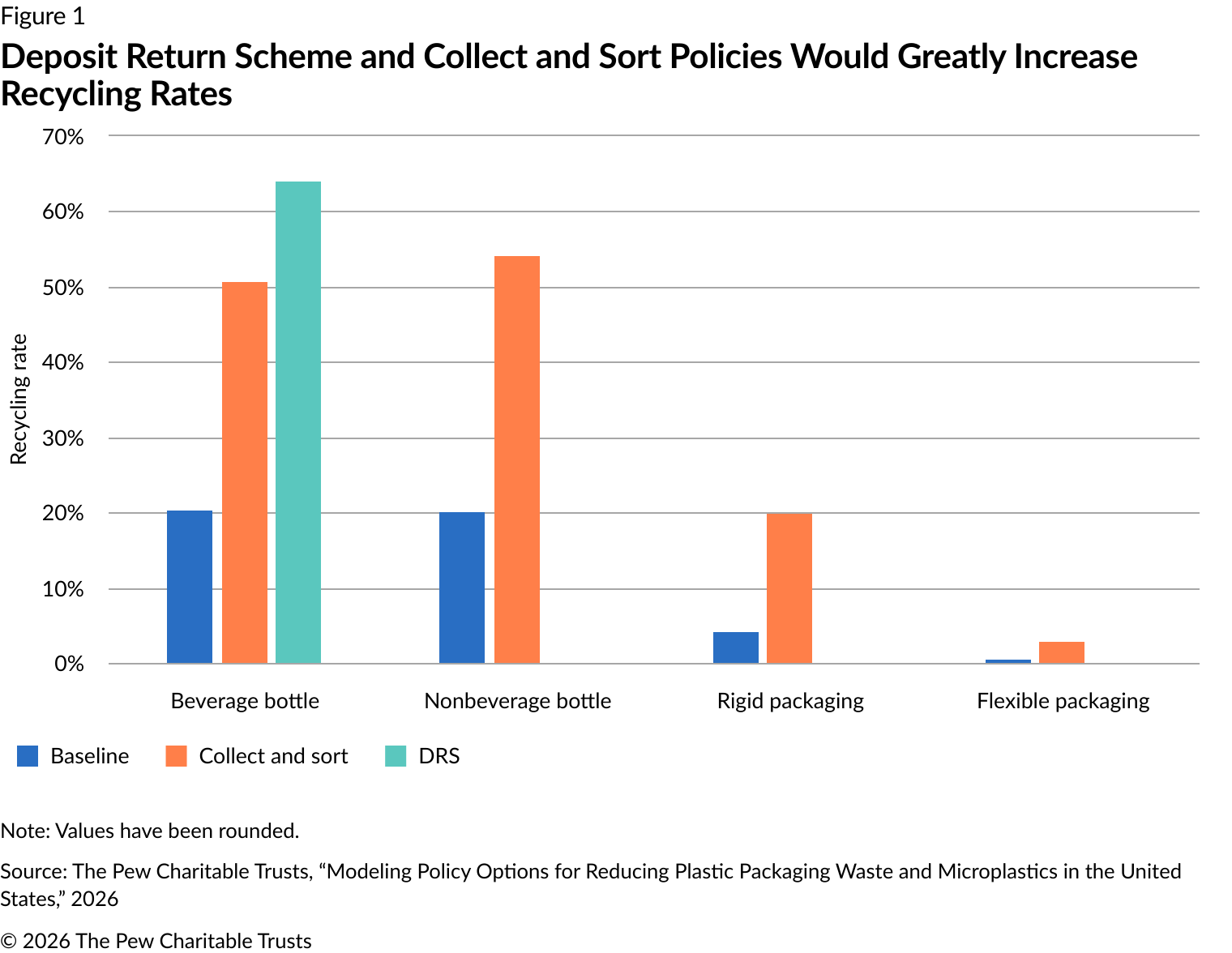
According to our modeling, deposit return schemes (DRS)—programs that refund bottle deposits paid upon purchase—would reduce annual beverage bottle pollution by 41% and increase the national recycling rate from 6.3% to 15% by 2040. It also finds that by 2040, a national DRS could decrease landfill and incineration costs by nearly $700 million annually, generate 11,000 jobs in the recycling sector, and increase greenhouse gas emissions by 5.6%.
Quadrupling collection and increasing sorting efficiency would result in a slightly greater overall recycling rate than the DRS scenario and capture more types of plastic packaging. Improving collection and sorting would require a $21 billion investment from 2025 to 2040 and create more than 17,000 jobs in the recycling sector. Although improving collection and recycling would drive a nearly 7% increase in net greenhouse gas emissions, this increase would be offset by the use of recycled material, which produces much lower greenhouse gas emissions than does primary plastic. Recycling, as a waste management practice downstream of the consumer that diverts resources from landfills or incineration, does not address overall waste generation. As a result, pollution would remain the same as at the baseline.
Combining pre- and post-consumer policies could significantly reduce waste and pollution
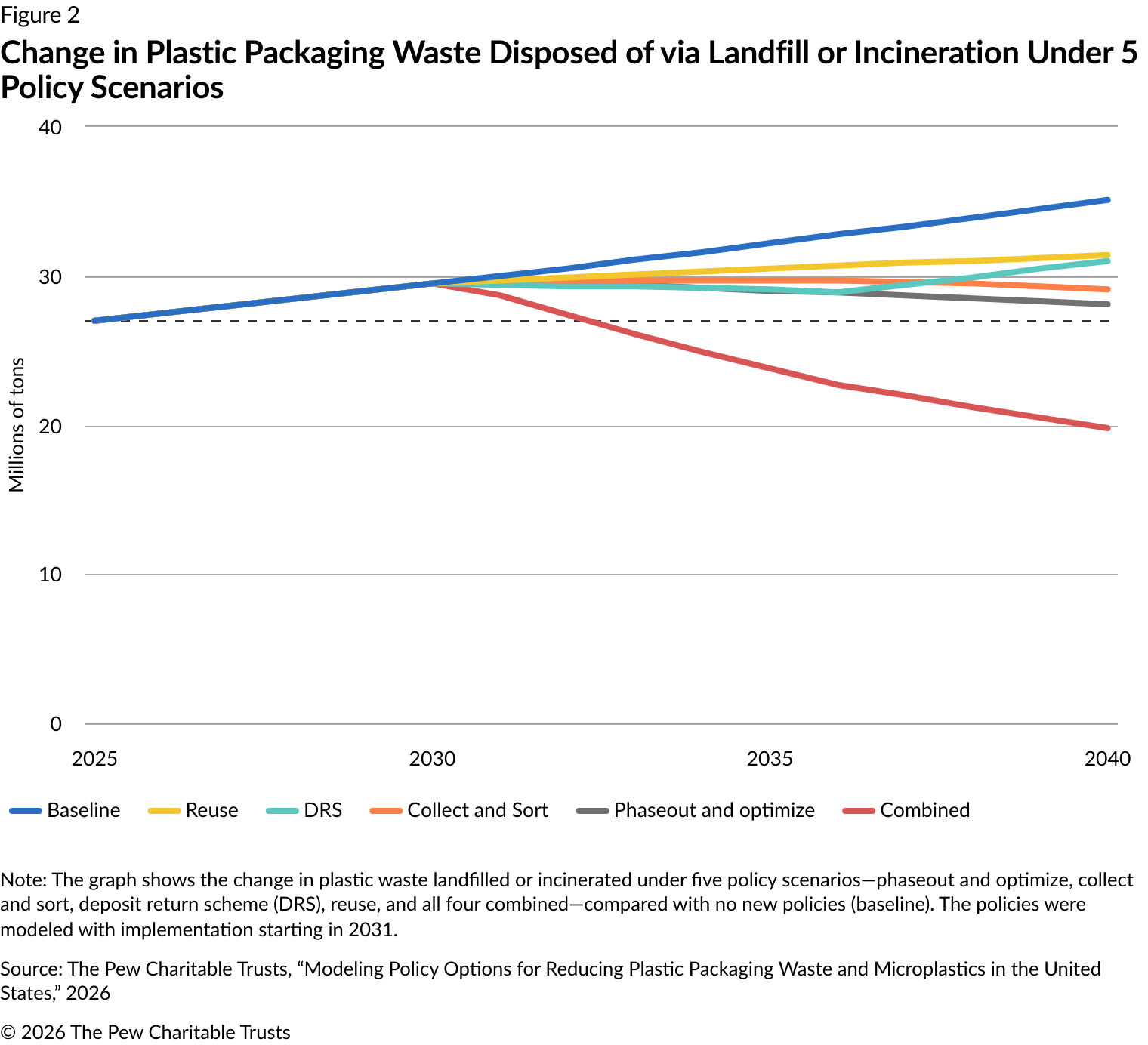
Combining “upstream” policies—those for the pre-consumer parts of the supply chain—would be far better than implementing each policy alone, the research found. For example, one policy to increase reuse would reduce waste by 11%, while another, to phase out certain materials and optimize product design, would lower waste by 20%. When combined, those two policies achieve a 29% waste reduction. At first glance, this doesn’t look markedly different, but the effects of the policies aren’t simply additive. Because these policies address the same types of plastic waste, their combined impact reflects a more efficient, streamlined system rather than a sum of separate effects.
The report found similar gains for post-consumer policies, all of which would reduce waste disposal costs and boost investments to recycling.
Microplastics from tires and textiles rival packaging waste, but solutions lag
|
Microplastics, which are particles smaller than 5 millimeters, are ubiquitous. Two major sources are tires and textiles, though microplastics also come from paint, pellets, agricultural, and personal care products, and even recycling. The majority of microplastics generated from textiles and tires end up as pollution and, remarkably, by 2040 will account for as much pollution as plastic packaging MSW does. A combined policy that limits microplastic loss rates through product design and improved waste management would decrease this microplastic pollution from textiles and tires by only 15%. |
For textiles, the analysis evaluates the impact of reducing microfiber shed rates, installing washing machine filters, banning biosolids application on agricultural land, and all three policies combined. For tires, the analysis evaluates a reduction in miles driven, a reduction in tire abrasion rates, banning biosolids application on agricultural land, and all three policies combined. |

Our analysis shows that there are significant opportunities to reduce plastic waste and pollution and the associated waste management costs. However, the policies we modeled would not eliminate plastic waste or end pollution, and the costs of waste management would remain significant.
Based on these findings, Pew and other signatories to a joint statement recommend the following for reducing the burden of plastic waste in the United States:
- Combine and implement pre- and post-consumer policies, such as comprehensive extended producer responsibility. Pairing pre- and post-consumer policies can significantly reduce the economic and environmental impact of plastic across the value chain.
- Set ambitious and data-driven targets. Setting data-driven, achievable, and ambitious targets can help to reduce waste generation and inform future policymaking and investment needs.
- Invest in and scale up effective reuse systems. Reuse could significantly reduce waste generation and management costs while also reducing greenhouse gas emissions.
- Address the extensive pollution associated with microplastics. Given the growing concern about the impact of microplastics on human health and the environment, it will be important for policymakers and businesses to develop strategies to reduce their generation and improve their capture.
- Develop common reporting metrics across the plastics value chain to support policy and regional collaboration. Closing data gaps and aligning metrics and definitions will increase data transparency and support collaboration around source reduction, pollution prevention, and waste management.
Learn more about the study by reading our white paper, “Modeling Policy Options for Reducing Plastic Packaging Waste and Microplastics in the United States,” and read more about the recommendations here.
Andrea Schnitzer works on The Pew Charitable Trusts’ preventing plastic pollution project.
People


