Jumbo Flying Squid Need Conservation Action
South Pacific Regional Fisheries Management Organisation members should begin science-based management for this popular food species

Jumbo flying squid, commonly referred to as Humboldt squid, is a culinary favorite, but insufficient management of its stock in the South Pacific could leave chefs and diners in the United States, Europe and other major markets without the flavors they crave. The South Pacific Regional Fisheries Management Organisation (SPRFMO) – the multinational entity responsible for setting rules for fishing of jumbo flying squid in the vast high seas of the South Pacific – has done little to sustainably manage the fishery.

As the popularity of jumbo flying squid increases, the SPRFMO’s inaction threatens not only the squid population’s health and market supply, but also the coastal economies that depend on the species for livelihoods. When SPRFMO member countries, including the United States and the European Union, gather for their 2026 annual meeting – to be held in Panama City, Panama, from 2 to 6 March – they should begin the much-needed process of strengthening squid management measures in this key region.

Squid catch down from recent all-time high
The jumbo flying squid catch in the SPRFMO management area is part of the largest squid fishery in the world.
In 2022, fleets landed around one million metric tons of squid within SPRFMO’s boundaries and in the adjacent national waters of Chile, Ecuador and Peru – 10 times the catch in 2000 and more than the catch of jack mackerel, the species that has been SPRFMO’s major focus since its founding.
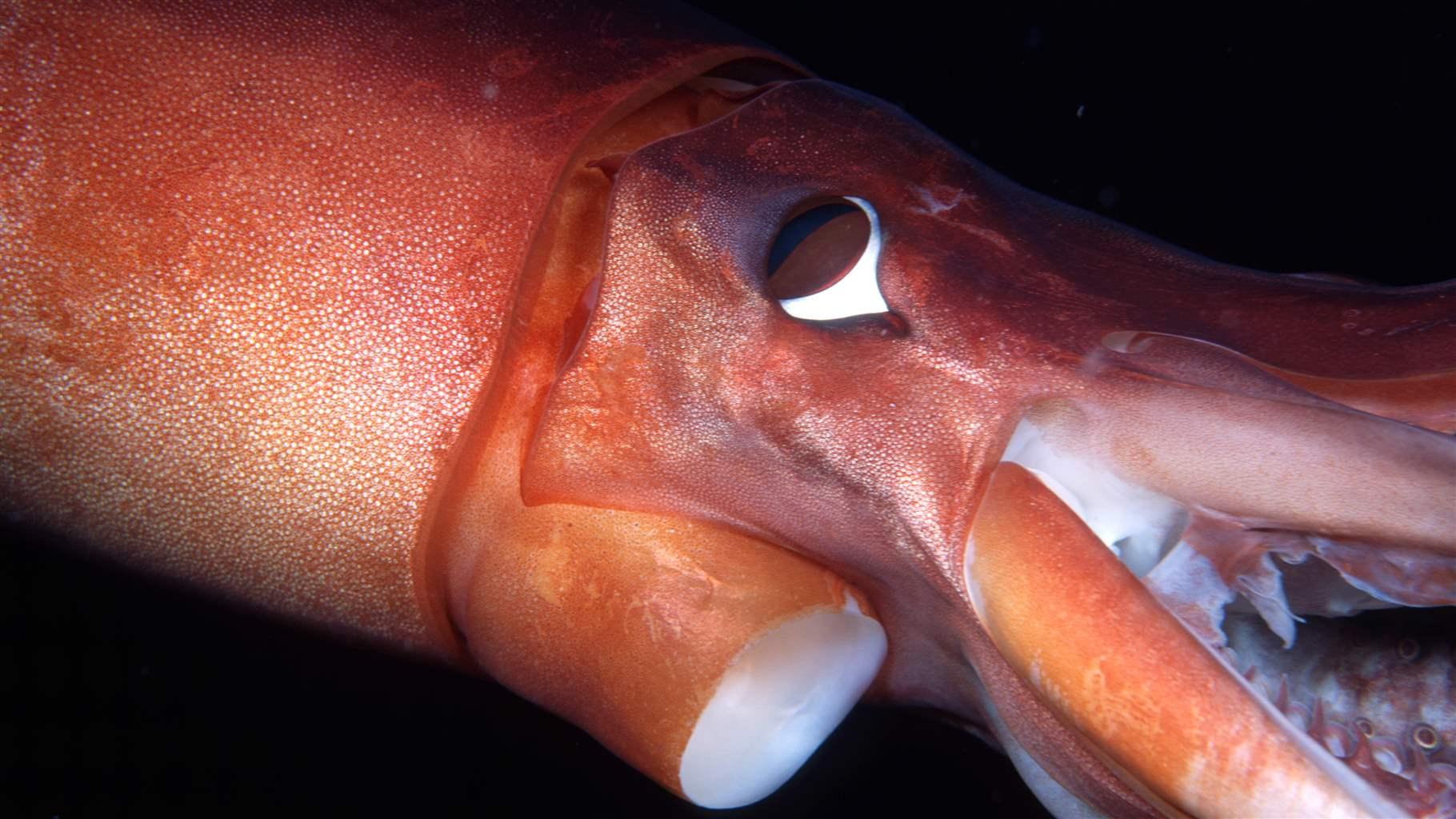
However, just two years later, squid catch within SPRFMO’s boundaries fell by half to the second-lowest amount in 10 years, despite more vessels targeting the species in the international waters. Changes in the population’s size and its movement into other areas of the ocean are the presumed causes of this precipitous decline: Jumbo flying squid have short lifespans and are sensitive to changes in environmental conditions, and ocean water temperature and oxygen concentrations are thought to influence their body size, reproduction and geographic distribution.
The recent decline is noticeable among fishers in Chile and Peru who have raised concerns about the status of the stock and the lack of international monitoring and control. But it also has attracted the attention of those tasked with reviewing SPRFMO’s work. A 2024 independent review of the SPRFMO’s oversight of jumbo flying squid noted that the species is “insufficiently managed,” as existing rules are poorly enforced and lack the fundamental basics of good management.
3 actions can strengthen South Pacific squid management
At the upcoming annual meeting, SPRFMO managers will consider nine proposals for preliminary steps to bring sustainability to the jumbo flying squid fishery. In particular, the SPRFMO should adopt proposals that:
- Agree to develop a management procedure.
Across the ocean, regional fisheries management organizations (RFMO) are moving away from annual quota negotiations and towards the use of management procedures (MP), which eliminate contentious, often-politicized negotiations of catch limits. Under an MP, SPRFMO members would agree in advance on benchmarks, such as changes in distribution of the species over time, that will govern future adjustments to the total allowable catch. SPRFMO scientists already have a workplan to develop a first squid stock assessment, which would form the basis for an MP. Now, managers need to take the next step of providing SPRFMO scientists with clear direction and formally request MP development.
- Adopt electronic monitoring (EM) standards to enhance science and strengthen compliance.
EM is an efficient, cost-effective way to increase independent monitoring of a fishery using onboard cameras and computers to collect information on fishing and vessel activities. Starting in 2029, the SPRFMO will require members to meet an enhanced level of observer coverage on the squid fleet, and EM can help achieve this. But first, managers should follow in the steps of other Pacific RFMOs, including the Inter-American Tropical Tuna Commission and the Western and Central Pacific Fisheries Commission, and adopt EM standards to ensure that each monitoring program collects the same types of information and that the data is consistent and useful. SPRFMO should also agree to require periodic reviews of members’ EM programs to make sure they meet the agreed standards and provide accurate, timely and representative information about their fleets’ squid fishing activities.
- Strengthen port State measures to keep illegal, unreported and unregulated (IUU)-caught squid from reaching the marketplace.
Even when countries do their best to implement science-based, precautionary rules to prevent and deter IUU catch from reaching the dock, illicit operators can still slip through the cracks. Effective port State measures, such as thorough risk assessments to inform port inspections and stronger reporting requirements and information exchange can enable countries to better detect IUU catch, observe the movements of IUU vessels and keep them away from their ports. Because port State measures generally apply to foreign vessels, States also need to equitably and effectively implement landing measures on their domestic vessels as required by the United Nations Food and Agriculture Organization’s Agreement on Port State Measures. This is particularly important given the high proportion of squid fishing vessels landing at domestic ports.
This year provides new opportunities for the SPRFMO to take key conservation and management actions that can help maintain a healthy, sustainable jumbo flying squid fishery in the face of growing demand.
Dave Gershman works on international fisheries for The Pew Charitable Trusts.
People


