Courts in Focus
Exploring the ripple effects of court involvement on communities

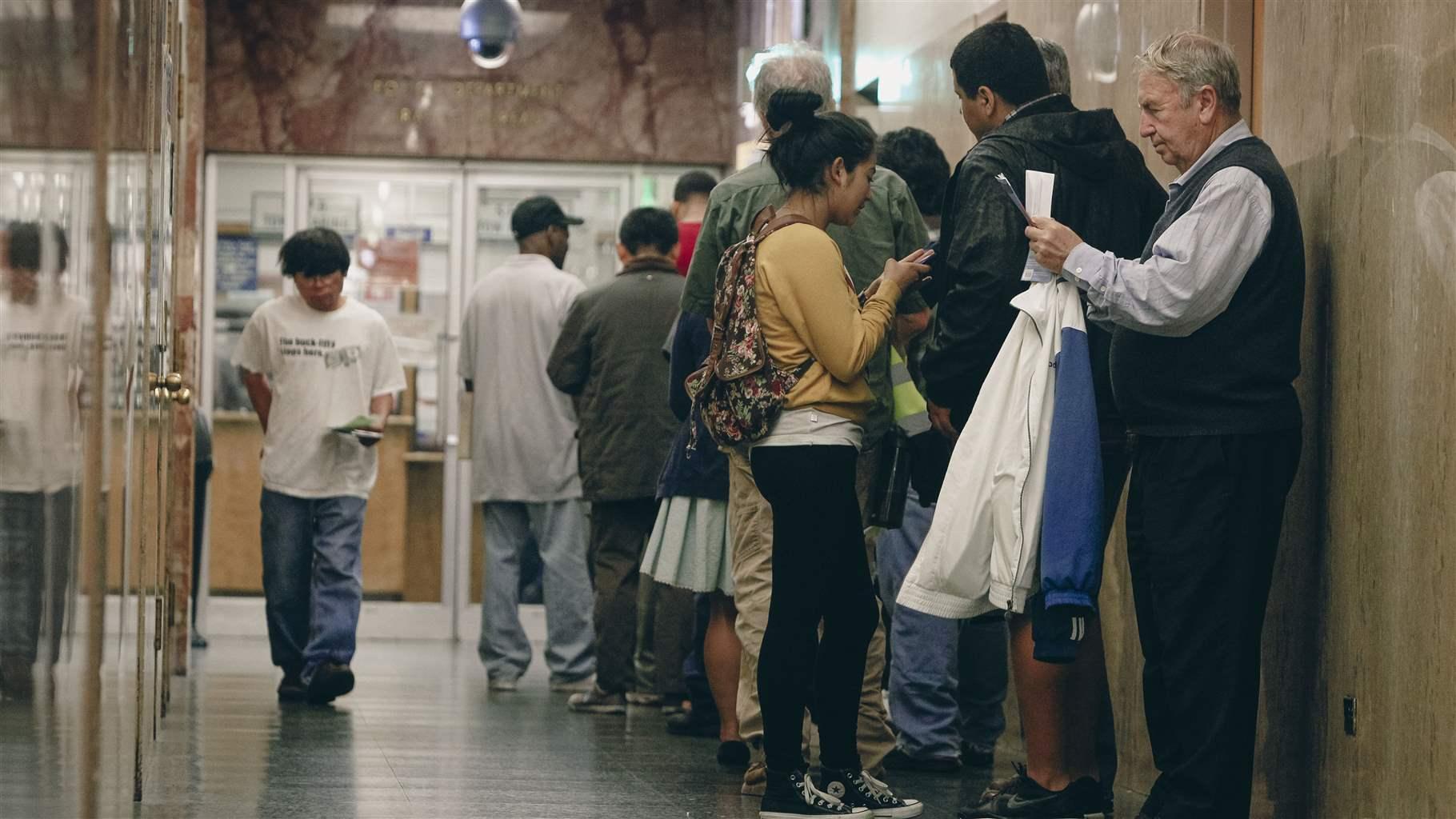
Nearly half of U.S. adults whose households had a civil or criminal court case reported that going to court worsened their financial security regardless of the outcome, according to a Pew survey. Win or lose, research has shown that the effects of court involvement extend beyond the immediate ruling and can undermine a person’s short- and long-term financial stability, family integrity, housing, and health. These consequences cut across geography and socioeconomic circumstances.
Pew researchers conducted extensive reviews of studies across a variety of populations on the adverse consequences of having a court case and uncovered several downstream effects. For example:
- Children are at higher risk of maltreatment and foster care placement when their household faces an eviction case.
- Individuals with court debt who live in rural communities experience poorer overall health, in part because of chronic stress over the ability to pay their court debt, than those who live in urban areas.
These findings underscore how courts can have a lasting effect on individuals and communities and also raise important questions. Are there better approaches? Can future court involvement be prevented? Are there alternative ways to help families maintain stable housing and lessen the risk of family disruption?
To help court leaders and policymakers better understand these outcomes and their long-term effects, The Pew Charitable Trusts’ courts and communities project is publishing a series of analyses that highlight how court involvement affects specific groups of people, including:
- Rural communities.
- Children and families.
- Middle-class neighborhoods.
- Emerging adults (ages 18-25).
The series will explore how state and local leaders are working to understand and address challenges specific to these groups. In addition, the series will highlight how state and local leaders are responding to these challenges in an effort to change outcomes for their constituents.
Courts are an integral part of a community, and judicial leaders and policymakers are becoming more aware of the significant financial, health, housing, and family consequences that court involvement can have on individuals and households. By exploring these impacts and the ways in which courts can mitigate them, court leaders and policymakers can drive meaningful improvements in court outcomes.