States’ Rainy Day Fund Capacity—and With it, Their Fiscal Flexibility—Continues to Decline

For the second year in a row, states’ rainy day fund capacity—the number of days that reserve balances could cover state operations—fell from its all-time high, reached in fiscal year 2024. At the end of fiscal 2026, the median state could run on its rainy day fund balances alone for 47.9 days, down from 49.1 days in fiscal 2025 and 54.5 in fiscal 2024, according to states’ own estimates reported to the National Association of State Budget Officers (NASBO). The back-to-back declines mark a notable shift after years of growth and are the first consecutive years of contraction not tied to a recession since at least fiscal 2000. Although most states still have near-record reserve balances, growing budget pressures could place greater demands on their already shrinking capacity.
Beneath that overall trend in rainy day fund capacity lies considerable state-by-state variation, driven by differences in state balances and spending levels. Capacity rose in 15 states in fiscal 2026, 12 of which reported higher balances. This marks a decrease from the previous year when 24 states increased their reserve capacity. Of the remaining 35 states, 14 drew on their reserves, 15 had balance growth that was outpaced by rising expenditures, five maintained flat reserves as expenditures grew, and one recorded no change in capacity.
And as their rainy day fund capacity falls, states are also drawing down their leftover budget dollars, known as ending balances, at a rapid rate. As a result, states’ total balances—reserves plus ending balances—and the fiscal cushion they provide are quickly eroding, leaving states with fewer resources to address pervasive budget pressures.
By the end of fiscal 2026, rainy day fund balances had reached all-time highs in 26 states. However, just six states reached a record in the number of days that they could operate using only their rainy day funds as annual spending increased over the previous fiscal year in 39 states. Days’ worth of spending available in rainy day funds can fluctuate because of changes in state balances, spending levels, or both.
From fiscal 2021 to 2023, abundant federal pandemic aid and above-trend tax collections helped bolster states’ financial cushions and led to successive record highs in rainy day fund capacity, but those factors have since dissipated. Although rainy day fund levels are still high compared with before the pandemic, policymakers are navigating sluggish tax collections, growing spending pressures, and decreased aid from the federal government.
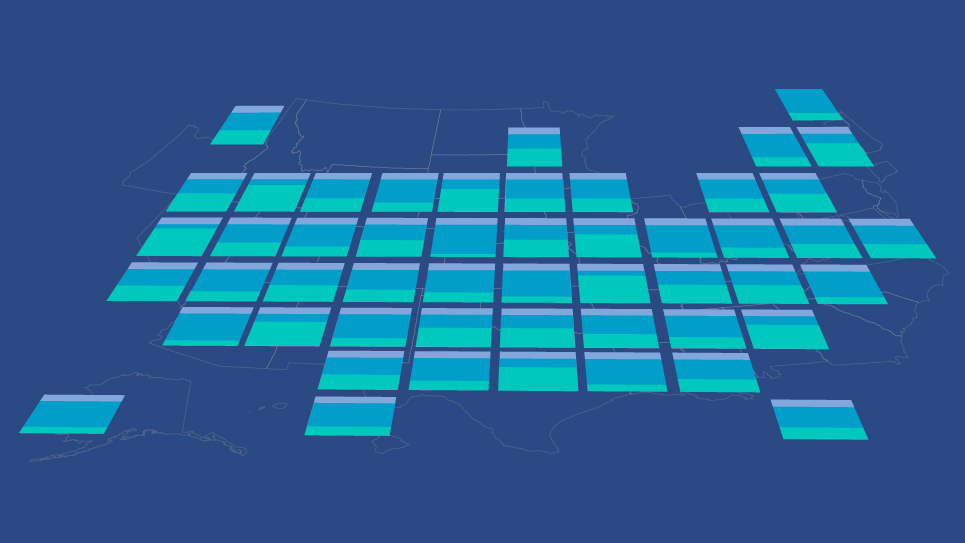
Moving forward, budget reserves will play a critical role in stabilizing state finances as policymakers confront the most widespread fiscal pressures since the onset of the pandemic in 2020. But state leaders should be cautious about relying on rainy day funds to close deficits, because many states’ reported budget gaps stem from structural imbalances—when recurring revenue is insufficient to support recurring expenditures—rather than from short-term shocks. Although reserves exist to provide relief during times of fiscal stress, they are not a sustainable solution for persistent budget shortfalls.
Additionally, demands on reserve balances are growing. New federal Medicaid and Supplemental Nutrition Assistance Program (SNAP) policies are expected to increase states’ administrative costs and the share of program expenses that states must cover, and to constrain key revenue sources over the coming years. States are also awaiting action on proposed Federal Emergency Management Agency (FEMA) changes that could shift more disaster costs to states, creating further demand on reserves.
Reserves cannot permanently offset these new and growing costs or replace federal support, but they can sometimes serve as a temporary bridge, giving policymakers time to assess their options and adjust long-term plans. How much flexibility states have to use reserves, however, can also depend on their own fiscal rules. Some states restrict when lawmakers may make withdrawals or how much the state can hold in savings. For example, Maine hit its statutory cap in fiscal 2025 and then again in fiscal 2026.
To navigate competing demands and ensure that their savings levels and governing statutes are appropriate for the current budgeting environment, states should use fiscal management tools, such as long-term budget assessments and stress tests, and they should regularly update these analyses to adapt to the rapidly evolving fiscal landscape.
Rainy day funds
States held an estimated aggregate of $182.7 billion in rainy day fund savings at the end of fiscal 2026. The median state could run government operations on its rainy day fund alone for 47.9 days, equal to 13.1% of annual spending. Although the strength of state rainy day funds remained much greater than it was in fiscal 2019 before the pandemic-induced recession started in February 2020, it also varied widely by state, ranging from 256.5 days in Wyoming to zero in New Jersey.
Rainy day fund capacity declined from fiscal 2025, even as slightly more than half of states grew their rainy day fund balances because many of the increases failed to keep pace with rising expenditures. The median balance increase was also the smallest since at least fiscal 2000. The aggregate balance nationwide also declined, in part because California, which holds the nation’s largest balance, withdrew nearly 20% of its rainy day fund. Despite the large withdrawal, however, California still had the 15th-strongest rainy day fund capacity in the country in fiscal 2026.
Rainy day fund state highlights
States’ results for fiscal 2026 show that:
- Wyoming recorded the nation’s largest rainy day reserve as a share of operating costs (256.5 days), a balance the state reached in an effort to manage its heavy reliance on volatile severance tax revenue. Three other states had more than 100 days’ worth of operating costs set aside: Alaska (188.7), North Dakota (109.5), and Arkansas (102).
- New Jersey reported zero days’ worth of operating costs in reserve for the second straight year after draining its savings in fiscal 2025 for the second time since the pandemic-induced recession. The other states with the smallest rainy day funds as a share of operating costs were Washington (10.2), Illinois (16.2), Delaware (18.5), and Rhode Island (19).
- Just 15 states increased the length of time that they could run government operations on rainy day funds alone compared with a year earlier. The largest gains were in Vermont (+21 days), South Carolina (+12.3), Indiana (+5.7), Utah (+5.4), and Montana (+4.8). These increases were less than half the size of the top capacity gains from the prior year. Of the 35 states where capacity declined or remained flat, the largest drops were in Texas (-33.8 days), Kentucky (-28.7), North Dakota (-28.4), Maine (-20.1), and Minnesota (-19.2).
- 27 states increased their rainy day fund balances compared with fiscal 2025. Nine states maintained steady balance levels, and 14 states reported declines: California, Colorado, Iowa, Kentucky, Maine, Maryland, Massachusetts, Michigan, Minnesota, Missouri, Nebraska, South Dakota, Virginia, and Washington.
- Among the 26 states that had record-high balances in fiscal 2026, capacity fell short of the national median of 47.9 days in 12: Arizona, Delaware, Florida, Illinois, Indiana, Louisiana, Mississippi, New York, Ohio, Tennessee, Utah, and Wisconsin.
Total balances
The capacity of states’ total balances also continued its downward trend in fiscal 2026. The median state has enough in reserves to sustain state government operations for 80 days—almost a month less than in fiscal 2025. This marked the first time median capacity of total balances was less than 100 days since fiscal 2021.
Compared with rainy day funds, which function as dedicated savings, ending balances fluctuate from year to year based on a range of factors and provide a less stable safeguard against future budget uncertainty.
During the pandemic-era revenue surge (fiscal years 2021 to 2023), state ending balances rose to unusually high levels. The median state accumulated 92.6 days’ worth of leftover cash at the peak in fiscal 2022, a 422% increase over the median of 17.7 days before the pandemic in fiscal 2019. However, the number of states reporting year-over-year declines has increased each year since, reaching 38 states in fiscal 2026 with a median change of -31.9%. Of those states, 17 spent down their ending balances by more than half.
The decline reflects the combination of efforts to spend down unusually large balances and mounting pressure on state budgets. In the years right after the revenue surge, states used excess ending balances for one-time purposes such as paying down debt, making supplemental pension payments, investing in economic development, and transferring money to other state funds. More recently, however, tepid tax revenue growth and growing spending demands have led states to increasingly draw on unallocated balances while also adopting other strategies, such as spending cuts and funds transfers, to help balance their budgets.
Total balance state highlights
States’ results for fiscal 2026 show that:
- The highest-ranked state for total balances as a share of operating costs was Wyoming (267.4 days). Fourteen other states had total balances that could cover more than 100 days’ worth of operating costs.
- The state with the fewest days was Washington, at 16.1, followed by Rhode Island (25.1), Illinois (30.2), New Hampshire (31.7), and Maryland (32.3).
- Just seven states increased their total fiscal cushions as a share of operating costs from a year earlier: Montana (+23.9 days), Virginia (+22.9), Indiana (+13.9), Louisiana (+12.6), New Mexico (+3.7), Mississippi (+0.3), and North Carolina (+0.3). The largest declines were in Texas (-203.5 days), North Dakota (-116.8), Georgia (-62.1), Missouri (-51.2), and Nevada (-51.1).
Looking ahead
Governors’ recommended budgets for fiscal 2027 suggest that median rainy day fund capacity will decline further—to 45.5 days—and that ending balances are likely to fall for the fifth year in a row, with a median drop of roughly 30% versus fiscal 2026, in line with the previous year’s decline. Overall, the budget proposals suggest a continuation of fiscal 2026 conditions.
How rainy day fund capacity will fare through fiscal 2027 and beyond remains uncertain. Federal funding cuts and other budget stressors may lead states to either rely more on their rainy day funds than in recent years or to forgo planned deposits to those funds in the absence of surplus revenue. A rapidly shifting budget environment may also lead to changes in capacity that aren’t apparent until well after the budget year closes. For example, Wyoming reported 320.2 days of capacity in its fiscal 2025 preliminary actual numbers, but when it finalized its accounting for the year, that capacity shrank to 264.7 days. The decrease was the result of higher-than-expected expenditures and of the state drawing on its rainy day fund to pay for water development projects.
Why Pew assesses reserves and balances
States use reserves and balances to manage budgetary uncertainty, including revenue forecasting errors, budget gaps during economic downturns, and other unforeseen emergencies, such as natural disasters. This financial cushion can soften the need for spending cuts or tax increases when states need to balance their budgets in response to temporary shocks, though these actions can be necessary to address longer-term structural imbalances.
Because reserves and balances are vital to managing unexpected changes and maintaining fiscal stability, their levels are tracked closely by bond rating agencies. For example, Fitch Ratings increased Oklahoma’s credit rating in 2026, highlighting that the state’s “dedicated operating reserves stabilized materially above the pre-pandemic trend.” And notably, rating agencies do not penalize states for responsible withdrawals from their reserves, which analysts have suggested demonstrates a commitment to long-term fiscal sustainability when coupled with other prudent fiscal measures such as spending reductions, revenue adjustments, and a plan to replenish savings when conditions improve.
There is no one-size-fits-all rule on when, how, and how much to save. Policymakers in states with a history of significant economic or revenue volatility may desire larger cushions. Pew’s research shows the optimal savings target of state rainy day funds depends on several factors: the defined purpose of funds, the volatility of a state’s tax revenue, the potential increase in spending demands during economic downturns, and the level of coverage that the state seeks to provide for its budget.
In addition to deposits initiated by policymakers over time, specific deposit rules that direct a portion of above-normal revenue growth or one-time windfalls into savings play an important role in shoring up rainy day funds in some states. For example, Virginia sets aside at least half of tax revenue growth in excess of its six-year average growth rate, Maryland saves nonwithholding income tax revenue that exceeds statutorily established limits, and Louisiana deposits "excess mineral revenues," including severance tax collections and oil and gas production royalties, into the state’s budget stabilization fund.
Budget stress tests—which estimate the size of temporary budget shortfalls that could result from recessions or other adverse economic events—can also help states better understand and prepare for potential fiscal challenges, such as by refining their savings targets.
Reserves and balances represent funds available to states to fill budget gaps, although there may be varied levels of restriction on their use, such as under what fiscal or economic conditions they can be used. In addition, limits are often set on how much states may deposit into rainy day accounts in a given year when seeking to replenish their reserves.
Page Forrest is an associate manager and Justin Theal is a senior officer with The Pew Charitable Trusts’ Fiscal 50 project.


