New Federal Medicaid Policies Compound State Budget Pressures
State fiscal debates to watch in 2026

This is one in a series of five articles examining key debates that will unfold in the nation’s statehouses in the year ahead.
Medicaid—the health care provider for roughly 1 in 5 Americans and the largest single source of federal funding for state governments—is entering a period of major change that could reshape state budgets for years to come. State policymakers must now manage the budgetary and operational impacts of some of the most sweeping revisions in Medicaid’s 60-year history—changes enacted through H.R. 1, the federal budget reconciliation law passed last July—while also contending with substantial and growing underlying cost pressures.

After multiple years of widespread budget surpluses, states now face slowing revenue growth and rising health care costs amid broader economic and fiscal uncertainties. Medicaid, a joint federal-state program, provides comprehensive coverage for health and long-term care to about 70 million low-income people as of September 2025. In fiscal year 2023, the program’s share of state budgets rose at the fastest annual rate in at least two decades as pandemic-era federal aid expired but enrollment remained elevated. Today, Medicaid continues to command a growing share of state resources. Because states have limited control over the program’s growth, new mandates or funding restrictions can quickly ripple through their budgets.
“What this bill does is compound pressures that were already there,” California Medicaid Director Tyler Sadwith said of the reconciliation law. “Rural hospitals are struggling, legislatures are facing budget shortfalls, and the standard tools [used to rein in costs]—cutting eligibility, rates, or benefits—are limited.”
The choices that lawmakers make in early 2026—how to implement the required federal changes, fund new requirements, and preserve access to care—will shape both their states’ fiscal outlooks and the program’s direction for years to come.
‘Precarious and unsustainable’
Even before H.R. 1, Medicaid was straining state finances. A combination of rising health care costs and the “unwinding”—the phaseout of enhanced federal funding and pandemic-era protections that have led states to remove millions from their rolls—have left programs with fewer federal dollars. Still, despite those disenrollments, enrollment remains well above pre-pandemic numbers. Such forces have pushed spending to levels that Amir Bassiri, Medicaid director for the New York State Department of Health, called “precarious and unsustainable.”
Even though states disenrolled more than 25 million people between March 2023 and May 2024 after the federal continuous coverage requirement linked to the pandemic ended, total Medicaid and Children’s Health Insurance Program enrollment still reached 85.8 million—about 33% above pre-pandemic levels.
In addition, many factors contribute to Medicaid’s upward spending pressures, including rising prescription drug costs (notably GLP-1 medicines for diabetes and weight loss), higher hospital and clinic payments to help address workforce shortages, and a greater need for care as a result of the pandemic and an aging population. Together, these factors pushed total spending per enrollee to a 50-year high of $9,109 in fiscal 2023.
Meanwhile, state tax collections that had surged during the pandemic began to decline in fiscal 2023. They’ve remained below their long-term trend since then, leaving less revenue to offset rising health care costs.
More strain on the way
H.R. 1 makes key changes to Medicaid: who qualifies and how often, how states can finance their share of costs, and how much they can pay health care providers. “What we are seeing now is pretty historic in terms of the anticipated coverage losses and restrictions in federal support,” said Robin Rudowitz, who directs the Program on Medicaid and the Uninsured for KFF, a leading nonprofit analyst of health care policy.

Beginning no later than Dec. 31, 2026, most adults covered through the expansion of coverage included in the 2010 Affordable Care Act (ACA) must document 80 hours of work or qualifying activities each month, while all Medicaid enrollees will be subject to eligibility checks every six months, instead of annually. Not all states have expanded coverage.
At the same time, two of states’ key financing levers are being restricted. The law bans new or higher taxes on health care providers, which states often use to help pay for their share of Medicaid costs, and phases down rates on existing taxes in states that opted to expand the program. Starting in late 2027, expansion states that exceed the new federal limits must begin ratcheting down their tax rates—a cut of roughly half by 2031. In addition, state-directed payments—extra payments that states require Medicaid managed care plans to make to providers to help increase access and quality of care—will now be capped at lower rates, reducing how much federal matching funding states can claim. Payments above the new levels begin phasing down in 2028.
And federal oversight will expand starting in 2029: Any claim paid without verified eligibility will be treated as an “erroneous payment,” increasing audit and funds recoupment risk for states that fall behind on documentation.
“We are going to be held to a much higher standard,” said Dr. Emma Sandoe, Oregon’s Medicaid director. “That means potentially significant penalties to the state.”
The budget impacts
For most states, H.R. 1’s costs will arrive in two waves: near-term administrative costs for carrying out new eligibility and work rules, followed by a longer-term squeeze as financing limits are phased in.
Standing up new systems—which includes hiring staff to help reassess eligibility, expanding call centers, and modernizing IT systems—will require significant upfront spending that will often become ongoing costs once those new processes are running. States collectively will receive $200 million in short-term implementation grants and can tap enhanced federal matching funds for certain Medicaid IT system upgrades, but those won’t cover all the costs.
The Congressional Budget Office (CBO) estimates that about 18.5 million adults will fall under the new rules each year once the law is fully implemented, underscoring the scale of the administrative workload states must absorb. Yet only two states—Georgia, which now has a work requirement, and Arkansas, which previously had one—have experience building or maintaining such systems, adding another layer of complexity to states’ fiscal planning.
The financing limits mean that many expansion states could lose up to half of their provider-fee revenue between 2027 and 2032, forcing tough choices about how to address the resulting decline. Meanwhile, lower caps on state-directed payments will require many states to scale down reimbursement rates to remain within federal limits, forcing some to replace lost federal matching funds with state dollars to help ensure access and quality of care or manage the impact of lower provider payments.
To help cushion these pressures for rural hospitals, in 2025 Congress created a $50 billion Rural Health Transformation Program fund, available through fiscal 2030. However, Edwin Park of Georgetown University’s Center for Children and Families notes that the federal guidance for that fund emphasizes investments in technology and other new spending, and it caps payments to providers at 15% of funds awarded to each state.
“The way the states have been approaching it based on that guidance is really about temporary funding for new activities—not backfilling any losses that rural providers might otherwise face,” Park said.
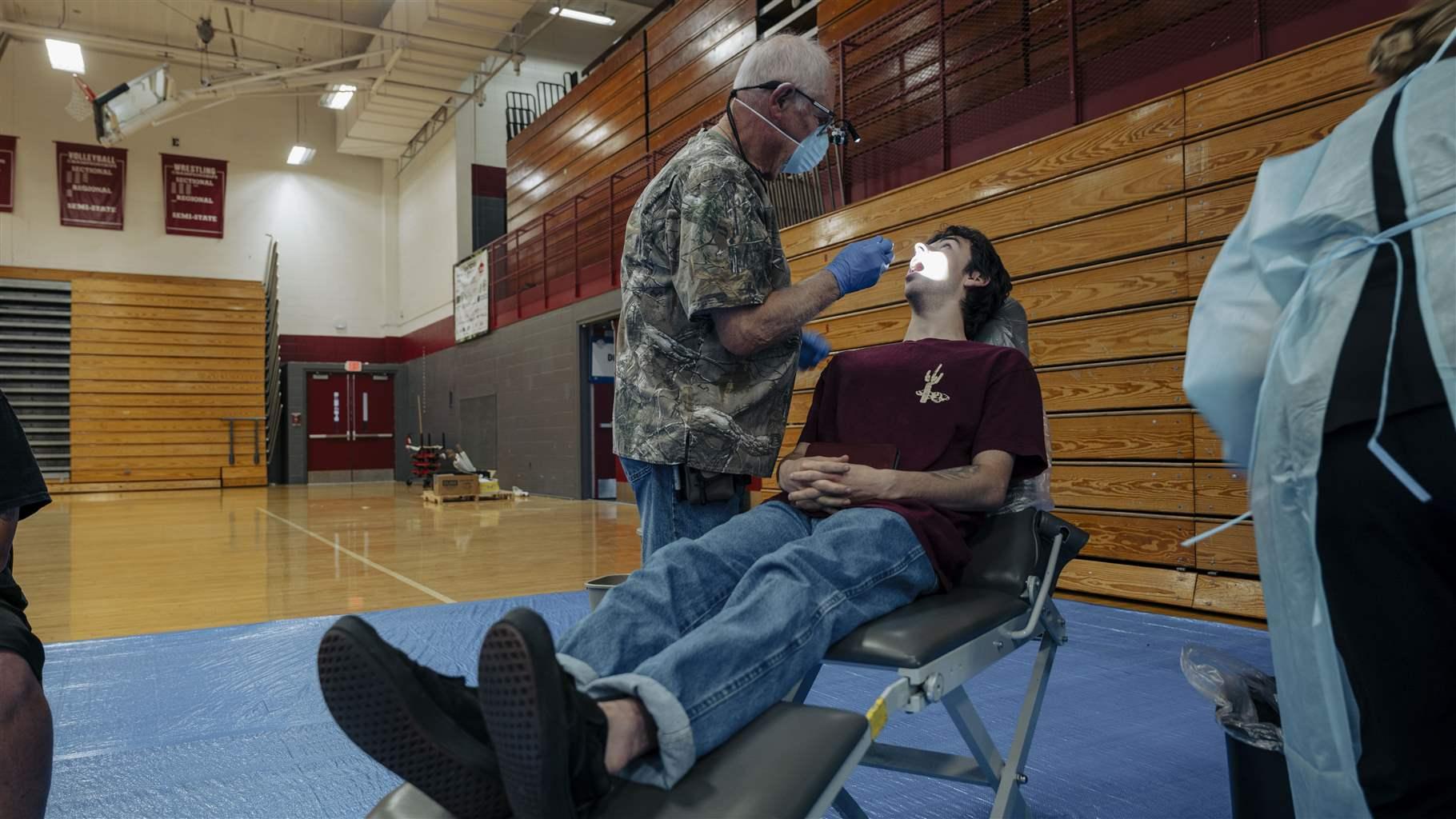
But some policymakers with rural constituencies have a different perspective. For example, Emily Ricci, deputy commissioner of Alaska’s Department of Health, called the fund “a really critical funding opportunity coming at a unique period of time” for the state.
A range of risks across states
The new law's impact on state budgets will vary. The states with the greatest exposure include ones that expanded Medicaid coverage under ACA, given that the new work and reporting rules apply only to those states, and to ones that depend heavily on provider taxes to fund their programs.
States with larger ACA expansion populations—ranging from about 19% of enrollees in Massachusetts and Minnesota to 56% in Rhode Island as of March 2025—will encounter greater administrative demands under the new work and verification rules.
The CBO estimates that H.R.1 will increase the number of uninsured individuals by 7.5 million in 2034, with expansion states seeing uninsured rates rise five times more on average than non-expansion states. The decrease in Medicaid enrollees is expected to reduce state costs, but the fiscal payoff may be limited: The federal government covers 90% of the costs for adults added through the expansion. These enrollees are generally younger and healthier, making them about $1,400 less expensive to cover than the average full-benefit enrollee, who is more likely to be older and have a disability requiring costly long-term services.
For example, Arizona’s Joint Legislative Budget Committee projects that H.R. 1’s work and reporting rules will generate $363 million in total savings starting in fiscal 2027 but only $15 million in state general fund savings. Some states expect the administrative costs of compliance to exceed any savings from enrollment declines.
As the new limits phase in, KFF estimates that roughly two-thirds of states will see reduced revenue from provider-based taxes on hospitals and certain health care organizations. Those with both higher assessments and greater reliance on federal dollars to fund their programs are particularly exposed to losing large amounts of federal revenue.
“Expansion states with narrow tax bases and heavy reliance on provider fees will face the toughest trade-offs,” said Heather Howard, director of State Health and Value Strategies, a Princeton University-based program that offers states technical assistance to improve health outcomes. “Filling H.R. 1’s longer-term holes from provider tax limits and work requirements isn’t feasible.”
As coverage declines, hospitals will face higher uncompensated care costs and reduced revenues, pressures that often shift to state and local budgets remain uninsured. Safety-net and rural hospitals, already operating with thin margins, are especially vulnerable.
California’s Sadwith projects that reductions in federal funding could reach roughly $30 billion annually, noting that the changes affect “not just our Medicaid program and safety net but our entire health care ecosystem.”
For state budgets, these consequences are indirect but significant: as coverage drops, hospitals and other Medicaid providers see more uninsured patients, increasing uncompensated care costs and reducing revenue. That, in turn, will increase demand for state and local funding to help keep safety-net and rural hospitals open. In fact, research from the University of North Carolina at Chapel Hill looked at the potential impact nationwide of the Medicaid changes in H.R. 1 and found that more than 100 rural hospitals could be at high risk of closure by 2034, that federally qualified health centers could lose between nearly one-fifth and more than one-quarter of their revenue, and that the downstream ramifications could result in an estimated 300,000 to 400,000 lost jobs and up to $15 billion in lost local tax revenue.
The difficult decisions ahead
Policymakers must decide how to manage rising costs, fund the new administrative workload, address coverage changes, and adjust to declining federal funding.
The first challenge is addressing the pressures of elevated enrollment and per-enrollee costs. States try to contain these costs by, for example, reducing coverage of certain benefits, decreasing provider reimbursement rates, or limiting eligibility.
A second challenge is implementation. Policymakers are looking at expanding eligibility teams, upgrading data systems, and modernizing call centers to handle twice-yearly renewals and new work-requirement tracking. Although the law provides limited short-term funds to help with implementation, and states can tap the existing enhanced federal match for IT upgrades, many of the added staffing and system costs will become new ongoing state expenses.

Complicating matters, state leaders still lack formal federal rules on how to implement the new requirements. A forthcoming Health and Human Services interim rule is expected by June, but that would only leave states six months to adapt systems before the January 2027 deadline.
These decisions will influence coverage levels and hospital finances in the years ahead. States are working to streamline paperwork, increase automation, and coordinate with health insurance marketplaces to keep eligible residents enrolled.
And amid all of these challenges, states must plan for declining federal support. As provider-based revenue shrinks and lower caps on supplemental payments to health care providers take effect, policymakers will face tough choices about how to finance their share of Medicaid costs with less reliance on provider taxes. For example, will they turn to using more general fund dollars for this purpose? They will need to respond to growing pressures to keep safety-net and rural hospitals open as uncompensated care needs rise and reimbursement rates fall.
Some may look to the federal Rural Health Transformation Program fund for short-term relief, but the grants are temporary—with half being distributed equally among states and the remaining funds allocated through a competitive process.
Another approach will be to adjust state policies to mitigate the budget impact when the federal reductions roll in. Several states—including North Carolina, Idaho, and Colorado—already implemented Medicaid cuts in 2025 in response to tightening fiscal conditions.
Howard, from the State Health and Value Strategies program, sees a widening divide among states in terms of approaches and spending.
“Some are focused on preserving coverage and minimizing administrative burden, [while] others see work requirements as a cost-saving opportunity, even if that means eligible people lose coverage,” she said, though she warned of potential longer-term consequences. “Churn can save money in the short term but often costs more later when people cycle back needing more care.”
Riley Judd is a senior associate, and Justin Theal is a senior officer with The Pew Charitable Trusts’ Fiscal 50 project.
People


