Conserving the Pantanal and Gran Chaco of South America: Pew’s Work in Brazil

The Pantanal and Gran Chaco represent two ecologically distinct yet interconnected landscapes—the world’s largest tropical wetland and one of the most extensive dry forests—which, together, help conserve biodiversity, store carbon, regulate water flows, and provide critical habitat for a wide array of species.
The Pew Charitable Trusts is working alongside national and regional governments, partner organizations, local communities, and Indigenous peoples in Bolivia and Brazil to solidify and expand protection of the region’s extraordinary biodiversity, as well as to promote sustainable land uses that support local residents’ livelihoods. And Pew is also beginning to expand this collaborative work into northern Argentina.
About The Pew Charitable Trusts
Founded in 1948, Pew is a nonpartisan philanthropic organization that uses data to make a difference, addressing the challenges of a changing world by illuminating issues, creating common ground, and advancing ambitious strategies that lead to tangible progress.
Pew works closely with governments, civic organizations, Indigenous communities, and research institutions that share our commitment to conservation, public service, and evidence-based decision-making. These partnerships combine essential expertise, local knowledge, and effective leadership to advance solutions that work within local cultural, policy, and environmental contexts.
Pew’s work in Brazil
Pew’s work in Brazil is concentrated in the states of Mato Grosso and Mato Grosso do Sul, spanning the Pantanal’s river systems and surrounding territories, including the Upper Paraguay River Basin. These efforts, carried out in collaboration with partners, focus on four interconnected priorities:
- Protecting key watersheds feeding the Pantanal floodplain against threats from development and changes in land use patterns, such as agricultural expansion.
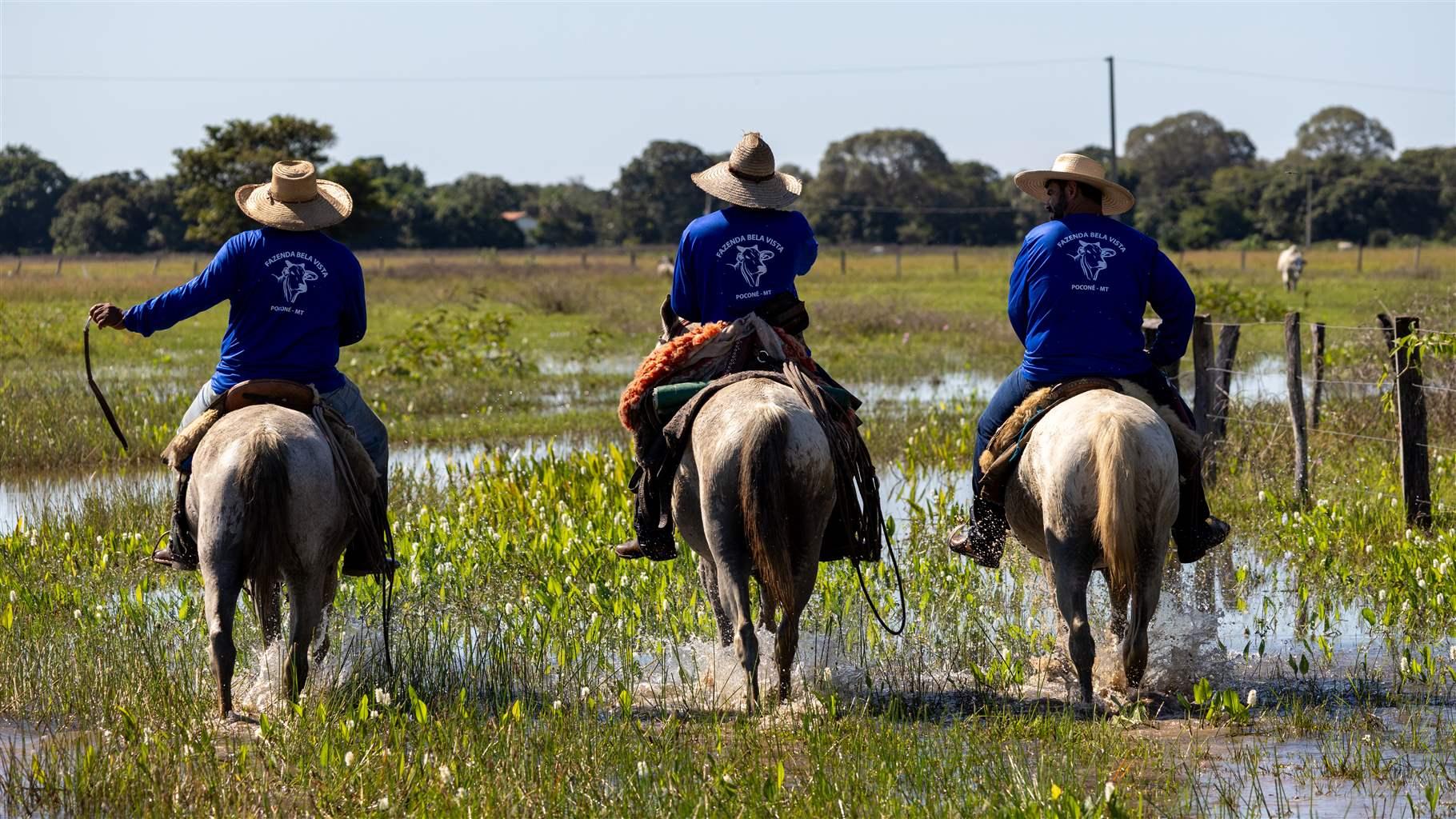
- Advancing sustainable cattle ranching standards to promote land conservation and sustainable livelihoods in the Pantanal.
- Supporting Indigenous peoples in strengthening their own territorial governance and management systems.
- Improving the management of existing protected areas to meet international management standards and support the creation of new ones.
Pew’s partners in Brazil
- Ecoa—Ecologia e Ação (Ecology and Action): A nonprofit organization advancing environmental protection for the Pantanal wetland’s key water sources.
- Embrapa Pantanal—Brazilian Agricultural Research Corp. (Pantanal Unit): A public research institution developing sustainable agricultural and natural resources management practices in the Pantanal.
- Instituto Taquari Vivo: A nonprofit organization working on sustainable financing solutions for the Pantanal.
- IPÊ—Instituto de Pesquisas Ecológicas (Institute for Ecological Research): A nonprofit organization advancing biodiversity conservation through scientific research, education, and improved protected areas management.
- Mupan—Mulheres em Ação no Pantanal (Women in Action in the Pantanal): A nonprofit providing technical support for the upgraded management of the Kadiwéu Indigenous Territory.
- Associação Onçafari: A nonprofit focusing on jaguar conservation and increased habitat protection through the creation of protected areas.
- Panthera Brasil: A nonprofit organization leading large-scale big cat conservation, including the development of a protected habitat corridor in the northern Pantanal.
- Pontes Pantaneiras (Pantanal Bridges): A diverse coalition of stakeholders promoting collaboration, sustainable development, and biodiversity conservation in the Pantanal.
- Smithsonian Institution: A nonprofit contributing scientific research and monitoring to strengthen international biodiversity conservation efforts.
- UCL—University College London: A university providing scientific research and technical expertise to support evidence-based conservation initiatives.
- WWF Brasil: A nonprofit that uses policy interventions to support the conservation and protection of key Pantanal water resources.

People